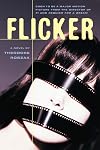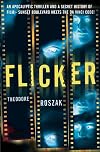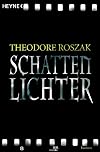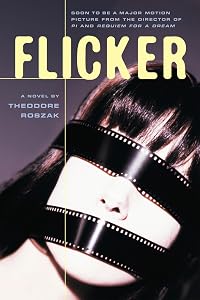
Flicker
by Theodore Roszak
On This Page
Description
From the golden age of art movies and underground cinema to X-rated porn, splatter films, and midnight movies, this breathtaking thriller is a tour de force of cinematic fact and fantasy, full of metaphysical mysteries that will haunt the dreams of every moviegoer. Jonathan Gates could not have anticipated that his student studies would lead him to uncover the secret history of the movies a tale of intrigue, deception, and death that stretches back to the 14th century. However, he succumbs show more to what will be a lifelong obsession with the mysterious Max Castle, a nearly forgotten genius of the silent screen who later became the greatest director of horror films, only to vanish in the 1940s, at the height of his talent. Now, 20 years later, as Jonathan seeks the truth behind Castle's disappearance, the innocent entertainments of his youth the sexy sirens, the screwball comedies, the high romance take on a sinister appearance. His tortured quest takes him from Hollywood's Poverty Row into the shadowy lore of ancient religious heresies. He encounters a cast of exotic characters, including Orson Welles and John Huston, who teach him that there is more to film than meets the eye, and journeys through the dark side of nostalgia, where the Three Stooges and Shirley Temple join company with an alien god whose purposes are anything but entertainment. show lessTags
Recommendations










Member Recommendations
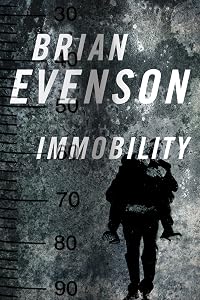
ari.joki Secret societies, conspiracies, mass media...
ViolentDelights A more horrific tale of a researcher who becomes increasingly involved with the work of a mysterious underground filmmaker
Member Reviews
In this 1991 novel, we are introduced to film buff Jonathan Gates. Gaining his film education from his lover, Clare, he throws himself into the early 1960s film culture, rediscovering classic film before it was fashionable. In that process, he begins to come across references and snippets of film by a forgotten 1930s director, Max Castle. Castle directed Z-list horror shockers, and anyone watching them with a little knowledge or insight can see that they hide powerful and disturbing messages using a variety of almost subliminal techniques. Their overt content, Gates finds, can instill visceral feelings of disgust and revulsion; yet his growing technical knowledge tells him that Castle's work as a director is powerful and possibly show more important.
So he begins to gather information about Max Castle, tracking down remaining rare footage from his films, and then meeting actors and crew who worked with him. Slowly, Gates pieces together Max Castle's story, which leads him down unexpected rabbit holes.
The first half of this novel is a fly-on-the-wall portrait of the Californian film community from the perspective of the film buff fanbase. Gates, his lover Claire and Sharkey, a projectionist, run a down-at-heel art cinema and move in film buff circles, rubbing up against collectors, critics, film makers and a range of people from inside the industry. This portrait of an era has verisimilitude and some very effective character painting. Gates tracks down Zip Lipsky, Castle's cameraman, who gives him extensive insights into the character of the man he is pursuing. Lipsky is a particularly well-drawn character and I quite took to him.
There is a lot of humour in this part of the book, as well as some aspects of life in the 1960s and 70s that we would now find objectionable. There is quite a lot of sex and some casual anti-Semitism (from the mouths of expatriate Germans in Hollywood, it should be said) that some may find distasteful.
But from about the mid-way point of the book, things become more serious as Gates begins to realise that the subliminal aspects of Castle's films are not just there because of Castle wishing to show off; rather, they reflect his background as a scion of a heretical cult. Investigating this leads Gates to a major conspiracy.
This section of the book is quite hard going. Not only does Roszak present the reader with a lot of early church history and an exploration of Cathar conspiracies, but he also launches into an attack on the punk and post-punk nihilism of the era. This becomes quite visceral at times as Gates encounters post-punk filmmakers with a particular line on what were once called "video nasties" - indeed, the setting of the story is at the dawn of the video age, and Roszak takes a lot of trouble to explore the transition from film, viewed in one setting under specific circumstances, to television and video, viewed in the home, almost on demand, in a different set of circumstances. Given Roszak's earlier role as a cultural commentator, it should come as no surprise that there is a lot of discussion of media and media theory wrapped up in all of this book. Much of it is insightful, and reading it from the perspective of more than thirty years after it was written is interesting. At the same time, Roszak's vision of post-punk ultra-nihilism may be a bit too 'in your face' for some readers. And on a more practical note, his central character Jonathan Gates' progress from unpaid gopher in a seedy art cinema to a Professor of Film Studies at UCLA is suspiciously seamless.
Jonathan Gates goes so far down the rabbit hole that he suddenly finds that he cannot get out; the novel takes an unexpected turn, and something of the earlier sense of the book returns. We end where we began, looking in detail at old films, the problems of their preservation and showing, and the details of Max Castle's work.
Many of the insights and ideas in this novel, especially those on religion, sex and sexuality, will not please everyone. Some of the thoughts on media and the media landscape will equally upset some whose immediate focus is on those matters. Some of the ideas have been overtaken by events and our switch to a different, online media landscape; but the author of The Making of a Counter-Culture is always going to have something to say on how we watch film and television. Those who have read Neil Postman's Amusing ourselves to Death may find themselves quite chilled by this novel, even now. show less
So he begins to gather information about Max Castle, tracking down remaining rare footage from his films, and then meeting actors and crew who worked with him. Slowly, Gates pieces together Max Castle's story, which leads him down unexpected rabbit holes.
The first half of this novel is a fly-on-the-wall portrait of the Californian film community from the perspective of the film buff fanbase. Gates, his lover Claire and Sharkey, a projectionist, run a down-at-heel art cinema and move in film buff circles, rubbing up against collectors, critics, film makers and a range of people from inside the industry. This portrait of an era has verisimilitude and some very effective character painting. Gates tracks down Zip Lipsky, Castle's cameraman, who gives him extensive insights into the character of the man he is pursuing. Lipsky is a particularly well-drawn character and I quite took to him.
There is a lot of humour in this part of the book, as well as some aspects of life in the 1960s and 70s that we would now find objectionable. There is quite a lot of sex and some casual anti-Semitism (from the mouths of expatriate Germans in Hollywood, it should be said) that some may find distasteful.
But from about the mid-way point of the book, things become more serious as Gates begins to realise that the subliminal aspects of Castle's films are not just there because of Castle wishing to show off; rather, they reflect his background as a scion of a heretical cult. Investigating this leads Gates to a major conspiracy.
This section of the book is quite hard going. Not only does Roszak present the reader with a lot of early church history and an exploration of Cathar conspiracies, but he also launches into an attack on the punk and post-punk nihilism of the era. This becomes quite visceral at times as Gates encounters post-punk filmmakers with a particular line on what were once called "video nasties" - indeed, the setting of the story is at the dawn of the video age, and Roszak takes a lot of trouble to explore the transition from film, viewed in one setting under specific circumstances, to television and video, viewed in the home, almost on demand, in a different set of circumstances. Given Roszak's earlier role as a cultural commentator, it should come as no surprise that there is a lot of discussion of media and media theory wrapped up in all of this book. Much of it is insightful, and reading it from the perspective of more than thirty years after it was written is interesting. At the same time, Roszak's vision of post-punk ultra-nihilism may be a bit too 'in your face' for some readers. And on a more practical note, his central character Jonathan Gates' progress from unpaid gopher in a seedy art cinema to a Professor of Film Studies at UCLA is suspiciously seamless.
Jonathan Gates goes so far down the rabbit hole that he suddenly finds that he cannot get out; the novel takes an unexpected turn, and something of the earlier sense of the book returns. We end where we began, looking in detail at old films, the problems of their preservation and showing, and the details of Max Castle's work.
Many of the insights and ideas in this novel, especially those on religion, sex and sexuality, will not please everyone. Some of the thoughts on media and the media landscape will equally upset some whose immediate focus is on those matters. Some of the ideas have been overtaken by events and our switch to a different, online media landscape; but the author of The Making of a Counter-Culture is always going to have something to say on how we watch film and television. Those who have read Neil Postman's Amusing ourselves to Death may find themselves quite chilled by this novel, even now. show less
A horror novel for pretentious film buffs. Unfortunately, I tend to dislike books about movies. (Or movies about movies for that matter, although somehow I like books (and movies) about books).
Anyway: A film critic rediscovers the lost work of an obscure German horror director who was lost at sea during WWII, and although his work is generally dismissed as pulp, he finds a plethora of mysterious techniques at use in the work, making use of subliminal techniques to accentuate the horror of the stories. He's fascinated, and makes the director the main subject of his academic studies - but to his lover, the films are nothing but evil.
Gradually, his research draws him into some strange circles, as he discovers unsavory details - and a weird show more cult descended from medieval heretics which may still be influential today...
Strangely (and I'm sure the author would be dismayed to hear) I found the book to be a lot like the imaginary subliminal movies he speaks of: it was undeniably compelling reading, but I'm not sure I liked it, and I definitely disagreed with it. It strongly condemns pop culture (movies, music, etc) that is dark, trashy and nihilistic and waxes nostalgic about the faux-innocent works of a 'golden' past as being 'Good.' ("Singin' In the Rain is the ultimate anti-fascist film.") Lots of random criticisms of stuff I like and lame cardboard stereotypes of punk rockers... which led to me both thinking that, for a so-called 'scholar' the author really lacks social understanding, and also just made me want to go find him, waggle my tongue at him and say, "I am what you hate and fear!" show less
Anyway: A film critic rediscovers the lost work of an obscure German horror director who was lost at sea during WWII, and although his work is generally dismissed as pulp, he finds a plethora of mysterious techniques at use in the work, making use of subliminal techniques to accentuate the horror of the stories. He's fascinated, and makes the director the main subject of his academic studies - but to his lover, the films are nothing but evil.
Gradually, his research draws him into some strange circles, as he discovers unsavory details - and a weird show more cult descended from medieval heretics which may still be influential today...
Strangely (and I'm sure the author would be dismayed to hear) I found the book to be a lot like the imaginary subliminal movies he speaks of: it was undeniably compelling reading, but I'm not sure I liked it, and I definitely disagreed with it. It strongly condemns pop culture (movies, music, etc) that is dark, trashy and nihilistic and waxes nostalgic about the faux-innocent works of a 'golden' past as being 'Good.' ("Singin' In the Rain is the ultimate anti-fascist film.") Lots of random criticisms of stuff I like and lame cardboard stereotypes of punk rockers... which led to me both thinking that, for a so-called 'scholar' the author really lacks social understanding, and also just made me want to go find him, waggle my tongue at him and say, "I am what you hate and fear!" show less
https://fromtheheartofeurope.eu/flicker-by-theodore-roszak/
I’d previously read the author’s Tiptree-winning Memoirs of Elizabeth Frankenstein, so I was prepared for some fairly dense prose. I wasn’t expecting to be left until quite a late stage before being able to decide if this was really an sfnal book or not; in the end, I decided that it is – the plot is about an obscure religious cult with cinematic ambitions, and the author’s gradual entanglement therewith. The blurb suggests that it’s a cross between Sunset Boulevard and The Name of the Rose, and I think that is probably fair, though I have not seen Sunset Boulevard.
I’m not a film buff, and my Oscar-winners project has been in part a journey to try and get into the show more minds of those who are. There are lots of other areas of human endeavour that leave me cold – I cannot get excited about makes of car, for instance, and sports events outside the major championships don’t do all that much for me. Roszak did in fact manage to convey to me what it is to care about films. The book dates from 1991, still a time when films physically existed entirely on celluloid; it’s weird to reflect how thoroughly the practice of digital storage has affected our experience of the cinema.
Anyway, it’s a bit rambling, but I liked the sense of geography (mostly California but with a bit of Europe and elsewhere) and the cult itself was an interesting concept. show less
I’d previously read the author’s Tiptree-winning Memoirs of Elizabeth Frankenstein, so I was prepared for some fairly dense prose. I wasn’t expecting to be left until quite a late stage before being able to decide if this was really an sfnal book or not; in the end, I decided that it is – the plot is about an obscure religious cult with cinematic ambitions, and the author’s gradual entanglement therewith. The blurb suggests that it’s a cross between Sunset Boulevard and The Name of the Rose, and I think that is probably fair, though I have not seen Sunset Boulevard.
I’m not a film buff, and my Oscar-winners project has been in part a journey to try and get into the show more minds of those who are. There are lots of other areas of human endeavour that leave me cold – I cannot get excited about makes of car, for instance, and sports events outside the major championships don’t do all that much for me. Roszak did in fact manage to convey to me what it is to care about films. The book dates from 1991, still a time when films physically existed entirely on celluloid; it’s weird to reflect how thoroughly the practice of digital storage has affected our experience of the cinema.
Anyway, it’s a bit rambling, but I liked the sense of geography (mostly California but with a bit of Europe and elsewhere) and the cult itself was an interesting concept. show less
Oy gevalt, this was terrible.
The set-up was intriguing -- Templar-esque conspiracy has been hiding secret subliminal messages in films. Especially at the beginning of the book, the whole classic film culture is so very present that if you are a film history fan at all it's very easy to get sucked in.
Then, it takes a turn for the annoying. Essentially, the authorial voice seems to be an old guy who maintains that the culture of his youth was insightful, poignant and significant, in contrast to the culture of following generations which is vapid, hollow, and immoral, and he WON'T STOP BRAYING ABOUT IT. The last half of the book consists of endless variations on "hey you kids get off my lawn!"
A particularly painful aspect of this novel is show more that Roszak managed to create a group of teenage characters who are even more cringe-inducing than poor, sweet Madeleine L'Engle's hopeless teen gang in The Young Unicorns. Just completely missing the mark with capturing any sense of a believable youth experience, it's like a paranoid fantasy of mohawks and bad grammar.
The cherry on top of all this is that he also communicates a palpable nostalgia for the misogynistic, anti-Semitic, and homophobic days of golden age Hollywood (as opposed to now, I guess). I suspect he would defend that choice by claiming that Hollywood was misogynistic, anti-Semitic, and homophobic ... yeah, but that's not the part you're supposed to miss, dude.
To add one more complaint, this book also embraces the belief that the most terrifying thing to academic white guys is a sexualized black guy. Alas, Mandingo.
Grade: D for dreadful
Recommended: You know, I have heard of people loving this book, and I don't get it. show less
The set-up was intriguing -- Templar-esque conspiracy has been hiding secret subliminal messages in films. Especially at the beginning of the book, the whole classic film culture is so very present that if you are a film history fan at all it's very easy to get sucked in.
Then, it takes a turn for the annoying. Essentially, the authorial voice seems to be an old guy who maintains that the culture of his youth was insightful, poignant and significant, in contrast to the culture of following generations which is vapid, hollow, and immoral, and he WON'T STOP BRAYING ABOUT IT. The last half of the book consists of endless variations on "hey you kids get off my lawn!"
A particularly painful aspect of this novel is show more that Roszak managed to create a group of teenage characters who are even more cringe-inducing than poor, sweet Madeleine L'Engle's hopeless teen gang in The Young Unicorns. Just completely missing the mark with capturing any sense of a believable youth experience, it's like a paranoid fantasy of mohawks and bad grammar.
The cherry on top of all this is that he also communicates a palpable nostalgia for the misogynistic, anti-Semitic, and homophobic days of golden age Hollywood (as opposed to now, I guess). I suspect he would defend that choice by claiming that Hollywood was misogynistic, anti-Semitic, and homophobic ... yeah, but that's not the part you're supposed to miss, dude.
To add one more complaint, this book also embraces the belief that the most terrifying thing to academic white guys is a sexualized black guy. Alas, Mandingo.
Grade: D for dreadful
Recommended: You know, I have heard of people loving this book, and I don't get it. show less
Not as much of a fan of this book as some people, but it did pull me in. A subtle horror novel about the technology behind making films. If you like books about conspiracies, you'll probably liike this one. Watch out for the subliminal messages - they're everywhere!
I'm going to come back to this, so in the meantime, may I just say, holy shit. This book was so, so funny and intriguing and bizarre and gross and wonderful. And the most fitting return to print after my recent glut of All Movies All The Time.
The Tale of Two Different Books
I was first given a copy of this book in the summer of 1993 by one of my good friends that had an interest in film-making as I did. I probably read about 150 pages of it before I went off to college at the University of North Texas in Denton to study in their Radio-Television-Film department.
Unfortunately, being off at college I never got around to finishing the book. So, 27 years later, I found another copy of it and decided to re-read and finish it like my friend (who passed away a few years ago from Lupus) had hoped.
I loved the first 2/3 of it. It was quickly becoming one of my favorite books of all-time. The mystery of Max Castle and his unique film-making abilities, really intrigued me. Then, I felt show more with the last 1/3, it became a completely different book. The introduction of the Cathars and Simon Dunkle felt like a left-turn that wasn't anywhere as interesting as the first 2/3 of the book. Max Castle became an afterthought, until the final few chapters.
Finally, I really didn't care for the ending, it had no real conclusion in my eyes. show less
I was first given a copy of this book in the summer of 1993 by one of my good friends that had an interest in film-making as I did. I probably read about 150 pages of it before I went off to college at the University of North Texas in Denton to study in their Radio-Television-Film department.
Unfortunately, being off at college I never got around to finishing the book. So, 27 years later, I found another copy of it and decided to re-read and finish it like my friend (who passed away a few years ago from Lupus) had hoped.
I loved the first 2/3 of it. It was quickly becoming one of my favorite books of all-time. The mystery of Max Castle and his unique film-making abilities, really intrigued me. Then, I felt show more with the last 1/3, it became a completely different book. The introduction of the Cathars and Simon Dunkle felt like a left-turn that wasn't anywhere as interesting as the first 2/3 of the book. Max Castle became an afterthought, until the final few chapters.
Finally, I really didn't care for the ending, it had no real conclusion in my eyes. show less
Members
- Recently Added By
Lists

Best Horror Mega-List
342 works; 6 members

Best Books on Film
46 works; 12 members

Secret Histories
28 works; 8 members

Well-written Fluff
20 works; 10 members

greasy film of cinematic fiction
36 works; 3 members

Jones and Newman's Horror: Another 100 Best Books
100 works; 7 members

Conspiracy Theories
1 work; 1 member

Books Read in 1992
11 works; 1 member
Author Information

22+ Works 3,299 Members
Theodore Roszak was born in Chicago, Illinois on November 15, 1933. He received a B.A. from UCLA and a Ph.D. in English history from Princeton University. He taught at Stanford University, the University of British Columbia, San Francisco State University, and California State University, Hayward. His only lengthy departure from academia was when show more he served as editor of Peace News in London during 1964 and 1965. His writings and social philosophy have been controversial since the publication of The Making of a Counter Culture in 1968. His other nonfiction works include Where the Wasteland Ends, Person/Planet, The Voice of the Earth, The Cult of Information, and Ecopsychology: Healing the Mind, Restoring the Earth. He also wrote several novels including Flicker, The Devil and Daniel Silverman, and Memoirs of Elizabeth Frankenstein, which won the Tiptree Award. He died of cancer on July 5, 2011 at the age of 77. (Bowker Author Biography) show less
Awards and Honors
Awards
Distinctions
Series
Belongs to Publisher Series
Common Knowledge
- Original publication date
- 1991
- People/Characters
- Max Castle; Jonathan Gates
- Important places
- Hollywood, Los Angeles, California, USA
- Epigraph
- The stronger the evil, the stronger the film.
Alfred Hitchcock - First words
- I saw my first Max Castle movie in a grubby basement in west Los Angeles.
- Last words
- (Click to show. Warning: May contain spoilers.)Entertainment for the penguins.
Classifications
Statistics
- Members
- 636
- Popularity
- 45,888
- Reviews
- 12
- Rating
- (3.94)
- Languages
- 8 — English, Finnish, French, German, Italian, Romanian, Russian, Spanish
- Media
- Paper, Ebook
- ISBNs
- 21
- ASINs
- 5