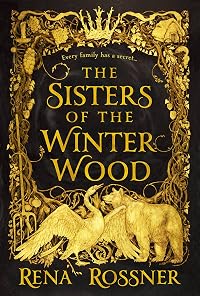
The Sisters of the Winter Wood
by Rena Rossner
On This Page
Description
Captivating and boldly imaginative, with a tale of sisterhood at its heart, Rena Rossner's debut fantasy invites you to enter a world filled with magic, folklore, and the dangers of the woods.*Publishers Weekly: Best Book of 2018: SF/Fantasy/Horror
*BookPage: Best Book of 2018: Science Fiction & Fantasy
"With luscious and hypnotic prose, Rena Rossner tells a gripping, powerful story of family, sisterhood, and two young women trying to find their way in the world." — Madeline Miller, show more bestselling author of Circe
In a remote village surrounded by vast forests on the border of Moldova and Ukraine, sisters Liba and Laya have been raised on the honeyed scent of their Mami's babka and the low rumble of their Tati's prayers. But when a troupe of mysterious men arrives, Laya falls under their spell — despite their mother's warning to be wary of strangers. And this is not the only danger lurking in the woods.
As dark forces close in on their village, Liba and Laya discover a family secret passed down through generations. Faced with a magical heritage they never knew existed, the sisters realize the old fairy tales are true. . .and could save them all.
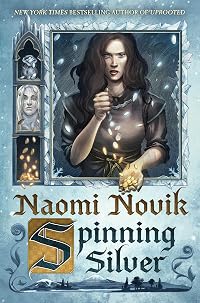
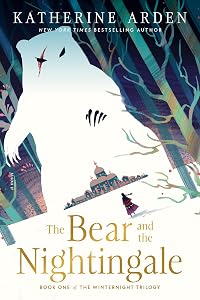
Discover a magical tale of secrets, heritage, and fairy tales weaving through history that will enchant readers of The Bear and the Nightingale, Uprooted and The Golem and the Jinni.
Praise for The Sisters of the Winter Wood:
"Intricately crafted, gorgeously rendered. . .full of heart, history, and enchantment." —Publishers Weekly (starred review)
"A richly detailed story of Jewish identity and sisterhood. . . Ambitious and surprising." —Kirkus
For more from Rena Rossner, check out The Light of the Midnight Stars.. show less
Tags
Recommendations



Member Reviews
In an Author’s Note at the end of this story, the author tells us that she was inspired in part by the experiences of her own family, who emigrated from the area on the border between the Ukraine and Moldova following a series of pogroms against Jews in 1903. These violent anti-semitic riots, carried out with government approval, left many dead and wounded, with houses destroyed and stores pillaged.
The worst pogroms were in the years between 1881-1883 and 1903-1906, causing a mass exodus of Jews to other countries. Some two million Jews subjected to pogroms emigrated from the area between 1881 and 1914, mainly going to the United States. It was then that the author’s family left Dubrossary and Kupel, both towns featured in this show more story, and went to the “goldene medina” or “golden land” of America. The Jews who did not leave those two towns were finished off by the Nazis in 1940, who rounded them up, locked half of them in the main synagogue, burned it to the ground, and shot the other half and buried them in a mass grave. As the author writes in her Note, “the stories I drew upon . . . these were all things that happened.”
But this is not a Holocaust story. On the contrary, it is a story of Jewish resilience told in the form of a fairy tale. The story is based upon Jewish history, traditions, and language. There are three glossaries at the end of the book for Hebrew, Yiddish, and Ukrainian words and phrases included in the story. Most of these are defined as they are come up in the narrative, but the glossaries are a nice touch.
The plot centers around two sisters, Liba, 17, and Laya, 15. Liba's narration is shown in prose and Laya's in free verse. This variation in style is an apt representation of the differences between them: Liba is earthbound and practical, and Liba has her head in the clouds, always dreaming of flying away. Liba is devout, but Laya is not sure God even exists. She thinks: “We pray because it makes us feel like someone’s listening . . . even if they’re not.” The love they have for each other is fierce, and transcends their differences.
As the book begins, a stranger comes to their cottage and asks to speak to Tati, the girls’ father. The stranger says that Tati’s own father, who is the leader of the Jewish community in nearby Kupel, is dying, and Tati and Mami must go there right away. The parents decide not to take the girls since travel is so dangerous for Jews. Before they go, however, Mami tells each of the sisters secrets about their past and who they are, and begs them to watch out for each other. She tells Liba:
“Know this - anything is possible, Liba, anything. There are lots of different kinds of beasts in the world . . . . People are not always what they seem. And you are more powerful than you’ve ever dreamed. If you’re ever in danger, you can draw on that power to save your sister, and yourself.”
Likewise Mami tells both girls that if necessary, they must become what they need to be to protect themselves.
Indeed, later in the story, after all hell breaks loose, Liba avers that “being a Jew means always changing - staying true to what you are, but adapting to your surroundings. That’s what our people have always done.”
Discussion: The lives of the characters in this book are interwoven with magic, much of it seeming to come from the ancient forest next to the sisters' cottage. The story most notably harkens back to Christina Rossetti’s narrative poem “Goblin Market,” to which it closely adheres. The author also draws upon the Russian folklore traditions which give prominent roles to bears and to swans. These three strands of folklore allow the author to use metaphor to show what is happening to the girls and to the village, from their transition through puberty and adulthood and the fears this inspires in each of the girls, to the incursion into their area of Anti-semites bent on destroying them.
Evaluation: This book about growing up, the inevitability of change, and the dangers in the wider world is well told. The author added interest and atmosphere by weaving into the story elements from folk and fairy tales. show less
The worst pogroms were in the years between 1881-1883 and 1903-1906, causing a mass exodus of Jews to other countries. Some two million Jews subjected to pogroms emigrated from the area between 1881 and 1914, mainly going to the United States. It was then that the author’s family left Dubrossary and Kupel, both towns featured in this show more story, and went to the “goldene medina” or “golden land” of America. The Jews who did not leave those two towns were finished off by the Nazis in 1940, who rounded them up, locked half of them in the main synagogue, burned it to the ground, and shot the other half and buried them in a mass grave. As the author writes in her Note, “the stories I drew upon . . . these were all things that happened.”
But this is not a Holocaust story. On the contrary, it is a story of Jewish resilience told in the form of a fairy tale. The story is based upon Jewish history, traditions, and language. There are three glossaries at the end of the book for Hebrew, Yiddish, and Ukrainian words and phrases included in the story. Most of these are defined as they are come up in the narrative, but the glossaries are a nice touch.
The plot centers around two sisters, Liba, 17, and Laya, 15. Liba's narration is shown in prose and Laya's in free verse. This variation in style is an apt representation of the differences between them: Liba is earthbound and practical, and Liba has her head in the clouds, always dreaming of flying away. Liba is devout, but Laya is not sure God even exists. She thinks: “We pray because it makes us feel like someone’s listening . . . even if they’re not.” The love they have for each other is fierce, and transcends their differences.
As the book begins, a stranger comes to their cottage and asks to speak to Tati, the girls’ father. The stranger says that Tati’s own father, who is the leader of the Jewish community in nearby Kupel, is dying, and Tati and Mami must go there right away. The parents decide not to take the girls since travel is so dangerous for Jews. Before they go, however, Mami tells each of the sisters secrets about their past and who they are, and begs them to watch out for each other. She tells Liba:
“Know this - anything is possible, Liba, anything. There are lots of different kinds of beasts in the world . . . . People are not always what they seem. And you are more powerful than you’ve ever dreamed. If you’re ever in danger, you can draw on that power to save your sister, and yourself.”
Likewise Mami tells both girls that if necessary, they must become what they need to be to protect themselves.
Indeed, later in the story, after all hell breaks loose, Liba avers that “being a Jew means always changing - staying true to what you are, but adapting to your surroundings. That’s what our people have always done.”
Discussion: The lives of the characters in this book are interwoven with magic, much of it seeming to come from the ancient forest next to the sisters' cottage. The story most notably harkens back to Christina Rossetti’s narrative poem “Goblin Market,” to which it closely adheres. The author also draws upon the Russian folklore traditions which give prominent roles to bears and to swans. These three strands of folklore allow the author to use metaphor to show what is happening to the girls and to the village, from their transition through puberty and adulthood and the fears this inspires in each of the girls, to the incursion into their area of Anti-semites bent on destroying them.
Evaluation: This book about growing up, the inevitability of change, and the dangers in the wider world is well told. The author added interest and atmosphere by weaving into the story elements from folk and fairy tales. show less
Rossner’s novel is built on contrasts—Jewish/Christian, female/male, prose/verse, race, ethnicity. It's also a fanfic reworking of Christina Rosseti’s poem "Goblin Market" set in Ukraine during the pogroms, and overall, it works very well. Rossner is to be commended for writing two strong female protagonists who know what they want but avoid the common YA cliches of having wisdom beyond their years, or never making believable mistakes, or effortlessly excelling at everything they try as they move through the narrative. Rossner also does an excellent job of avoiding lazy black-and-white distinctions and lets her story show readers the complexity of the world her protagonists inhabit: antisemitism and friendly relations between Jews show more and Christians exist in the same village, whose Jewish community is itself divided along sectarian lines. Almost 18, the protagonist worries she's too old for marriage; "You're too young to be left on your own!" exclaims a neighbor not raised in the Hasidic tradition.
The author founders in her enthusiasm to cram everything into this novel; not just "Goblin Market," but oral family tradition! And Ukrainian folklore! And Russian lyric poetry! And Greek mythology! And Novik's Uprooted! and so on. It would have made for a much tighter and more cohesive story had she focused on a few of these. That said, this novel succeeds far more than it falls short, and it's worth a read. show less
The author founders in her enthusiasm to cram everything into this novel; not just "Goblin Market," but oral family tradition! And Ukrainian folklore! And Russian lyric poetry! And Greek mythology! And Novik's Uprooted! and so on. It would have made for a much tighter and more cohesive story had she focused on a few of these. That said, this novel succeeds far more than it falls short, and it's worth a read. show less
Liba and Laya are two Jewish girls living in a small town in Ukraine, in the early 20th century. They are starting to hear alarming stories about dangers to Jews out in the larger world, but they feel safe in their town, secure in the knowledge that both Jews and non-Jews are decent people in their town.
Then Liba discovers that her father, her beloved Tati, can transform into a bear, and her Mami into a swan. And, also, that she is likely going to be able to transform into a bear.
Unfortunately, that's on the same night that a stranger shows up at their cottage in the woods, with the news that Tati's father is dying, and that Tati, his heir, needs to return immediately. The parents take a couple of days to make a decision, but then they show more go, leaving the girls behind, and telling Liba to protect Laya.
Before leaving, their Mami has separately told each of the girls more about her swan heritage, Laya's likely ability to become a swan, and a more painful family secret. She pledges each of them to secrecy; she asks Liba, the elder and beginning to show her bear heritage, to protect Liba, and to ensure, if the swans arrive, that Laya is allowed to make her own choice about whether to go with them, or not.
With their parents gone for an unknown length of time, Liba struggles to protect her sister, in ways that Laya doesn't necessarily agree with, or agree that she has the right to. They're less than three years apart in age, and both of an age that, if their father weren't so protective, they might already r been married. A rather strange group of fruit sellers has moved into the town, or rather, into the woods right outside it, and one of these young men has charmed Laya. Liba is appalled; these men are not Jews, and in fact she hears them saying shockingly antisemitic things at the market, and encouraging nasty rumors. Their Tati would never approve such a match.
But in the meantime, Liba has become attracted to Dovid, the son of the local kosher butcher, who isn't kosher enough for Tati. Dovid is kind, generous, and his family is kind and supportive--to Liba, and to Laya to the extent that she will allow it.
And Liba and Laya both know that Tati would not approve that match, either.
Not to mention, Liba is increasingly partially transforming into a bear, and knows she will complete the transformation at some point. How can she keep this from Dovid? But if she doesn't, how can he love a beast? She keeps decidiing to end it, but she can't follow through.
Meanwhile, dark forces are closing in on the sisters, and on the town. The strange fruit sellers are only the first and most obvious of those threats, and news of pogroms are starting to reach the town, and heighten the tension between Jews and non-Jews.
When the growing danger forces each of the sisters to make choices based on partial information they don't completely understand, and communication and trust starts to break down between them, the town itself explodes in potentially deadly conflict.
I really loved this story. Strongly recommended.
I bought this audiobook. show less
Then Liba discovers that her father, her beloved Tati, can transform into a bear, and her Mami into a swan. And, also, that she is likely going to be able to transform into a bear.
Unfortunately, that's on the same night that a stranger shows up at their cottage in the woods, with the news that Tati's father is dying, and that Tati, his heir, needs to return immediately. The parents take a couple of days to make a decision, but then they show more go, leaving the girls behind, and telling Liba to protect Laya.
Before leaving, their Mami has separately told each of the girls more about her swan heritage, Laya's likely ability to become a swan, and a more painful family secret. She pledges each of them to secrecy; she asks Liba, the elder and beginning to show her bear heritage, to protect Liba, and to ensure, if the swans arrive, that Laya is allowed to make her own choice about whether to go with them, or not.
With their parents gone for an unknown length of time, Liba struggles to protect her sister, in ways that Laya doesn't necessarily agree with, or agree that she has the right to. They're less than three years apart in age, and both of an age that, if their father weren't so protective, they might already r been married. A rather strange group of fruit sellers has moved into the town, or rather, into the woods right outside it, and one of these young men has charmed Laya. Liba is appalled; these men are not Jews, and in fact she hears them saying shockingly antisemitic things at the market, and encouraging nasty rumors. Their Tati would never approve such a match.
But in the meantime, Liba has become attracted to Dovid, the son of the local kosher butcher, who isn't kosher enough for Tati. Dovid is kind, generous, and his family is kind and supportive--to Liba, and to Laya to the extent that she will allow it.
And Liba and Laya both know that Tati would not approve that match, either.
Not to mention, Liba is increasingly partially transforming into a bear, and knows she will complete the transformation at some point. How can she keep this from Dovid? But if she doesn't, how can he love a beast? She keeps decidiing to end it, but she can't follow through.
Meanwhile, dark forces are closing in on the sisters, and on the town. The strange fruit sellers are only the first and most obvious of those threats, and news of pogroms are starting to reach the town, and heighten the tension between Jews and non-Jews.
When the growing danger forces each of the sisters to make choices based on partial information they don't completely understand, and communication and trust starts to break down between them, the town itself explodes in potentially deadly conflict.
I really loved this story. Strongly recommended.
I bought this audiobook. show less
Another modern telling of old fairy tales and more; here’s Christina Rosseti’s Goblin Market, Leda and the Swan, Russian folklore, and I suspect more. The author gives us duel POVs: Liba, almost 18, tells her tale in prose, is dark haired and considers herself fat; and Laya, 15, so blond she’s almost white haired, very slim and beautiful, and writes her parts in poetry. When word comes that their father’s father is on his deathbed, their parents must leave at once, walking through the wintry landscape. Liba and Laya stay to tend to the animals. They live in the woods, where the people of the village do not dare go.
In Dubossary, the town they live near, their father was accepted right off by the Jews of the shtetl, but their show more mother never has been because she refuses to cover her hair –they claim they reject her because her kitchen is not kosher (it is) but they buy her baked goods; would they really do that if they thought her kitchen wasn’t kosher? Or perhaps I missed something and she was selling just to the goyim. Conversely, their parents don’t think a boy like Dovid, who is sweet, intelligent, and hardworking isn’t good enough for Liba because his father is the butcher! Ah, the barriers people build up between themselves.
Liba and Laya’s parents have secrets, but they don’t have time to explain everything before they go. The girls are on their own. They know how to take care of the animals and do the baking and cooking, but they are teenagers with no one to advise them on how to deal with things like the clan of newcomers to the market. These newcomers are good looking, and have luscious ripe fruits for sale- even though it’s winter. They have a hypnotic effect on Laya and other village girls. To add to their personal problems (like fear of turning into a bear), people in the village are being killed. Is it a bear? It’s been a long time since there’s been one around. Or is it the Jews? Are they using the blood of the victims to make Passover matzoh? Will there be a move to remove the Jews of the village-a pogrom similar to others in Russia? Who are the strange men looking for Liba and Laya’s father?
There is a lot of running about and searching for Laya, who tends to go missing. Things get off to kind of a slow start, but pick up by the middle. There is a lot of not knowing who to trust, and Liba has a problem with asking for help. There is a lot of Yiddish, Ukrainian, and Hebrew words used. Most of them are obvious as to what they mean; for others, there is a glossary in the back. I enjoyed their use; the book is told in the first persons, so it makes sense they would think/write using those words. It added depth to the novel for me. There is rather more romance in the novel than I expected, but in Liba’s case it doesn’t over power her story. Laya is a different matter.. but there are good reasons for that. I very much enjoyed the book and hated to put it down. It’s coming of age and romance and magic. I see it’s aimed at the adult market, but it did seem more like a Young Adult story. Five stars. show less
In Dubossary, the town they live near, their father was accepted right off by the Jews of the shtetl, but their show more mother never has been because she refuses to cover her hair –they claim they reject her because her kitchen is not kosher (it is) but they buy her baked goods; would they really do that if they thought her kitchen wasn’t kosher? Or perhaps I missed something and she was selling just to the goyim. Conversely, their parents don’t think a boy like Dovid, who is sweet, intelligent, and hardworking isn’t good enough for Liba because his father is the butcher! Ah, the barriers people build up between themselves.
Liba and Laya’s parents have secrets, but they don’t have time to explain everything before they go. The girls are on their own. They know how to take care of the animals and do the baking and cooking, but they are teenagers with no one to advise them on how to deal with things like the clan of newcomers to the market. These newcomers are good looking, and have luscious ripe fruits for sale- even though it’s winter. They have a hypnotic effect on Laya and other village girls. To add to their personal problems (like fear of turning into a bear), people in the village are being killed. Is it a bear? It’s been a long time since there’s been one around. Or is it the Jews? Are they using the blood of the victims to make Passover matzoh? Will there be a move to remove the Jews of the village-a pogrom similar to others in Russia? Who are the strange men looking for Liba and Laya’s father?
There is a lot of running about and searching for Laya, who tends to go missing. Things get off to kind of a slow start, but pick up by the middle. There is a lot of not knowing who to trust, and Liba has a problem with asking for help. There is a lot of Yiddish, Ukrainian, and Hebrew words used. Most of them are obvious as to what they mean; for others, there is a glossary in the back. I enjoyed their use; the book is told in the first persons, so it makes sense they would think/write using those words. It added depth to the novel for me. There is rather more romance in the novel than I expected, but in Liba’s case it doesn’t over power her story. Laya is a different matter.. but there are good reasons for that. I very much enjoyed the book and hated to put it down. It’s coming of age and romance and magic. I see it’s aimed at the adult market, but it did seem more like a Young Adult story. Five stars. show less
The book is well-written, but felt a bit long. I liked concept of alternate chapters told by the two sisters, one in poetry and the other in prose. As the author explains at the end of the book, there are lots of references to the folklore and literature of many times and places. The story is a close retelling of Christina Rossetti's poem, "Goblin Market," but with shapeshifting, Jewish sisters in Eastern Europe in 1903. The glossary at the end---it would have been nice to know it existed while I read the story---contains the meaning of the Hebrew, Yiddish, and Ukrainian words and expressions used.
My major concern about the book is explaining away pogroms by blaming them on magical beings: people were not tricked by goblins into show more murdering Jews; as the author's note explains, people were responsible for the atrocities.
I read "Goblin Market" on Project Gutenberg after reading the book and I checked out what Wikipedia had to say about it. According to its article, Rossetti's use of goblins might be anti-Semitic; Women's Poetry and Religion in Victorian England: Jewish Identity and Christian Culture by Cynthia Scheinberg is referenced for this suggestion. show less
My major concern about the book is explaining away pogroms by blaming them on magical beings: people were not tricked by goblins into show more murdering Jews; as the author's note explains, people were responsible for the atrocities.
I read "Goblin Market" on Project Gutenberg after reading the book and I checked out what Wikipedia had to say about it. According to its article, Rossetti's use of goblins might be anti-Semitic; Women's Poetry and Religion in Victorian England: Jewish Identity and Christian Culture by Cynthia Scheinberg is referenced for this suggestion. show less
I've been trying to read this book for years -- because hey, fairy tales, transformations, Goblin Market -- lots of things in here that generally appeal to me. Oh. and also historical fiction centered on eastern European Judaism -- also a fascinating topic. I finally tried the audio book, and, well. I think there are a lot of cool themes to this book and I am not the audience for it. Too much introspection, self criticism, repetition. Just did not flow fast enough to keep my interest, despite all of the amazing things on view.
I listened to the audio book and it was only after reading other reviews that I realised Laya's sections were written in poetry!
I could have done without quite as much teenage angst that happened in the middle of the book but overall this book had a lot of depth and I loved all the Jewish and historical details that made this story stand out from other books.
Keen to read the Christina Rosseti poem now!
I could have done without quite as much teenage angst that happened in the middle of the book but overall this book had a lot of depth and I loved all the Jewish and historical details that made this story stand out from other books.
Keen to read the Christina Rosseti poem now!
Members
- Recently Added By
Lists

Ukrainian Culture
17 works; 2 members
Author Information

4+ Works 1,000 Members
All Editions
Some Editions
Awards and Honors
Awards
Distinctions
Work Relationships
Is a retelling of
Common Knowledge
- Original title
- The Sisters of the Winter Wood
- Original publication date
- 2018-09
- People/Characters
- Berman Leib; Adel Leib; Liba Leib; Laya Leib; Dovid Meisels; Fedir Hovlin (show all 9); Miron Hovlin; Ruven; Alter
- Important places
- Dubăsari, Transnistria [also claimed by Moldova]; Kishinev, Russia; Kupel, Ukraine
- Important events
- Kishinev pogrom (1903)
- Epigraph
- Oif a meiseh forget men kain kasheh nit. (Don't ask questions about fairy tales.) ---Yiddish saying
For there is no friend like a sister In calm or stormy weather; To cheer one on the tedious way, To fetch one if one goes astray, To lift one if one totters down, To strengthen whilst one stands. ---Christina Rosetti, Gob... (show all)lin Market - Dedication
- In memory of Nettie Bunder z''l (1921-2017) who taught me all the Yiddish I know
- First words
- If you want to know the history of a town, read the gravestones in its cemetery.
- Last words
- (Click to show. Warning: May contain spoilers.)The world feels big and wide and full of possibility.
I take Laya's hand and squeeze it, and she squeezes back. - Blurbers
- Tidhar, Lavie; Morgan, Louisa; Popovic, Lana; Dean, Pamela
Classifications
Statistics
- Members
- 700
- Popularity
- 40,826
- Reviews
- 16
- Rating
- (3.43)
- Languages
- English
- Media
- Paper, Audiobook, Ebook
- ISBNs
- 14
- ASINs
- 4