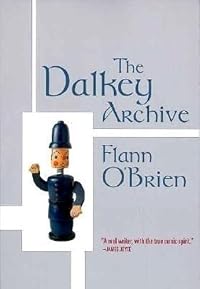
The Dalkey Archive
by Flann O'Brien
On This Page
Description
From the author of the classic novel 'At-Swim-Two-Birds' comes this ingenious tale which follows the mad and absurd ambitions of a scientist determined to destroy the world. Flann O'Brien's third novel, 'The Dalkey Archive' is a riotous depiction of the extraordinary events surrounding theologian and mad scientist De Selby's attempt to destroy the world by removing all the oxygen from the atmosphere. Only Michael Shaughnessy, 'a lowly civil servant', and James Joyce, alive and well and show more working as a barman in the nearby seaside resort of Skerries, can stop the inimitable De Selby in his tracks. show lessTags
Recommendations
















Member Reviews
Sin llegar al nivel de 'El Tercer Policía', por otra parte difícil de superar, ‘Crónica de Dalkey’ es una obra con la que divertirse y en la que da gusto sumergirse. El mundo creado por O’Brien es disparatado y lleno de ironía; pero eso sí, has de dejarte llevar y entrar en su juego, dejarte embaucar.
En esta novela hay de todo: cuevas submarinas, debates sobre teología y filosofía, diálogos con San Agustín, disputas sobre lo ocurrido realmente con Jonás y la ballena o sobre Judas, un sargento de policía que, Dios le libre, nunca ha montado en su bicicleta, la búsqueda de James Joyce, que parece que no está muerto, y por supuesto ese gran genio excéntrico llamado De Selby, con sus extrañas y estrambóticas teorías y show more sentencias, como la que dedica a Descartes: ”He escrito majaderías, luego existo.”
Todo empieza cuando Mick Shaughnessy, el protagonista, y su amigo Hackett, se encuentran en el pueblo de Dalkey con De Selby, y este les invita a su casa, en donde De Selby les explica sus planes para acabar con el mundo mediante un ingenioso invento. Mick entra entonces en una fase paranoica en la que se propone desbaratar los planes de De Selby a toda costa. Pero si no tenía bastante con esta idea, Mick se entera de que su admirado James Joyce puede seguir vivo y que se oculta en la misma Irlanda, así que empieza a buscarle. Y entre estos planes, encuentros con personajes excéntricos, diálogos en el pub, y mucho alcohol, van sucediéndose las andanzas de Mick.
Sorprendente, demencial, divertido, erudito, inteligente, Flann O’Brien nos deja un nueva muestra de su maestría a la hora de escribir buenas historias. Sin duda, se trata de un “buen bocado” literario. show less
En esta novela hay de todo: cuevas submarinas, debates sobre teología y filosofía, diálogos con San Agustín, disputas sobre lo ocurrido realmente con Jonás y la ballena o sobre Judas, un sargento de policía que, Dios le libre, nunca ha montado en su bicicleta, la búsqueda de James Joyce, que parece que no está muerto, y por supuesto ese gran genio excéntrico llamado De Selby, con sus extrañas y estrambóticas teorías y show more sentencias, como la que dedica a Descartes: ”He escrito majaderías, luego existo.”
Todo empieza cuando Mick Shaughnessy, el protagonista, y su amigo Hackett, se encuentran en el pueblo de Dalkey con De Selby, y este les invita a su casa, en donde De Selby les explica sus planes para acabar con el mundo mediante un ingenioso invento. Mick entra entonces en una fase paranoica en la que se propone desbaratar los planes de De Selby a toda costa. Pero si no tenía bastante con esta idea, Mick se entera de que su admirado James Joyce puede seguir vivo y que se oculta en la misma Irlanda, así que empieza a buscarle. Y entre estos planes, encuentros con personajes excéntricos, diálogos en el pub, y mucho alcohol, van sucediéndose las andanzas de Mick.
Sorprendente, demencial, divertido, erudito, inteligente, Flann O’Brien nos deja un nueva muestra de su maestría a la hora de escribir buenas historias. Sin duda, se trata de un “buen bocado” literario. show less
Every O'Brien novel I've read has been really funny, and The Dalkey Archive is no different. The book centers around Mick and his struggles: him and his friend Hackett's interactions with the mad scientist De Selby; his efforts to help James Joyce join the Jesuits; and his arms-length relationship with his girlfriend Mary. While it somewhat recycles a few plot elements of The Third Policeman (the De Selby character, policemen on bicycles), as well as the literary playfulness of At Swim-Two-Birds (James Joyce is a character suspected of not having written his own novels and desirous of becoming a priest), it has its own identity in the protagonist's struggles with religion and relationships. But irreverence is paramount, and aided by show more some of the most continuous drinking I've ever seen in a novel, O'Brien makes fun of Ireland, the Church, authorship, and just about everything else.
The De Selby plotline is the one I enjoyed the most. I could probably read about the "Mollycule Theory" forever:
"Everything is composed of small mollycules of itself and they are flying around in concentric circles and arcs and segments and innumerable various other routes too numerous to mention collectively, never standing still or resting but spinning away and darting hither and thither and back again, all the time on the go. Do you follow me intelligently? Mollycules? ... The gross and net result of it is that people who spend most of their natural lives riding iron bicycles over the rocky roadsteads of the parish get their personalities mixed up with the personalities of their bicycles as a result of the interchanging of the mollycules of each of them, and you would be surprised at the number of people in country parts who are nearly half people and half bicycles.... And you would be unutterably flibbergasted if you knew the number of stout bicycles that partake serenely of humanity."
Never mind that De Selby is attempting to destroy the world with DMP, a lethal substance which also has the property of allowing conversation with important Christian religious figures. Mick and Hackett try some out, scuba diving along with De Selby to have an enlightening conversation with no less a personage than Saint Augustine. Much like in The Third Policeman, our hero plots a mission to retrieve the fatal supply, though not before using the theologically troubling revelations to engage in further barroom debate over Judas, the merits of various theologians, and other doctrinal disputes: is the bicycle/man duality similar to that between God and Jesus?
Probably the most important portions of the novel from a "literary" perspective are those of Joyce. Reams of analyses have been written about the most influential author in Irish history, but O'Brien's personal attitude toward Joyce is nowhere near as deferential as Brahms' artistic intimidation by his own famous predecessor, that "To follow in Beethoven's footsteps transcends one's strength". Mick's response to a question about why he wants to meet Joyce brings him firmly down to earth:
"I believe the picture of himself he has conveyed in his writings is fallacious. I believe he must be a far better man or a far worse. I think I have read all his works, though I admit I did not properly persevere with his play-writing. I consider his poetry meretricious and mannered. But I have an admiration for all his other work, for his dexterity and resource in handling language, for his precision, for his subtlety in conveying the image of Dublin and her people, for his accuracy in setting down speech authentically, and for his enormous humour."
In real life O'Brien was a famously under-achieving figure. That he makes Joyce a central figure, especially one who wants to join the Jesuits but is assigned the task of "in charge of the maintenance and repair of the Fathers' underclothes in all the Dublin residential establishments" is his own way of poking fun at the legends of literature, even as he pokes gentle fun at the trappings of religion. The Joyce character's ignorance of his fame, or even of authorship of his own works, is an interesting commentary on the unreality of fame to the famous, as well as a jab at Irish over-humility. Though Mick's eventual reconciliation and marriage to his pregnant girlfriend Mary is as serious an ending for an O'Brien protagonist as you'll find, I think his playful attitude towards life is best summed up by a limerick Hackett recites on learning that Mick has delusions of becoming a monk:
"There was a young monk of La Trappe
Who contracted a dose of the clap,
He said Dominus Vobiscum,
Oh why can't my piss come
There's something gone wrong with my... tap." show less
The De Selby plotline is the one I enjoyed the most. I could probably read about the "Mollycule Theory" forever:
"Everything is composed of small mollycules of itself and they are flying around in concentric circles and arcs and segments and innumerable various other routes too numerous to mention collectively, never standing still or resting but spinning away and darting hither and thither and back again, all the time on the go. Do you follow me intelligently? Mollycules? ... The gross and net result of it is that people who spend most of their natural lives riding iron bicycles over the rocky roadsteads of the parish get their personalities mixed up with the personalities of their bicycles as a result of the interchanging of the mollycules of each of them, and you would be surprised at the number of people in country parts who are nearly half people and half bicycles.... And you would be unutterably flibbergasted if you knew the number of stout bicycles that partake serenely of humanity."
Never mind that De Selby is attempting to destroy the world with DMP, a lethal substance which also has the property of allowing conversation with important Christian religious figures. Mick and Hackett try some out, scuba diving along with De Selby to have an enlightening conversation with no less a personage than Saint Augustine. Much like in The Third Policeman, our hero plots a mission to retrieve the fatal supply, though not before using the theologically troubling revelations to engage in further barroom debate over Judas, the merits of various theologians, and other doctrinal disputes: is the bicycle/man duality similar to that between God and Jesus?
Probably the most important portions of the novel from a "literary" perspective are those of Joyce. Reams of analyses have been written about the most influential author in Irish history, but O'Brien's personal attitude toward Joyce is nowhere near as deferential as Brahms' artistic intimidation by his own famous predecessor, that "To follow in Beethoven's footsteps transcends one's strength". Mick's response to a question about why he wants to meet Joyce brings him firmly down to earth:
"I believe the picture of himself he has conveyed in his writings is fallacious. I believe he must be a far better man or a far worse. I think I have read all his works, though I admit I did not properly persevere with his play-writing. I consider his poetry meretricious and mannered. But I have an admiration for all his other work, for his dexterity and resource in handling language, for his precision, for his subtlety in conveying the image of Dublin and her people, for his accuracy in setting down speech authentically, and for his enormous humour."
In real life O'Brien was a famously under-achieving figure. That he makes Joyce a central figure, especially one who wants to join the Jesuits but is assigned the task of "in charge of the maintenance and repair of the Fathers' underclothes in all the Dublin residential establishments" is his own way of poking fun at the legends of literature, even as he pokes gentle fun at the trappings of religion. The Joyce character's ignorance of his fame, or even of authorship of his own works, is an interesting commentary on the unreality of fame to the famous, as well as a jab at Irish over-humility. Though Mick's eventual reconciliation and marriage to his pregnant girlfriend Mary is as serious an ending for an O'Brien protagonist as you'll find, I think his playful attitude towards life is best summed up by a limerick Hackett recites on learning that Mick has delusions of becoming a monk:
"There was a young monk of La Trappe
Who contracted a dose of the clap,
He said Dominus Vobiscum,
Oh why can't my piss come
There's something gone wrong with my... tap." show less
Per fortuna che O’Brien ci avverte che la serieta’ non e’ poi del tutto seria.
Attraverso gli occhiali della maschera, Mick vedeva Teague McGettigan immerso nella lettura della prima edizione del giornale, aperto in fondo, alla pagina delle corse. Ecco un uomo in pace con se stesso, senza il minimo interesse per le cose sovrannaturali. Un uomo, forse, da invidiare.
(42)
“Il risultato lordo e netto e’ che le persone che passano la maggior parte della loro vita naturale a pedalare su biciclette di ferro sopra le strade sassose di questa parrocchia finiscono per avere la loro personalita’ mischiata con la personalita’ della bicicletta, per effetto dell’interscambio delle mollicole di ciascuno dei due, e voi non immaginate show more nemmeno la quantita’ di gente delle zone rurali che e’ quasi meta’ persona e meta’ bicicletta”.
(102)
“E l’idea sarebbe?”.
“Niente di speciale; proporro’ che il signor Byrne (ossia James Joyce) sia assunto ufficialmente nel personale di servizio come responsabile della manutenzione e riparazione della biancheria intima dei Padri in tutti gli istituti di Dublino”.
(236) show less
Attraverso gli occhiali della maschera, Mick vedeva Teague McGettigan immerso nella lettura della prima edizione del giornale, aperto in fondo, alla pagina delle corse. Ecco un uomo in pace con se stesso, senza il minimo interesse per le cose sovrannaturali. Un uomo, forse, da invidiare.
(42)
“Il risultato lordo e netto e’ che le persone che passano la maggior parte della loro vita naturale a pedalare su biciclette di ferro sopra le strade sassose di questa parrocchia finiscono per avere la loro personalita’ mischiata con la personalita’ della bicicletta, per effetto dell’interscambio delle mollicole di ciascuno dei due, e voi non immaginate show more nemmeno la quantita’ di gente delle zone rurali che e’ quasi meta’ persona e meta’ bicicletta”.
(102)
“E l’idea sarebbe?”.
“Niente di speciale; proporro’ che il signor Byrne (ossia James Joyce) sia assunto ufficialmente nel personale di servizio come responsabile della manutenzione e riparazione della biancheria intima dei Padri in tutti gli istituti di Dublino”.
(236) show less
Is it possible to not be entirely sure what something you just read is, and still enjoy every moment of it? Apparently so, because that is my first take on this book. It is bizarre, it is funny, it is weird, it is somewhat indescribable, and it seems to go all over the place while going very little distance. Yet, at the end, it is still satisfying and perplexing and contains thoughts and concepts that will haunt me for quite a while.
The plot is close to indecipherable. Mick and Hackett meet DeSelby, a man who has found a way to use the atmosphere to play with time and, eventually, destroy the world. He also uses this same method to talk to saints and important religious individuals of the past. Mick also discovers that James Joyce is show more alive and selling drinks at a local tavern. As he is making this discovery, he is putting together the plot to steal the source of DeSelby’s ability and save the world. And through all this, there are twisted conversations with such entities as St. Augustine and, of course, James Joyce.
The conversations are all over the place. The plot (here it sounds like science fiction – in the book it just sounds – well, wacky) merely ties the conversations together. And the entire affect is still more fun than it sounds. At least, I think it is. Did I mention I’m still not sure what was going on here? show less
The plot is close to indecipherable. Mick and Hackett meet DeSelby, a man who has found a way to use the atmosphere to play with time and, eventually, destroy the world. He also uses this same method to talk to saints and important religious individuals of the past. Mick also discovers that James Joyce is show more alive and selling drinks at a local tavern. As he is making this discovery, he is putting together the plot to steal the source of DeSelby’s ability and save the world. And through all this, there are twisted conversations with such entities as St. Augustine and, of course, James Joyce.
The conversations are all over the place. The plot (here it sounds like science fiction – in the book it just sounds – well, wacky) merely ties the conversations together. And the entire affect is still more fun than it sounds. At least, I think it is. Did I mention I’m still not sure what was going on here? show less
I've often seen later authors compared to O'Brien, so when I saw this going cheap at a local shop I thought I'd give it a go. Forewarned by the previous reviewers that it was a late, minor work, I didn't raise my expectations too high. This was fortunate, because although the literary style is inventive and amusing enough, the story falls apart a bit toward the end.
The first half sets up a plot that feels Robert-Rankinesque, in which two friends, Mick and Hackett, stumble upon reclusive mad scientist De Selby, who's devised and intends to use a substance that can stop time and remove all the oxygen from the air, thereby killing all life on earth. A brief demonstration of this substance also introduces a sort of Philip K Dick 'Valis' show more element to the story. So we follow Mick in his attempt to foil De Selby's plans, and in a sub-plot about James Joyce being alive and living in hiding. But the resolution of both plotlines seems underwhelming and rushed, as if the author suddenly lost interest.
A curious mixed bag of a book, to be sure. show less
The first half sets up a plot that feels Robert-Rankinesque, in which two friends, Mick and Hackett, stumble upon reclusive mad scientist De Selby, who's devised and intends to use a substance that can stop time and remove all the oxygen from the air, thereby killing all life on earth. A brief demonstration of this substance also introduces a sort of Philip K Dick 'Valis' show more element to the story. So we follow Mick in his attempt to foil De Selby's plans, and in a sub-plot about James Joyce being alive and living in hiding. But the resolution of both plotlines seems underwhelming and rushed, as if the author suddenly lost interest.
A curious mixed bag of a book, to be sure. show less
I feel like I have so much to say about this book, though I don't. The first third could be classified as the most fascinating story I've ever read. From there, it gets weird, a bit confusing, and a touch tedious. "Is the main character crazy? Am I??" you might wonder at several points. Many of the words will require a trip to the dictionary - 33% of those words will be defined for you (unless you are from Ireland, in which case, awesome!). I love and am confused by this book. It'll need to be read again, which I'm fairly sure I'm looking forward to? In the meantime, I intend to think the hell out of it.
Sometimes I start books on a dare. I think that the book is going to be inaccessible because the author has a reputation. I chose this one sort of at random, because I had heard many good things about 'At Swim Two Birds'. Later I found out that 'The Third Policeman' had many of the same themes as this book.
I enjoyed this book from the very beginning. It had a great sense of humour and it was quite surreal. Eventually I did go on to read the other two books mentioned, but I did not enjoy them as much as this one.
I enjoyed this book from the very beginning. It had a great sense of humour and it was quite surreal. Eventually I did go on to read the other two books mentioned, but I did not enjoy them as much as this one.
Members
- Recently Added By
Lists

Harold Bloom - The Western Canon: D. The Chaotic Age
833 works; 24 members

Books Read in 2024
4,623 works; 126 members
Author Information

46+ Works 13,328 Members
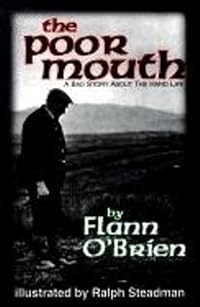
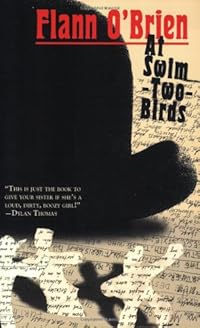
Writer Brian O'Nolan was born on October 5, 1911. He graduated from University College, Dublin. This gifted Irish writer had three identities: Brian O'Nolan, an Irish civil servant and administrator; Myles Copaleen, columnist for the Irish Times, poet and author of An Beal Bocht (The Poor Mouth: A Bad Story about the Hard Life, 1941), a satire in show more Gaelic on the Gaelic revival; and Flann O'Brien, playwright and avant-garde comic novelist. His masterpiece, At Swim-Two-Birds (1939), went almost unrecognized in its time. This novel, which plays havoc with the conventional novel form, is about a man writing a book about characters in turn writing about him. O'Brien starts off with three separate openings. The Third Policeman (1967), funny but grim, plunges into the world of the dead, though one is not immediately aware that the protagonist is no longer living. He died on April 1, 1966. (Bowker Author Biography) show less
Some Editions
Awards and Honors
Notable Lists
Series
Belongs to Publisher Series
Work Relationships
Is contained in
Common Knowledge
- Canonical title
- The Dalkey Archive
- Original title
- The Dalkey Archive
- Original publication date
- 1964
- First words
- Dalkey is a little town maybe twelve miles south of Dublin, on the shore.
- Blurbers
- Joyce, James
Classifications
Statistics
- Members
- 951
- Popularity
- 27,738
- Reviews
- 15
- Rating
- (3.66)
- Languages
- 9 — Dutch, English, French, German, Italian, Portuguese, Russian, Spanish, Turkish
- Media
- Paper, Ebook
- ISBNs
- 24
- ASINs
- 11