On This Page
Description
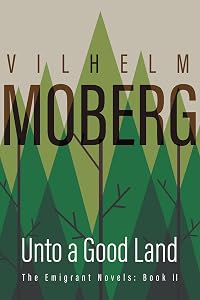
Considered one of Sweden's greatest 20th-century writers, Vilhelm Moberg created Karl Oskar and Kristina Nilsson to portray the joys and tragedies of daily life for early Swedish pioneers in America. His consistently faithful depiction of these humble people's lives is a major strength of the Emigrant Novels.Moberg's extensive research in the papers of Swedish emigrants in archival collections, including the Minnesota Historical Society, enabled him to incorporate many details of pioneer show more life. First published between 1949 and 1959 in Swedish, these four books were considered a single work by Moberg, who intended that they be read as documentary novels. These editions contain introductions written by Roger McKnight, Gustavus Adolphus College, and restore Moberg's bibliography not included in earlier English editions.Book 2 opens in the summer of 1850 as the emigrants disembark in New York City. Their journey to a new home in Minnesota Territory takes them by riverboat, steam wagon, Great Lakes steamship, and oxcart to Chisago County. show lessTags
Recommendations
















Member Reviews
Utvandrarna från Ljuder socken i Småland har äntligen nått sitt nya hemland – det stora Nordarmerika. Tillsammans beger de sig till Minnesota där en av de medresande har sin son. Där ämnar sig Karl Oskar hitta mark för att börja sitt liv som en amerikansk bonde och försörja sin familj. Hans reskamrater, även Kristina, tvivlar stundtals på honom då det visar sig vara långt till Minnesota men i Karls Oskar sinne vilar minnet efter hans avlidna dotter Anna vilar fortfarande tungt och han vägrar att förlora ett till barn på det sättet.
Karl Oskar drömmer att bygga ett nytt hem som ska kunna ge honom möjligheten att verkligen ta hand om sin fru och sina barn; aldrig ska de gå igenom allt de var tvunga att gå igenom i show more fosterlandet. Men hans yngre bror Robert, den evige naiva drömmaren, har fått nys om guldruset i Kalifornien och det är det enda han kan tänka på. Han bara inväntar den dagen han kan hoppa på nästa båt och ta sig till guldets land. Där ska han bli rik och försäkra sig att han aldrig ska behöva ha någon mer husbonde i hela sitt liv.
Moberg är en mästare. Hans karaktärer är levande och älskvärda – även om de har sina uppenbara brister (jag tänker speciellt på deras tendens att tänka på nativamerikaner som hedningar eller djurliknande). Men det är aldrig på ett sätt så att man ogillar dem, utan snarare kommer deras fördomar på sådana sätt att man skulle vilja sätta sig ner med dem och diskutera ämnet för att de ska få kunskap och förståelse om saken.
Jag är alltid lite vaksam när det gäller att läsa böcker som utspelar sig för i tiden för många av böckerna har en tendens att vara sexistiska eller dylikt. Men trots att man ser stora klyftor mellan män och kvinnor i Mobergs böcker så känns det som att det är karaktärerna som är sexistiska och inte själva boken. Det är en stor skillnad (speciellt när det handlar om transpersoner, men det är kanske inte så relevant just här) och har stor inverkan på hur man ser på karaktärerna. Karl Oskar och Kristina (fast speciellt Kristina) har en tendens att se världen på ett sådant sätt som kyrkan säger att de ska se den. Trots det så känns dynamiken mellan dem rätt jämlik; Karl Oskar beter sig inte överkastad Kristina.
Däremot är det definitivt inte jämställt mellan dem och det är väldigt uppenbart ibland - som det faktum att Karl Oskar ofta beger sig utanför hemmet men det är endast väldigt sällan som Kristina kommer utanför deras ägor. Det är något som uppenbart drabbar henne hårt då hon inte har några vänner i närheten.
Vad jag älskar mest med böckerna är hur mycket jag har kommit att älska deras familj. Trots att det inte händer jättemycket – även om det finns små handlingar i boken så är det inte en stor handling med början, mitt och slut genom hela boken – så är det helt underbart att läsa sexhundra sidor om deras liv. Jag skulle antagligen kunna läsa ett hel bok om pajbak om det är Kristina som bakar – och så är ju paj otroligt gott. show less
Karl Oskar drömmer att bygga ett nytt hem som ska kunna ge honom möjligheten att verkligen ta hand om sin fru och sina barn; aldrig ska de gå igenom allt de var tvunga att gå igenom i show more fosterlandet. Men hans yngre bror Robert, den evige naiva drömmaren, har fått nys om guldruset i Kalifornien och det är det enda han kan tänka på. Han bara inväntar den dagen han kan hoppa på nästa båt och ta sig till guldets land. Där ska han bli rik och försäkra sig att han aldrig ska behöva ha någon mer husbonde i hela sitt liv.
Moberg är en mästare. Hans karaktärer är levande och älskvärda – även om de har sina uppenbara brister (jag tänker speciellt på deras tendens att tänka på nativamerikaner som hedningar eller djurliknande). Men det är aldrig på ett sätt så att man ogillar dem, utan snarare kommer deras fördomar på sådana sätt att man skulle vilja sätta sig ner med dem och diskutera ämnet för att de ska få kunskap och förståelse om saken.
Jag är alltid lite vaksam när det gäller att läsa böcker som utspelar sig för i tiden för många av böckerna har en tendens att vara sexistiska eller dylikt. Men trots att man ser stora klyftor mellan män och kvinnor i Mobergs böcker så känns det som att det är karaktärerna som är sexistiska och inte själva boken. Det är en stor skillnad (speciellt när det handlar om transpersoner, men det är kanske inte så relevant just här) och har stor inverkan på hur man ser på karaktärerna. Karl Oskar och Kristina (fast speciellt Kristina) har en tendens att se världen på ett sådant sätt som kyrkan säger att de ska se den. Trots det så känns dynamiken mellan dem rätt jämlik; Karl Oskar beter sig inte överkastad Kristina.
Däremot är det definitivt inte jämställt mellan dem och det är väldigt uppenbart ibland - som det faktum att Karl Oskar ofta beger sig utanför hemmet men det är endast väldigt sällan som Kristina kommer utanför deras ägor. Det är något som uppenbart drabbar henne hårt då hon inte har några vänner i närheten.
Vad jag älskar mest med böckerna är hur mycket jag har kommit att älska deras familj. Trots att det inte händer jättemycket – även om det finns små handlingar i boken så är det inte en stor handling med början, mitt och slut genom hela boken – så är det helt underbart att läsa sexhundra sidor om deras liv. Jag skulle antagligen kunna läsa ett hel bok om pajbak om det är Kristina som bakar – och så är ju paj otroligt gott. show less
In this second book in Vilhelm Moberg’s tetralogy about Karl Oskar Nilsson and his family and neighbors, the Swedish emigrants have reached the shores of North America—New York. Karl Oskar set out with his wife, Kristina and their three young children and his younger brother Robert. Robert has studied his book on North American and his book teaching him to speak English. He is the only one of the group who can speak or understand any English at all, and that is limited. Kristina’s uncle Danjel emigrated with his wife, who did not survive the crossing, their four children and Ulrika, “the Glad One”, and her daughter. The Glad One was the parish whore in Sweden to whom Danjel taught the Word of God; he then took her into his show more household along with her daughter. Danjel is also responsible for Arvind who was a farmhand in Sweden—Danjel paid his passage and Arvind will work for Danjel to pay him back. The book focuses on Karl Oskar and Kristina, but all of the emigrants are ready to find good land upon which to settle and make a good home.
Moberg evinces the fear, wonder, and, sometimes, frustration experienced by Karl Oskar and Kristina, but there is never a feeling of tension. From the beginning, the group is passed from good person to good person who help them make their way from New York to Minnesota where they hope to settle. A few harrowing experiences befall Karl Oskar and Robert. One of Danjel’s children dies. Karl Oskar runs out of money and does not know how his family will survive the harsh winter. Robert and Arvind set out for California to make their fortunes in the gold fields, and we do not know in this book what happens to them or whether they will be heard from again.
Ultimately, however, this tale is primarily one that leaves the reader feeling good about the emigrants, about “North America” and about the prospects for most of them for a bright future. In the true spirit of American freedom and equality, the Nilssons even come to understand that Ulrika became a prostitute as a result of bad things that happened to her from a very young age, and accept the Glad One as a friend. Enjoyable in the best sense of the word, but not a great literary experience. show less
Moberg evinces the fear, wonder, and, sometimes, frustration experienced by Karl Oskar and Kristina, but there is never a feeling of tension. From the beginning, the group is passed from good person to good person who help them make their way from New York to Minnesota where they hope to settle. A few harrowing experiences befall Karl Oskar and Robert. One of Danjel’s children dies. Karl Oskar runs out of money and does not know how his family will survive the harsh winter. Robert and Arvind set out for California to make their fortunes in the gold fields, and we do not know in this book what happens to them or whether they will be heard from again.
Ultimately, however, this tale is primarily one that leaves the reader feeling good about the emigrants, about “North America” and about the prospects for most of them for a bright future. In the true spirit of American freedom and equality, the Nilssons even come to understand that Ulrika became a prostitute as a result of bad things that happened to her from a very young age, and accept the Glad One as a friend. Enjoyable in the best sense of the word, but not a great literary experience. show less
Read as a stand-alone novel.
The story of Karl and Kristina Nillson who emigrate from Sweden to America in 1850 along with a few neighbors and their families. The story begins with them on the ship, where they meet another countrywoman who has a contact address for her son in Minnesota. Lacking any other specific destination, they help her on her journey and settle there also. The story explores their feelings on arriving in New York, the trip by steamship, rail, and foot to northern MN. Arriving at the end of summer, they have no time to put in crops, barely enough time to build homes, and run out of money. Karl sets about to make furniture, shoes, and tools out of wood. Kristina comes to terms with her homesickness. Karl's younger show more brother Robert has a creative imagination, doesn't fit well with farming expectations. Ulrika, who was scorned as the local whore, shows herself as a caring and useful.
Some themes are the strong Christian/godliness beliefs, the importance of neighbors getting along and helping each other, cleanliness, feeling stupid or useless when they can't communicate in English. show less
The story of Karl and Kristina Nillson who emigrate from Sweden to America in 1850 along with a few neighbors and their families. The story begins with them on the ship, where they meet another countrywoman who has a contact address for her son in Minnesota. Lacking any other specific destination, they help her on her journey and settle there also. The story explores their feelings on arriving in New York, the trip by steamship, rail, and foot to northern MN. Arriving at the end of summer, they have no time to put in crops, barely enough time to build homes, and run out of money. Karl sets about to make furniture, shoes, and tools out of wood. Kristina comes to terms with her homesickness. Karl's younger show more brother Robert has a creative imagination, doesn't fit well with farming expectations. Ulrika, who was scorned as the local whore, shows herself as a caring and useful.
Some themes are the strong Christian/godliness beliefs, the importance of neighbors getting along and helping each other, cleanliness, feeling stupid or useless when they can't communicate in English. show less
Book Two opens in the summer of 1850 as the emigrants disembark in New York City. Their journey to a new home in Minnesota Territory takes them by riverboat, steam wagon, Great Lakes steamship, and oxcart to Chisago County.
#2 in our old book database. Not rated.
Ett mästerverk. Moberg förmedlar historien så fint ur den lilla människans perspektiv. De hårda livsvillkoren, Okunskap om vissa ämnen och stor kunskap inom andra. Drömmar och tro på en ljusare framtid men också tvivlen. En av de riktigt stora svenska berättarna.
May 16, 2020Swedish
I Invandrarna fortsätter Karl Oskars och Kristinas resa. De har kommit fram till USA men måste nu färdas vidare över land för att komma fram till Minnesota, där de för andra gången ska sätta bo tillsammans. De får det inte lätt i det nya landet. Karl Oskars bror Robert drömmer om att hitta guld och reser iväg tillsammans med sin vän Arvid.
Invandrarna handlar om landet som tog emot dem.
Invandrarna handlar om landet som tog emot dem.
Feb 19, 2023Swedish
Members
- Recently Added By
Author Information

189+ Works 4,314 Members
The Emigrants (1949) is the first volume of Moberg's internationally famous tetralogy describing the lives of Swedish emigrants in the nineteenth century. The Last Letter Home (1959) completes this psychologically penetrating and historically accurate treatment of Swedish settlement in Chisago County, Minnesota. Moberg's strident individualism and show more enduring empathy with the common people are also seen in A Time on Earth (1962), in which the old Swedish-American Albert Carlson assesses his life as death approaches. In Scandinavia, Moberg is famous as a historian and dramatist as well as a novelist. His History of the Swedish People (1970--71), of which two volumes were completed when he died in 1973, depicts in characteristically vivid language the life of the common folk---in sharp contrast to that of kings and nobility---throughout Sweden's history. (Bowker Author Biography) show less
Some Editions
Awards and Honors
Series

Belongs to Publisher Series
Work Relationships
Contains
Common Knowledge
- Canonical title
- Unto A Good Land
- Original title
- Invandrarna
- Original publication date
- 1952
- People/Characters
- Karl Oskar Nilsson; Kristina; Robert Nilsson; Arvid
- Important places
- Taylors Falls, Minnesota, USA
- Related movies
- Utvandrarna (1971 | IMDb)
- Epigraph
- "And I am come down to deliver them...and to bring them up out of that land unto a good land and a large, unto a land flowing with milk and honey."
Exodus III:8 - First words
- Vid 1800-talets mitt hade Nordamerikas Förenta Stater i det närmaste uppnått de gränser, inom vilka de skulle växa till världens mäktigaste rike.
On the elongated island of Manhattan, in the Hudson River, the largest city in North America had sprung up, already inhabited by half a million people. - Quotations
- Karl Oskar wept inwardly like a man, with invisible tears. [p.84]
- Last words
- (Click to show. Warning: May contain spoilers.)Hasteligen tekknat af Eder ömme son, Karl Oskar Nilsson.
(Click to show. Warning: May contain spoilers.)Kindly overlook my poor writing written down hastely by your devoted Son Karl Oskar Nillson - Original language
- Swedish
Classifications
- Genres
- Fiction and Literature, General Fiction, Historical Fiction
- DDC/MDS
- 839.7372 — Literature & rhetoric German & related literatures Other Germanic literatures Swedish literature Swedish fiction 1900-1999 1900-1945
- LCC
- PT9875 .M5 .I613 — Language and Literature German, Dutch and Scandinavian literatures Swedish literature Individual authors or works 1900-1960
- BISAC
Statistics
- Members
- 555
- Popularity
- 53,344
- Reviews
- 8
- Rating
- (4.21)
- Languages
- 7 — Dutch, English, Estonian, German, Norwegian (Bokmål), Norwegian, Swedish
- Media
- Paper, Audiobook, Ebook
- ISBNs
- 33
- ASINs
- 15