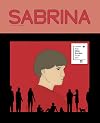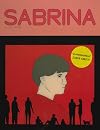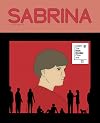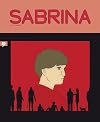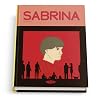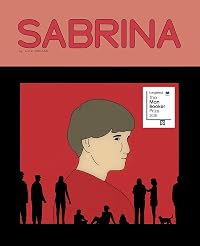
Sabrina
by Nick Drnaso
On This Page
Description
"When Sabrina disappears, an airman in the U.S. Air Force is drawn into a web of suppositions, wild theories, and outright lies. Sabrina depicts a modern world devoid of personal interaction and responsibility, where relationships are stripped of intimacy through glowing computer screens. An indictment of our modern state, Drnaso contemplates the dangers of a fake news climate."--Tags
Recommendations
Member Reviews
I'm quite a bit frustrated by this book. First, the art, page layout and writing are so influenced by Chris Ware as to be totally distracting. And as with Ware, I find that the tiny pictures distance me from the story, and the characters, with their expressionless faces and often unexpressed inner thoughts, are nearly ciphers.
The first half of the story seems determined to show how mundane life can be for people looking in from the outside of other people's tragedy. I felt a little meta as I gazed into the book dispassionately at one character dispassionately gazing at another experiencing great personal loss. I recognized the awkwardness within myself of dealing with such events, but still found it a bit tedious to read.
Around the show more midpoint, the creator introduces a talk radio program that ties the events of this story into the false flag conspiracy theories that assert the government is staging the Sandy Hook shooting and other massacres as part of a strategy to take away the rights of American Citizens. I believe this is the first time I have seen this issue addressed in a work of fiction, and it really started to make my blood boil as I thought how the suffering of the loved ones of victims is being negated and even criminalized in the minds of people who see the grieving as bad actors in a vast conspiracy.
If the first part is how we detach ourselves from tragedy, the second part addresses how we can go overboard trying to insert ourselves into the tragedy: constantly hitting refresh hoping for new tidbits or insights, overanalyzing, spreading rumors, becoming trolls, growing paranoid, spiraling into doomsday scenarios.
Having gotten me riled up, the story cannot offer me any really satisfying conclusion. The world is what it is, terrifying and mundane, and the characters move on with varying degrees of hope and/or despair.
I ultimately land on a thumbs up for the book, but I must admit that that may well be due to the fact that I used to live in Colorado Springs in the same neighborhood where much of the book is set. Hey, I said we all need to somehow insert ourselves into the story. show less
The first half of the story seems determined to show how mundane life can be for people looking in from the outside of other people's tragedy. I felt a little meta as I gazed into the book dispassionately at one character dispassionately gazing at another experiencing great personal loss. I recognized the awkwardness within myself of dealing with such events, but still found it a bit tedious to read.
Around the show more midpoint, the creator introduces a talk radio program that ties the events of this story into the false flag conspiracy theories that assert the government is staging the Sandy Hook shooting and other massacres as part of a strategy to take away the rights of American Citizens. I believe this is the first time I have seen this issue addressed in a work of fiction, and it really started to make my blood boil as I thought how the suffering of the loved ones of victims is being negated and even criminalized in the minds of people who see the grieving as bad actors in a vast conspiracy.
If the first part is how we detach ourselves from tragedy, the second part addresses how we can go overboard trying to insert ourselves into the tragedy: constantly hitting refresh hoping for new tidbits or insights, overanalyzing, spreading rumors, becoming trolls, growing paranoid, spiraling into doomsday scenarios.
Having gotten me riled up, the story cannot offer me any really satisfying conclusion. The world is what it is, terrifying and mundane, and the characters move on with varying degrees of hope and/or despair.
I ultimately land on a thumbs up for the book, but I must admit that that may well be due to the fact that I used to live in Colorado Springs in the same neighborhood where much of the book is set. Hey, I said we all need to somehow insert ourselves into the story. show less
Reading about how the tragic events which haunt USA society become entangled in the dark web of conspiracy theories was both sad and an emotional black hole.
Sabrina disappears and her fate happens off page, so the reader can only deduced the truth of what happened to her based on probability, however, we do see what happens to those most closely affected by her disappearance, and the disturbing fantasies weaved about them informs our opinion of the (un)likelihood of the conspiracy theories about Sabrina.
Clear parallels to bullshit peddlers such as Alex Jones and their lies about national traumas like 9-11 and Sandy Hook. It's informative about how and why these "theories" arise, but it's also a fairly bleak look into the heart of a show more dysfunctional society. There is a vague sense of positivity towards the end, but you need a microscope to find it. Worthwhile low pick. show less
Sabrina disappears and her fate happens off page, so the reader can only deduced the truth of what happened to her based on probability, however, we do see what happens to those most closely affected by her disappearance, and the disturbing fantasies weaved about them informs our opinion of the (un)likelihood of the conspiracy theories about Sabrina.
Clear parallels to bullshit peddlers such as Alex Jones and their lies about national traumas like 9-11 and Sandy Hook. It's informative about how and why these "theories" arise, but it's also a fairly bleak look into the heart of a show more dysfunctional society. There is a vague sense of positivity towards the end, but you need a microscope to find it. Worthwhile low pick. show less
Sabrina is missing. She was last seen walking home to her apartment. When she later turns out to be the victim of a vicious taped murder distributed to various news outlets across the state of Illinois, there is a frenzy of speculation, conspiracy theories, grief, and anguish. Her sister, Sandra, and her mother are left to deal with the investigation and the media hysteria on their own. Sabrina’s boyfriend, Teddy, leaves town in a state of shock in order to be taken in by his old high-school chum, Calvin. Calvin works for the Air Force. He has an empty house since his wife, Jackie, and their daughter, Cici, have left him. Calvin leads a sad existence of work, online games, and not much else. His video calls to Cici are about his only show more contact with the outside world.
This is a bleak world filled with soulless jobs, incessant bombardment by ranting right-wing radio hosts, virtual “kills” in video games, and burgers. Yet Calvin has enough fellow feeling to be willing to take in Teddy and see to his minimal needs for an indefinite period. Who knows how long it will take Teddy to process what has happened? Can any of them? And with the perpetrator already dead by his own hand, where is the outlet for anger and vengeance? Is there even hope for any tomorrow when we are constantly surrounded by predictions of apocalypse? And yet Teddy does survive in his way. As does Sandra. And even Calvin turns a page. It’s not exactly hopeful, but I suppose if tomorrow actually arrives, then that in itself is a kind of hope fulfilled.
Drnaso’s draftsmanship tends toward the minimalist. There are few details available in the views into these lives and fewer still in the faces of the protagonists. People look similar, a theme picked up by the conspiracy theories as well. But it might also just be the case that there is an unseemly sameness to these lives. At times Drnaso’s panels are filled with text. At others he gives us whole pages of textless panels, lending a kind of quietude to those moments. And although it might seem the narrative is headed toward a specific endpoint, in fact nothing gets closed off. It’s a haunting presentation of a world we know all too well but wish we didn’t.
Recommended. show less
This is a bleak world filled with soulless jobs, incessant bombardment by ranting right-wing radio hosts, virtual “kills” in video games, and burgers. Yet Calvin has enough fellow feeling to be willing to take in Teddy and see to his minimal needs for an indefinite period. Who knows how long it will take Teddy to process what has happened? Can any of them? And with the perpetrator already dead by his own hand, where is the outlet for anger and vengeance? Is there even hope for any tomorrow when we are constantly surrounded by predictions of apocalypse? And yet Teddy does survive in his way. As does Sandra. And even Calvin turns a page. It’s not exactly hopeful, but I suppose if tomorrow actually arrives, then that in itself is a kind of hope fulfilled.
Drnaso’s draftsmanship tends toward the minimalist. There are few details available in the views into these lives and fewer still in the faces of the protagonists. People look similar, a theme picked up by the conspiracy theories as well. But it might also just be the case that there is an unseemly sameness to these lives. At times Drnaso’s panels are filled with text. At others he gives us whole pages of textless panels, lending a kind of quietude to those moments. And although it might seem the narrative is headed toward a specific endpoint, in fact nothing gets closed off. It’s a haunting presentation of a world we know all too well but wish we didn’t.
Recommended. show less
This is no spoiler, Sabrina is dead, murdered in her own neighborhood. That fact is central to the story behind the 5th Booker Long List entry I've read this summer and by far the one, I believe, speaks most to readers right now and the role society plays in every tragedy which is hashed and rehashed through 24/7 news coverage and social media. Everyone has an opinion, everyone thinks they know more than we're told, some think everything is a conspiracy while others find it an opportunity to make some easy money. There are also those who find it necessary to publicly shame others for an opinion with which they do not agree. Sadly, there are others who want to be famous too, no matter what it takes to do so but it should be more show more spectacular than the last one.
It's about people so caught up with other peoples affairs that they don't see what's right in front of them. Of loosing focus and not seeing the real problem.
It's about false narratives which rile up their audience and create enemies our of friends.
It is about grief and how people experience it in different ways and how it can not go through its horrible yet healing stages when social media contorts the facts and makes even those who are innocent and feeling loss, the criminal.
It's about so called "experts" who gain notoriety just because they are good talkers.
It's about society not thinking for themselves but accepting what television and radio talking heads tell them to think.
This graphic novel may make the reader uncomfortable, sad and angry. It should. It is a mirror into today's world and allows the reader to reflect just what we've come too.
Drnaso's GN is brilliant. show less
It's about people so caught up with other peoples affairs that they don't see what's right in front of them. Of loosing focus and not seeing the real problem.
It's about false narratives which rile up their audience and create enemies our of friends.
It is about grief and how people experience it in different ways and how it can not go through its horrible yet healing stages when social media contorts the facts and makes even those who are innocent and feeling loss, the criminal.
It's about so called "experts" who gain notoriety just because they are good talkers.
It's about society not thinking for themselves but accepting what television and radio talking heads tell them to think.
This graphic novel may make the reader uncomfortable, sad and angry. It should. It is a mirror into today's world and allows the reader to reflect just what we've come too.
Drnaso's GN is brilliant. show less
[possible spoilers]
The themes of isolation in this book are so strong, as soon as I finished it I took the opportunity to reach out to several friends I hadn't seen in some time. And I'm not even from America. I imagine it's even more hardhitting for someone who actually belongs to that culture.
I don't want to give too much away - if you haven't read it yet I recommend doing so before you read anything about it. But I'll say a few things: it struck me as a non-American (and as a gay) how little the male characters touch each other. The character Teddy comes out to Colorado to process his grief, and I think it took until at least the 2/3 mark in the book before they so much as hugged.
The conspiracy themes that start around the halfway show more mark also strike me as something that could only progress to such extremes in a political climate like in the US. Well, perhaps. It's funny that they tie so neatly into the last book I was reading, [b:Them: Adventures with Extremists|1823|Them Adventures with Extremists|Jon Ronson|https://images.gr-assets.com/books/1400199696s/1823.jpg|5946]. I promise that wasn't deliberate!
The art is very minimalist, which might not be to some people's tastes, and yet it's somehow very nuanced and seems to convey feelings of isolation very effectively, especially the cramped, tiny frames that make up quite a few of its pages. I think it's great that we're seeing comic creators using the medium to their advantage in such ways. I'll be coming back to this book again, definitely. I think there's plenty I missed the first time. More please! show less
The themes of isolation in this book are so strong, as soon as I finished it I took the opportunity to reach out to several friends I hadn't seen in some time. And I'm not even from America. I imagine it's even more hardhitting for someone who actually belongs to that culture.
I don't want to give too much away - if you haven't read it yet I recommend doing so before you read anything about it. But I'll say a few things: it struck me as a non-American (and as a gay) how little the male characters touch each other. The character Teddy comes out to Colorado to process his grief, and I think it took until at least the 2/3 mark in the book before they so much as hugged.
The conspiracy themes that start around the halfway show more mark also strike me as something that could only progress to such extremes in a political climate like in the US. Well, perhaps. It's funny that they tie so neatly into the last book I was reading, [b:Them: Adventures with Extremists|1823|Them Adventures with Extremists|Jon Ronson|https://images.gr-assets.com/books/1400199696s/1823.jpg|5946]. I promise that wasn't deliberate!
The art is very minimalist, which might not be to some people's tastes, and yet it's somehow very nuanced and seems to convey feelings of isolation very effectively, especially the cramped, tiny frames that make up quite a few of its pages. I think it's great that we're seeing comic creators using the medium to their advantage in such ways. I'll be coming back to this book again, definitely. I think there's plenty I missed the first time. More please! show less
3.5 stars rounded up to 4. The ordinariness of ordinary life must be hiding something. If life is a miracle who turned it boring? Well, maybe what its hiding is horrible and boring is an improvement; an escape from the horror, the horror. After all, who would hide awesomeness?
Unless it's not so much hidden as protected; stashed away so the horror doesn't ruin it. Or maybe it's we who are ruined. And maybe we're too busy fighting over whose fault it is.
Whatevs. It's too hard to figure it out. Should I hide this review because it contains spoilers for reality?
Unless it's not so much hidden as protected; stashed away so the horror doesn't ruin it. Or maybe it's we who are ruined. And maybe we're too busy fighting over whose fault it is.
Whatevs. It's too hard to figure it out. Should I hide this review because it contains spoilers for reality?
Sabrina - 4.0
Although Sabrina is a complex, multi-character story that strikes right at the gut, I had trouble with the artwork, finding it rather flat and also it was very difficult to differentiate between the characters, both men and women, so I often had to stop and figure out who was being pictured.
This is the story of the murder of a woman named Sabrina and how it affects her loved ones and then rippling out, the media and the general public. There are various conspiracy theories spawned on the internet and even with the murderer caught, fingers continued to point in different directions. It is a strange and difficult world we live in where people feel they have the right to barge into a family’s private grief and express their show more opinions or even address insults to the victim and the family. Personal interaction and intimacy have disappeared and have been replaced with the impersonal computer screen.
As an indictment of our era of “fake news” and personal attacks via the internet, this story is spot on, I just wish the artwork would have allowed for the characters to have been distinguishable from one another. show less
Although Sabrina is a complex, multi-character story that strikes right at the gut, I had trouble with the artwork, finding it rather flat and also it was very difficult to differentiate between the characters, both men and women, so I often had to stop and figure out who was being pictured.
This is the story of the murder of a woman named Sabrina and how it affects her loved ones and then rippling out, the media and the general public. There are various conspiracy theories spawned on the internet and even with the murderer caught, fingers continued to point in different directions. It is a strange and difficult world we live in where people feel they have the right to barge into a family’s private grief and express their show more opinions or even address insults to the victim and the family. Personal interaction and intimacy have disappeared and have been replaced with the impersonal computer screen.
As an indictment of our era of “fake news” and personal attacks via the internet, this story is spot on, I just wish the artwork would have allowed for the characters to have been distinguishable from one another. show less
Members
- Recently Added By
Published Reviews
ThingScore 100
What’s most curious and, ultimately, valuable about this book is that it is not a crime story; it’s a perspicacious and chilling analysis of the nature of trust and truth and the erosion of both in the age of the internet – and especially, in the age of Trump.
Sabrina’s story develops from the uncertain, unpredictable emotions of lived experience to the micro-paranoias of clickbait with show more a speed and, worst of all, a familiarity that is blood-curdling. show less
Sabrina’s story develops from the uncertain, unpredictable emotions of lived experience to the micro-paranoias of clickbait with show more a speed and, worst of all, a familiarity that is blood-curdling. show less
added by SnootyBaronet
Lists

Recommended Comics / Graphic Novels
595 works; 119 members

Books Read in 2022
5,226 works; 115 members

Books Read in 2023
5,638 works; 147 members

The Atlantic's The Great American Novel
136 works; 12 members
Author Information

10+ Works 1,130 Members
Some Editions
Awards and Honors
Awards
Distinctions
Notable Lists
Work Relationships
Is abridged in
Common Knowledge
- Original title
- Sabrina
- Original publication date
- 2018
- People/Characters
- Calvin Wrobel; Sabrina Gallo; Teddy King; Sandra Gallo; Timmy Yancey
- Important places
- Cheyenne Mountain, Colorado Springs, Colorado, USA
- Dedication
- For Sarah
- First words
- There you are!
- Last words
- (Click to show. Warning: May contain spoilers.)Hey, let me in!
- Original language
- English
Classifications
- Genre
- Graphic Novels & Comics
- DDC/MDS
- 741.5 — Arts & recreation Drawing & decorative arts Drawing Comic books, graphic novels, fotonovelas, cartoons, caricatures, comic strips
- LCC
- PN6727 .D76 .S25 — Language and Literature Literature (General) Literature (General) Collections of general literature Comic books, strips, etc.
- BISAC
Statistics
- Members
- 820
- Popularity
- 33,714
- Reviews
- 37
- Rating
- (3.78)
- Languages
- 8 — Czech, English, French, German, Italian, Portuguese (Portugal), Croatian, Spanish
- Media
- Paper, Ebook
- ISBNs
- 14
- ASINs
- 1