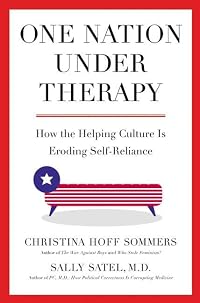
One Nation Under Therapy: How the Helping Culture Is Eroding Self-Reliance
by Christina Hoff Sommers, Sally Satel
On This Page
Description
Americans have traditionally placed great value on self-reliance and fortitude. In recent decades, however, we have seen the rise of an ethic that views Americans as requiring the ministrations of mental health professionals to cope with life's vicissitudes. Being "in touch with one's feelings" and freely expressing them have become paramount virtues. Today, with a book for every ailment, a counselor for every crisis, a lawsuit for every grievance, and a TV show for every conceivable show more problem, "help" is offered everywhere, but with it come troubling consequences, including: the myth of stressed-out, homework-burdened, hypercompetitive, and depressed or suicidal schoolchildren; the loss of moral bearings in our approach to lying, crime, addiction, and other foibles and vices; the expansion of Post-Traumatic Stress Disorder from an affliction of war veterans to nearly everyone who has experienced a setback.--From publisher description. show lessTags
Recommendations

























Member Reviews
Nothing much new here, but it never hurts to focus some light on the rather glaring, obvious problems of our culture.
I earned a degree in Psychology back in the day and I recognized a very absurd trend going on. It's called being a one-trick-pony. Most of the serious practitioners of psychology realize that no single situation or psychological issue can be solved with a single tool. To do so, or think so, is beyond stupid. Situations change and people differ. Not only do they differ, but any single person might need a wide range of tools used at different times -- or even NO TOOLS AT ALL.
Self-reliance, resiliency, and adaptability must be sought after, brought about on a patient's own terms. It is not something that can be forced on show more anyone. It's not an externality.
This book, however, highlights the amazing absurdity of the notion that we're all sniveling brats and we're all broken people. If we go by real numbers, real PTSD in the population very small. Having some temporary issues one way or another is NOT PTSD. Just like having clinical depression over years is not the same thing as having a week of the blues.
There's a great analogy in the practice of the Law. It's called leading the witness. If you come at people with an assumption that they MUST have PTSD, you're providing the person with a narrative that they will try to shoehorn themselves into. If left alone, that person may never have ever SEEN themselves as a trauma victim.
And yet, over the years, we see more and more therapy-isms creeping in, everywhere we look. Are you depressed? Are you traumatized? How do you know? Come get therapy! Come on, you KNOW you're all messed up, right? COME GET THERAPY.
Does this sound like a sales pitch to you? Like there are a lot of snake-oil salesmen (and women) masquerading as legitimate therapists trying to convince YOU that you NEED therapy so they can make some money? Justify their own jobs? Justify the huge huge numbers of specialized PTSD therapists that are funded by well-meaning but thoroughly duped government agencies who now believe that the WHOLE FREAKING SOCIETY is on the verge of mental collapse?
Hmmm. Maybe it is just that. A trend not supported by real numbers. Just like the pharmaceutical industry that pumps out and encourages the total drugging-up of our children based on massive overdiagnosis of Hyperactivity or Depression. It boils down to one maxim: follow the money. Who is profiting most? Then look at the people who insist that the problem is pervasive.
Then ask people candidly if they're really having a problem or if they're following a narrative. Most people don't want to dwell on the bad things. A little repression is actually very, very good. That's why we forget about our last flu. Or about the real pain during childbirth. Or that time we passed a stone.
Do you REALLY want to relive that experience? Over and over and over? If you do, then hell... that's sick. It's better to forget.
And yet, enabling this therapism provides us with exactly this same effect. It helps us relive the trauma over and over and over. Some people do need this kind of psychological toolset. I'll never say otherwise. But it is a single tool usually only used ONCE when unconscious effects are preventing someone from functioning in real life. When it comes to light, it should not be dwelled upon. It should be understood and boxed away. Send it to the same place where you sent the memory of your kidney stone.
Otherwise, you'll keep it fresh. Who wants to keep their trauma fresh, anyway?
We are strong. We are all as strong as we want to be. Don't enable weakness if you have a choice. Be resilient. :) show less
I earned a degree in Psychology back in the day and I recognized a very absurd trend going on. It's called being a one-trick-pony. Most of the serious practitioners of psychology realize that no single situation or psychological issue can be solved with a single tool. To do so, or think so, is beyond stupid. Situations change and people differ. Not only do they differ, but any single person might need a wide range of tools used at different times -- or even NO TOOLS AT ALL.
Self-reliance, resiliency, and adaptability must be sought after, brought about on a patient's own terms. It is not something that can be forced on show more anyone. It's not an externality.
This book, however, highlights the amazing absurdity of the notion that we're all sniveling brats and we're all broken people. If we go by real numbers, real PTSD in the population very small. Having some temporary issues one way or another is NOT PTSD. Just like having clinical depression over years is not the same thing as having a week of the blues.
There's a great analogy in the practice of the Law. It's called leading the witness. If you come at people with an assumption that they MUST have PTSD, you're providing the person with a narrative that they will try to shoehorn themselves into. If left alone, that person may never have ever SEEN themselves as a trauma victim.
And yet, over the years, we see more and more therapy-isms creeping in, everywhere we look. Are you depressed? Are you traumatized? How do you know? Come get therapy! Come on, you KNOW you're all messed up, right? COME GET THERAPY.
Does this sound like a sales pitch to you? Like there are a lot of snake-oil salesmen (and women) masquerading as legitimate therapists trying to convince YOU that you NEED therapy so they can make some money? Justify their own jobs? Justify the huge huge numbers of specialized PTSD therapists that are funded by well-meaning but thoroughly duped government agencies who now believe that the WHOLE FREAKING SOCIETY is on the verge of mental collapse?
Hmmm. Maybe it is just that. A trend not supported by real numbers. Just like the pharmaceutical industry that pumps out and encourages the total drugging-up of our children based on massive overdiagnosis of Hyperactivity or Depression. It boils down to one maxim: follow the money. Who is profiting most? Then look at the people who insist that the problem is pervasive.
Then ask people candidly if they're really having a problem or if they're following a narrative. Most people don't want to dwell on the bad things. A little repression is actually very, very good. That's why we forget about our last flu. Or about the real pain during childbirth. Or that time we passed a stone.
Do you REALLY want to relive that experience? Over and over and over? If you do, then hell... that's sick. It's better to forget.
And yet, enabling this therapism provides us with exactly this same effect. It helps us relive the trauma over and over and over. Some people do need this kind of psychological toolset. I'll never say otherwise. But it is a single tool usually only used ONCE when unconscious effects are preventing someone from functioning in real life. When it comes to light, it should not be dwelled upon. It should be understood and boxed away. Send it to the same place where you sent the memory of your kidney stone.
Otherwise, you'll keep it fresh. Who wants to keep their trauma fresh, anyway?
We are strong. We are all as strong as we want to be. Don't enable weakness if you have a choice. Be resilient. :) show less
Направило ли ви е впечатление, че по филмите американците много ходят на психотерапия? Не само на вас и не е само по филмите - в САЩ психологията е много повече на мода, отколкото в Европа и всякакви квалифицирани и неквалифицирани "терапевти" се борят със зъби и нокти да убедят всеки човек, че трябва да им дава пари.
Медикализирането на нормални човешки емоции и състояния отдавна е склонност на психологията show more и даже психиатрията - и това се усеща не само в САЩ вече. Съвсем нормално е човек да е тъжен след загуба на близък или преживяна лична или обществена трагедия или опасност, но не това искат да чуят хилядите психолози, които се опитват да "лекуват" нормалните човешки емоции с терапии или лекарства.
В това не би имало нищо кой знае колко лошо, ако прекаленото вторачване в чувствата и преживяването на емоциите на човек всъщност не ги усилваше - така отново и отново изследвания доказват, че огромната част от хората сами се справят по-добре със своите нормални емоции след загуба на съпруг/а или дете, след катастрофа или тежка болест. Специализирана терапия помага само на малка част хора, които не могат да се справят сами, а на останалите тя всъщност вреди.
В Европа общественото разбиране за нуждата от психотерапия е по-здравословно, но вредното въздействие на медикализацията на човешките емоции вече си е проправило път в специализираните институции като образование и съдебна система. Вече и тук невъзпитаното и невъздържано поведение на децата бива извинявано с всякакъв вид "психични разстройства", "тежка домашна среда" и толерирано в училище, а престъпници все по-често биват гледани благосклонно от съда, защото са "имали тежко детство" или поради "културните им особености". Наркоманиите пък са вече "болест", която не е по вина на "болния".
Това омаловажаване на личната отговорност има тежки и дълбоки последици върху обществения живот и разбирането ни за това какво е позволено и какво не в отношенията между хората. Безкрайната жалостивост към другите хора и извиняването на тяхното противообществено или дори само невъзпитано и невъздържано поведение, както и моралният релативизъм и отказът от заемане на морална позиция и заклеймяване на определени поведения като неморални е просто покана за още подобно поведение и разпад на обществения ред.
Което вече се случва в най-цивилизованите, богати и "прогресивни" градове в света като Сан Франциско, Филаделфия, Париж и Лондон, които, иронично, не могат да се справят с лавинообразно нарастващи проблеми с бездомност, религиозен фанатизъм, наркомания и улична престъпност не поради липса на средства, техника, знания или хора, а поради липса на обществен и политически гръбнак. show less
Медикализирането на нормални човешки емоции и състояния отдавна е склонност на психологията show more и даже психиатрията - и това се усеща не само в САЩ вече. Съвсем нормално е човек да е тъжен след загуба на близък или преживяна лична или обществена трагедия или опасност, но не това искат да чуят хилядите психолози, които се опитват да "лекуват" нормалните човешки емоции с терапии или лекарства.
В това не би имало нищо кой знае колко лошо, ако прекаленото вторачване в чувствата и преживяването на емоциите на човек всъщност не ги усилваше - така отново и отново изследвания доказват, че огромната част от хората сами се справят по-добре със своите нормални емоции след загуба на съпруг/а или дете, след катастрофа или тежка болест. Специализирана терапия помага само на малка част хора, които не могат да се справят сами, а на останалите тя всъщност вреди.
В Европа общественото разбиране за нуждата от психотерапия е по-здравословно, но вредното въздействие на медикализацията на човешките емоции вече си е проправило път в специализираните институции като образование и съдебна система. Вече и тук невъзпитаното и невъздържано поведение на децата бива извинявано с всякакъв вид "психични разстройства", "тежка домашна среда" и толерирано в училище, а престъпници все по-често биват гледани благосклонно от съда, защото са "имали тежко детство" или поради "културните им особености". Наркоманиите пък са вече "болест", която не е по вина на "болния".
Това омаловажаване на личната отговорност има тежки и дълбоки последици върху обществения живот и разбирането ни за това какво е позволено и какво не в отношенията между хората. Безкрайната жалостивост към другите хора и извиняването на тяхното противообществено или дори само невъзпитано и невъздържано поведение, както и моралният релативизъм и отказът от заемане на морална позиция и заклеймяване на определени поведения като неморални е просто покана за още подобно поведение и разпад на обществения ред.
Което вече се случва в най-цивилизованите, богати и "прогресивни" градове в света като Сан Франциско, Филаделфия, Париж и Лондон, които, иронично, не могат да се справят с лавинообразно нарастващи проблеми с бездомност, религиозен фанатизъм, наркомания и улична престъпност не поради липса на средства, техника, знания или хора, а поради липса на обществен и политически гръбнак. show less
A refreshing read. Finally somebody is saying what common sense dictates: not everybody benefits from Talking About Our Feelings with therapists and strangers. Furthermore, post-trauma therapy and similar things may harm more than heal. Imagine that!
This book isn't exactly rocket science, but is a fine resource nonetheless. Next time some busybody suggests you need therapy or grief support because your uncle died or because you witnessed a bad car accident, lend this book to the interloper.
This book isn't exactly rocket science, but is a fine resource nonetheless. Next time some busybody suggests you need therapy or grief support because your uncle died or because you witnessed a bad car accident, lend this book to the interloper.
Book exposes the modern penchant toward psychological therapy.
Very well documented. Discusses issues related to war veterans, PTSD and 911 victims.
Authors suggest that sometime talking about tragedy
can cause more problems than just continuing on with life.
Authors allow that some therapy may be helpful (especially for those
who are seeking therapy) but suggest that for more survivors
of tragedy, the best path is a mixture of stoicism, healing from religion
and support from community.
At some places, it was tedious to wade through all the documentation
from various psychological journals, but the overall effect of the
book was to change my mind about the modern use of therapy.
Although most oppinions are well documented, the authors seemed show more to
have an unfounded bias against psychology ('therapism') on a few issues. show less
Very well documented. Discusses issues related to war veterans, PTSD and 911 victims.
Authors suggest that sometime talking about tragedy
can cause more problems than just continuing on with life.
Authors allow that some therapy may be helpful (especially for those
who are seeking therapy) but suggest that for more survivors
of tragedy, the best path is a mixture of stoicism, healing from religion
and support from community.
At some places, it was tedious to wade through all the documentation
from various psychological journals, but the overall effect of the
book was to change my mind about the modern use of therapy.
Although most oppinions are well documented, the authors seemed show more to
have an unfounded bias against psychology ('therapism') on a few issues. show less
Ratings
Members
- Recently Added By
Lists

Therapeutic Society
61 works; 1 member
Author Information

8 Works 1,491 Members
Christina Hoff Sommers is a resident scholar at the American Enterprise Institute in Washington, D.C. She has a PhD in philosophy from Brandeis University and was formerly a professor of philosophy at Clark University. Somers has written for numerous publications and is the author of Who Stole Feminism? How Women Have Betrayed Women. She is show more married with two sons and lives in Chevy Chase, Maryland. show less
6+ Works 415 Members
Common Knowledge
- Original publication date
- 2005-04
- Dedication
- To Christopher DeMuth
- First words
- (Preface): In 2000, five Canadian psychologists published a satirical article about Winnie the Pooh entitled "Pathology in the Hundred Acre Wood."
In 2001, the Girl Scouts of America introduced a "Stress Less Badge" for girls aged eight to eleven. - Last words
- (Click to show. Warning: May contain spoilers.)Our very future depends on our answer.
- Blurbers
- Marinoff, Lou; Ravitch, Diane
Classifications
- Genres
- Nonfiction, General Nonfiction
- DDC/MDS
- 155.8 — Philosophy and Psychology Psychology Differential and developmental psychology Cultural Psychology; Ethnopsychology
- LCC
- RA790.6 .S66 — Medicine Public aspects of medicine Public aspects of medicine Public health. Hygiene. Preventive medicine Mental health. Mental illness prevention
- BISAC
Statistics
- Members
- 189
- Popularity
- 169,041
- Reviews
- 4
- Rating
- (3.48)
- Languages
- English
- Media
- Paper, Audiobook, Ebook
- ISBNs
- 9
- ASINs
- 1