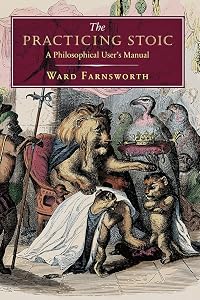
The Practicing Stoic: A Philosophical User's Manual
by Ward Farnsworth
On This Page
Description
The great insights of the Stoics are spread over a wide range of ancient sources. This book brings them all together for the first time. It systematically presents what the various Stoic philosophers said on every important topic, accompanied by an eloquent commentary that is clear and concise. The result is a set of philosophy lessons for everyone-the most valuable wisdom of ages past made available for our times, and for all time.Tags
Recommendations
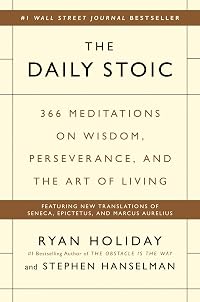
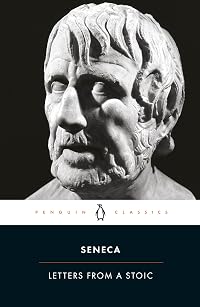
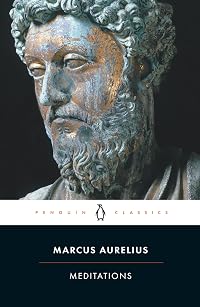
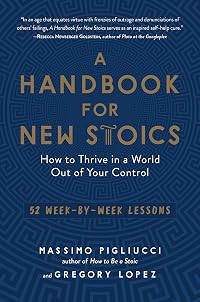






Member Reviews
Great book to read through and keep as reference for good and bad times in life. The title is a good description of the goal of the book, which is to provide practical advice on living. As a result, the focus is on Stoic ethics. The author does a great job of presenting the best version of Stoicism, discussing Stoic ideas with their own words, the author's learned commentary and putting Stoics in conversation and debate. The ideas are helpfully organized into topics, and while most of the Stoics quoted are Romans, the book also cites more modern students of the Stoics from Montaigne to Samuel Johnson. The author does a good job defending Stoics against criticism. Stoics are not heartless but experienced, hoping to teach through show more reasoning instead of experience how to best handle the vicissitudes of life. Stoics that were wealthy (Seneca in particular) are not hypocrites but recognize wealth as an indifferent, it was fine to prefer an indifferent as long as one does not attach too much weight to it. The Stoics were also the first to admit that they were not prefect and much of their advice is aspirational.
The gist of Stoicism is the liberating idea that while there are many things that we do not control, we control the most important things, how we react to those things that we do not control. By not inducing too much self-anguish over the things external to us, but by controlling our judgements to those externals, we free ourselves. It's ultimately an empowering philosophy and a gentle one. We often think that bad things happen, and then we are injured by bad things. But the Stoic insight was to decompose this process to three steps instead of two. A thing happens, we judge it be bad, and then we are hurt by that judgement. The other sight is that often our judgements are skewed by social convention or irrationalities. We do not value the things we have until we lose them. We crave fame from the crowd while despising the masses. We flash to anger when we are insulted. We project our insecurities onto others. Much of Stoicism is about realizing how skewed and irrational these judgements are. The book is broken into helpful sections on essentially Stoics teachings on correcting these judgements. Stoics use a variety of tactics to get us to see it from a different view, from citing the customs of unfamiliar cultures, or the view of children. But Stoicism is not nihilistic or relativist. To the Stoics, what matters is living life with virtue. Clearing our eyes simply allows us to do that better. This book is an excellent start and a good source to return to. show less
The gist of Stoicism is the liberating idea that while there are many things that we do not control, we control the most important things, how we react to those things that we do not control. By not inducing too much self-anguish over the things external to us, but by controlling our judgements to those externals, we free ourselves. It's ultimately an empowering philosophy and a gentle one. We often think that bad things happen, and then we are injured by bad things. But the Stoic insight was to decompose this process to three steps instead of two. A thing happens, we judge it be bad, and then we are hurt by that judgement. The other sight is that often our judgements are skewed by social convention or irrationalities. We do not value the things we have until we lose them. We crave fame from the crowd while despising the masses. We flash to anger when we are insulted. We project our insecurities onto others. Much of Stoicism is about realizing how skewed and irrational these judgements are. The book is broken into helpful sections on essentially Stoics teachings on correcting these judgements. Stoics use a variety of tactics to get us to see it from a different view, from citing the customs of unfamiliar cultures, or the view of children. But Stoicism is not nihilistic or relativist. To the Stoics, what matters is living life with virtue. Clearing our eyes simply allows us to do that better. This book is an excellent start and a good source to return to. show less
Throw out your Bible, your Koran, and any other religious or pseudo-religious text (e.g., The Secret) and just focus on this collection of about the most sensible things the best minds have said about living your life and coping with anger and other unhelpful emotions. Farnsworth is a great guide and his selections from Seneca and others is very well chosen.
This is an unusually nice summary of this easy-to-understand but hard-to-do philosophy recommended to me by the great stoic, Vince D. Much of the text is collected quotations from the Stoics whose work has survived, Seneca, Epictetus, and Marcus Aurelius. Some modern practitioners are also included, especially Montaigne and Schopenhauer (another entertaining, but lightweight philosopher). I liked it enough that I plan to read Farnsworth’s book on Rhetoric.
Much of Stoicism would be classified as psychology today; it is the self-help advice philosophy. The final chapter of this book addresses some of the critics of Stoicism, but in debate, you shouldn’t let the other team summarize your own criticisms for you.
I have various problems show more with Stoicism; the main one being that I have never met anyone without some CNS disease who changed their personality. Stoicism offers some good advice, but you need to be especially receptive to benefit from it, and, in most instances, I don’t think you will alter your life to fit Seneca’s recommendations, rather you will appreciate the recommendations if you already act that way. I suppose I am a Cynic. show less
Much of Stoicism would be classified as psychology today; it is the self-help advice philosophy. The final chapter of this book addresses some of the critics of Stoicism, but in debate, you shouldn’t let the other team summarize your own criticisms for you.
I have various problems show more with Stoicism; the main one being that I have never met anyone without some CNS disease who changed their personality. Stoicism offers some good advice, but you need to be especially receptive to benefit from it, and, in most instances, I don’t think you will alter your life to fit Seneca’s recommendations, rather you will appreciate the recommendations if you already act that way. I suppose I am a Cynic. show less
Very informative about the philosophy of stoicism, and the most notable of its proponents.
Simply put, Farnsworth write the way I like to read, with clarity and ample cross-referencing, and in a linear fashion from premise to evidence to conclusions.
It is interesting to me that so much of Stoic wisdom parallels Biblical advice, especially from an LDS perspective, although that is not the author's intent or viewpoint.
I would characterize it as describing the stoic Christian, rather than the Christian Stoic.
Politically, I deduce that there can be stoic conservatives and stoic progressives (and stoic liberals, no longer the same thing), but it is impossible to have stoic socialists / Leftists - the ideologies are incompatible.
p. 22: Cicero show more said, essentially, that allowing ourselves to be consumed with the evils done to us & others, we can never be happy or even in our right mind. show less
Simply put, Farnsworth write the way I like to read, with clarity and ample cross-referencing, and in a linear fashion from premise to evidence to conclusions.
It is interesting to me that so much of Stoic wisdom parallels Biblical advice, especially from an LDS perspective, although that is not the author's intent or viewpoint.
I would characterize it as describing the stoic Christian, rather than the Christian Stoic.
Politically, I deduce that there can be stoic conservatives and stoic progressives (and stoic liberals, no longer the same thing), but it is impossible to have stoic socialists / Leftists - the ideologies are incompatible.
p. 22: Cicero show more said, essentially, that allowing ourselves to be consumed with the evils done to us & others, we can never be happy or even in our right mind. show less
Of the many available books on Stoicism, three things make Farnsworth’s The Practicing Stoic stand out:
1. The Stoics largely speak for themselves; the book is organized around topics and most of the content comes from the original sources. So, for example, the chapter on “judgment” presents, with commentary, the original writings of Epictetus, Seneca, and Marcus Aurelius—the big three late Stoics—on that topic. This way, you can compare and contrast each authors thoughts on the same topic, which is very interesting and useful. It’s easier to digest this way rather than reading the collected works of each author separately.
2. In addition to the original writings of the Stoics, the original writings of other prominent show more supporting authors are included, including Adam Smith, Plutarch, Samuel Johnson, Arthur Schopenhauer, and more. While these authors are not Stoics themselves, the examples provided demonstrate stoic influence.
3. The content is organized by topic in twelve chapters, covering judgment, externals, perspective, death, wealth and pleasure, what others think, valuation, emotion, adversity, virtue, and learning. There is also a final chapter responding to the criticism of Stoicism. The organization of content in this way is easier to assimilate and refer back to, especially considering the Stoics wrote in a rather disorganized way.
In all, this is one of the best books on the practice of Stoicism I’ve come across. As the author states himself, if you’re looking for an in-depth theoretical examination of the philosophy of Stoicism, you’ll have to look elsewhere. This book is really for those who want a practical guide to living by stoic principles and appreciate learning the material primarily from the original sources, without having to read through each source separately and organize the material manually. show less
1. The Stoics largely speak for themselves; the book is organized around topics and most of the content comes from the original sources. So, for example, the chapter on “judgment” presents, with commentary, the original writings of Epictetus, Seneca, and Marcus Aurelius—the big three late Stoics—on that topic. This way, you can compare and contrast each authors thoughts on the same topic, which is very interesting and useful. It’s easier to digest this way rather than reading the collected works of each author separately.
2. In addition to the original writings of the Stoics, the original writings of other prominent show more supporting authors are included, including Adam Smith, Plutarch, Samuel Johnson, Arthur Schopenhauer, and more. While these authors are not Stoics themselves, the examples provided demonstrate stoic influence.
3. The content is organized by topic in twelve chapters, covering judgment, externals, perspective, death, wealth and pleasure, what others think, valuation, emotion, adversity, virtue, and learning. There is also a final chapter responding to the criticism of Stoicism. The organization of content in this way is easier to assimilate and refer back to, especially considering the Stoics wrote in a rather disorganized way.
In all, this is one of the best books on the practice of Stoicism I’ve come across. As the author states himself, if you’re looking for an in-depth theoretical examination of the philosophy of Stoicism, you’ll have to look elsewhere. This book is really for those who want a practical guide to living by stoic principles and appreciate learning the material primarily from the original sources, without having to read through each source separately and organize the material manually. show less
This book is a synthesis of the writing of Seneca, Epictetus, and Marcus Aurelius. Each chapter covers a topic, such as "Judgement" or "Learning", in which Farnsworth guides the reader through subtopics with the three's works quoted with comment and context.
It could be a handy pocket reference in time of need, or introduction to the original text of the ancient stoic. Sadly, what the book didn't achieve is breathing new life into Stoic teaching by situating them in the many new experiences brought by modern life and technology. Although book title contains the words "User's manual", which gives the impression of practicality and techniques, reading through it still feels detached from practicality from time to time. This is mainly due show more to Farnsworth quoting the ancient authors consistently, without offering much of a modern perspective. It would also be interesting to speculate what Seneca would have to say to technology and social media? How does one achieve eudaimonia in the age of algorithm? But of course, Stoic believes certain human experiences are timeless. It is also unfair to blame this book for not doing enough - after all, its goal is not to fit the old teaching with new observation, but simply present the original Stoicism text.
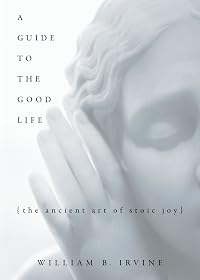
Personally, I would think of [b:A Guide to the Good Life: The Ancient Art of Stoic Joy|5617966|A Guide to the Good Life The Ancient Art of Stoic Joy|William B. Irvine|https://images.gr-assets.com/books/1547348819s/5617966.jpg|5789357] by William B. Irvine to be a better introduction to Stoicism in the modern age.
Originally Posted Here: https://www.buemlned.me/2019/review-farnsworth-stoic-manual show less
It could be a handy pocket reference in time of need, or introduction to the original text of the ancient stoic. Sadly, what the book didn't achieve is breathing new life into Stoic teaching by situating them in the many new experiences brought by modern life and technology. Although book title contains the words "User's manual", which gives the impression of practicality and techniques, reading through it still feels detached from practicality from time to time. This is mainly due show more to Farnsworth quoting the ancient authors consistently, without offering much of a modern perspective. It would also be interesting to speculate what Seneca would have to say to technology and social media? How does one achieve eudaimonia in the age of algorithm? But of course, Stoic believes certain human experiences are timeless. It is also unfair to blame this book for not doing enough - after all, its goal is not to fit the old teaching with new observation, but simply present the original Stoicism text.
Personally, I would think of [b:A Guide to the Good Life: The Ancient Art of Stoic Joy|5617966|A Guide to the Good Life The Ancient Art of Stoic Joy|William B. Irvine|https://images.gr-assets.com/books/1547348819s/5617966.jpg|5789357] by William B. Irvine to be a better introduction to Stoicism in the modern age.
Originally Posted Here: https://www.buemlned.me/2019/review-farnsworth-stoic-manual show less
This is an excellent introduction to stoicism (a really easy read). It mainly consists of quotes from notable stoic philosophers bracketed by short commentary. As a result it is easy to see where I next want to look to dive deeper.
The selected quotes are very well chosen (straightforward but when you consider the underlying message there's a lot there). This is definitely a book worth keeping to reread and meditate on.
The selected quotes are very well chosen (straightforward but when you consider the underlying message there's a lot there). This is definitely a book worth keeping to reread and meditate on.
Members
- Recently Added By
Lists

Books Read in 2024
4,727 works; 128 members
Author Information
12 Works 1,512 Members
Ward Farnsworth is professor of law and Nancy Barton Scholar at the Boston University School of Law.
Common Knowledge
- Canonical title
- The Practicing Stoic: A Philosophical User's Manual
- First words
- This introduction provides a brief and rough summary of the ideas that follow in the rest of the book.
- Last words
- (Click to show. Warning: May contain spoilers.)They aimed high, fell short, and did well.
Classifications
Statistics
- Members
- 392
- Popularity
- 79,969
- Reviews
- 13
- Rating
- (4.14)
- Languages
- English, Estonian, German, Portuguese (Portugal)
- Media
- Paper, Audiobook, Ebook
- ISBNs
- 13
- ASINs
- 5