On This Page
Description
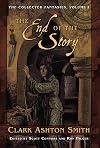
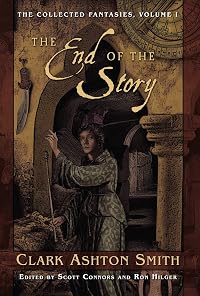
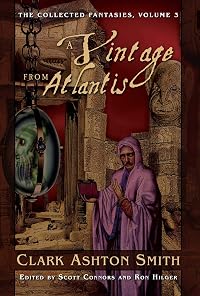
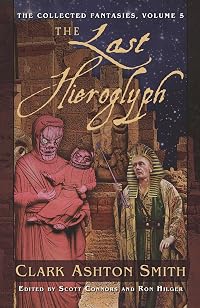
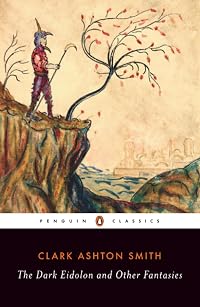
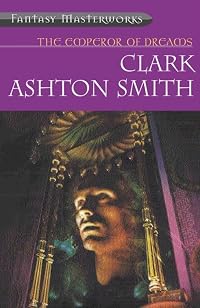
Published in chronological order, with extensive story and bibliographic notes, this series not only provides access to stories that have been out of print for years, but gives them a historical and social context. Series editors Scott Conners and Ronald S. Hilger excavated the still-existing manuscripts, letters and various published versions of the stories, creating a definitive "preferred text" for Smith's entire body of work. This first volume of the series, brings together 25 of his show more fantasy stories, written between 1925 and 1930, including such classics as "The Abominations of Yondo," "The Monster of the Prophecy," "The Last Incantation" and the title story. show lessTags
Recommendations













Member Reviews
'The End of the Story' is paradoxically the beginning of Ashton Smith's 'Averoigne' cycle and dates from 1930 ('Weird Tales'). In my mind, it is one of the best he ever wrote despite its languid and leisurely progress and its self-consciously literary feel.
The Averoigne stories are set in the Middle Ages but this introductory story introduces the fantasy through a veil - the tale is set in the eighteenth century so that the twentieth century pulp reader is thrown into an Ancien Regime culture in order to reach two further levels, Medieval and Pagan.
The young hero arrives at a Benedictine Abbey (a thematic link to later stories) to be introduced to a library which contains a full range of literary production from the Western past show more including, suggestively, otherwise unavailable works by the eroticists of paganism such as Ovid and Sappho.
The trigger for the tale is a forbidden medieval manuscript that turns out to be something closer to a courtly romance than the standard issue and probably expected necronomichon-like text. It is forbidden because it kindles desire rather than because it contains a secret. The secret is elsewhere.
The eroticism is perhaps more strongly emphasised in this story than in many later ones but here we have another persistent theme - the young male enchanted through his own obsessive desire into a possibly delusory but fully accepted relationship with a highly sexualised pagan presence.
From our world through the gateway of the eighteenth century (when reason may be said to have triumphed), our hero is not constrained by Christian virtue and enters into an Hellenistic pagan past of fantasy where he wishes to remain for ever.
This is the spoiler part (although there is nothing of the 'whodunnit' about his story and I make no apology here). The representative of Christianity pulls him out of the dream 'for his own sake' and his reaction is one of resentment and a determination to return regardless.
Do we see Ashton Smith here stating his determination not to be diverted by the need to make money from his writing fantasy and poetry? Is he asserting his freedom to be what he is, a sensual dreamer, in a society that has little time for such men?
It is certainly a story of the pull, on a well read literary man, of the past, specifically the sexual freedom of the pre-Christian era, and a revolt against the cultural reality imposed on him by Christian morality and reason alike.
The implication, of course, is that fantasy is more real than reality at some level because the reality in which we live is imposed on us by history and that history has involved wiping away another reality which was more magical and fitted to the desires of men.
This is a common theme in fantasy writing. Ashton Smith suggests rather than states - today, it is stated too obviously perhaps in stories about magic in the modern world where the repeated trope is that old arts have been lost but once were real.
It is amusing that the idea has now appeared in physics that our apparently immutable 'laws' may be more contingent than we think and that time and space might be different in the furthest reaches of time and space.
This theory of scientists, of course, does not help fantasy writers because fantasy writers can write only within the tiny current timescales of human existence. The facts of the matter are the facts of the matter but, imaginatively at least, time and space can be bent to suggest the magical as real.
The story is thus something of a Manifesto for what is to come in the 'Averoigne' stories. Ashton Smith is laying down the ground rules for his fantasy world in which an undercurrent of erotic desire and ambiguity flows between the pagan past and a Christian 'present' that is also now past.
The distancing involved in having the Manifesto situated in a future that is also our past (the eighteenth century) creates in itself a magical distancing in which each past in turn reflects on the one on which it lies and so makes each successively more magical through distance.
So, as pulp fiction, this story will disappoint many readers but, as literary product, it is Ashton Smith at the height of his powers. show less
The Averoigne stories are set in the Middle Ages but this introductory story introduces the fantasy through a veil - the tale is set in the eighteenth century so that the twentieth century pulp reader is thrown into an Ancien Regime culture in order to reach two further levels, Medieval and Pagan.
The young hero arrives at a Benedictine Abbey (a thematic link to later stories) to be introduced to a library which contains a full range of literary production from the Western past show more including, suggestively, otherwise unavailable works by the eroticists of paganism such as Ovid and Sappho.
The trigger for the tale is a forbidden medieval manuscript that turns out to be something closer to a courtly romance than the standard issue and probably expected necronomichon-like text. It is forbidden because it kindles desire rather than because it contains a secret. The secret is elsewhere.
The eroticism is perhaps more strongly emphasised in this story than in many later ones but here we have another persistent theme - the young male enchanted through his own obsessive desire into a possibly delusory but fully accepted relationship with a highly sexualised pagan presence.
From our world through the gateway of the eighteenth century (when reason may be said to have triumphed), our hero is not constrained by Christian virtue and enters into an Hellenistic pagan past of fantasy where he wishes to remain for ever.
This is the spoiler part (although there is nothing of the 'whodunnit' about his story and I make no apology here). The representative of Christianity pulls him out of the dream 'for his own sake' and his reaction is one of resentment and a determination to return regardless.
Do we see Ashton Smith here stating his determination not to be diverted by the need to make money from his writing fantasy and poetry? Is he asserting his freedom to be what he is, a sensual dreamer, in a society that has little time for such men?
It is certainly a story of the pull, on a well read literary man, of the past, specifically the sexual freedom of the pre-Christian era, and a revolt against the cultural reality imposed on him by Christian morality and reason alike.
The implication, of course, is that fantasy is more real than reality at some level because the reality in which we live is imposed on us by history and that history has involved wiping away another reality which was more magical and fitted to the desires of men.
This is a common theme in fantasy writing. Ashton Smith suggests rather than states - today, it is stated too obviously perhaps in stories about magic in the modern world where the repeated trope is that old arts have been lost but once were real.
It is amusing that the idea has now appeared in physics that our apparently immutable 'laws' may be more contingent than we think and that time and space might be different in the furthest reaches of time and space.
This theory of scientists, of course, does not help fantasy writers because fantasy writers can write only within the tiny current timescales of human existence. The facts of the matter are the facts of the matter but, imaginatively at least, time and space can be bent to suggest the magical as real.
The story is thus something of a Manifesto for what is to come in the 'Averoigne' stories. Ashton Smith is laying down the ground rules for his fantasy world in which an undercurrent of erotic desire and ambiguity flows between the pagan past and a Christian 'present' that is also now past.
The distancing involved in having the Manifesto situated in a future that is also our past (the eighteenth century) creates in itself a magical distancing in which each past in turn reflects on the one on which it lies and so makes each successively more magical through distance.
So, as pulp fiction, this story will disappoint many readers but, as literary product, it is Ashton Smith at the height of his powers. show less
In the tradition of Poe and Lovecraft, over two dozen finely wrought mind-bending tales of horror, terror, shock and hallucination by Clark Ashton Smith (1893-1961). Below are my comments on a trio, including the title story, a cautionary yarn on the nature of memory and a dark fable featuring one of those Dionysian creatures who loves wine, women and physical pleasure and who roams the forests as it plays its panpipes - the Satyr.
THE END OF THE STORY
At one point in this short story our first-person chronicler reflects: “At sight of her, I trembled from head to foot with the violence of a strange emotion. I had heard of the sudden mad loves by which men are seized on beholding for the first time a certain face and form; but never show more before had I experienced a passion of such intensity, such all-consuming ardor, as the one I conceived immediately for this woman. Indeed, it seemed as if I had loved her for a long time, without knowing that it was she whom I loved, and without being able to identify the nature of my emotion or to orient the feeling in any manner.”
Is our young narrator in this tale beholding a manifestation of the Hindu goddess Rati or perhaps Tara or Avalokitevara or another female Buddhist deity? If so, then all would be well. However, this is France in the 17th century and prior to his ecstatic, sensual experience our young man was a guest of a Benedictine monetary wherein he read a forbidden manuscript propelling him on his quest that lead to this intense, sensual encounter in the first place. Therein lies the basis of his conflict – does his trust his heart or listen to the advice of the monastery’s abbot? His final reflection foreshadows his choice.
A NIGHT IN MALNEANT
A tale of remorse. Having caused his true love, the brokenhearted lady Mariel, to take her own life, our handsome, dashing young narrator flees from his home, wandering from city to city throughout the world in an attempt to banish any memory of Mariel. He comes upon the city of Malnéant, but mystery of mystery - everyone in this city has spent many years mourning the death of a beautiful woman by the name of Mariel and are currently preparing her burial. The young lover reflects, “Now I began to dread the city about me with a manifold fear: for apparently the whole business of the people in Malnéant consisted of preparations for the funeral of this lady Mariel. And it began to be obvious that I must walk the streets of the city all night because of these same preparations.”
I recall Jorge Luis Borges noting how our memory can be a great magician and deceiver - our first memory is of the event or happening itself but our second memory becomes a recollection of the first memory, the third memory a recollection of the second, ad infinitum, an infinite series of memories, each one in turn becoming the very clay, the source material for our next memory - repetition of bad memories as self-created prison. And this Clark Aston Smith tale compounds the mental prison – an entire city of men and women perpetually living through our very own bad memory, the entire city suffering our personal unending torture.
THE SATYR
A dark fable featuring husband Raoul drinking his wine that dulls his senses, while poet Olivier writes his verses and ballads about Raoul’s wife Adele and her golden eyes, feminine charms and her wine-dark tresses. On occasion, Adele will even take strolls with Olivier through the forest surrounding their chateau. But there reaches a point where between his drinking wine and hunting game Raoul observes how his wife appears to have grown younger and fairer, which, he realizes, can only happen if she is touched by the magic of love. Sidebar: through Raoul’s wine drinking, Olivier’s poetry and Adele’s awakened love, the spirit of Dionysius is present and accepted since it is contained within the walls of ‘civilized’ behavior.
One fine April day, with spring and greenery in the air, Olivier persuades Adele to venture further into the forest, a forest where legends abound about the wood being haunted by a primordial spirit even more ancient that Christ or Satan, a spirit filled with “panic, madness, demoniac possession or baleful, unreasoning passions.” Well, not only do Olivier and Adele take their forest stroll but a now suspicious Raoul takes up his rapier and sallies forth on his own not-so-casual forest stroll.
Let’s pause here to note how one ancient interpretation describes the Satyr as possessing the fearless and brutal instincts needed to defend itself in the wild forests without the aid of civilization as it lives its carefree life, playing music on its flute and having a deep connection with nature. Other interpretations, as in this Clark Ashton Smith tale, are not nearly so glowing, depicting the Satyr as a wine-crazed sex-fiend, a dark Dionysian force that should be avoided.
The tale’s events transpire until Raoul comes up Olivier and wife Adele embracing one another, naked and asleep. We read, “He was about to fling himself upon them and impale the two with a single thrust where they lay, when an unlooked-for and scarce conceivable thing occurred. With swiftness veritably supernatural, a brown hairy creature, a being that was not wholly man, not wholly animal, but some hellish mixture of both, sprang from amid the alder branches and snatched Adele from Olivier's embrace. Olivier and Raoul saw it only in one fleeting glimpse, and neither could have described it clearly afterwards. But the face was that which had leered upon the lovers from the foliage; and the shaggy' legs and body were those of a creature of antique legend. It disappeared as incredibly as it had come, bearing the woman in its arms; and her shrieks of terror were surmounted by the pealing of its mad, diabolical laughter.”
I noted the various interpretations of a Satyr’s nature to suggest that Clark Ashton Smith can be read on many levels, including our probing and questioning underlying cultural myths and attitudes contained in his imaginative tales and, indirectly, in our own society. show less
FINAL REVIEW
In the tradition of Poe and Lovecraft, over two dozen finely wrought mind-bending tales of horror, terror, shock and hallucination by Clark Ashton Smith (1893-1961). Below are my comments on a trio, including the title story, a cautionary yarn on the nature of memory and a dark fable featuring one of those Dionysian creatures who loves wine, women and physical pleasure and who roams the forests as it plays its panpipes - the Satyr.
The End of the Story
At one point in this short story our first-person chronicler reflects: “At sight of her, I trembled from head to foot with the violence of a strange emotion. I had heard of the sudden mad loves by which men are seized on beholding for the first time a certain face and form; show more but never before had I experienced a passion of such intensity, such all-consuming ardor, as the one I conceived immediately for this woman. Indeed, it seemed as if I had loved her for a long time, without knowing that it was she whom I loved, and without being able to identify the nature of my emotion or to orient the feeling in any manner.”
Is our young narrator in this tale beholding a manifestation of the Hindu goddess Rati or perhaps Tara or Avalokitevara or another female Buddhist deity? If so, then all would be well. However, this is France in the 17th century and prior to his ecstatic, sensual experience our young man was a guest of a Benedictine monetary wherein he read a forbidden manuscript propelling him on his quest that lead to this intense, sensual encounter in the first place. Therein lies the basis of his conflict – does his trust his heart or listen to the advice of the monastery’s abbot? His final reflection foreshadows his choice.
A Night in Malnéant
A tale of remorse. Having caused his true love, the brokenhearted lady Mariel, to take her own life, our handsome, dashing young narrator flees from his home, wandering from city to city throughout the world in an attempt to banish any memory of Mariel. He comes upon the city of Malnéant, but mystery of mystery - everyone in this city has spent many years mourning the death of a beautiful woman by the name of Mariel and are currently preparing her burial. The young lover reflects, “Now I began to dread the city about me with a manifold fear: for apparently the whole business of the people in Malnéant consisted of preparations for the funeral of this lady Mariel. And it began to be obvious that I must walk the streets of the city all night because of these same preparations.”
I recall Jorge Luis Borges noting how our memory can be a great magician and deceiver - our first memory is of the event or happening itself but our second memory becomes a recollection of the first memory, the third memory a recollection of the second, ad infinitum, an infinite series of memories, each one in turn becoming the very clay, the source material for our next memory - repetition of bad memories as self-created prison. And this Clark Aston Smith tale compounds the mental prison – an entire city of men and women perpetually living through our very own bad memory, the entire city suffering our personal unending torture.
The Satyr
A dark fable featuring husband Raoul drinking his wine that dulls his senses, while poet Olivier writes his verses and ballads about Raoul’s wife Adele and her golden eyes, feminine charms and her wine-dark tresses. On occasion, Adele will even take strolls with Olivier through the forest surrounding their chateau. But there reaches a point where between his drinking wine and hunting game Raoul observes how his wife appears to have grown younger and fairer, which, he realizes, can only happen if she is touched by the magic of love. Sidebar: through Raoul’s wine drinking, Olivier’s poetry and Adele’s awakened love, the spirit of Dionysius is present and accepted since it is contained within the walls of ‘civilized’ behavior.
One fine April day, with spring and greenery in the air, Olivier persuades Adele to venture further into the forest, a forest where legends abound about the wood being haunted by a primordial spirit even more ancient that Christ or Satan, a spirit filled with “panic, madness, demoniac possession or baleful, unreasoning passions.” Well, not only do Olivier and Adele take their forest stroll but a now suspicious Raoul takes up his rapier and sallies forth on his own not-so-casual forest stroll.
Let’s pause here to note how one ancient interpretation describes the Satyr as possessing the fearless and brutal instincts needed to defend itself in the wild forests without the aid of civilization as it lives its carefree life, playing music on its flute and having a deep connection with nature. Other interpretations, as in this Clark Ashton Smith tale, are not nearly so glowing, depicting the Satyr as a wine-crazed sex-fiend, a dark Dionysian force that should be avoided.
The tale’s events transpire until Raoul comes up Olivier and wife Adele embracing one another, naked and asleep. We read, “He was about to fling himself upon them and impale the two with a single thrust where they lay, when an unlooked-for and scarce conceivable thing occurred. With swiftness veritably supernatural, a brown hairy creature, a being that was not wholly man, not wholly animal, but some hellish mixture of both, sprang from amid the alder branches and snatched Adele from Olivier's embrace. Olivier and Raoul saw it only in one fleeting glimpse, and neither could have described it clearly afterwards. But the face was that which had leered upon the lovers from the foliage; and the shaggy' legs and body were those of a creature of antique legend. It disappeared as incredibly as it had come, bearing the woman in its arms; and her shrieks of terror were surmounted by the pealing of its mad, diabolical laughter.”
I noted the various interpretations of a Satyr’s nature to suggest that Clark Ashton Smith can be read on many levels, including our probing and questioning underlying cultural myths and attitudes contained in his imaginative tales and, indirectly, in our own society. show less
Clark Ashton Smith was a poet and a painter who wrote genre blending fiction for Weird Tales to pay his bills. His work, in this volume, is a little uneven, but nearly all of the stories, even the failures, show his lush and lively imagination and his talent for world building.
I was very surprised that an interracial romance was the theme of "The Venus of Azombeii." I even more surprised by the interspecies romance of "The Monster of the Prophecy." Gad.
I liked the stories, but I disliked the absence of an active table of contents in this e-book edition. That might keep me from buying other titles in this series.
TITLE RATING
To the Daemon 4
The Abominations of Yondo 5
Sadastor 4
The Ninth Skeleton 4
The Last Incantation 4
The End of the show more Story 4
The Phantoms of the Fire 3
A Night in Maln'eant 4
The Resurrection of the Rattlesnake 2
A Night in Maln'eant 2
The Venus of Azombeii 4
The Tale of Satampra Zeiros 5
The Monster of the Prophecy 5
The Metamorphosis of the World 3
The Epiphany of Death 4
A Murder in the Fourth Dimension 3
The Devotee of Evil 3
The Satyr 4
The Planet of the Dead 4
The Uncharted Isle 3
Marooned in Andromeda 3
The Root of Ampoi 3
The Necromantic Tale 4
The Immeasurable Horror 5
A Voyage to Sfanomoe 4 show less
I was very surprised that an interracial romance was the theme of "The Venus of Azombeii." I even more surprised by the interspecies romance of "The Monster of the Prophecy." Gad.
I liked the stories, but I disliked the absence of an active table of contents in this e-book edition. That might keep me from buying other titles in this series.
TITLE RATING
To the Daemon 4
The Abominations of Yondo 5
Sadastor 4
The Ninth Skeleton 4
The Last Incantation 4
The End of the show more Story 4
The Phantoms of the Fire 3
A Night in Maln'eant 4
The Resurrection of the Rattlesnake 2
A Night in Maln'eant 2
The Venus of Azombeii 4
The Tale of Satampra Zeiros 5
The Monster of the Prophecy 5
The Metamorphosis of the World 3
The Epiphany of Death 4
A Murder in the Fourth Dimension 3
The Devotee of Evil 3
The Satyr 4
The Planet of the Dead 4
The Uncharted Isle 3
Marooned in Andromeda 3
The Root of Ampoi 3
The Necromantic Tale 4
The Immeasurable Horror 5
A Voyage to Sfanomoe 4 show less
Let me start by saying I do not generally read short stories, but a great review by GR friend, Stephen, interested me. This collection of short stories was written mostly in the second half of 1929 and the first half of 1930, and are presented in chronological order. Smith's writing style is very dense and descriptive, he uses language we do not often see these days (archaic, I suppose), and seems to have a fixation about colors and flora. Most of the stories had elements of death. Interspersed throughout the stories is a very dry sense of humor. The stories span fantasy, science fiction, and horror, which was one of the reasons I wanted to read this book. Personally, I liked his science fiction stories best.
The end of the story is usually unpleasant for the hero.
Ratings
Members
- Recently Added By
Lists

Weird and Weirder Fiction
270 works; 35 members

Books Read in 2015
3,299 works; 126 members
Author Information

378+ Works 7,405 Members
Series

Work Relationships
Contains
Common Knowledge
- Canonical title
- The End of the Story
- Original publication date
- 2007-01-24
- People/Characters
- Captain Volmar; Charnadis; Lyspial; Nylissa; Malygris; Christophe Morand (show all 44); Gérard de Venteillon; Nycea; Jonas McGillicuddy; Arthur Avilton; John Godfrey; Emil Schuler; John Alvington; Mybaloë; Julius Marsden; Mergawe; Satampra Zeiros; Tirouv Ompallios; Theophilus Alvor; Vizaphmal; Cunthamosi; Ambiala; Roger Lapham; Tomeron; Theolus; James Buckingham; Edgar Halpin; Jean Averaud; Philip Hastane; Francis Melchior; Antarion; Thameera; Mark Irwin; Jim Knox; Mabousa; Roderick Hagdon; James Wharton; Elinor Hagdon; Richard Harmon; John Ashley; Robert Manville; Aristide Rocher; Hotar; Evidon
- Important places
- Averoigne; Hyperborea; Atlantis
- First words
- Tell me many tales, O benign maleficent daemon, but tell me none that I have ever heard or have even dreamt of otherwise than obscurely or infrequently.
- Disambiguation notice
- This is the anthology work "The End of the Story". Do not combine with the short story of the same name.
Classifications
Statistics
- Members
- 445
- Popularity
- 69,036
- Reviews
- 6
- Rating
- (4.04)
- Languages
- English
- Media
- Paper, Audiobook, Ebook
- ISBNs
- 6
- ASINs
- 7