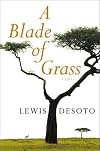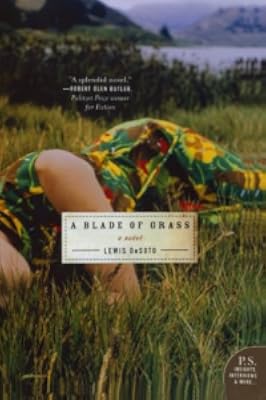
A Blade of Grass
by Lewis Desoto
On This Page
Description
Märit Laurens is a young woman of British descent who comes to live with her husband, Ben, on their newly purchased farm along the border of South Africa. Shortly after her arrival, violence strikes at the heart of Märit's world. Devastated and confused but determined to run the farm on her own, Märit finds herself in a simmering tug of war between the local Afrikaner community and the black workers who live on the farm, both vying for control over the land in the wake of tragedy. show more Märit's only supporter is her black housekeeper, Tembi, who, like Märit, is alone in the world. Together, the women struggle to hold on to the farm, but the quietly encroaching civil war brings out conflicting loyalties that turn the fight for the farm into a fight for their lives. Thrilling to read, A Blade of Grass is a wrenching story of friendship and betrayal and of the trauma of the land that has shaped post-colonial Africa. show lessTags
Recommendations









Member Recommendations
Member Reviews
This book. In A Blade of Grass, Lewis DeSoto took a place and a time, a complicated, beautiful place at a complicated, horrible time and threw it repeatedly in the reader's face. And for all of that (and there is a lot of that), it is primarily a story of a tenuous friendship between two women who should have never become friends, except that they were both lonely and alone.
Tembi grew up in the place her people had always lived, until the man came and told them they would all have to go somewhere else. And when they had been moved, they found the land they had been moved to, a land they had no connection to, could not support them. And so they left; first the men, to work in the mines and then the women, to work as domestic servants. show more Tembi goes with her mother to live on a farm, where her mother takes care of the house. Tembi, now a young woman, works in the dairy and while she doesn't feel a part of the life of the Kral, she is happy to be with her mother. And then her mother is killed. Tembi is asked to work in the house, but she's not sure she can work for the woman there.
Marit has married an Englishman who wants to be a farmer. They find a farm on good land that they can afford because it is near the border and there has been some unrest, but Ben is both optimistic and determined and he is willing to work hard. Marit's a bit unmoored in this strange place inhabited by stolid Boers and the silent Blacks working for them, but she is willing to support her husband with his dream; it's what she's been raised to do. And then her husband is killed and she is adrift, with only the housekeeper to speak to.
There is an immediacy and a force to DeSoto's writing. The reader is never given a specific time or place to hang the story on, but his descriptions are vivid and kept close by the use of the present tense throughout. This has the effect of making the events in the story carry far more weight as there is no sense of an "afterwards". Both Tembi and Marit were complex characters, which was important in this book of great wrongs and disasters. show less
Tembi grew up in the place her people had always lived, until the man came and told them they would all have to go somewhere else. And when they had been moved, they found the land they had been moved to, a land they had no connection to, could not support them. And so they left; first the men, to work in the mines and then the women, to work as domestic servants. show more Tembi goes with her mother to live on a farm, where her mother takes care of the house. Tembi, now a young woman, works in the dairy and while she doesn't feel a part of the life of the Kral, she is happy to be with her mother. And then her mother is killed. Tembi is asked to work in the house, but she's not sure she can work for the woman there.
Marit has married an Englishman who wants to be a farmer. They find a farm on good land that they can afford because it is near the border and there has been some unrest, but Ben is both optimistic and determined and he is willing to work hard. Marit's a bit unmoored in this strange place inhabited by stolid Boers and the silent Blacks working for them, but she is willing to support her husband with his dream; it's what she's been raised to do. And then her husband is killed and she is adrift, with only the housekeeper to speak to.
There is an immediacy and a force to DeSoto's writing. The reader is never given a specific time or place to hang the story on, but his descriptions are vivid and kept close by the use of the present tense throughout. This has the effect of making the events in the story carry far more weight as there is no sense of an "afterwards". Both Tembi and Marit were complex characters, which was important in this book of great wrongs and disasters. show less
There are events in life for which ordinary people are completely unprepared. Nothing in their upbringing can give them guidance. Some people rise to the situation and come out stronger. Others are completely overwhelmed and sink from sight.
Marit Laurens found herself facing just such life altering events. A completely ordinary middle class girl, she had been 'well brought up' by the standards of 1960s white Johannesburg. Unfortunately, this upbringing anticipated a continuation of the status quo and Marit was now far away from that illusory security. Six months previously, three months after her parents were killed in an accident, she had married Ben and somewhat aimlessly adopted his life.
For his part, Ben had dreams and ambitions for show more both of them. Leaving the constraints of Manchester, he had come to South Africa to farm; almonds, cattle, maize, you name it, Ben was going to succeed with it. South Africa was encouraging farming in the early 1970s, the land and climate were good, the future seemed assured. Unfortunately for Marit and Ben, they had settled on the northern border, surrounded by Afrikaners engaged in fighting cross border guerilla incursions.
DeSoto, originally from South Africa, describes the land with real feeling, so that it becomes an integral part of the book. Random violence, forces of nature, and unthinking and careless cruelty impinge on this world, shocking in their speed and impact, yet insignificant to the outside.
Marit is forced to act, to make decisions, to take charge. Unprepared and unable to accept help or guidance in her new surroundings, she flounders, relying increasingly on her black housemaid. As the community around them dissolves in the escalating chaos of the unnamed war, their struggles with the outside world and each other determine their own fates and that of the farm.
Long listed for the Booker Prize, [A Blade of Grass] somehow turns a tale of unsympathetic yet understandable characters into a compelling story, somewhat in the same way a Philip Caputo or Robert Stone novel unfolds. DeSoto is less raw, but there is the same compelling inevitability, drawing the characters and the reader on to the end. This was a first novel. I will certainly look for his second one, due out next month. show less
Marit Laurens found herself facing just such life altering events. A completely ordinary middle class girl, she had been 'well brought up' by the standards of 1960s white Johannesburg. Unfortunately, this upbringing anticipated a continuation of the status quo and Marit was now far away from that illusory security. Six months previously, three months after her parents were killed in an accident, she had married Ben and somewhat aimlessly adopted his life.
For his part, Ben had dreams and ambitions for show more both of them. Leaving the constraints of Manchester, he had come to South Africa to farm; almonds, cattle, maize, you name it, Ben was going to succeed with it. South Africa was encouraging farming in the early 1970s, the land and climate were good, the future seemed assured. Unfortunately for Marit and Ben, they had settled on the northern border, surrounded by Afrikaners engaged in fighting cross border guerilla incursions.
DeSoto, originally from South Africa, describes the land with real feeling, so that it becomes an integral part of the book. Random violence, forces of nature, and unthinking and careless cruelty impinge on this world, shocking in their speed and impact, yet insignificant to the outside.
Marit is forced to act, to make decisions, to take charge. Unprepared and unable to accept help or guidance in her new surroundings, she flounders, relying increasingly on her black housemaid. As the community around them dissolves in the escalating chaos of the unnamed war, their struggles with the outside world and each other determine their own fates and that of the farm.
Long listed for the Booker Prize, [A Blade of Grass] somehow turns a tale of unsympathetic yet understandable characters into a compelling story, somewhat in the same way a Philip Caputo or Robert Stone novel unfolds. DeSoto is less raw, but there is the same compelling inevitability, drawing the characters and the reader on to the end. This was a first novel. I will certainly look for his second one, due out next month. show less
This is not my kind of book at all. Overly descriptive, vague and empty-feeling, and characters living in their heads instead of in the real world. I should have taken my cue from the first chapter, which is ridiculously grandiose in its description, and left the book there. But no, I felt I hadn't been fair enough to it, so on I read, until this afternoon, when I decided that if I preferred staring mindlessly off into space on the bus instead of reading, the book probably had to go.
This book uses a maddening present tense to tell the story of Märit Laurens, wife of gentleman farmer Ben Laurens, and their life on the farm near the South African border with an unnamed country. It's supposed to be about apartheid and violence and show more tragedy, but the 98 pages I read mostly involved thoughts, musings and ruminations, with the occasional internal monologue to liven things up. Plot-wise, Märit is supposed to be drawn to her maid, Tembi, after Tembi's mother and Märit's husband both die, and they are supposed to be involved in a struggle for survival. Unfortunately, I don't care much about Märit -- her thoughts are kind of boring -- and knowing that Ben is supposed to die really hinders my ability to appreciate his character, since I'm just sitting there waiting for the axe to drop.
I say the present tense is "maddening" because it makes me feel like the events are just kind of floating there outside of the regular time-space continuum. I prefer good solid past tense. And the characters were really not that interesting, with the exception of Ben, who seemed to be the only one who did anything meaningful (although to be fair, Tembi does more than Märit). That could be because men had greater freedom in this society, white men in particular, but if the book is focusing on the women I expect them to be able to do more than sit around and pout and suddenly turn embarrassingly horny with no real explanation. Putting this book down and moving on. show less
This book uses a maddening present tense to tell the story of Märit Laurens, wife of gentleman farmer Ben Laurens, and their life on the farm near the South African border with an unnamed country. It's supposed to be about apartheid and violence and show more tragedy, but the 98 pages I read mostly involved thoughts, musings and ruminations, with the occasional internal monologue to liven things up. Plot-wise, Märit is supposed to be drawn to her maid, Tembi, after Tembi's mother and Märit's husband both die, and they are supposed to be involved in a struggle for survival. Unfortunately, I don't care much about Märit -- her thoughts are kind of boring -- and knowing that Ben is supposed to die really hinders my ability to appreciate his character, since I'm just sitting there waiting for the axe to drop.
I say the present tense is "maddening" because it makes me feel like the events are just kind of floating there outside of the regular time-space continuum. I prefer good solid past tense. And the characters were really not that interesting, with the exception of Ben, who seemed to be the only one who did anything meaningful (although to be fair, Tembi does more than Märit). That could be because men had greater freedom in this society, white men in particular, but if the book is focusing on the women I expect them to be able to do more than sit around and pout and suddenly turn embarrassingly horny with no real explanation. Putting this book down and moving on. show less
Sometimes when I finish a really good book I just can’t wait to dash off to the computer and write my review – I want to tell everyone about it. That’s the way I feel about A Blade of Grass by South African/Canadian author Lewis Desoto, which was longlisted for the Booker in 2004. It’s a story of an inter-racial friendship set on the contested South African frontier in the 1970s during the apartheid era. I found it to be a remarkable debut novel that was engaging from the very beginning yet managed to raise complex issues about entitlement to land; about power and gender; and about the destructive effects of fear of The Other.
So you can imagine my surprise when I discovered from some outraged comments at GoodReads that some show more readers are very cross about this book. For some, there is too much lyrical description, for others too much symbolism. One who thought that DeSoto also has absolutely no place in writing from a female perspective took issue with the way that the peace and harmony of the relationship between two female protagonists, one Black, one White, is disrupted by jealousy over a man. Someone else is peeved about the stereotyping of entrenched racist Afrikaaners; ambivalent, hopeful Britishers; and resentful, disenfranchised Africans. (There was also a reader who thought it was set during the Boer War. The less said about that the better, eh?) The novel copped a very negative review at Culture Wars too.
I don’t think that I read this novel uncritically, so I was relieved to see not only some positive views amongst the others at GR, but also this one from Quill and Quire. I felt that this novel rendered the complexities of living in a racist society with the respect it deserves. The two central characters, Marït and Tembi, are creatures of the society in which they grew up and their identities are forged by the black/white divide. Even when they transcend this divide, as Desoto renders it, they inevitably retain some habits of thought and behaviour, and in moments of crisis they revert to old habits even if intellectually and emotionally they reject them. This seems entirely realistic to me.
To read the rest of my review please visit https://anzlitlovers.com/2015/01/25/a-blade-of-grass-by-lewis-desoto/ show less
So you can imagine my surprise when I discovered from some outraged comments at GoodReads that some show more readers are very cross about this book. For some, there is too much lyrical description, for others too much symbolism. One who thought that DeSoto also has absolutely no place in writing from a female perspective took issue with the way that the peace and harmony of the relationship between two female protagonists, one Black, one White, is disrupted by jealousy over a man. Someone else is peeved about the stereotyping of entrenched racist Afrikaaners; ambivalent, hopeful Britishers; and resentful, disenfranchised Africans. (There was also a reader who thought it was set during the Boer War. The less said about that the better, eh?) The novel copped a very negative review at Culture Wars too.
I don’t think that I read this novel uncritically, so I was relieved to see not only some positive views amongst the others at GR, but also this one from Quill and Quire. I felt that this novel rendered the complexities of living in a racist society with the respect it deserves. The two central characters, Marït and Tembi, are creatures of the society in which they grew up and their identities are forged by the black/white divide. Even when they transcend this divide, as Desoto renders it, they inevitably retain some habits of thought and behaviour, and in moments of crisis they revert to old habits even if intellectually and emotionally they reject them. This seems entirely realistic to me.
To read the rest of my review please visit https://anzlitlovers.com/2015/01/25/a-blade-of-grass-by-lewis-desoto/ show less
This was my book club's pick for June of 2006. It tells the story of two South African women, one white, one black. The year isn't given but it is before the fall of apartheid when white people lived a life of ease and privilege and black people toiled for the whites.
The white woman, Marit, is a recent orphan and a recent wife. She and her husband have moved to land on the border to farm. Marit has no siblings and seems to have had no friends other than her husband and she doesn't make friends with the other farmers' wives. The black woman, Tembi, is a little younger than Marit. At the start of the book her mother, who is the cook for Marit and her husband, is killed by a hit and run driver as she walks to the nearest town in the show more dark. Tembi's father is a miner and has lived apart from Tembi and her mother for some time except for two weeks of holidays. After the mother's funeral he leaves and never returns. Marit asks Tembi to take her mother's job. The relationship gets off to a rocky start but after Marit's husband is killed by a land mine the two women grow very close. The political situation intensifies and Marit is advised to leave but she really has no where else to go. Through natural disasters and man-made trials Marit and Tembi persevere. The ending is sad but also hopeful in terms of the black populace of South Africa.
I thought this was a beautifully written book. The author was born in South Africa but moved to Canada and now lives, according to the bio, "in Toronto and Normandy". He obviously loves the country of South Africa but hated the political situation. In an interview at the back of the book he says he has never been back to South Africa but now he is planning a trip. I felt, while I was reading the book, like I had taken a trip to South Africa. I would recommend this book to anyone. show less
The white woman, Marit, is a recent orphan and a recent wife. She and her husband have moved to land on the border to farm. Marit has no siblings and seems to have had no friends other than her husband and she doesn't make friends with the other farmers' wives. The black woman, Tembi, is a little younger than Marit. At the start of the book her mother, who is the cook for Marit and her husband, is killed by a hit and run driver as she walks to the nearest town in the show more dark. Tembi's father is a miner and has lived apart from Tembi and her mother for some time except for two weeks of holidays. After the mother's funeral he leaves and never returns. Marit asks Tembi to take her mother's job. The relationship gets off to a rocky start but after Marit's husband is killed by a land mine the two women grow very close. The political situation intensifies and Marit is advised to leave but she really has no where else to go. Through natural disasters and man-made trials Marit and Tembi persevere. The ending is sad but also hopeful in terms of the black populace of South Africa.
I thought this was a beautifully written book. The author was born in South Africa but moved to Canada and now lives, according to the bio, "in Toronto and Normandy". He obviously loves the country of South Africa but hated the political situation. In an interview at the back of the book he says he has never been back to South Africa but now he is planning a trip. I felt, while I was reading the book, like I had taken a trip to South Africa. I would recommend this book to anyone. show less
A wonderful, sad book. This story takes place in South Africa and is a snapshot of how apartheid affects one white family and a black woman. After her husband is killed by a hidden underground bomb, Marit finds herself alone on the farm in the midst of civil war. All servants and cropworkers (black) leave except Tembi, a daughter of the family maid (who was killed accidentally). Tembi is a lovely 18 year old girl who feels she's in the middle of apartheid. She is smart and has had formal schooling so she feels slightly higher up than the other blacks. She is kind and truly wants to help Mairt. Marit finds herself determined to keep the farm, not that she had chosen to come here, but she has no where else to go, as she' been recently show more orphaned now widowed. I came to love them both and wanted them to live together forever with no outside interference. (I see this book being made into a movie.) show less
I do like an unrelentingly sad novel. Gorgeous imagery and symbols. Maybe a little too sentimental but that didn't bother me. And rusk eating.
Definatly, a novelist to read more of.
Definatly, a novelist to read more of.
Members
- Recently Added By
Lists

Booker Prize
491 works; 62 members

Man Booker Prize Longlist 2004
22 works; 2 members
Author Information

10 Works 393 Members
Awards and Honors
Awards
Series
Belongs to Publisher Series
Common Knowledge
- Canonical title
- A Blade of Grass
- Original title
- A blade of grass
- Original publication date
- 2003
- People/Characters
- Marit Laurens; Ben Laurens; Tembi Mkize; Grace Mkize; Khoza; Joshua
- Important places
- Africa
- First words
- First she must wash the seeds.
- Last words*
- (Click to show. Warning: May contain spoilers.)Doch zuerst muss sie die Samen einpflanzen.
- Original language*
- Englisch
*Some information comes from Common Knowledge in other languages. Click "Edit" for more information.
Classifications
Statistics
- Members
- 327
- Popularity
- 97,776
- Reviews
- 9
- Rating
- (3.81)
- Languages
- 7 — Danish, Dutch, English, French, German, Polish, Spanish
- Media
- Paper, Ebook
- ISBNs
- 18
- ASINs
- 3