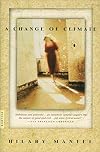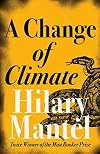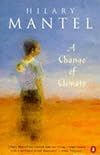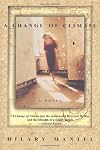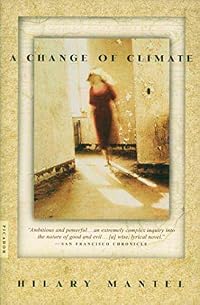
A Change of Climate
by Hilary Mantel
On This Page
Description
Ralph and Anna Eldred are an exemplary couple, devoting themselves to doing good. Thirty years ago as missionaries in Africa, the worst that could happen did. Shattered by their encounter with inexplicable evil, they returned to England, never to speak of it again. But when Ralph falls into an affair, Anna finds no forgiveness in her heart, and thirty years of repressed rage and grief explode, destroying not only a marriage but also their love, their faith, and everything they thought they were.Tags
Recommendations









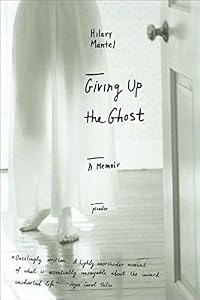


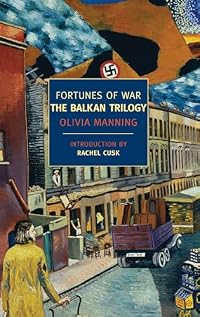


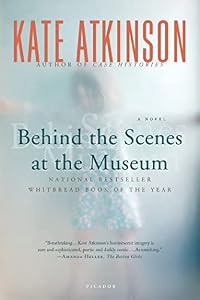




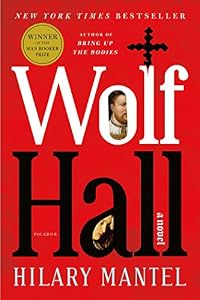







Member Recommendations
Member Reviews
From Little Things Big Things Grow
Alone in her school-room and her house below the tropic of Capricorn she saw her path in life, tangled, choked, thorny, like one of the cut lines that ran through the bush and melted away into the desert. Later course she wondered at herself. How could she not have seen the road ahead. Even in the early days before the wisdom conferred by the event, any trouble, any possible trouble seemed to settle around the sullen fugitive form of Enoch.
This is the story of a marriage and an unexpected tragic event. The setting is 1950s - 1980s Southern Africa and England. The book jumps back and forth between the African and English years and it may take a little effort in the very beginning to adjust. But any show more effort is well-worth it.
From early on in the marriage we sense an atmosphere of impending doom. Doom of an event that seems to be going to happen in Africa but we can’t be sure.
Ralph and Anna Eldred spend the early years of their marriage trying to “do good” in Africa. Although their relationship with their Protestant god is tenuous, the Eldreds try to use mission houses as bases for their work to improve the lives of the locals.
Their first posting is South Africa from where they are eventually expelled because of their anti-apartheid views. Not wanting to leave Africa they agree to be sent to a remote mission house in Bechuanaland (now Botswana). It’s bleak and isolated, and while I was reading the book I was reminded of Doris Lessing’s early works set in Rhodesia. Particularly with the descriptions of the landscapes and of the loneliness of isolated white women, my mind was drawn to Lessing’s The Grass is Singing, which I also highly recommend.
The book is about our actions and their consequences, good and evil, secrets and disclosures. Small actions, hardly noticed at the time, the thoughtless use of a spoken word, the unwanted giving of an apple… But from the one small act a chain is set and there is no going back. In reading A Change of Climate, you know something is happening but you don’t know what it is.
The two plots - the marriage and the tragedy are tightly interwoven in the writing, though there is no direct causal connection. Lives, including the lives of those yet to be born, are affected by “the event” which is unknown to the reader for a large chunk of the book.
I read that Mantel had trouble in formulating the structure of the book. You can see this in the early chapters but she managed successfully. The prose is delightful. Though Mantel is known for her Cromwell trilogy, her other books are impressive and this one in particular is my favorite.
Unfortunately I can’t go into the two plots as my review would be full of spoiler alerts. All I can add is that I highly recommend this book.
You raise up your head and you ask, "Is this where it is?"
And somebody points to you and says, "It's his"
And you say, "What's mine?" and somebody else says, "Well, what is?"
And you say, "Oh my God, am I here all alone?"
But something is happening and you don't know what it is
Do you, Mr. Jones?
- Bob Dylan, 1965 show less
Alone in her school-room and her house below the tropic of Capricorn she saw her path in life, tangled, choked, thorny, like one of the cut lines that ran through the bush and melted away into the desert. Later course she wondered at herself. How could she not have seen the road ahead. Even in the early days before the wisdom conferred by the event, any trouble, any possible trouble seemed to settle around the sullen fugitive form of Enoch.
This is the story of a marriage and an unexpected tragic event. The setting is 1950s - 1980s Southern Africa and England. The book jumps back and forth between the African and English years and it may take a little effort in the very beginning to adjust. But any show more effort is well-worth it.
From early on in the marriage we sense an atmosphere of impending doom. Doom of an event that seems to be going to happen in Africa but we can’t be sure.
Ralph and Anna Eldred spend the early years of their marriage trying to “do good” in Africa. Although their relationship with their Protestant god is tenuous, the Eldreds try to use mission houses as bases for their work to improve the lives of the locals.
Their first posting is South Africa from where they are eventually expelled because of their anti-apartheid views. Not wanting to leave Africa they agree to be sent to a remote mission house in Bechuanaland (now Botswana). It’s bleak and isolated, and while I was reading the book I was reminded of Doris Lessing’s early works set in Rhodesia. Particularly with the descriptions of the landscapes and of the loneliness of isolated white women, my mind was drawn to Lessing’s The Grass is Singing, which I also highly recommend.
The book is about our actions and their consequences, good and evil, secrets and disclosures. Small actions, hardly noticed at the time, the thoughtless use of a spoken word, the unwanted giving of an apple… But from the one small act a chain is set and there is no going back. In reading A Change of Climate, you know something is happening but you don’t know what it is.
The two plots - the marriage and the tragedy are tightly interwoven in the writing, though there is no direct causal connection. Lives, including the lives of those yet to be born, are affected by “the event” which is unknown to the reader for a large chunk of the book.
I read that Mantel had trouble in formulating the structure of the book. You can see this in the early chapters but she managed successfully. The prose is delightful. Though Mantel is known for her Cromwell trilogy, her other books are impressive and this one in particular is my favorite.
Unfortunately I can’t go into the two plots as my review would be full of spoiler alerts. All I can add is that I highly recommend this book.
You raise up your head and you ask, "Is this where it is?"
And somebody points to you and says, "It's his"
And you say, "What's mine?" and somebody else says, "Well, what is?"
And you say, "Oh my God, am I here all alone?"
But something is happening and you don't know what it is
Do you, Mr. Jones?
- Bob Dylan, 1965 show less
One of Hilary Mantel's achievements in this stunning novel that is partly about secrets and their repercussions within a family and across time is her ability not only to keep the major secret for more than half the book but also to show how it affects members of the family without their even knowing that there is a secret, much less what it is. The reader is puzzled and disturbed but, like the family members, doesn't know why.
A Change of Climate is the story of the Eldred family. Parents Ralph and Anna, after spending the earliest years of their marriage trying to do good in colonial Africa, return to Norfolk, close to where both grew up; Ralph continues to try to do good, bringing "Sad Cases" and "Good Souls" back to the rambling Red show more House where he and Anna live with their four children, one born in Africa and three in England. The novel jumps back and forth between the present (around 1980), the time in Africa, and Ralph's childhood, bringing in his sister Emma and various other characters including one daughter's boyfriend and a son's girlfriend. After Emma's married lover dies, and the elder two children return from college to the family home, secrets start to unravel, as the characters confront issues of evil and forgiveness, loss, and the present versus the past. Each character is sharply and perceptively drawn, as are their interactions.
I am a Hilary Mantel fan, and one of the things I like best about her work is that she writes a huge variety of books, not sticking to the tried and true, and inevitably some are better than others. This complex, thought-provoking novel is one of her best. show less
A Change of Climate is the story of the Eldred family. Parents Ralph and Anna, after spending the earliest years of their marriage trying to do good in colonial Africa, return to Norfolk, close to where both grew up; Ralph continues to try to do good, bringing "Sad Cases" and "Good Souls" back to the rambling Red show more House where he and Anna live with their four children, one born in Africa and three in England. The novel jumps back and forth between the present (around 1980), the time in Africa, and Ralph's childhood, bringing in his sister Emma and various other characters including one daughter's boyfriend and a son's girlfriend. After Emma's married lover dies, and the elder two children return from college to the family home, secrets start to unravel, as the characters confront issues of evil and forgiveness, loss, and the present versus the past. Each character is sharply and perceptively drawn, as are their interactions.
I am a Hilary Mantel fan, and one of the things I like best about her work is that she writes a huge variety of books, not sticking to the tried and true, and inevitably some are better than others. This complex, thought-provoking novel is one of her best. show less
Ralph and Anna Eldred began their married life as missionaries in 1950s South Africa, and returned to England in the 1970s, where Ralph manages a charitable trust. In addition to their four children, Ralph & Anna also give shelter for disadvantaged youth who are sent from London to the country for rehabilitation. The book opens in the 1980s, and moves seamlessly backwards and forwards in time, gradually filling in the details of Ralph and Anna's life together, and the lives of other significant figures, like their children and Ralph's unmarried sister Emma.
For the first third of this book, I thought it was a fairly typical story of missionaries, and their adjustment to life "back home." But I was wrong -- A Change of Climate is a show more beautiful story of marriage, the lasting impact of tragedy and suffering, and the power of forgiveness and healing. There were several moments in this book that hit like a ton of bricks: Emma's loneliness after her lover's death, which goes unacknowledged by almost everyone; the reason Ralph chose his profession which, in turn, influenced Emma's decision to become a doctor; the secret Ralph and Anna harbored for twenty years, and how it influenced absolutely everything they did, every day. There were also a myriad of moral issues, all laid before the reader in a way that allows us to form our own opinions.
While the plot and the moral dilemmas were captivating, I was also impressed with Mantel's use of characters. Emma, in particular, stands in the middle of the "action," usually as a stabilizing force that holds the family together through its darkest moments. Hilary Mantel has gained recognition in recent years through her historical novels. This is a much earlier work that embodies a similar quiet style: not a lot of action, and most of it happens in people's heads. But it was, for me, a book with even greater emotional impact. show less
For the first third of this book, I thought it was a fairly typical story of missionaries, and their adjustment to life "back home." But I was wrong -- A Change of Climate is a show more beautiful story of marriage, the lasting impact of tragedy and suffering, and the power of forgiveness and healing. There were several moments in this book that hit like a ton of bricks: Emma's loneliness after her lover's death, which goes unacknowledged by almost everyone; the reason Ralph chose his profession which, in turn, influenced Emma's decision to become a doctor; the secret Ralph and Anna harbored for twenty years, and how it influenced absolutely everything they did, every day. There were also a myriad of moral issues, all laid before the reader in a way that allows us to form our own opinions.
While the plot and the moral dilemmas were captivating, I was also impressed with Mantel's use of characters. Emma, in particular, stands in the middle of the "action," usually as a stabilizing force that holds the family together through its darkest moments. Hilary Mantel has gained recognition in recent years through her historical novels. This is a much earlier work that embodies a similar quiet style: not a lot of action, and most of it happens in people's heads. But it was, for me, a book with even greater emotional impact. show less
Just brilliant. Family complexity, ethics, infidelity, parenting, unbearable grief, the brutality of people and nations, and the things we all hide from each other and - mostly - from ourselves. The exploration of how the best intentions, the most earnest choices to do good, can not only fail but bring about anguish may seem bleak, but there is also courage, tenacity, grit, and decency.
Mantel writes the way I wish I could: I am mesmerized by the way she sculpts scenes and dialog, shapes chapters, and turns what lesser writers (mea culpa) would drop as "info-dumps." I remember when we watched the TV production of Wolf Hall, we marveled at how a long scene consisting simply of people standing in a room talking to each other could be so show more compelling and tense. That of course could be partly due to the brilliance of Mark Rylance, Claire Foy, and Damian Lewis, but Mantel can do it just on the page. I stand in awe. show less
Mantel writes the way I wish I could: I am mesmerized by the way she sculpts scenes and dialog, shapes chapters, and turns what lesser writers (mea culpa) would drop as "info-dumps." I remember when we watched the TV production of Wolf Hall, we marveled at how a long scene consisting simply of people standing in a room talking to each other could be so show more compelling and tense. That of course could be partly due to the brilliance of Mark Rylance, Claire Foy, and Damian Lewis, but Mantel can do it just on the page. I stand in awe. show less
I hope that Hilary Mantel returns to contemporary settings, much as I love her period work. This novel, set amongst the virtuous and socially liberal in the countryside is bracing, challenging, funny and frightening. Mantel digs under the skin of life, laying bare our weaknesses and strengths with incision and rigour, and with a highly articulated sense of place, from africa to Norfolk,.
I was curious to read a Hilary Mantel that didn't involve Cromwell, so grabbed this as I wandered my library.
I'm not sure about this one. Characters are well-drawn, but the story seems to lack meat. The evil thing described on the back text is truly horrific, but as a driver of the rest of the story, I found it unconvincing. Not sure why it was never discussed again, or why the parents felt so much guilt for a situation that was truly beyond their control. As with many books, everything seems to twist on the premise that people will not talk to one another about anything, secrets get kept, but there seems to be no reason to keep silent other than to drive the narrative.
I love Mantel's writing, but couldn't find it in me to care about show more these people. I think I'm back to Cromwell. show less
I'm not sure about this one. Characters are well-drawn, but the story seems to lack meat. The evil thing described on the back text is truly horrific, but as a driver of the rest of the story, I found it unconvincing. Not sure why it was never discussed again, or why the parents felt so much guilt for a situation that was truly beyond their control. As with many books, everything seems to twist on the premise that people will not talk to one another about anything, secrets get kept, but there seems to be no reason to keep silent other than to drive the narrative.
I love Mantel's writing, but couldn't find it in me to care about show more these people. I think I'm back to Cromwell. show less
This is my fifth Mantel read after being a late starter. I'm starting to think of her books as Cromwell Mantel and Other Mantel, as her writing style seems really quite different between the two.
A Change of Climate is the tale of a previously very settled marriage in crisis interspersed with the tale of the couple's time as missionaries in Africa when they were first married. The African tale is necessary to later understand perhaps why things have ended up as they have, but I really didn't warm to these chapters as much as the modern day chapters in rural England. They seemed to interrupt my flow of enjoyment of the narrative.
I feel a bit ambivalent towards this one. I enjoyed it enough and turned the pages quite happily, but I'm not show more sure that I'm going to sing it's praises.
3.5 stars - a good enough read, but not my favourite Mantel to date. show less
A Change of Climate is the tale of a previously very settled marriage in crisis interspersed with the tale of the couple's time as missionaries in Africa when they were first married. The African tale is necessary to later understand perhaps why things have ended up as they have, but I really didn't warm to these chapters as much as the modern day chapters in rural England. They seemed to interrupt my flow of enjoyment of the narrative.
I feel a bit ambivalent towards this one. I enjoyed it enough and turned the pages quite happily, but I'm not show more sure that I'm going to sing it's praises.
3.5 stars - a good enough read, but not my favourite Mantel to date. show less
Members
- Recently Added By
Lists

Books Read in 2015
3,299 works; 126 members

Fiction about missionaries
34 works; 5 members
Author Information

64+ Works 38,674 Members
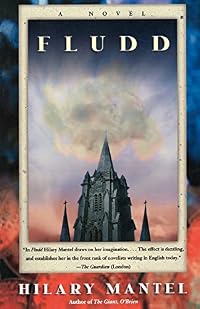
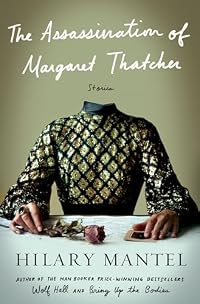
Hilary Mantel was born in Glossop, Derbyshire, England on July 6, 1952. She studied law at the London School of Economics and Sheffield University. She worked as a social worker in Botswana for five years, followed by four years in Saudi Arabia. She returned to Britain in the mid-1980s. In 1987 she was awarded the Shiva Naipaul Memorial Prize for show more an article about Jeddah. She worked as a film critic for The Spectator from 1987 to 1991. She has written numerous books including Eight Months on Ghazzah Street, A Place of Greater Safety, A Change of Climate, The Giant, O'Brien, Giving up the Ghost: A Memoir, and Beyond Black. She has won several awards for her work including the Winifred Holtby Memorial Prize, the Cheltenham Prize and the Southern Arts Literature Prize for Fludd; the 1996 Hawthornden Prize for An Experiment in Love, the 2009 Man Booker Prize for Wolf Hall, and the 2012 Man Booker Prize for Bring up the Bodies. She made The New York Times Best Seller List with her title The Assassination of Margaret Thatcher. (Bowker Author Biography) show less
Work Relationships
Common Knowledge
- Canonical title*
- Change of climate
- Original title
- A change of climate
- Original publication date
- 1994
- Important places
- Norfolk, England, UK; South Africa; Botswana
- Dedication
- To Jenny Naipaul
- First words
- One day when Kit was ten years old, a visitor cut her wrists in the kitchen.
*Some information comes from Common Knowledge in other languages. Click "Edit" for more information.
Classifications
Statistics
- Members
- 576
- Popularity
- 50,904
- Reviews
- 13
- Rating
- (3.73)
- Languages
- 5 — Danish, Dutch, English, German, Malayalam
- Media
- Paper, Audiobook, Ebook
- ISBNs
- 25
- ASINs
- 8