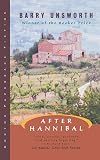
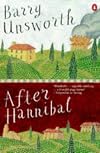
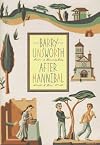
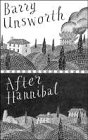
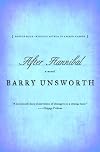
After Hannibal
by Barry Unsworth
On This Page
Description
Fiction. Literature. HTML:Golden Umbria is home to breathtaking scenery and great art; it is also where Hannibal and his invading band of Carthaginians ambushed and slaughtered a Roman legion, and where the local place-names still speak of that bloodshed.Unsworth's contemporary invaders include the Greens, a retired American couple seeking serenity among the Umbrian hills, who are bilked out of their savings by the corrupt English "building expert" Stan Blemish; the Chapmans, a British show more property speculator and his wife, whose dispute with their neighbors over a wall escalates into a feud of nearly medieval proportions; Anders Ritter, a German haunted by the part his father played in a mass killing of Italian hostages in Rome during the Second World War; and Fabio and Arturo, a gay couple who, searching for peace and self-sufficiency, find treachery instead. And at the center of all these webs of deceit and greed is the cunning lawyer Mancini, happy to aid the disputants—and to exploit to the fullest the faith that these "innocents abroad" have placed in him. show less
Tags
Recommendations













Member Reviews
The novel centers around a country road which serves several homes in the Umbrian countryside. We get to know something about the people in each of the five households on the road, along with a few outsiders they come in contact with. Several of the houses are owned by people who are from other countries (a German, an English couple, a pair of American retirees), and the final two are occupied by Italians. Drama kicks off in the beginning with the collapse of part of the wall along the road, which the farmers on the corner insist was caused by trucks going to the English couple's house. Meanwhile, the Americans are dealing with some unsavory business practices in the repair and remodeling of their dream home, and various domestic show more intrigues play out in different households.
The "male gaze" as a filter for the observance of women is a well-known concept; I think that similarly there is a "foreign gaze" through which Italy is often observed. (I have no doubt it happens to other countries as well, but Italy seems to be so idealized, particularly by Americans.) Unsworth does a great job of presenting that here. An example from early in the book, from the point of view of the British wife: "She felt guilty at feeling like this about them [the farmers expecting them to repair the wall], as they were contadini, peasants, and therefore very authentic people and by definition admirable." For a while I felt like Unsworth might have swung too far the other way in making the Italians overall not very nice or trustworthy people, but in the end I think it ended up, if not balanced, at least with some positives.
Bottom line: There is more of a culture gap than you might think from vacationing in the large cities and going to museums. Also, Italy is not the answer to your dreams. (Note: apparently this was partially based on Unsworth's own experiences settling in the area of Perugia. He did stay in the country until he died, though, so apparently it worked out for him.) show less
The "male gaze" as a filter for the observance of women is a well-known concept; I think that similarly there is a "foreign gaze" through which Italy is often observed. (I have no doubt it happens to other countries as well, but Italy seems to be so idealized, particularly by Americans.) Unsworth does a great job of presenting that here. An example from early in the book, from the point of view of the British wife: "She felt guilty at feeling like this about them [the farmers expecting them to repair the wall], as they were contadini, peasants, and therefore very authentic people and by definition admirable." For a while I felt like Unsworth might have swung too far the other way in making the Italians overall not very nice or trustworthy people, but in the end I think it ended up, if not balanced, at least with some positives.
Bottom line: There is more of a culture gap than you might think from vacationing in the large cities and going to museums. Also, Italy is not the answer to your dreams. (Note: apparently this was partially based on Unsworth's own experiences settling in the area of Perugia. He did stay in the country until he died, though, so apparently it worked out for him.) show less
Unsworth's writing is so lovely that it was easy to fall into After Hannibal but midway I was thinking of giving it up. It takes place in Tuscany where there are five homes on a rural road. In each case we learn of deceptions that are or have taken place against the occupants. Three of the five are outsiders; Americans, British, and German. And then there is the lawyer who takes advantage of them all again.
I eventually browsed the last fifty pages, it was just too cynical for me. Unsworth was British and lived in Umbria late in his life causing some reviewers to claim that this was based on his Tuscan experiences. Maybe so, on the last page he writes "But the real thief of dreams was generally not the one you feared but the one you show more trusted. show less
I eventually browsed the last fifty pages, it was just too cynical for me. Unsworth was British and lived in Umbria late in his life causing some reviewers to claim that this was based on his Tuscan experiences. Maybe so, on the last page he writes "But the real thief of dreams was generally not the one you feared but the one you show more trusted. show less
fragment:
Ze worden Strade Vicinale genoemd, buurtweggetjes. Ze zijn niet bedoeld als verbinding tussen verschillende plaatsen, maar louter als toegangsweg tussen verspreid liggende huizen. 's Zomers stoffig, 's winters modderig, zo slingeren duizenden kilometer van dit soort weggetjes zich door het platteland van Italië. Als zo'n weg je deur eenmaal bereikt, is zijn voortbestaan overbodig, misschien ploetert hij elders verder, minsschien ook niet. Hun loop is te volgens op de landkaarten die bewaard worden in de burelen van de plaatselijke commune, maar geen enkele kaart zal je vertellen wat je vooraf moet weten: of ze begaanbaar zijn of in puin liggen, of geheel zijn opgehouden te bestaan - behalve dan in de cartografiese zin. Het show more onderhoud berust bij diegenen die ervan afhankelijk zijn, wat vaak tot ruzies leidt. Het echt belangrijke aan wegen als deze is niet waar ze eindigen maar de levens die ze in hun loop raken. p 9 show less
Ze worden Strade Vicinale genoemd, buurtweggetjes. Ze zijn niet bedoeld als verbinding tussen verschillende plaatsen, maar louter als toegangsweg tussen verspreid liggende huizen. 's Zomers stoffig, 's winters modderig, zo slingeren duizenden kilometer van dit soort weggetjes zich door het platteland van Italië. Als zo'n weg je deur eenmaal bereikt, is zijn voortbestaan overbodig, misschien ploetert hij elders verder, minsschien ook niet. Hun loop is te volgens op de landkaarten die bewaard worden in de burelen van de plaatselijke commune, maar geen enkele kaart zal je vertellen wat je vooraf moet weten: of ze begaanbaar zijn of in puin liggen, of geheel zijn opgehouden te bestaan - behalve dan in de cartografiese zin. Het show more onderhoud berust bij diegenen die ervan afhankelijk zijn, wat vaak tot ruzies leidt. Het echt belangrijke aan wegen als deze is niet waar ze eindigen maar de levens die ze in hun loop raken. p 9 show less
Jul 4, 2010Dutch
Een grappig en onderhoudend verhaal over de lotgevallen van Engelsen en Amerikanen in Umbrië. Leuk om te lezen.
Dec 26, 2011Dutch
Ratings
Members
- Recently Added By
Lists

Books Read in 2016
4,666 works; 197 members
Author Information

20+ Works 6,824 Members
Barry Unsworth was born in Wingate, England on August 10, 1930. He received an undergraduate degree in English from the University of Manchester in 1951. He started out writing short stories, but soon switched to novels. His first novel, The Partnership, was published in 1966. He wrote 17 novels during his lifetime including Stone Virgin, Losing show more Nelson, The Songs of the Kings, Land of Marvels, and The Quality of Mercy. Sacred Hunger won a Booker Prize in 1992. Morality Play and Pascali's Island were both made into feature films. He died from lung cancer on June 5, 2012 at the age of 81. (Bowker Author Biography) show less
Some Editions
Awards and Honors
Awards
Series
Belongs to Publisher Series
Common Knowledge
- Canonical title*
- Een zomer in Italië
- Original title
- After Hannibal
- Alternate titles*
- Na Hannibal
- Original publication date
- 1996
- Important places
- Umbria, Italy
- Dedication
- For Aira
- First words
- They are called strade vicinali, neighborhood roads.
- Last words
- (Click to show. Warning: May contain spoilers.)This is what you must do.
*Some information comes from Common Knowledge in other languages. Click "Edit" for more information.
Classifications
Statistics
- Members
- 370
- Popularity
- 84,717
- Reviews
- 4
- Rating
- (3.28)
- Languages
- Dutch, English, German, Swedish
- Media
- Paper, Audiobook, Ebook
- ISBNs
- 15
- ASINs
- 3