Blaming
by Elizabeth Taylor
On This Page
Description
While on holiday in Istanbul, tragedy strikes, and suddenly the comfortably middle-aged, middle-class Amy is left stranded and a widow. Martha, a young American novelist, kindly helps her, but upon their return to England, Amy is ungratefully reluctant to maintain their friendship--on home soil she realizes that in normal circumstances, Martha isn't the sort of person she would be friends with. But guilt is a hard taskmaster, and Martha has a way of getting under one's skin.Tags
Recommendations



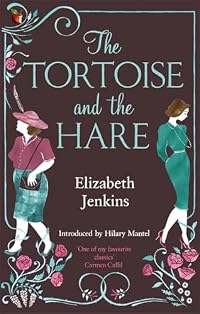



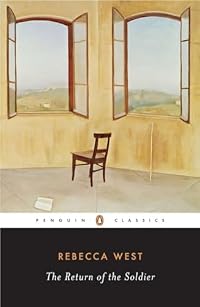


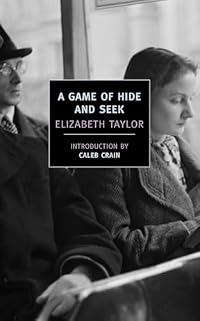

















Member Recommendations


KayCliff Both books deal with friendships between two women, one newly widowed.
Member Reviews
A simple, poignant story that focuses on obligation, guilt and blame, rather than characters or plot - though it's not as depressing as it sounds.
It is set around the time of publication (mid '70s), though at times it could easily be a decade or two earlier (except that the name Amy feels very incongruous). Amy and Nick are a late middle-aged, middle-class couple on a Mediterranean cruise, as he recuperates from a major illness. A younger, American author called Martha attaches herself to them as the only other English speakers, and when Nick suddenly dies, she helps Martha with the arrangements.
The book is mainly about the relationship between Amy and Martha: Amy feels obligated to Martha, but has little in common with her, and finds show more her needy and annoying ("She did all that for me and I never want to see her again, she thought in shame"). Her visits, when they cannot be prevented, become a way to pass time, "rather taken for granted than welcome". At one point, her son James warns, "Don't for heaven's sake punish her because you owe her gratitude."
Is Amy too cold, selfish and ungrateful, or is she just a shocked and grieving widow? "No one cares for reminders that gratitude is due."
In addition, Amy's relationship with James is tinged with all sorts of guilt, exacerbated by his wife Maggie ("in spite of lack of warmth, their relationship was exemplary"), and their children Dora and Imogen. Worst of all, are the guilty feelings that arise when someone dies: what should one have done differently? The only two people who never blame are Amy's housekeeper Ernie and widowed doctor friend Gareth, but even so, their competence sometimes makes her ashamed of her own helplessness, which she tries to hide.
The social niceties and incongruities are acutely observed. This is the first Taylor I've read, but I can see why she's likened to Bowen, Austen and Pym (whom I have read). There is even a painfully funny scene where James and Maggie discuss his mother's widowhood, starting, "We must do all we can for her", diluting their suggestions the more they discuss it, so the scene ends "So nothing was done" (Shades of "Sense and Sensibility").
The children provide plenty of humour, individually and in their sibling rivalry: Dora (the elder) is the more sympathetic character, but very knowing, and capable of being quite manipulative, albeit in a charming way, whereas Isobel is horridly selfish, rude and spoilt (fun to read about, but not to meet!).
I hope that Taylor didn't see too much of herself in Martha, in whose books "objects took the place of characters" and who uses vague research as an excuse for unwanted nosiness. When she visits, Amy realises she is "like a tiresome child... but unlike a child she can't be reprimanded". Despite her inquisitiveness, at other times she is strangely and frustratingly indifferent to people and social norms - yet has the audacity to accuse Amy of being uninterested in people. She also has a knack of expecting things and tacitly making other people feel guilty for not anticipating this, though to what extent this is deliberate is not clear.
The other link between Martha and the children is how they see themselves in the mind of others. Isobel "was disturbed, as many children and all egoists are... by the idea of a non-existence at any time with relation to the present" and Martha has similar concerns that when she goes away, she'll be able to picture Amy's life, but that Amy "won't be able to imagine ME, or my life. That makes me feel unreal".
By the end of the book, Amy is blaming herself for some aspect of everyone's life, including her own, with a smidgen or respite when "she was relieved... to be able to say that there was blame lying elsewhere".
The final questions is "What else could I have done?", and I'm not sure I have a satisfactory answer to that, because I'm not sure that anything else would necessarily have led to a happier outcome. show less
It is set around the time of publication (mid '70s), though at times it could easily be a decade or two earlier (except that the name Amy feels very incongruous). Amy and Nick are a late middle-aged, middle-class couple on a Mediterranean cruise, as he recuperates from a major illness. A younger, American author called Martha attaches herself to them as the only other English speakers, and when Nick suddenly dies, she helps Martha with the arrangements.
The book is mainly about the relationship between Amy and Martha: Amy feels obligated to Martha, but has little in common with her, and finds show more her needy and annoying ("She did all that for me and I never want to see her again, she thought in shame"). Her visits, when they cannot be prevented, become a way to pass time, "rather taken for granted than welcome". At one point, her son James warns, "Don't for heaven's sake punish her because you owe her gratitude."
Is Amy too cold, selfish and ungrateful, or is she just a shocked and grieving widow? "No one cares for reminders that gratitude is due."
In addition, Amy's relationship with James is tinged with all sorts of guilt, exacerbated by his wife Maggie ("in spite of lack of warmth, their relationship was exemplary"), and their children Dora and Imogen. Worst of all, are the guilty feelings that arise when someone dies: what should one have done differently? The only two people who never blame are Amy's housekeeper Ernie and widowed doctor friend Gareth, but even so, their competence sometimes makes her ashamed of her own helplessness, which she tries to hide.
The social niceties and incongruities are acutely observed. This is the first Taylor I've read, but I can see why she's likened to Bowen, Austen and Pym (whom I have read). There is even a painfully funny scene where James and Maggie discuss his mother's widowhood, starting, "We must do all we can for her", diluting their suggestions the more they discuss it, so the scene ends "So nothing was done" (Shades of "Sense and Sensibility").
The children provide plenty of humour, individually and in their sibling rivalry: Dora (the elder) is the more sympathetic character, but very knowing, and capable of being quite manipulative, albeit in a charming way, whereas Isobel is horridly selfish, rude and spoilt (fun to read about, but not to meet!).
I hope that Taylor didn't see too much of herself in Martha, in whose books "objects took the place of characters" and who uses vague research as an excuse for unwanted nosiness. When she visits, Amy realises she is "like a tiresome child... but unlike a child she can't be reprimanded". Despite her inquisitiveness, at other times she is strangely and frustratingly indifferent to people and social norms - yet has the audacity to accuse Amy of being uninterested in people. She also has a knack of expecting things and tacitly making other people feel guilty for not anticipating this, though to what extent this is deliberate is not clear.
The other link between Martha and the children is how they see themselves in the mind of others. Isobel "was disturbed, as many children and all egoists are... by the idea of a non-existence at any time with relation to the present" and Martha has similar concerns that when she goes away, she'll be able to picture Amy's life, but that Amy "won't be able to imagine ME, or my life. That makes me feel unreal".
By the end of the book, Amy is blaming herself for some aspect of everyone's life, including her own, with a smidgen or respite when "she was relieved... to be able to say that there was blame lying elsewhere".
The final questions is "What else could I have done?", and I'm not sure I have a satisfactory answer to that, because I'm not sure that anything else would necessarily have led to a happier outcome. show less
Taylor's last novel, published posthumously. Amy, a middle-aged, middle-class woman, Englishly passive and reserved to an almost comical degree, unexpectedly becomes a widow and is drawn into an unlikely and rather unwanted friendship with Martha, a spontaneous, unconventional American. In the hands of most novelists this sort of situation would end happily, with Amy discovering her previously unrealised capacity for enjoying life, but this is Taylor (and not only that, but Taylor in the last months of her life), so it ends badly, and we are left to reflect on blame and guilt and the impossibility of paying our debts to the dead. Depressing, but beautifully written, and full of very perceptive detail, and some really spot-on dialogue.
Every once and awhile a book comes along that just hits all the right notes, and for me, Blaming by Elizabeth Taylor was such a book. The story is about death and widowhood. It explores the feelings of bereavement; the anger, resentment, loneliness, helplessness and boredom over the course of the first winter after the main character lost her husband while on a Mediterranean cruise. The author is able to evoke the feelings of pain and guilt that are all part and parcel of the grieving process. Although it may sound dark and dreary, there is humor, hope and compassion in this story as well.
This was my first book by Elizabeth Taylor and I am excited to discover more by this author. Her writing is intelligent, sympathetic and highly show more engaging. She illustrates what is going on under the surface, how people interact with each other, and is also able to insert gentle satire in her descriptions of the routines of life. She obviously knows and likes children as she captures their innocence, precociousness, and their ability to be unaware of how hilarious their thoughts and opinions can be.
I can’t really put my finger on why this book touched me so strongly and I don’t know if it would work as well for others. Her main character was tentative in her ways and a little resentful of the diminished choices that widowhood brought but the insights the author revealed of upper middle class English life made this book a very pleasurable read for me. show less
This was my first book by Elizabeth Taylor and I am excited to discover more by this author. Her writing is intelligent, sympathetic and highly show more engaging. She illustrates what is going on under the surface, how people interact with each other, and is also able to insert gentle satire in her descriptions of the routines of life. She obviously knows and likes children as she captures their innocence, precociousness, and their ability to be unaware of how hilarious their thoughts and opinions can be.
I can’t really put my finger on why this book touched me so strongly and I don’t know if it would work as well for others. Her main character was tentative in her ways and a little resentful of the diminished choices that widowhood brought but the insights the author revealed of upper middle class English life made this book a very pleasurable read for me. show less
Amy and Nick are an average couple, happily married for years and looking forward to spending their later years together. Unexpectedly, while on holiday, tragedy strikes and leaves Amy a widow. Paralyzed by grief and confusion, Amy accepts help and support from Martha, another member of their holiday touring party. Martha is an odd duck, someone Amy would never have befriended otherwise. But after returning home she feels indebted to her, and Martha becomes a regular visitor in Amy's home. Martha helps fill otherwise long and lonely days, and slowly Amy begins rebuilding her life.
Amy's son James and his wife Maggie repeatedly extend invitations to visit, but Amy is proud and doesn't want to intrude (and, to be fair, James and Maggie show more have invited Amy more from a sense of duty than anything else). Amy's housekeeper / cook, Ernie Pounce, tries to please her through his efficient service, better-than-average culinary abilities, and fond memories of Nick. And Gareth, her physician and long-time family friend, drops by often just to chat or have a meal. But Martha makes herself such a presence in Amy's life, that Amy is oblivious to care offered by relatives and close friends. And yet, when Martha most needs Amy's help and support, Amy fails her.
Blaming was Taylor's last novel, published just months before her death. It is a quiet, sad book, perhaps reflecting Taylor's own mood at the time, since she knew she was dying of cancer. It is moving in her typically understated way, and yet she also unleashed her brilliant wit in portrayals of Ernie, and Amy's two grandchildren, lightening the mood at just the right moments. While Blaming is not as strong as some of Taylor's early and mid-career novels, it is a fitting conclusion to her work. show less
Amy's son James and his wife Maggie repeatedly extend invitations to visit, but Amy is proud and doesn't want to intrude (and, to be fair, James and Maggie show more have invited Amy more from a sense of duty than anything else). Amy's housekeeper / cook, Ernie Pounce, tries to please her through his efficient service, better-than-average culinary abilities, and fond memories of Nick. And Gareth, her physician and long-time family friend, drops by often just to chat or have a meal. But Martha makes herself such a presence in Amy's life, that Amy is oblivious to care offered by relatives and close friends. And yet, when Martha most needs Amy's help and support, Amy fails her.
Blaming was Taylor's last novel, published just months before her death. It is a quiet, sad book, perhaps reflecting Taylor's own mood at the time, since she knew she was dying of cancer. It is moving in her typically understated way, and yet she also unleashed her brilliant wit in portrayals of Ernie, and Amy's two grandchildren, lightening the mood at just the right moments. While Blaming is not as strong as some of Taylor's early and mid-career novels, it is a fitting conclusion to her work. show less
Not feeling well, I took Blaming to bed with me night before last where I read and dozed, read and dozed for twelve hours whereupon I had completed the book. As of this moment Blaming is my very favorite of Elizabeth Taylor's works. I know this will change with the next one but I was very much taken with this story.
This story is about a British couple, Amy and Nick, on vacation touring Istanbul whereupon they come in contact with an American woman, Martha, who seems very needy for English speaking companionship. She leeches onto the them and where they go, she goes as well. As it happens, Nick has an episode and passes away on the trip and Martha is there for Amy all along the way. She gives up the remainder of her holiday to support show more and be there for Amy whether Amy desires her companionship or not. Turns out she really doesn't but there she is.
When they get back to London Martha continues the contact and 'friendship' with Amy. Amy has long since tired of Martha's company but what does one do and stay within the realm of propriety? Why one soldiers on.
The story felt so real and all of the characters were so easy to identify with and to understand their personalities and eccentricities. I felt as though I was the one walking into Amy's home or into Martha's bedsitter. I especially loved the character of Ernie, Amy's houseman. I found him to be just a lovely man and want an Ernie of my own.
"So Martha came and went in Laurel Walk, rather taken for granted than welcomed. On winter afternoons, she and Amy would walk beside the river while the slimy mudbanks became rosy in the setting sun and gulls collected on them, squabbling; or the water ran by , carrying scum, at full tide."
Can you see it? Can you feel it? I could.
"What is it tonight...what are you talking about?" Amy asked, having learned that she must ask questions."
Loved that bit.
I found the ending to be rather bittersweet and was not expecting it to occur in that manner nor perhaps even with that character. One thing I admire so much in Elizabeth Taylor is that she does not feel the need to tidy up all ends nor to end each storyline. With her books as in life the characters go on to live their lives with the imperfections and blemishes that are on all of our lives.
Blaming was a five star read for me and I don't quite know how to pick up another book after this one. I very highly recommend this one. show less
This story is about a British couple, Amy and Nick, on vacation touring Istanbul whereupon they come in contact with an American woman, Martha, who seems very needy for English speaking companionship. She leeches onto the them and where they go, she goes as well. As it happens, Nick has an episode and passes away on the trip and Martha is there for Amy all along the way. She gives up the remainder of her holiday to support show more and be there for Amy whether Amy desires her companionship or not. Turns out she really doesn't but there she is.
When they get back to London Martha continues the contact and 'friendship' with Amy. Amy has long since tired of Martha's company but what does one do and stay within the realm of propriety? Why one soldiers on.
The story felt so real and all of the characters were so easy to identify with and to understand their personalities and eccentricities. I felt as though I was the one walking into Amy's home or into Martha's bedsitter. I especially loved the character of Ernie, Amy's houseman. I found him to be just a lovely man and want an Ernie of my own.
"So Martha came and went in Laurel Walk, rather taken for granted than welcomed. On winter afternoons, she and Amy would walk beside the river while the slimy mudbanks became rosy in the setting sun and gulls collected on them, squabbling; or the water ran by , carrying scum, at full tide."
Can you see it? Can you feel it? I could.
"What is it tonight...what are you talking about?" Amy asked, having learned that she must ask questions."
Loved that bit.
I found the ending to be rather bittersweet and was not expecting it to occur in that manner nor perhaps even with that character. One thing I admire so much in Elizabeth Taylor is that she does not feel the need to tidy up all ends nor to end each storyline. With her books as in life the characters go on to live their lives with the imperfections and blemishes that are on all of our lives.
Blaming was a five star read for me and I don't quite know how to pick up another book after this one. I very highly recommend this one. show less
Not a happy book but I still enjoyed it very much. I appreciated ET’s spare prose, keen observations, and characters. Her episodic structure, which seems to bother some readers, appealed to me. There is no driving plot line, more a series of vignettes in which to get to know the characters and explore their feelings and perceptions as well as your own.
Classic Elizabeth Taylor - a beautifully crafted novel describing the interior life of a female character. Very funny in places too, especially the granddaughter Isobel and manservant Ernie. A wonderful treat.
Members
- Recently Added By
Lists

Favourite Virago Modern Classics
183 works; 38 members

50 Books by Women Authors
50 works; 10 members

hopes
34 works; 1 member

2025 Christmas Gifts
70 works; 19 members
Talk Discussions
Past Discussions
Group Read, July 2021: Blaming in 1001 Books to read before you die (July 2021)
Elizabeth Taylor Centenary: Blaming in Virago Modern Classics (December 2012)
Author Information

30+ Works 7,829 Members
Some Editions
Awards and Honors
Series
Belongs to Publisher Series
Virago Modern Classics (373)
Common Knowledge
- Canonical title
- Blaming
- Original title
- Blaming
- Original publication date
- 1976
- Important places
- Istanbul, Turkey; London, England, UK
- Dedication
- For JOHN with love
- First words
- Istanbul was cool.
The Englishness of the English novel in the twentieth century has a great deal to do with our native fondness for hierarchies. (Introduction)
My mother knew that she was dying when she wrote this novel. (Afterword) - Quotations
- How to pass her time was her problem, and she wondered about other women alone in their houses, wishing their lives away.
“She knew that bereaved people are a great burden to others – no one finding words to say, or ways to behave.” - Last words
- (Click to show. Warning: May contain spoilers.)"What else could I have done?" she asked the rain.
(Click to show. Warning: May contain spoilers.)Whatever Austen's and Taylor's ladylike demeanor in their personal lives, neither woman was a lady in the exuberant exercise of her art, and thank goodness for that. (Introduction)
(Click to show. Warning: May contain spoilers.)I shall always be grateful that as well as being a writer, she was also my mother. (Afterword)
Classifications
Statistics
- Members
- 440
- Popularity
- 69,337
- Reviews
- 13
- Rating
- (3.81)
- Languages
- English, French, Italian
- Media
- Paper, Ebook
- ISBNs
- 9
- ASINs
- 5