
Jonathan Keates
Author of Canterbury Cathedral
About the Author
Image credit: Jerry Bauer
Works by Jonathan Keates
La Catedral de Canterbury. 1 copy
Associated Works
Tagged
Common Knowledge
- Canonical name
- Keates, Jonathan
- Other names
- Keates, Jonathan B.
- Birthdate
- 1946
- Gender
- male
- Education
- Bryanston School
Magdalen College, University of Oxford (BA) - Occupations
- novelist
travel writer
teacher (English, City of London School)
biographer
author
writer (show all 7)
journalist - Organizations
- Venice In Peril Fund (Chairman)
City of London School - Awards and honors
- Royal Society of Literature (Fellow, 1992)
- Agent
- Felicity Bryan
- Nationality
- England
UK - Birthplace
- Paris, France
- Places of residence
- London, England, UK
- Associated Place (for map)
- London, England, UK
Members
Reviews

I broached this book in order to learn more about the human being Handel, rather than the composer.
This book was unable to satisfy this requirement. Handel was, apparently, a man who did not leave swathes of letters and private papers. What one, therefore, finds oneself reading is a discourse upon his music.
Having said this, I learned much that I did not previously know about Handel and, were I to be a musical student, this tome would be a must.
This book was unable to satisfy this requirement. Handel was, apparently, a man who did not leave swathes of letters and private papers. What one, therefore, finds oneself reading is a discourse upon his music.
Having said this, I learned much that I did not previously know about Handel and, were I to be a musical student, this tome would be a must.
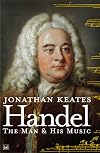
Summary: A biography of George Frideric Handel, tracing his life through his music, from his training in Halle, his time in Italy, and his long career in England, following George I's ascent to the English throne, through the formation of three opera companies, and the composition of the oratorios for which he is most famous.
For most of us, when you mention Handel, we think primarily of his most famous works: The Royal Fireworks Music,The Water Music, Judas Maccabeus, The Concerti Grossi, show more and most of all Messiah. For a long time these were about the only works of Handel in my music collection. In recent years, I've discovered that Handel composed numerous other operas and oratorios on biblical and classical themes. But until I read this book, I had no idea of how much music Handel composed, particularly in the genre of opera.
Keates biography really is just as much musicography as it is biography. Part of the reason is that Handel, apart from his music, lived a very private life, never marrying. We do learn about his family including his physician father. We learn about his training in Halle, his time in Italy learning from Corelli and Scarlatti, and most fatefully, how he became kapellmeister to the Elector of Hanover in 1710, and moved to London in 1712 when the Elector ascended to the English throne as George I. Handel never depended exclusively on the Royal Family for patronage, enjoying the patronage of other wealthy houses. He also helped launch, over the years, three opera companies. When, in the 1730's interest in his operas waned, he began writing oratorios, leading to Samson, Alexander Balus, and above all, Messiah and Judas Maccabeus. We learn of Handel's temporary paralysis (perhaps from stroke?) and the eventual loss of his sight, the use of the proceeds of Messiah performances for the Foundling Hospital, and his passing in 1757.
What we learn most from Keates is about the music itself--the libretti and the librettists Handel worked with, the scenes and movements, music drawn from earlier work and the performers who first performed these works. We are introduced to 'il Senesino,' Handel's star castrato (a role likely not to be filled in this way in our more humane age) and Susannah Cibber, who sang "He was despised" in Messiah. She did not have a great voice but was unmatched in her expressiveness, as an actor. We also trace the career of Handel, the music impresario, and the struggles hardly unique to his age to make musical performances and companies financially viable, as well as profitable to himself. He was perhaps more successful than most, due particularly to his oratorios, leaving an estate of 20,000 pounds, distributing bequests to a number of causes and friends.
Some might consider his account of the works and their first performances too much. But for the musicophile who wants to discover Handel's lesser known works, many of which have been recorded in the last thirty years, the book makes a great adjunct to the discovery of these works. One of the indexes Keates includes is one by category and alphabet to all the works referenced in his book, with page numbers. I would also have appreciated a chronological listing, and perhaps a discography of recordings of these works.
After a period when Handel's reputation was in eclipse, he once again has grown in regard. Keates work instructs us on many of the lesser known aspects of his life and work, and the prolific body of work that remains for many of us to discover. show less
For most of us, when you mention Handel, we think primarily of his most famous works: The Royal Fireworks Music,The Water Music, Judas Maccabeus, The Concerti Grossi, show more and most of all Messiah. For a long time these were about the only works of Handel in my music collection. In recent years, I've discovered that Handel composed numerous other operas and oratorios on biblical and classical themes. But until I read this book, I had no idea of how much music Handel composed, particularly in the genre of opera.
Keates biography really is just as much musicography as it is biography. Part of the reason is that Handel, apart from his music, lived a very private life, never marrying. We do learn about his family including his physician father. We learn about his training in Halle, his time in Italy learning from Corelli and Scarlatti, and most fatefully, how he became kapellmeister to the Elector of Hanover in 1710, and moved to London in 1712 when the Elector ascended to the English throne as George I. Handel never depended exclusively on the Royal Family for patronage, enjoying the patronage of other wealthy houses. He also helped launch, over the years, three opera companies. When, in the 1730's interest in his operas waned, he began writing oratorios, leading to Samson, Alexander Balus, and above all, Messiah and Judas Maccabeus. We learn of Handel's temporary paralysis (perhaps from stroke?) and the eventual loss of his sight, the use of the proceeds of Messiah performances for the Foundling Hospital, and his passing in 1757.
What we learn most from Keates is about the music itself--the libretti and the librettists Handel worked with, the scenes and movements, music drawn from earlier work and the performers who first performed these works. We are introduced to 'il Senesino,' Handel's star castrato (a role likely not to be filled in this way in our more humane age) and Susannah Cibber, who sang "He was despised" in Messiah. She did not have a great voice but was unmatched in her expressiveness, as an actor. We also trace the career of Handel, the music impresario, and the struggles hardly unique to his age to make musical performances and companies financially viable, as well as profitable to himself. He was perhaps more successful than most, due particularly to his oratorios, leaving an estate of 20,000 pounds, distributing bequests to a number of causes and friends.
Some might consider his account of the works and their first performances too much. But for the musicophile who wants to discover Handel's lesser known works, many of which have been recorded in the last thirty years, the book makes a great adjunct to the discovery of these works. One of the indexes Keates includes is one by category and alphabet to all the works referenced in his book, with page numbers. I would also have appreciated a chronological listing, and perhaps a discography of recordings of these works.
After a period when Handel's reputation was in eclipse, he once again has grown in regard. Keates work instructs us on many of the lesser known aspects of his life and work, and the prolific body of work that remains for many of us to discover. show less
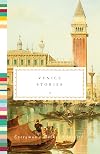
A visit to Venice via the elegant transport of the short story. This beautiful collection includes entries from literary stylists including Trollope, James, Proust, and Du Maurier among others. In a small handy hardbound edition this volume is just right for travel, whether to Venice or elsewhere.

Owing a lot to Alan Hollinghurst this novel covers very much the same ground.
Awards


You May Also Like


Associated Authors
Statistics
- Works
- 35
- Also by
- 7
- Members
- 1,037
- Popularity
- #24,830
- Rating
- 3.9
- Reviews
- 8
- ISBNs
- 94
- Languages
- 4