Hiking with Nietzsche: On Becoming Who You Are
by John Kaag
On This Page
Description
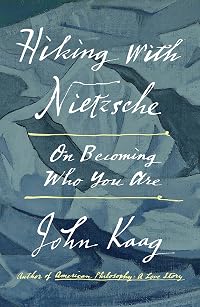
"Hiking with Nietzsche: Becoming Who You Are is a tale of two philosophical journeys--one made by John Kaag as an introspective young man of nineteen, the other seventeen years later, in radically different circumstances: he is now a husband and father, and his wife and small child are in tow. Kaag sets off for the Swiss peaks above Sils Maria where Nietzsche wrote his landmark work Thus Spoke Zarathustra. Both of Kaag's journeys are made in search of the wisdom at the core of Nietzsche's show more philosophy, yet they deliver him to radically different interpretations and, more crucially, revelations about the human condition. Just as Kaag's acclaimed debut, American Philosophy: A Love Story, seamlessly wove together his philosophical discoveries with his search for meaning, Hiking with Nietzsche is a fascinating exploration not only of Nietzsche's ideals but of how his experience of living relates to us as individuals in the twenty-first century. Bold, intimate, and rich with insight, Hiking with Nietzsche is about defeating complacency, balancing sanity and madness, and coming to grips with the unobtainable. As Kaag hikes, alone or with his family, but always with Nietzsche, he recognizes that even slipping can be instructive. It is in the process of climbing, and through the inevitable missteps, that one has the chance, in Nietzsche's words, to 'become who you are.'" show lessTags
Recommendations





Member Reviews
Eager to expand my shallow perception of Nietzsche as a grandiose, progressively insane anti-Semite--he was not an anti-Semite--I picked up this book as an accessible, approachable way of learning more. Sadly, the book only confirmed Nietzsche as the avatar of modern self-absorption and the godfather of the Ayn Rand types who see most ordinary human beings, as Nietzsche did, as "sheep." I write this with regret, as I really wanted my negative opinion to be overturned, and to learn to admire Nietzsche's intellectual boldness. John Kaag seemed to be the perfect guide by whom to be set right: his candid, confessional style is hard not to like. (He's the kind of guy who can talk about aspiring to become the Übermensch and seem humble about show more it.) But get this: Kaag, who by his own account nearly died in a foolish teenage climbing stunt, returns as a 36-year-old with wife and young daughter in tow to the same location, to more or less repeat the experience. No, he doesn't want to die, but he does leave his family without telling his wife which path he's taking into the mountains, and at least once leaves wife and daughter all day and into the evening after promising to be back at lunchtime.
I guess I'm against Nietzsche, and Kaag, because I'm with the sheep: I admire the ordinary, decent people who live and die in obscurity, after lives of service to those who depend on them and love them. show less
I guess I'm against Nietzsche, and Kaag, because I'm with the sheep: I admire the ordinary, decent people who live and die in obscurity, after lives of service to those who depend on them and love them. show less
Um livro surpreendente que mistura os dramas familiares de um professor de filosofia, seu diário de (várias) viagens e reflexões sobre Friedrich Nietzsche. O professor de filosofia da Universidade do Massachusetts John Kaag refaz, com sua esposa e a filha pequena, as trilhas dos Alpes suíços percorridas por Friedrich Nietzsche quando este escreveu "Assim Falou Zaratustra", e pelo próprio Kaag, quando era um jovem introspectivo de dezenove anos. No caminho, Kaag traça paralelos entre suas duas viagens, a relação com a família e a carreira e os textos do filósofo alemão. A combinação de relato de viagem familiar e investigação filosófica faz lembrar o clássico "Zen e a Arte da Manutenção de Motocicletas" Assim como na show more aclamada estréia de Kaag, American Philosophy: A Love Story, ele une perfeitamente suas descobertas filosóficas com sua busca por significado. Caminhando com Nietzsche é uma exploração fascinante não apenas dos ideais de Nietzsche, mas também de como sua experiência de vida se relaciona conosco, como indivíduos, no século XXI. Ousado, íntimo e rico em insights, Caminhando com Nietzsche é sobre derrotar a complacência, equilibrar sanidade e loucura e lidar com o inatingível. A medida que Kaag caminha, sozinho ou com sua família, porém sempre com Nietzsche, ele reconhece que até escorregar pode ser instrutivo. É no processo de escalada e seus inevitáveis erros que se tem a chance, nas palavras de Nietzsche, de "tornar-se quem se é". show less
Hiking with Nietzsche is, on the one hand, a creative way to present the ideas of Nietzsche to those less familiar with them, from an author that in many ways shares a similar pessimistic disposition. John Kaag seems especially well-suited to tell the story, and by telling it in the context of Nietzsche’s original environment and travels, he makes Nietzsche’s core ideas of eternal recurrence, the Overman, and master-slave morality more memorable and understandable.
On the other hand, Kaag is exceedingly pessimistic, which helps him to explain Nietzsche but also makes for some gloomy reading. The author discusses suicide, self-destruction, anxiety and depression, failed marriages, isolation, loneliness, nihilism, not wanting to be a show more parent, and fasting as “a means of orienting the will to something higher or deeper.” I found much of his commentary to be likewise either overly nihilistic, dramatic, or sentimental.
Personally, and by nature, I’m not a pessimist, and in fact find most pessimists to be intolerably annoying. Pessimism is self-defeating in the most obvious way, is unproductive, comes across as sulky and immature, and takes for granted the best and most enjoyable parts of life. To be fair, the author cannot be faulted for his own personality, and as far as I can tell, he’s writing in an honest and authentic manner, but it’s simply not a disposition or a philosophy that I can, or want, to relate to.
The same goes for Nietzsche himself; while he was undeniably brilliant and creative, his philosophy is centered on the idea of goodness being synonymous with individual power. He considers self-actualization to be a process of trampling on others to achieve one’s own goals in a zero-sum competition for resources (the “master mentality” as superior to the “slave mentality”). He fails to recognize the third alternative, a means of achieving self-actualization through cooperation or in helping others in positive-sum relationships. But, as an outcast himself, with a history of failed relationships and depression, the philosophy fits the personality.
I would have given the book less than three stars, but the author is a skilled writer and parts of the book were enjoyable and fascinating. The idea of eternal recurrence—the idea that you should live your life as if you will, for all eternity, have to live it over again—is compelling. Also, I imagine that if you are pessimistic and suffer from depression, this book might actually be inspirational to you. If not, then I’m not sure if you’re going to find much value in it, especially since the author doesn’t spend as much time on the actual philosophy as I would have liked. show less
On the other hand, Kaag is exceedingly pessimistic, which helps him to explain Nietzsche but also makes for some gloomy reading. The author discusses suicide, self-destruction, anxiety and depression, failed marriages, isolation, loneliness, nihilism, not wanting to be a show more parent, and fasting as “a means of orienting the will to something higher or deeper.” I found much of his commentary to be likewise either overly nihilistic, dramatic, or sentimental.
Personally, and by nature, I’m not a pessimist, and in fact find most pessimists to be intolerably annoying. Pessimism is self-defeating in the most obvious way, is unproductive, comes across as sulky and immature, and takes for granted the best and most enjoyable parts of life. To be fair, the author cannot be faulted for his own personality, and as far as I can tell, he’s writing in an honest and authentic manner, but it’s simply not a disposition or a philosophy that I can, or want, to relate to.
The same goes for Nietzsche himself; while he was undeniably brilliant and creative, his philosophy is centered on the idea of goodness being synonymous with individual power. He considers self-actualization to be a process of trampling on others to achieve one’s own goals in a zero-sum competition for resources (the “master mentality” as superior to the “slave mentality”). He fails to recognize the third alternative, a means of achieving self-actualization through cooperation or in helping others in positive-sum relationships. But, as an outcast himself, with a history of failed relationships and depression, the philosophy fits the personality.
I would have given the book less than three stars, but the author is a skilled writer and parts of the book were enjoyable and fascinating. The idea of eternal recurrence—the idea that you should live your life as if you will, for all eternity, have to live it over again—is compelling. Also, I imagine that if you are pessimistic and suffer from depression, this book might actually be inspirational to you. If not, then I’m not sure if you’re going to find much value in it, especially since the author doesn’t spend as much time on the actual philosophy as I would have liked. show less
Not sure how to rate this one. If a reader is unfamiliar with Nietzsche, this book should send them racing to dive in—and that's excellent. The blend, though, of philosophical/biographical review and what I guess I'd call life writing or memoir ended up not sitting very well with me, which in turn made me wonder what my problem was. After all, if philosophy doesn't affect us personally, what in the world is it for? And if we're to make clear why philosophy is crucial outside of closed academic circles, how better to do it than through a relatable introduction? Maybe I should just be satisfied for now that the book's brought up some questions I'll keep pondering.
Kaag takes you on a philosophical tour of Nietzsche’s stomping grounds from two very different perspectives. Maybe that’s why the book works so well, crisscrossing and showing different takes on the same timeless thoughts.
His 19 year old self sounds a lot like me at the age: unfocused, unsure, and yearning to understand more of the world. His present, 30-year-old-with-a-wife-and-child self is grounded to reality. He’s a man who is still unsure of his place in the world but has carved a niche for himself.
Keeping this in mind, he takes you on a tour of the Swiss Alps, retracing Nietzsche’s steps and trying to figure out why he thought the things he did. We get thought-provoking glimpses into Nietzsche’s mind, giving us insight show more into someone who was truly special and ahead of his time, so to say.
There’s a lot to unpack from the book, but all I’ll say is that I had a great time with it. Highly recommended for those getting into Nietzsche or have similar world views. show less
His 19 year old self sounds a lot like me at the age: unfocused, unsure, and yearning to understand more of the world. His present, 30-year-old-with-a-wife-and-child self is grounded to reality. He’s a man who is still unsure of his place in the world but has carved a niche for himself.
Keeping this in mind, he takes you on a tour of the Swiss Alps, retracing Nietzsche’s steps and trying to figure out why he thought the things he did. We get thought-provoking glimpses into Nietzsche’s mind, giving us insight show more into someone who was truly special and ahead of his time, so to say.
There’s a lot to unpack from the book, but all I’ll say is that I had a great time with it. Highly recommended for those getting into Nietzsche or have similar world views. show less
I awaited the publication date of this book with great anticipation, I even pre-ordered it. I thoroughly enjoyed John Kaag’s previous book, American Philosophy: A Love Story. What drew me in was that it was a fantastic blend of the American philosophical history that I was unaware of, a very nice love story, and a story of self-discovery. It was a brave and honest narrative of Kaag’s adventures in rediscovering some American philosophers. His rediscovery was my discovery.
This book, even though the author sees it as a continuation of his self-discovery and honest revelations, was different to me. He has moved the emphasis to Europe, a more familiar philosophical ground but his focus was on Nietzsche, a profoundly difficult and show more intimidating writer and thinker. It takes a lot of attention from the reader to be prepared for the kind of mental gymnastics that Nietzsche presents.
This book also allows us to look at the inner turmoil within the author, his relationship with his father, his emotional fragility when he was much younger and the pilgrimage he took as a young man to the very same places he is revisiting as an older man and presumably a man who is more able to deal with the emotions and thoughts that had tortured him as a young man. I sometimes felt like a voyeur peeking into places I really should not peek into while I read the book.
The reading did not begin auspiciously, I was quite often distracted and the narrative did not grab hold of my attention as I thought it would. I struggled with the whole imposing reputation and darkness of vision that is attributed to Nietzsche. While the oscillation between Kaag’s remembrances of his past journey and his present journey served as good juxtaposition for the advancement of his story, it made my mind fatigued. I took a very long and circuitous route; I laid the book down often and I ignored it for a number of months.
I started the book while it was late Autumn, as the dark of Winter started to envelope us. The weather reflected Nietzsche’s visions, which made it difficult to mentally absorb the words. I finished the book in late April, my perspective became more enlightened and my mental state became less dark and the messages from the book became more absorbed as I made my way through it. It may also be that the initial chapters of the book reflected the dark weather, which I allowed to affect my mental moods.
In the end, I loved the book, I will be re-reading it later, in sequence with Kaag’s earlier book so that I may pursue his thought process completely. It wasn’t just the change in weather that turned it, it was also the author’s patient and expert explanation and interpretation of Nietzsche’s ideas, his erudite unraveling of the complicated original writing and the inclusion of many other stories, those of his family and of other historical characters that ably illustrated his points and served as supporting narratives to the main ones.
The author’s inclusion of Hesse in the last portion of the book was particularly welcomed to me as I adored Hesse’s books as a young man. Explaining Nietzsche through the conduit of Hesse’ writing was meaningful to me personally and I believe that Hesse had the foresight and story telling ability to interpret Nietzsche without diminishing the impact of Nietzsche’s thoughts.
This last part of the book made clear the intent of the author’s thesis, and the second part of the book title: On Becoming Who You Are. It was inspiring and enlightening to get to the unifying thought which binds the philosophy to the narrative. The author did a magnificent job of tying up his thoughts about Nietzsche, his own life, and Nietzsche’s philosophy, it made the difficult journey worthwhile for me, even though I suspect I made the journey difficult on my own. But no matter, I understood the point and enjoyed the book in the end. show less
This book, even though the author sees it as a continuation of his self-discovery and honest revelations, was different to me. He has moved the emphasis to Europe, a more familiar philosophical ground but his focus was on Nietzsche, a profoundly difficult and show more intimidating writer and thinker. It takes a lot of attention from the reader to be prepared for the kind of mental gymnastics that Nietzsche presents.
This book also allows us to look at the inner turmoil within the author, his relationship with his father, his emotional fragility when he was much younger and the pilgrimage he took as a young man to the very same places he is revisiting as an older man and presumably a man who is more able to deal with the emotions and thoughts that had tortured him as a young man. I sometimes felt like a voyeur peeking into places I really should not peek into while I read the book.
The reading did not begin auspiciously, I was quite often distracted and the narrative did not grab hold of my attention as I thought it would. I struggled with the whole imposing reputation and darkness of vision that is attributed to Nietzsche. While the oscillation between Kaag’s remembrances of his past journey and his present journey served as good juxtaposition for the advancement of his story, it made my mind fatigued. I took a very long and circuitous route; I laid the book down often and I ignored it for a number of months.
I started the book while it was late Autumn, as the dark of Winter started to envelope us. The weather reflected Nietzsche’s visions, which made it difficult to mentally absorb the words. I finished the book in late April, my perspective became more enlightened and my mental state became less dark and the messages from the book became more absorbed as I made my way through it. It may also be that the initial chapters of the book reflected the dark weather, which I allowed to affect my mental moods.
In the end, I loved the book, I will be re-reading it later, in sequence with Kaag’s earlier book so that I may pursue his thought process completely. It wasn’t just the change in weather that turned it, it was also the author’s patient and expert explanation and interpretation of Nietzsche’s ideas, his erudite unraveling of the complicated original writing and the inclusion of many other stories, those of his family and of other historical characters that ably illustrated his points and served as supporting narratives to the main ones.
The author’s inclusion of Hesse in the last portion of the book was particularly welcomed to me as I adored Hesse’s books as a young man. Explaining Nietzsche through the conduit of Hesse’ writing was meaningful to me personally and I believe that Hesse had the foresight and story telling ability to interpret Nietzsche without diminishing the impact of Nietzsche’s thoughts.
This last part of the book made clear the intent of the author’s thesis, and the second part of the book title: On Becoming Who You Are. It was inspiring and enlightening to get to the unifying thought which binds the philosophy to the narrative. The author did a magnificent job of tying up his thoughts about Nietzsche, his own life, and Nietzsche’s philosophy, it made the difficult journey worthwhile for me, even though I suspect I made the journey difficult on my own. But no matter, I understood the point and enjoyed the book in the end. show less
I liked John Kaag's previous book, American Philosophy: A Love Story, and enjoyed this one also, though not as much.
It's hard to understand what Nietzsche was up to, hard to understand his own aphoristic works, so Kaag provided a good introduction for me.
The memior parts of this book, about Kaag's early fascination with Nietzsche and his return to the Swiss Alps together with his wife and young daughter, were not as happy a story as in his earlier book.
I don't expect to want to learn more about, Nietzsche, but John Kaag does write well and I do want to read his next memoir.
It's hard to understand what Nietzsche was up to, hard to understand his own aphoristic works, so Kaag provided a good introduction for me.
The memior parts of this book, about Kaag's early fascination with Nietzsche and his return to the Swiss Alps together with his wife and young daughter, were not as happy a story as in his earlier book.
I don't expect to want to learn more about, Nietzsche, but John Kaag does write well and I do want to read his next memoir.
Members
- Recently Added By
Published Reviews
ThingScore 50
Kaag is a lively storyteller who brings Nietzsche’s life into continual contact with his own. This is both the strength and the weakness of the book.
added by pbirch01
Author Information

11+ Works 989 Members
John Kaag the author of American Philosophy: A Love Story and Hiking with Nietzsche, is professor of philosophy at the University of Massachusetts, Lowell. Twitter @JohnKaag
Awards and Honors
Awards
Distinctions
The Guardian Book of the Day (2019-04-10)
Common Knowledge
- Original title
- Hiking with Nietzsche: On Becoming Who You Are
- Original publication date
- 2018
- Original language
- English
Classifications
Statistics
- Members
- 365
- Popularity
- 86,677
- Reviews
- 13
- Rating
- (3.64)
- Languages
- 5 — Dutch, English, German, Portuguese, Turkish
- Media
- Paper, Audiobook, Ebook
- ISBNs
- 14
- ASINs
- 2