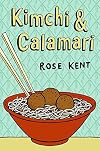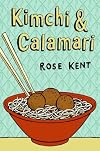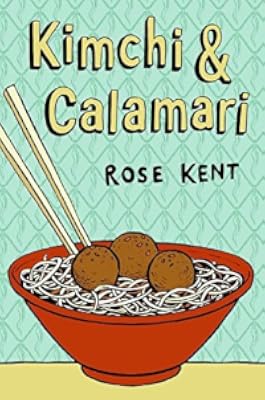
Kimchi & Calamari
by Rose Kent
On This Page
Description
Adopted from Korea by Italian parents, fourteen-year-old Joseph Calderaro begins to make important self-discoveries about race and family after his social studies teacher assigns an essay on cultural heritage and tracing the past.Tags
Recommendations










Member Reviews
Fourteen-year-old Joseph was born in Korea and adopted as a baby by an Italian-American couple. This usually doesn't seem to bother him much but when first his teacher assigns a research project into each student's ancestry and then a Korean family moves into town, Joseph begins questioning his identity and feeling like a fraudulent Korean who doesn't quite fit in no matter where he is.
This book is a well-done example of a realistic novel for tweens and young teens. Joseph's problems are relatable and not necessarily traumatic like in a lot of YA books. Although his situation is very specific, the concept of feeling not quite in one category nor another is likely universal amongst the target age group (e.g., no longer a child but not show more yet an adult). The plot tackles other everyday problems as well, such as finding a date for the big dance, juggling chores and homework, connecting meaningfully with parents, etc.
The colloquial language fits well with this book then, and it flows easily and quickly for the most part. However, Kent has some of the worst metaphors I have ever encountered including such lines as: "But suddenly I felt empty -- like the soda bottle in my hand;" "Rain sprinkled on my face like salt on french fries;" and "God, she was perfect. Even her hair, what with how it was flipped back with silver clips like the stanchions on the Verrazano Bridge."
The portrayal of Joseph's family is a smidge over the top with how very stereotypically Italian they are, but I think that may have been in part to highlight Joseph's feelings of not quite fitting in. Overall though, I would recommend this book as a decent offering into becoming more aware of different cultures. It definitely gives kids a chance to explore how other people who may not look like them or who have slightly unusual circumstances are still just like them in many ways. show less
This book is a well-done example of a realistic novel for tweens and young teens. Joseph's problems are relatable and not necessarily traumatic like in a lot of YA books. Although his situation is very specific, the concept of feeling not quite in one category nor another is likely universal amongst the target age group (e.g., no longer a child but not show more yet an adult). The plot tackles other everyday problems as well, such as finding a date for the big dance, juggling chores and homework, connecting meaningfully with parents, etc.
The colloquial language fits well with this book then, and it flows easily and quickly for the most part. However, Kent has some of the worst metaphors I have ever encountered including such lines as: "But suddenly I felt empty -- like the soda bottle in my hand;" "Rain sprinkled on my face like salt on french fries;" and "God, she was perfect. Even her hair, what with how it was flipped back with silver clips like the stanchions on the Verrazano Bridge."
The portrayal of Joseph's family is a smidge over the top with how very stereotypically Italian they are, but I think that may have been in part to highlight Joseph's feelings of not quite fitting in. Overall though, I would recommend this book as a decent offering into becoming more aware of different cultures. It definitely gives kids a chance to explore how other people who may not look like them or who have slightly unusual circumstances are still just like them in many ways. show less
Joseph Calderero, eighth-grade optimist, has a life that’s running along as satisfyingly as a fully carbonated beverage. His family loves him, his friends support him, and he’s got a rapier wit that girls go for (or so he hopes since the Farewell Formal is imminent). As a Korean boy who has been raised by an Italian-American family he soon finds that he will need his optimism, his family, his friends, and his wit to keep his identity from fizzling into flatness when his multiple cultures inescapably clash.
While Joseph has likely had questions about his past and his heritage all his life, circumstances conspire to bring his questions to the surface around his fourteenth birthday–his sociology teacher decides to turn sociology into show more soul-searching ancestral roots, his parents give him a corno (a goat horn worn by Italian men for good luck) on a gold chain for his birthday, and a “real” Korean family moves into the neighborhood.
Now, Joseph needs to write a 1500 word sociology paper on his ancestry when he really only needs two words “I’m adopted.” He has a goat horn hidden deep in his drawer. And the mother of the Korean family down the street considers him to be a “cheap Korean imitation.” Joseph’s layers–the Korean ancestry and the Italian upbringing and the uniquely Joseph–are creating inside of him an identity crisis of colossal proportion.
The essay assignment provides a central focus for much of the action of the book. As Joseph delves into his past to unearth 1500 words worth of material, he finds a murky path. The path’s so murky that he says, “I’m starting to think the adoption agency just pulled me out of a deep dark hole. Abacadabra, one Korean kid.”
In lieu of admitting his difficulties in completing the assignment to his teacher, he decides to turn his non-fiction heritage into a fictional account; basically, he adopts a famous ancestor and writes about him. Joseph’s fabrication eventually comes out in a school-wide scandal that Joseph terms Essaygate, but he does get another chance–another chance both to write the essay and to discover who he is. Joseph discovers he’s a sandwich–he’s a straight shooter with a depth that allows him to love kimchi and use chopsticks while also enjoying eating calamari (as a “calamari connoisseur” no less) and wearing a corno.
Rose Kent gives Joseph an authentic (and humorous) voice–he’s a multicultural teen grappling with where he comes from and where he’s going as he draws from all of the many influences in his life to develop his own unique identity. Kimchi & Calamari is a notable new multicultural work of children’s literature that will resonate with those who are adopted and those of diverse ethnicity but also with all those who are struggling to understand their place in this world (which is a pretty wide net). There’s also the food references to rope in food lovers and the first date angst for the budding romantics.
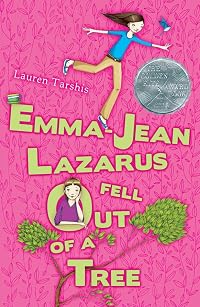
Kimchi & Calamari has been nominated for the 2007 Middle Grade Cybils Award. It’s up against some pretty stiff competition, such as Emma Jean Lazarus fell out of a Tree, so it will be interesting to wait and see…
Take-away quote:
His teacher Mrs. Peroutka: “…sometimes it feels like the here and now is all that matters, but we have legacies that help shape who we are.” show less
While Joseph has likely had questions about his past and his heritage all his life, circumstances conspire to bring his questions to the surface around his fourteenth birthday–his sociology teacher decides to turn sociology into show more soul-searching ancestral roots, his parents give him a corno (a goat horn worn by Italian men for good luck) on a gold chain for his birthday, and a “real” Korean family moves into the neighborhood.
Now, Joseph needs to write a 1500 word sociology paper on his ancestry when he really only needs two words “I’m adopted.” He has a goat horn hidden deep in his drawer. And the mother of the Korean family down the street considers him to be a “cheap Korean imitation.” Joseph’s layers–the Korean ancestry and the Italian upbringing and the uniquely Joseph–are creating inside of him an identity crisis of colossal proportion.
The essay assignment provides a central focus for much of the action of the book. As Joseph delves into his past to unearth 1500 words worth of material, he finds a murky path. The path’s so murky that he says, “I’m starting to think the adoption agency just pulled me out of a deep dark hole. Abacadabra, one Korean kid.”
In lieu of admitting his difficulties in completing the assignment to his teacher, he decides to turn his non-fiction heritage into a fictional account; basically, he adopts a famous ancestor and writes about him. Joseph’s fabrication eventually comes out in a school-wide scandal that Joseph terms Essaygate, but he does get another chance–another chance both to write the essay and to discover who he is. Joseph discovers he’s a sandwich–he’s a straight shooter with a depth that allows him to love kimchi and use chopsticks while also enjoying eating calamari (as a “calamari connoisseur” no less) and wearing a corno.
Rose Kent gives Joseph an authentic (and humorous) voice–he’s a multicultural teen grappling with where he comes from and where he’s going as he draws from all of the many influences in his life to develop his own unique identity. Kimchi & Calamari is a notable new multicultural work of children’s literature that will resonate with those who are adopted and those of diverse ethnicity but also with all those who are struggling to understand their place in this world (which is a pretty wide net). There’s also the food references to rope in food lovers and the first date angst for the budding romantics.
Kimchi & Calamari has been nominated for the 2007 Middle Grade Cybils Award. It’s up against some pretty stiff competition, such as Emma Jean Lazarus fell out of a Tree, so it will be interesting to wait and see…
Take-away quote:
His teacher Mrs. Peroutka: “…sometimes it feels like the here and now is all that matters, but we have legacies that help shape who we are.” show less
At first, I wasn't really into the MC's personality. Once I got to know him and his story I began to really care. This is about adoption so there were moments where Joseph felt unwanted or like he wasn't really his parents kids. I got pretty teary eyed towards the end because of reasons... I've always felt that adoption was something I might like to do in the future, but I wouldn't want my child questioning whether they were my kid or not which I could that the parents felt the same. There was a moment at the end where Joseph was told that he never had to prove he was Korean which brought me back to something said about me and how I've never felt really Hispanic but I know that I never have to prove who I am to someone else who matters. show more Joseph and I know who we are. show less
Great, readable, funny middle school book about Joseph, and 8th grader. Joseph was born in Korea and is adopted by an Italian family living in New Jersey. Joseph encounters a life changing event when his teacher assigns a report, "Celebrating Your Heritage." Joseph attempts to find his birth mother and figure out who he is. This is an "on target" middle school read with lots of humor. Great read!!!!
Fourteen-year-old Joseph is of Korean descent, adopted as an infant by his Italian family, the Calderaros. He's a happily accepted the Italian culture and cuisine that's become part of his life, but when a teacher assigns an essay to research family background, Joseph is uncomfortable because he doesn't know anything about his Korean heritage. A fictional essay he writes gets him into trouble but an internet search may lead him to his real mother. Unfortunately, the lead does not pan out but his questioning about his heritage and family life help him see he can be comfortable with life as an "ethnic sandwich."
Personal Response:
Kent is a funny, touching writer. Adolescents trying to figure out their own lives will relate to Joseph as he struggles to find who he is and how he fits into the world. Joseph cheats on his essay, but he is honorable enough to come forward with the truth, regardless of the consequences. Joseph’s relationship with Kelly is truthful, as he moves from infatuation to excitement at taking her out to the realization that looks are not everything.
Curricular or Programming Connections:
Students could write their own versions of the Tracing Your Past: A Heritage Essay assignment that Joseph is given, writing about their own families
Kent is a funny, touching writer. Adolescents trying to figure out their own lives will relate to Joseph as he struggles to find who he is and how he fits into the world. Joseph cheats on his essay, but he is honorable enough to come forward with the truth, regardless of the consequences. Joseph’s relationship with Kelly is truthful, as he moves from infatuation to excitement at taking her out to the realization that looks are not everything.
Curricular or Programming Connections:
Students could write their own versions of the Tracing Your Past: A Heritage Essay assignment that Joseph is given, writing about their own families
Recommended Ages: Gr. 6-9
Plot Summary: Joseph is a Korean adopted into a very Italian family. When Joseph is assigned a school project asking him to write about his heritage, he goes through an identity crisis. His best friend tries to help him find his birth mom. After Joseph turns in a paper describing his "grandfather" (a famous gold medal athlete from Korea), his teacher allows him to rewrite it.
Setting: New York suburb(?), modern day
Characters: Joseph C - 8th grade
Gina and Sophie - Joseph's twin sisters, second graders
Pete Nash - Joseph's best friend
Kelly - Joseph's crush
Robyn - Joseph's date to formal
Recurring Themes: adoption, family, friendship,
Controversial Issues: none
Personal Thoughts: This first half of this book dragged a show more little bit for me but it picked up. I'm torn about thinking the narrative was a little inauthentic. For example, Gina and Sophie occasionally acted more sophisticated than their age. In addition, Joseph is a nice guy who helps old women cross the street and isn't afraid to hang out with his family in public, yet he still has some conflicts with his family. Joseph is not afraid to call a complete adult stranger and become friends with her. Joseph's teacher lets him get off easy after blatantly lying in an essay. As I was reading it, I thought the ending was going to be obvious, but I was pleasantly surprised. I was glad Joseph didn't end up finding his real birth mother so easily. Overall, this book was better by the end, and it had enough of a happy ending but it wasn't the perfect ending I expected it to be from the beginning. show less
Plot Summary: Joseph is a Korean adopted into a very Italian family. When Joseph is assigned a school project asking him to write about his heritage, he goes through an identity crisis. His best friend tries to help him find his birth mom. After Joseph turns in a paper describing his "grandfather" (a famous gold medal athlete from Korea), his teacher allows him to rewrite it.
Setting: New York suburb(?), modern day
Characters: Joseph C - 8th grade
Gina and Sophie - Joseph's twin sisters, second graders
Pete Nash - Joseph's best friend
Kelly - Joseph's crush
Robyn - Joseph's date to formal
Recurring Themes: adoption, family, friendship,
Controversial Issues: none
Personal Thoughts: This first half of this book dragged a show more little bit for me but it picked up. I'm torn about thinking the narrative was a little inauthentic. For example, Gina and Sophie occasionally acted more sophisticated than their age. In addition, Joseph is a nice guy who helps old women cross the street and isn't afraid to hang out with his family in public, yet he still has some conflicts with his family. Joseph is not afraid to call a complete adult stranger and become friends with her. Joseph's teacher lets him get off easy after blatantly lying in an essay. As I was reading it, I thought the ending was going to be obvious, but I was pleasantly surprised. I was glad Joseph didn't end up finding his real birth mother so easily. Overall, this book was better by the end, and it had enough of a happy ending but it wasn't the perfect ending I expected it to be from the beginning. show less
Members
- Recently Added By
Author Information
6 Works 324 Members
Awards and Honors
Classifications
Statistics
- Members
- 254
- Popularity
- 127,716
- Reviews
- 14
- Rating
- (3.66)
- Languages
- English
- Media
- Paper, Ebook
- ISBNs
- 8
- ASINs
- 2