On This Page
Description
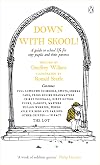
If headmasters were honest a prospectus would be a book which sa how many kanes he hav, contane a warning about the skool dog and the amount of prunes and rice served during the term. Nigel Molesworth may not be the best student St Custard's will ever have, but he is certainly able to express his feelings about his beloved school - not to mention botany walks and foopball. With his handy guide to Masters at a Glance (Know the Enemy) and Lessons (chiz chiz) and How to Avoid Them, no noble show more brave fearless etc. boy will ever have to suffer at the hands of the 'swots, bulies, milksops greedy guts and oiks' ever again WIZZ. 'A classic in the British genre of school story' The Times 'Most children who read Molesworth identify with a boy who doesn't like school and thinks his little brother is a waste of skin. Most adults who reread Molesworth emerge choking and incoherent' Guardian show lessTags
Recommendations
















Member Recommendations

Member Reviews
I teach school, which means that I am forever being serenaded with laments of how much better education was in some bygone era. Students were more respectful; students were more intelligent; most of all, students were more devoted to learning.
These experiences provide me just one more reason to love Down with Skool! Geoffrey Willans’ book purports to be the extended description by one young Nigel Molesworth of his English boarding school, St. Custard’s. Published in the 1950s, Down with Skool! proves what we all secretly suspect: that students have always been as fidgety, rebellious, ignorant, lazy, and pigheaded as they are today. As a schoolmaster himself, Willans had plenty of experience with early 20th century ignoramuses.
Nigel show more Molesworth, the self-described “curse of St. Custard’s,” is a blockhead, not to put it too finely. (He is known as Molesworth 1 at St. Custard’s in order to distinguish him from his even stupider younger brother, Molesworth 2.) Nigel’s spelling, punctuation, and syntax are atrocious, and he finds French, Latin, English (especially poetry), mathematics, geography, science — actually, anything academic — a complete waste of his valuable time. He finds his schoolmasters “weedy” and “wet,” and he devotes an entire chapter of the book to strategies for getting his masters off-task and for avoiding work.
But allow me to quote Molesworth himself on Macbeth:
I could join Molesworth’s English master in weeping.
Seriously, though, at just 114 pages, a reader can knock off this pretty funny book in just a few hours. Molesworth’s rantings will delight even a hard-hearted schoolteacher like me, while giving one an appreciation for all of the non-Molesworths in one’s class. Lastly, it provides this excellent explanation for endless supply of idiots in the world:
It hapens very often that parents think they are worred about the progress a boy is making. they do not realise that all boys are numskulls with o branes which is not surprising when you look at the parents really the whole thing goes on and on and there is no stoping it it is a vicious circle.
Thus shall it be ever. show less
These experiences provide me just one more reason to love Down with Skool! Geoffrey Willans’ book purports to be the extended description by one young Nigel Molesworth of his English boarding school, St. Custard’s. Published in the 1950s, Down with Skool! proves what we all secretly suspect: that students have always been as fidgety, rebellious, ignorant, lazy, and pigheaded as they are today. As a schoolmaster himself, Willans had plenty of experience with early 20th century ignoramuses.
Nigel show more Molesworth, the self-described “curse of St. Custard’s,” is a blockhead, not to put it too finely. (He is known as Molesworth 1 at St. Custard’s in order to distinguish him from his even stupider younger brother, Molesworth 2.) Nigel’s spelling, punctuation, and syntax are atrocious, and he finds French, Latin, English (especially poetry), mathematics, geography, science — actually, anything academic — a complete waste of his valuable time. He finds his schoolmasters “weedy” and “wet,” and he devotes an entire chapter of the book to strategies for getting his masters off-task and for avoiding work.
But allow me to quote Molesworth himself on Macbeth:
Sometimes we hav to recite which is girly in the extreme and there is no chance to read famous CRIB which you copied out in prep, when I recite it is something like this:Tomow and tomow and tomow
Um ah um ah
Tomow and tomow and tomow
Um — ah creeps creeps in the last syll–
No!
Tomowandtomowandtomow
Creeps in this um um
Out!
OUT!
Brief candle
Yes i kno sir half a mo sir
Yes
fie
O fie!
Um um tis an unweeded syllable an un–
No!
Tomowandtomowandtomow etc.
In other words quite frankly i just don’t kno it.
Also quite frankly
I JUST COULDN’T CARE LESS
What use will that be to me in this atomic age?
Occasionally english masters chide me for this point of view o molesworth one you must learn the value of spiritual things until i spray them with 200 rounds of my bakterial gun. i then plant the British in the masters inkwell and declare a whole holiday for the skool. boo to shakespeare.
So much for English masters.
I could join Molesworth’s English master in weeping.
Seriously, though, at just 114 pages, a reader can knock off this pretty funny book in just a few hours. Molesworth’s rantings will delight even a hard-hearted schoolteacher like me, while giving one an appreciation for all of the non-Molesworths in one’s class. Lastly, it provides this excellent explanation for endless supply of idiots in the world:
It hapens very often that parents think they are worred about the progress a boy is making. they do not realise that all boys are numskulls with o branes which is not surprising when you look at the parents really the whole thing goes on and on and there is no stoping it it is a vicious circle.
Thus shall it be ever. show less
This has always been and always will be one of the few books that has ever been able to make me laugh out loud. The tale of St. Custard's and the Masters and Pupils there is just hilarious. The main character is of course the famous or rather infamous Nigel Molesworth. Others who appear are Peason,Gillibrand,Grabber, and not forgetting Fotherington-Thomas(who is wet and a sissy). It contains a full lowdown on Skools,swots,snekes,cads,prigs,bulies,headmasters,criket,fopball,dirty roters,funks,parents,masters,wizard wheezes,weeds,aple pie beds & various other chizzes - in fact the lot.
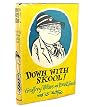
The book as you see is written using Molesworth's unique spelling and the drawings which add so much to the fun are by Ronald Searle.
The book as you see is written using Molesworth's unique spelling and the drawings which add so much to the fun are by Ronald Searle.
Funny school guide. Although set in a british boarding school of the 50's there is still a lot of things which are familiar. The entire book however is written in broken english which can get annoying at times.
Overall pretty enjoyable and strangely subversive. I never would have thought that this was written in the 50's, seems much more like a product of the early 70's.
Overall pretty enjoyable and strangely subversive. I never would have thought that this was written in the 50's, seems much more like a product of the early 70's.
That rare thing, an illustrated book the appeals to children, teenagers and adults. The Searle drawings are still funny, and so is the sublime text. You don't have to be an ex public school kid, either. I'm certainly not, as any fule kno. One million stars.
The first book in the Molesworth series. A hilarious satire of English boarding school life. The book developed from a series of Punch magazine stories. Brilliant ink cartoons by Ronald Searle. Idiosyncratic spelling and references now quite dated, for example Latin quotations. On the title page it says "contanes:
Full lowdown on skools, swots, snekes, cads, prigs bulies headmasters, criket foopball, dirty roters, funks, parents, masters, wizard wheezes, weeds, aple pie beds and various other chizzes - in fact THE LOT." Chapters include descriptions of headmasters and their standard speeches, different types of masters, lessons and how to avoid them, parents and how to torture them, school food, and much more. This was my parents' book, show more and I loved it when I was in junior high school. show less
Full lowdown on skools, swots, snekes, cads, prigs bulies headmasters, criket foopball, dirty roters, funks, parents, masters, wizard wheezes, weeds, aple pie beds and various other chizzes - in fact THE LOT." Chapters include descriptions of headmasters and their standard speeches, different types of masters, lessons and how to avoid them, parents and how to torture them, school food, and much more. This was my parents' book, show more and I loved it when I was in junior high school. show less
Written from the viewpoint (complete with bad spelling) of one of its students, this is a guide to living at St. Custard's boarding school, and is apparently the first of a series of such books. I'm afraid the charms of this one are lost on me.
The curse of St Custard's strikes back! Uterly wet sissies and weeds beware..
Members
- Recently Added By
Lists

Favorite Childhood Books
1,651 works; 515 members

Top Five Books of 2014
1,064 works; 398 members
Author Information

12+ Works 1,618 Members

Ronald Searle was born in Cambridge, England on March 3, 1920. At the age of 15, he paid for his own art school classes by working for a cartoonist at The Cambridge Daily News. In 1939 he passed a government drafting test and joined the Army as an architectural draftsman. During this time, he also made impressionistic watercolor sketches of fellow show more soldiers and cartoons poking fun at military conventions. His work was first published in the magazine Lilliput in 1941. During the war, he was captured by the Japanese and sent to Changi prison, which provided forced labor for building the Burma railway. He recorded the deplorable conditions of his camp and the fates of fellow soldiers by drawing with crude implements and scraps of paper. After he was released in 1945, his drawings were exhibited in Cambridge and were later published in 1986 as a book entitled To the Kwai - and Back: War Drawings 1939-1945. In 1948, he began writing and illustrating parodies about the students at a fictional English girls' school called St. Trinian's and publishing them in Lilliput. This led to a series of popular books, which included Hurrah for St. Trinian's, The Terror of St. Trinian's, and The St. Trinian's Story. His other books included Searle's Cats, The Square Egg, Hello - Where Did All the People Go?, The Secret Sketchbook, and More Cats. He also drew illustrations for numerous magazines and newspapers including The New Yorker, TV Guide, Le Monde, Life magazine, The New York Times, and the International Herald Tribune. He died on December 30, 2011 at the age of 91. (Bowker Author Biography) show less
Awards and Honors
Series

Belongs to Publisher Series
Armada (264)
Impedimenta (83)
Work Relationships
Is contained in
Common Knowledge
- Canonical title
- Down with Skool!
- Original publication date
- 1953
- People/Characters
- Nigel Molesworth
Classifications
Statistics
- Members
- 281
- Popularity
- 115,375
- Reviews
- 10
- Rating
- (4.14)
- Languages
- Catalan, English, Spanish
- Media
- Paper, Ebook
- ISBNs
- 8
- ASINs
- 13