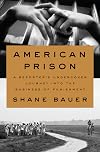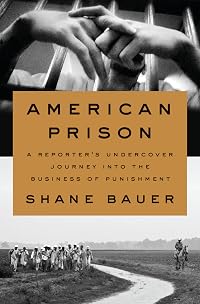
American Prison: A Reporter's Undercover Journey into the Business of Punishment
by Shane Bauer
On This Page
Description
An enraging, necessary look at the private prison system, and a convincing clarion call for prison reform.” —NPR.orgNew York Times Book Review 10 Best Books of 2018 * One of President Barack Obama’s favorite books of 2018 * Winner of the 2019 J. Anthony Lukas Book Prize * Winner of the Helen Bernstein Book Award for Excellence in Journalism * Winner of the 2019 RFK Book and Journalism Award * A New York Times Notable Book
A ground-breaking and brave inside reckoning with the show more nexus of prison and profit in America: in one Louisiana prison and over the course of our country's history.
In 2014, Shane Bauer was hired for $9 an hour to work as an entry-level prison guard at a private prison in Winnfield, Louisiana. An award-winning investigative journalist, he used his real name; there was no meaningful background check. Four months later, his employment came to an abrupt end. But he had seen enough, and in short order he wrote an exposé about his experiences that won a National Magazine Award and became the most-read feature in the history of the magazine Mother Jones. Still, there was much more that he needed to say. In American Prison, Bauer weaves a much deeper reckoning with his experiences together with a thoroughly researched history of for-profit prisons in America from their origins in the decades before the Civil War. For, as he soon realized, we can't understand the cruelty of our current system and its place in the larger story of mass incarceration without understanding where it came from. Private prisons became entrenched in the South as part of a systemic effort to keep the African-American labor force in place in the aftermath of slavery, and the echoes of these shameful origins are with us still.
The private prison system is deliberately unaccountable to public scrutiny. Private prisons are not incentivized to tend to the health of their inmates, or to feed them well, or to attract and retain a highly-trained prison staff. Though Bauer befriends some of his colleagues and sympathizes with their plight, the chronic dysfunction of their lives only adds to the prison's sense of chaos. To his horror, Bauer finds himself becoming crueler and more aggressive the longer he works in the prison, and he is far from alone.
A blistering indictment of the private prison system, and the powerful forces that drive it, American Prison is a necessary human document about the true face of justice in America. show less
Tags
Recommendations









































Member Reviews
Can You Abide This?
Here’s a fact that most Americans probably are not aware of. According to World Prison Brief (a public, searchable database of prison populations worldwide), the United States is the world leader in imprisonment of its own citizens. Currently, the USA has a total incarcerated population of just over 2.1 million people. How does that compare with other countries? China, with more than four times the U.S. population, incarcerates 1.6 million. Russia has around 700 thousand behind bars. And these are repressive countries. Clearly, there’s something very wrong here.
To make matters even worst, and the subject of Bauer’s book, the U.S. has turned over a portion of imprisonment to private, moneymaking companies, such show more as Corrections Corporation of America (recently rebranded as CoreCivic). Privatizing American prison populations in the U.S. is nothing new, as Bauer illustrates in illuminating chapters alternating with his own experience as a prison guard at CoreCivic’s Winn Correctional Center north of Baton Rouge, LA (now run under contract by LaSalle Corrections). In the past, post Civil War, this proved an efficient way essentially to extend slavery and provide farmers and manufacturers with cheap labor, fodder for medical experiments, and other practices detrimental to those imprisoned, even on the most minor of offenses.
So, how well has privatizing prisons worked out? If you are prisoner warehoused, for this is precisely the state of incarceration in a CoreCivic facility, not very well. And with CoreCivic growing with immigration imprisonment under the Trump administration, more people will experience what Bauer and others have chronicled: low-paid staff, nearly nonexistent hiring standard, inadequate training, lack of supplies, shortage of personnel, overcrowding, absence of even basic medical attention and mental health services, and other abuses of prisoners.
But not everybody suffers at the hands of CoreCivic and its ilk. Some profit quite handsomely, in fact. CoreCivic, for example, has proven a profitable investment for those invested in it. While publicly traded, this is not a company widely held by the public. Its investors include CoreCivic management and investment firms. And it appears, from a financial standpoint, quite a good use of capital. As of this writing, its market cap is $2.4 billion with a dividend yield of 8.8%. All this earned in the name of justice gone horribly awry.
Hopefully, Bauer’s book will be a wake up call to many Americans. Then again, we are a country that can’t face up to our terrible record on incarceration, a country that really has no idea how bad our prison situation is, and, worse, a country that doesn’t seem to care much. If Bauer’s book just nudged the awareness needle, well, that would be an accomplishment. show less
Here’s a fact that most Americans probably are not aware of. According to World Prison Brief (a public, searchable database of prison populations worldwide), the United States is the world leader in imprisonment of its own citizens. Currently, the USA has a total incarcerated population of just over 2.1 million people. How does that compare with other countries? China, with more than four times the U.S. population, incarcerates 1.6 million. Russia has around 700 thousand behind bars. And these are repressive countries. Clearly, there’s something very wrong here.
To make matters even worst, and the subject of Bauer’s book, the U.S. has turned over a portion of imprisonment to private, moneymaking companies, such show more as Corrections Corporation of America (recently rebranded as CoreCivic). Privatizing American prison populations in the U.S. is nothing new, as Bauer illustrates in illuminating chapters alternating with his own experience as a prison guard at CoreCivic’s Winn Correctional Center north of Baton Rouge, LA (now run under contract by LaSalle Corrections). In the past, post Civil War, this proved an efficient way essentially to extend slavery and provide farmers and manufacturers with cheap labor, fodder for medical experiments, and other practices detrimental to those imprisoned, even on the most minor of offenses.
So, how well has privatizing prisons worked out? If you are prisoner warehoused, for this is precisely the state of incarceration in a CoreCivic facility, not very well. And with CoreCivic growing with immigration imprisonment under the Trump administration, more people will experience what Bauer and others have chronicled: low-paid staff, nearly nonexistent hiring standard, inadequate training, lack of supplies, shortage of personnel, overcrowding, absence of even basic medical attention and mental health services, and other abuses of prisoners.
But not everybody suffers at the hands of CoreCivic and its ilk. Some profit quite handsomely, in fact. CoreCivic, for example, has proven a profitable investment for those invested in it. While publicly traded, this is not a company widely held by the public. Its investors include CoreCivic management and investment firms. And it appears, from a financial standpoint, quite a good use of capital. As of this writing, its market cap is $2.4 billion with a dividend yield of 8.8%. All this earned in the name of justice gone horribly awry.
Hopefully, Bauer’s book will be a wake up call to many Americans. Then again, we are a country that can’t face up to our terrible record on incarceration, a country that really has no idea how bad our prison situation is, and, worse, a country that doesn’t seem to care much. If Bauer’s book just nudged the awareness needle, well, that would be an accomplishment. show less
Oh this one was eye-opening - and so very, very disturbing. Bauer used his own name when applying. If the references were checked they would have realized he was a senior reporter at Mother Jones. Bauer lasted four months, recording conversations and taking photos surreptitiously. What goes on inside the walls of this for profit prison is simply outrageous and egregious. Rehabilitation? That's a joke. People die in these places. The treatment of ill inmates was sickening. Bauer weaves the history of prisons in the south in his narrative. And that explained a lot. Using prisoners for profit is not a new idea. Hard to read, but this needs to be known by the public. An excellent exposé
Un-put-downable - I read it in a day.
Shane Bauer goes undercover for four months as a guard in a for-profit prison in Louisiana, run by Correction Corporation of America (CCA), as it then was, now "rebranded" as Core Civic. Bauer, as it happens, was one of the three American journalists consigned to Tehran's notorious Evin prison for two years for accidentally wandering too close to the Iranian border, so he knows a little bit about the other side of the bars. Carrying an audio-recording pen, a notebook, and a coffee thermos with a camera built into the cap, he records and chronicles the daily nightmare that is the Winn prison. Pay starts (and remains, regardless of length of tenure) at $9/hour - well, eventually they raise it to $10 to show more remain at parity with the local WalMart pay scale. Dangerously understaffed (the bare minimum staff levels required by the state contract under which they operate are frequently not met), lunch in the chow hall for over 300 inmates is supervised by two guards. Two. Cost cutting means there is no one in the watch towers - an escaped inmate isn't missed for hours. There is no full time psychiatrist, there is one full time social worker. There are no classes, no education, no organized recreation, medical care is marginal at best - an inmate doubled up with chest pain is given Motrin until he collapses and dies days later. Inmates stew, complain, shriek abuse and threats, and try to kill themselves. Who can blame them? Bauer watches, engages, observes and is appalled. He struggles with his own fears and confusion: how tough should he be? how kind dare he be? who's trying to manipulate him? It's every man and woman for him or herself, and the price exacted in basic humanity is beyond payment.
As if this front-line coverage isn't enough, Bauer alternates his own experience with powerfully in-depth research of the history of the American for-profit prison system. If you thought it was a recent invention, you are very much mistaken. Once the slaves were freed, the South had lost its labor force - and slaves at least were considered rather valuable property. But prisoners? Who cared? They were free for the taking. Lose one? There were plenty more where he came from. Plantation and manufacturing barons quickly shifted to leasing prisoners for the worst physical labor and drove many to their deaths, chained, whipped, tortured, and starved. Any child born to a woman convict (who were routinely sexually abused and raped by foremen and bosses) was legally the property of the state and taken away when the child was 10, and sent to the fields to work. State governments hired out their prisoners to private industrialists and farmers and made money that way, and the owners made even more on the backs of this cheap, limitless "human resource." The type of labor shifted from agricultural to mining and railroad works... the death rates were routinely higher than those in the worst years of the Soviet gulags.
Yes, there was some pushback, there were some reformers. But when the revenue started dropping, the reformers were dismissed. And now we have CoreCivic and LaSalle, continuing in a handsome sanitized form, promising to house prisoners for $24 a day. You can do that if, for example, you only feed them a few hundred calories a day, as prisoners in the high-security suicide-watch ward are at Winn, under the contemptuous gaze of men dressed like black Ninjas who particularly enjoy using pepper spray and who know exactly what corners the security cameras (many of which don't work) don't cover. Bauer relates incident after incident, both observed firsthand and reported by immates or fellow staff members, and when CCA responds, the response is either they didn't know, they have no record, it was "contrary to policy," or they settled out of court. They like to say they are "committed to..." a lot of things, but don't actually DO any of them.
Bauer finally quits. He finds himself poisoned by the experience, his innate humanity clogged with the sewage of the prison chaos. But he has written a fine and important book - his reporting as well as other audits showing higher levels of violence, waste, and unacceptable performance in for-profit prisons than in state-run facilities influenced the Obama administration to refuse to contract with for-profit entities for federal prison services. You know how that ended, right? The federal contracting was immediately reinstated by Jeff Sessions.
Depressing, appalling, enlightening, gruesome (more than enough graphic sexual abuse and acting out is described), humane. This book should not be ignored. show less
Shane Bauer goes undercover for four months as a guard in a for-profit prison in Louisiana, run by Correction Corporation of America (CCA), as it then was, now "rebranded" as Core Civic. Bauer, as it happens, was one of the three American journalists consigned to Tehran's notorious Evin prison for two years for accidentally wandering too close to the Iranian border, so he knows a little bit about the other side of the bars. Carrying an audio-recording pen, a notebook, and a coffee thermos with a camera built into the cap, he records and chronicles the daily nightmare that is the Winn prison. Pay starts (and remains, regardless of length of tenure) at $9/hour - well, eventually they raise it to $10 to show more remain at parity with the local WalMart pay scale. Dangerously understaffed (the bare minimum staff levels required by the state contract under which they operate are frequently not met), lunch in the chow hall for over 300 inmates is supervised by two guards. Two. Cost cutting means there is no one in the watch towers - an escaped inmate isn't missed for hours. There is no full time psychiatrist, there is one full time social worker. There are no classes, no education, no organized recreation, medical care is marginal at best - an inmate doubled up with chest pain is given Motrin until he collapses and dies days later. Inmates stew, complain, shriek abuse and threats, and try to kill themselves. Who can blame them? Bauer watches, engages, observes and is appalled. He struggles with his own fears and confusion: how tough should he be? how kind dare he be? who's trying to manipulate him? It's every man and woman for him or herself, and the price exacted in basic humanity is beyond payment.
As if this front-line coverage isn't enough, Bauer alternates his own experience with powerfully in-depth research of the history of the American for-profit prison system. If you thought it was a recent invention, you are very much mistaken. Once the slaves were freed, the South had lost its labor force - and slaves at least were considered rather valuable property. But prisoners? Who cared? They were free for the taking. Lose one? There were plenty more where he came from. Plantation and manufacturing barons quickly shifted to leasing prisoners for the worst physical labor and drove many to their deaths, chained, whipped, tortured, and starved. Any child born to a woman convict (who were routinely sexually abused and raped by foremen and bosses) was legally the property of the state and taken away when the child was 10, and sent to the fields to work. State governments hired out their prisoners to private industrialists and farmers and made money that way, and the owners made even more on the backs of this cheap, limitless "human resource." The type of labor shifted from agricultural to mining and railroad works... the death rates were routinely higher than those in the worst years of the Soviet gulags.
Yes, there was some pushback, there were some reformers. But when the revenue started dropping, the reformers were dismissed. And now we have CoreCivic and LaSalle, continuing in a handsome sanitized form, promising to house prisoners for $24 a day. You can do that if, for example, you only feed them a few hundred calories a day, as prisoners in the high-security suicide-watch ward are at Winn, under the contemptuous gaze of men dressed like black Ninjas who particularly enjoy using pepper spray and who know exactly what corners the security cameras (many of which don't work) don't cover. Bauer relates incident after incident, both observed firsthand and reported by immates or fellow staff members, and when CCA responds, the response is either they didn't know, they have no record, it was "contrary to policy," or they settled out of court. They like to say they are "committed to..." a lot of things, but don't actually DO any of them.
Bauer finally quits. He finds himself poisoned by the experience, his innate humanity clogged with the sewage of the prison chaos. But he has written a fine and important book - his reporting as well as other audits showing higher levels of violence, waste, and unacceptable performance in for-profit prisons than in state-run facilities influenced the Obama administration to refuse to contract with for-profit entities for federal prison services. You know how that ended, right? The federal contracting was immediately reinstated by Jeff Sessions.
Depressing, appalling, enlightening, gruesome (more than enough graphic sexual abuse and acting out is described), humane. This book should not be ignored. show less
The author is an investigative reporter who spends four months working in a private prison in Louisiana belonging to CCA (now CoreCivic). He records his experiences there and checks what he saw with what was officially reported in CCA's records. Needless to say, there are many discrepancies. His reports on the economics of the prison make it clear that CCA's profit comes from paying prison guards no more than they would make at the local fast food joint and by short-changing prisoners on medical care, recreation, and education.
He intersperses the reports of his experiences with a history of the prison for profit industry. Most disturbing are his reports of the death rates of prisoners worked to death under appalling conditions. show more Prisoners in the US were dying at a rate comparable to the number of deaths in the Soviet gulag.
This is the most disturbing book I have read in years and it is one that is sure to make you angry. show less
He intersperses the reports of his experiences with a history of the prison for profit industry. Most disturbing are his reports of the death rates of prisoners worked to death under appalling conditions. show more Prisoners in the US were dying at a rate comparable to the number of deaths in the Soviet gulag.
This is the most disturbing book I have read in years and it is one that is sure to make you angry. show less
This is a shocking read, but in my opinion should be read by every American as well as those concerned about for-profit prisons in other countries. It’s a condemnation of the current prisons-for-profit scheme as well as a damning look at the history of prisons for profit in America.
Author Shane Bauer’s work is incredibly well documented with more than 25% of the book listing his references and original research.
Bauer began by going undercover as a prison guard at Winn Correctional Center, a for-profit prison in Winnfield, Louisiana.
What he found was a dangerously understaffed, unregulated prison, with prisoners often running the show. There was little in the way of prisoner enrichment programs, medical care, and GED education – show more all mandated by the state and federal agencies. Records were carefully forged to show these programs existed. The truth is, however, that they were curtailed because every penny spent on these programs, as well as mandated personnel numbers (also carefully and spuriously documented), came out of the bottom line of the corporation’s profits.
In alternating chapters Bauer also provides the history of for-profit prisons in America. They came of age after the civil war, when thousands of free blacks had no way to support themselves and there was a shortage of workers for dangerous tasks. Black prisoners died like flies in mines, building roads and railways and other dangerous work.
““Before the war, we owned the negroes. If a man had a good negro, he could afford to take care of him: if he was sick get a doctor. He might even put gold plugs in his teeth. But these convicts: we don’t own ’em. One dies, get another.” P 130.
“The torture and slaughter of thousands of African American men was no secret during the six-odd decades of postbellum convict leasing. From the beginning, newspapers had published exposés, legislative investigations had revealed startling numbers of deaths, and penal reformers and individual legislators had pushed for abolition. But outcry over humanitarian concerns had never been enough to end convict leasing on its own. It was only when leasing stopped bringing enormous profits to powerful businessmen and state treasuries that the system came apart.” P 168
Although reparations for descendants of former slaves is a hot topic in American politics, after reading this you may become an advocate for reparations for descendants of ‘free’ blacks held in American prisons. show less
Author Shane Bauer’s work is incredibly well documented with more than 25% of the book listing his references and original research.
Bauer began by going undercover as a prison guard at Winn Correctional Center, a for-profit prison in Winnfield, Louisiana.
What he found was a dangerously understaffed, unregulated prison, with prisoners often running the show. There was little in the way of prisoner enrichment programs, medical care, and GED education – show more all mandated by the state and federal agencies. Records were carefully forged to show these programs existed. The truth is, however, that they were curtailed because every penny spent on these programs, as well as mandated personnel numbers (also carefully and spuriously documented), came out of the bottom line of the corporation’s profits.
In alternating chapters Bauer also provides the history of for-profit prisons in America. They came of age after the civil war, when thousands of free blacks had no way to support themselves and there was a shortage of workers for dangerous tasks. Black prisoners died like flies in mines, building roads and railways and other dangerous work.
““Before the war, we owned the negroes. If a man had a good negro, he could afford to take care of him: if he was sick get a doctor. He might even put gold plugs in his teeth. But these convicts: we don’t own ’em. One dies, get another.” P 130.
“The torture and slaughter of thousands of African American men was no secret during the six-odd decades of postbellum convict leasing. From the beginning, newspapers had published exposés, legislative investigations had revealed startling numbers of deaths, and penal reformers and individual legislators had pushed for abolition. But outcry over humanitarian concerns had never been enough to end convict leasing on its own. It was only when leasing stopped bringing enormous profits to powerful businessmen and state treasuries that the system came apart.” P 168
Although reparations for descendants of former slaves is a hot topic in American politics, after reading this you may become an advocate for reparations for descendants of ‘free’ blacks held in American prisons. show less
Bauer previously spent two years in prison in Iran, having inadvertently crossed the border, and then came back to the US and went undercover in a Louisiana private prison. Even with that background, he can’t help being changed into a prison guard—although the Stanford Prison Experiment has been justly criticized for a lot, it’s important to acknowledge that our actual prisons are set up to encourage indifference, at best, to prisoners’ welfare, and guards respond to those conditions. It’s an incredibly compelling and horrific story of how ill-paid guards subject to corporate profit-oriented rules must and do cut corners, which he integrates with a larger history of for-profit prisons and their intimate connection to chattel show more slavery in the US. Highly recommended but very hard to read. show less
Can You Abide This?
Here’s a fact that most Americans probably are not aware of. According to World Prison Brief (a public, searchable database of prison populations worldwide), the United States is the world leader in imprisonment of its own citizens. Currently, the USA has a total incarcerated population of just over 2.1 million people. How does that compare with other countries? China, with more than four times the U.S. population, incarcerates 1.6 million. Russia has around 700 thousand behind bars. And these are repressive countries. Clearly, there’s something very wrong here.
To make matters even worst, and the subject of Bauer’s book, the U.S. has turned over a portion of imprisonment to private, moneymaking companies, such show more as Corrections Corporation of America (recently rebranded as CoreCivic). Privatizing American prison populations in the U.S. is nothing new, as Bauer illustrates in illuminating chapters alternating with his own experience as a prison guard at CoreCivic’s Winn Correctional Center north of Baton Rouge, LA (now run under contract by LaSalle Corrections). In the past, post Civil War, this proved an efficient way essentially to extend slavery and provide farmers and manufacturers with cheap labor, fodder for medical experiments, and other practices detrimental to those imprisoned, even on the most minor of offenses.
So, how well has privatizing prisons worked out? If you are prisoner warehoused, for this is precisely the state of incarceration in a CoreCivic facility, not very well. And with CoreCivic growing with immigration imprisonment under the Trump administration, more people will experience what Bauer and others have chronicled: low-paid staff, nearly nonexistent hiring standard, inadequate training, lack of supplies, shortage of personnel, overcrowding, absence of even basic medical attention and mental health services, and other abuses of prisoners.
But not everybody suffers at the hands of CoreCivic and its ilk. Some profit quite handsomely, in fact. CoreCivic, for example, has proven a profitable investment for those invested in it. While publicly traded, this is not a company widely held by the public. Its investors include CoreCivic management and investment firms. And it appears, from a financial standpoint, quite a good use of capital. As of this writing, its market cap is $2.4 billion with a dividend yield of 8.8%. All this earned in the name of justice gone horribly awry.
Hopefully, Bauer’s book will be a wake up call to many Americans. Then again, we are a country that can’t face up to our terrible record on incarceration, a country that really has no idea how bad our prison situation is, and, worse, a country that doesn’t seem to care much. If Bauer’s book just nudged the awareness needle, well, that would be an accomplishment. show less
Here’s a fact that most Americans probably are not aware of. According to World Prison Brief (a public, searchable database of prison populations worldwide), the United States is the world leader in imprisonment of its own citizens. Currently, the USA has a total incarcerated population of just over 2.1 million people. How does that compare with other countries? China, with more than four times the U.S. population, incarcerates 1.6 million. Russia has around 700 thousand behind bars. And these are repressive countries. Clearly, there’s something very wrong here.
To make matters even worst, and the subject of Bauer’s book, the U.S. has turned over a portion of imprisonment to private, moneymaking companies, such show more as Corrections Corporation of America (recently rebranded as CoreCivic). Privatizing American prison populations in the U.S. is nothing new, as Bauer illustrates in illuminating chapters alternating with his own experience as a prison guard at CoreCivic’s Winn Correctional Center north of Baton Rouge, LA (now run under contract by LaSalle Corrections). In the past, post Civil War, this proved an efficient way essentially to extend slavery and provide farmers and manufacturers with cheap labor, fodder for medical experiments, and other practices detrimental to those imprisoned, even on the most minor of offenses.
So, how well has privatizing prisons worked out? If you are prisoner warehoused, for this is precisely the state of incarceration in a CoreCivic facility, not very well. And with CoreCivic growing with immigration imprisonment under the Trump administration, more people will experience what Bauer and others have chronicled: low-paid staff, nearly nonexistent hiring standard, inadequate training, lack of supplies, shortage of personnel, overcrowding, absence of even basic medical attention and mental health services, and other abuses of prisoners.
But not everybody suffers at the hands of CoreCivic and its ilk. Some profit quite handsomely, in fact. CoreCivic, for example, has proven a profitable investment for those invested in it. While publicly traded, this is not a company widely held by the public. Its investors include CoreCivic management and investment firms. And it appears, from a financial standpoint, quite a good use of capital. As of this writing, its market cap is $2.4 billion with a dividend yield of 8.8%. All this earned in the name of justice gone horribly awry.
Hopefully, Bauer’s book will be a wake up call to many Americans. Then again, we are a country that can’t face up to our terrible record on incarceration, a country that really has no idea how bad our prison situation is, and, worse, a country that doesn’t seem to care much. If Bauer’s book just nudged the awareness needle, well, that would be an accomplishment. show less
Members
- Recently Added By
Lists

2019 Notable Books for Adults
26 works; 3 members

Obama Reads
181 works; 3 members

Books recommended by Barack Obama
295 works; 29 members

To Read
617 works; 7 members
Barack Obama's Favorite Books of 2018
29 works; 2 members
Author Information

2+ Works 758 Members
Some Editions
Awards and Honors
Awards
Distinctions
Common Knowledge
- Canonical title
- American Prison: A Reporter's Undercover Journey into the Business of Punishment
- Original publication date
- 2018
- People/Characters
- Shane Bauer
- Important places
- Winnfield, Louisiana, USA; Louisiana, USA; USA
- Epigraph
- We all want to believe in our inner power, our sense of personal agency, to resist external situational forces of the kinds operating in this Stanford Prison Experiment. . . . For many, that belief of personal power to resist... (show all) powerful situational and systemic forces is little more than a reassuring illusion of invulnerability.
—Philip Zimbardo
You just sell it like you were selling cars, or real estate, or hamburgers.
—Corrections Corporation of America cofounder Thomas Beasley - Dedication
- For the prisoners of America
- First words
- Two weeks after accepting the job, in November 2014, having grown a goatee, pulled the plugs from my earlobes, and bought a beat-up Dodge Ram pickup, I pull into Winnfield a town of approximately forty-six hundred people thre... (show all)e hours north of Baton Rouge.
- Canonical DDC/MDS
- 365.973
- Canonical LCC
- HV9471
Classifications
- Genres
- Sociology, General Nonfiction, Nonfiction, History
- DDC/MDS
- 365.973 — Society, government, & culture Social problems and social services Punishment History, geographic treatment, biography North America United States
- LCC
- HV9471 — Social sciences Social pathology. Social and public welfare. Criminology Social pathology. Social and public welfare. Criminal justice administration Penology. Prisons. Corrections By region or country
- BISAC
Statistics
- Members
- 683
- Popularity
- 42,205
- Reviews
- 17
- Rating
- (4.26)
- Languages
- English, Polish
- Media
- Paper, Audiobook, Ebook
- ISBNs
- 12
- ASINs
- 3