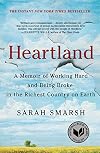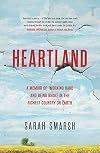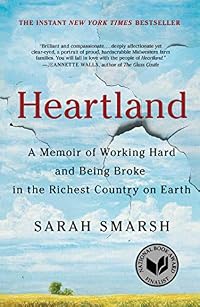
Heartland: A Memoir of Working Hard and Being Broke in the Richest Country on Earth
by Sarah Smarsh
On This Page
Description
*Finalist for the National Book Award**Finalist for the Kirkus Prize*
*Instant New York Times Bestseller*
*Named a Best Book of the Year by NPR, New York Post, BuzzFeed, Shelf Awareness, Bustle, and Publishers Weekly*
An essential read for our times: an eye-opening memoir of working-class poverty in America that will deepen our understanding of the ways in which class shapes our country and "a deeply humane memoir that crackles with clarifying insight".*
Sarah Smarsh was born a fifth show more generation Kansas wheat farmer on her paternal side, and the product of generations of teen mothers on her maternal side. Through her experiences growing up on a farm thirty miles west of Wichita, we are given a unique and essential look into the lives of poor and working class Americans living in the heartland.
During Sarah's turbulent childhood in Kansas in the 1980s and 1990s, she enjoyed the freedom of a country childhood, but observed the painful challenges of the poverty around her; untreated medical conditions for lack of insurance or consistent care, unsafe job conditions, abusive relationships, and limited resources and information that would provide for the upward mobility that is the American Dream. By telling the story of her life and the lives of the people she loves with clarity and precision but without judgement, Smarsh challenges us to look more closely at the class divide in our country.
Beautifully written, in a distinctive voice, Heartland combines personal narrative with powerful analysis and cultural commentary, challenging the myths about people thought to be less because they earn less.
"Heartland is one of a growing number of important works—including Matthew Desmond's Evicted and Amy Goldstein's Janesville—that together merit their own section in nonfiction aisles across the country: America's postindustrial decline...Smarsh shows how the false promise of the 'American dream' was used to subjugate the poor. It's a powerful mantra" *(The New York Times Book Review).. show less
Tags
Recommendations












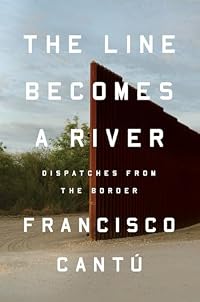
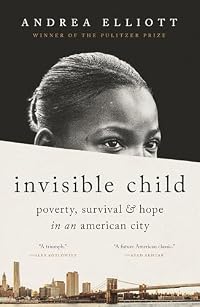
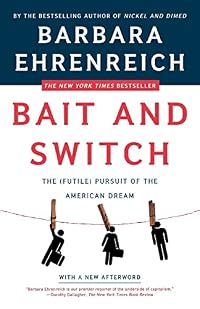

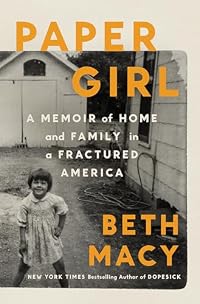

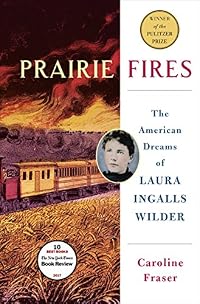
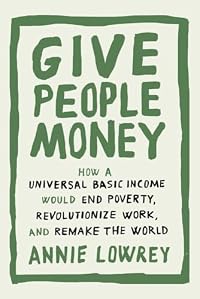
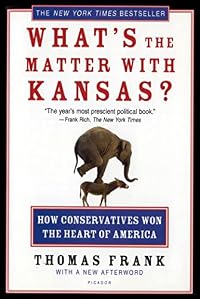
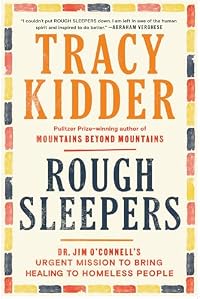


Member Recommendations
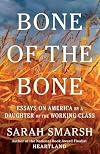
PuddinTame Heartland is Sarah Smarsh's memoir.
Member Reviews
Finally, a memoir by someone who escaped moral and material poverty in the U.S.A. and who openly points at the elephant in the room: one lucky, focused, intellectually gifted child who makes it does not justify the puritan mentality that relegates the poor in a corner in the name of self-improvement. You can be a hard worker, with values and all, and still be condemned to a lifetime of shame, poverty and possibly substance addiction. Even if you are white!!! This is the most important legacy of the memoir: it is never (only) a matter of skin colour, religion, good will. IT IS A MATTER OF CLASSISM.
Here, I wrote it. No, SHE wrote it. And if you think that she cannot talk because she is white, read this other one
[b:There Will Be No show more Miracles Here: A Memoir|38650651|There Will Be No Miracles Here A Memoir|Casey Gerald|https://i.gr-assets.com/images/S/compressed.photo.goodreads.com/books/1526399296l/38650651._SY75_.jpg|60261760]
He writes pretty much the same thing, but he is black. show less
Here, I wrote it. No, SHE wrote it. And if you think that she cannot talk because she is white, read this other one
[b:There Will Be No show more Miracles Here: A Memoir|38650651|There Will Be No Miracles Here A Memoir|Casey Gerald|https://i.gr-assets.com/images/S/compressed.photo.goodreads.com/books/1526399296l/38650651._SY75_.jpg|60261760]
He writes pretty much the same thing, but he is black. show less
Here's the woman's perspective of the territory claimed by Hillbilly Elergy. Although that story took place in the Appalachians and this is rural Kansas, it's all flyover country, to be avoided by coastal Americans. Smarsh is the scion of five generations of subsistence farmers, and was inspired at an early age to break the pervasive cycle of early pregnancy/non-profitable farming/alcoholism/domestic violence that infuses the matriarchy in which she is raised. Her motivation is not only escape, but love for an entity she grows inside herself, which she names August - a better self, not a child: “I loved us both so much that I made sure you were conceived only in my mind.”
The stories of her mother and father's mothers and fathers, show more and their mothers and fathers, are marinated in the concept so common to many Americans: don't get above yourself. And when getting above yourself means striving for a life better than the one your parents led, it's depressingly self-defeating. But Smarsh loves most of her relatives, and is never condescending in her recitation of the seemingly endless bad decisions that make hardscrabble lives even worse. She also does not shy from discussing white privilege, class, and race issues.
Quotes: “The defining feeling of my childhood was that of being told there wasn’t a problem when I knew damn well there was. If a person could go to work every day and still not be able to pay the bills, and the reason wasn’t racism, what less articulated problem was afoot? I wasn’t from a family or background anyone seemed to be rooting for. Our small town was almost entirely white, and in that context economics decided the social order. For my family, the advantage of our race was embedded into our existence but hard for us to perceive amid daily economic struggle.”
“Wealth and income inequality were nothing rare in global history. What was peculiar about the class system in the United States, though, is that for centuries we denied it existed. At every rung of the economic ladder, Americans believed that hard work and a little know-how were all a person needed to get ahead.”
“If you’re wild enough to enjoy it, poverty can contain a sort of freedom – no careers or properties to maintain, no community meetings or social status to be responsible to.”
“So much of childhood amounts to being awake in a grownup’s nightmare.”
“What it means to be “country” has changed in the few decades of my lifetime from an experience to a brand culture cultivated by conservative forces.”
“Receiving accolades for your academic work was an offense to grandmothers who had left school in tenth grade and were adverse to anyone thinking herself too good for where she came from.”
“No house is truly secure. The body is the only permanent home, and even that one comes with an eviction notice.” show less
The stories of her mother and father's mothers and fathers, show more and their mothers and fathers, are marinated in the concept so common to many Americans: don't get above yourself. And when getting above yourself means striving for a life better than the one your parents led, it's depressingly self-defeating. But Smarsh loves most of her relatives, and is never condescending in her recitation of the seemingly endless bad decisions that make hardscrabble lives even worse. She also does not shy from discussing white privilege, class, and race issues.
Quotes: “The defining feeling of my childhood was that of being told there wasn’t a problem when I knew damn well there was. If a person could go to work every day and still not be able to pay the bills, and the reason wasn’t racism, what less articulated problem was afoot? I wasn’t from a family or background anyone seemed to be rooting for. Our small town was almost entirely white, and in that context economics decided the social order. For my family, the advantage of our race was embedded into our existence but hard for us to perceive amid daily economic struggle.”
“Wealth and income inequality were nothing rare in global history. What was peculiar about the class system in the United States, though, is that for centuries we denied it existed. At every rung of the economic ladder, Americans believed that hard work and a little know-how were all a person needed to get ahead.”
“If you’re wild enough to enjoy it, poverty can contain a sort of freedom – no careers or properties to maintain, no community meetings or social status to be responsible to.”
“So much of childhood amounts to being awake in a grownup’s nightmare.”
“What it means to be “country” has changed in the few decades of my lifetime from an experience to a brand culture cultivated by conservative forces.”
“Receiving accolades for your academic work was an offense to grandmothers who had left school in tenth grade and were adverse to anyone thinking herself too good for where she came from.”
“No house is truly secure. The body is the only permanent home, and even that one comes with an eviction notice.” show less
Smarsh twines her personal story with research and reporting about the intersection of class, sex, politics, and education for a binge-worthy and eye-opening read. Her background and mine have little in common, but she bridged the gap as well in her book as she has apparently done in her life. It helps me understand better some friends and acquaintances whose lives have been more like Smarsh's. It doesn't bait or shame anyone.
When I first heard about this title, I grouped it with others on similar topics, and put off reading it. But our library district is encouraging the whole community to read it for One Community, One Book, so I picked it up and couldn't put it down. It's the best of its little subgroup. More clear-eyed than show more Educated, more beautiful than Hillbilly Elegy. show less
When I first heard about this title, I grouped it with others on similar topics, and put off reading it. But our library district is encouraging the whole community to read it for One Community, One Book, so I picked it up and couldn't put it down. It's the best of its little subgroup. More clear-eyed than show more Educated, more beautiful than Hillbilly Elegy. show less
I thought this book was going to be just another one of those books published in 2016 about why rural Americans voted for Trump. But it’s not — it’s bigger yet more personal than that. I’m sorry I mis-cataloged it in such a way. Smarsh’s deep Kansan accent connects each perfectly crafted thought to the next, as though each paragraph, each chapter is exactly where it needs to be. Some sentences left me lingering, in awe over the power she has over language. Thank you for surprising me, Sarah. Come up to Nebraska!
What a powerful read! This book really connected with me. I also was raised in the Midwest, a generation before Sarah, and am from humble roots. That is probably where our connection would end since unlike Sarah, I was raised in a stable family with loving parents who were able to provide what I needed-both physical and emotional. Still, I found myself appreciating and understanding the life she describes as her own.
It's not comfortable to read about the struggles and continually regretful decisions of people living in poverty, but I think it's so important in understanding their challenges and often hopeless mindsets. How startling it was to me that it might be easier to just move when things don't go as planned or hope comes only in show more the possibilities of a new location. Sarah's family moved countless times, repeatedly disrupting her life and schooling. Yet, Sarah helped me to appreciate and respect her family's attempts to make changes and keep trying. Life is bleak when there is little hope. This is something that those of us who haven't lived in true poverty can't understand. Unsurprisingly, it breaks many people. Sarah's people were bent, but not broken. Sarah herself, found an inner strength and rose above, breaking the ties that bound her family to poverty.
The style of Sarah's writing is unique and genuine. The book is written as a letter to her unconceived child; the spirit of a girl that she called August. She was determined to not make the same mistakes as the generations of women before her by having a child when she was still nearly a child herself, so she created an image this potential child of her youth. Throughout her childhood and early adulthood this image became quite real for her, and she used it as motivation to never have her since that would certainly continue the cycle of poverty. Sarah's inner strength and gift of intelligence, along with encouragement from select teachers along the way, blossomed slowly into a life with better opportunities than those of her ancestors. She writes in such an honest and open way of her experiences, creating a real feeling of what it was like for the reader. It is hard, but vital to our future to try to understand what the cycle of poverty is, in order to someday find a way to create change and hope for a better life.
My thanks to NetGalley and the publisher for the opportunity to read and review this title. Most of all, I thank Sarah for having the courage to tell her family's story (with their blessing) in such a moving way. I thoroughly recommend this title to all. show less
It's not comfortable to read about the struggles and continually regretful decisions of people living in poverty, but I think it's so important in understanding their challenges and often hopeless mindsets. How startling it was to me that it might be easier to just move when things don't go as planned or hope comes only in show more the possibilities of a new location. Sarah's family moved countless times, repeatedly disrupting her life and schooling. Yet, Sarah helped me to appreciate and respect her family's attempts to make changes and keep trying. Life is bleak when there is little hope. This is something that those of us who haven't lived in true poverty can't understand. Unsurprisingly, it breaks many people. Sarah's people were bent, but not broken. Sarah herself, found an inner strength and rose above, breaking the ties that bound her family to poverty.
The style of Sarah's writing is unique and genuine. The book is written as a letter to her unconceived child; the spirit of a girl that she called August. She was determined to not make the same mistakes as the generations of women before her by having a child when she was still nearly a child herself, so she created an image this potential child of her youth. Throughout her childhood and early adulthood this image became quite real for her, and she used it as motivation to never have her since that would certainly continue the cycle of poverty. Sarah's inner strength and gift of intelligence, along with encouragement from select teachers along the way, blossomed slowly into a life with better opportunities than those of her ancestors. She writes in such an honest and open way of her experiences, creating a real feeling of what it was like for the reader. It is hard, but vital to our future to try to understand what the cycle of poverty is, in order to someday find a way to create change and hope for a better life.
My thanks to NetGalley and the publisher for the opportunity to read and review this title. Most of all, I thank Sarah for having the courage to tell her family's story (with their blessing) in such a moving way. I thoroughly recommend this title to all. show less
A big part of our problem in America is not about what we know and with what we are familiar; it’s how disconnected we are from the lived experience and reality of others. The only way to counteract this is to be willing to listen and truly hear from the experiences of others.
Sarah Smarsh has exposed and expressed herself and her family, the experience of living as poor, working-class men, women, and children in Heartland: A Memoir of Working Hard and Being Broke in the Richest Country on Earth.
The author writes as to an unborn daughter she often considered and thought about regarding what she would have experienced if born in a predicament similar to the author’s. The author is born in Kansas toward the end of the time of the show more “family farm” to people who worked the land for generations but whose children were now turning to find work in cities. Her life is constantly in and out of the Wichita urban and rural areas. She chronicled three generations of her family’s life: often the story of men who work hard but often do not have enough, and generally are abusive; the women who endure it for a time, can often find freedom from the abuse, but still constrained by poverty and thus who often find themselves back with abusive men or with family. Constant movement and a lack of settlement; constantly changing schools. The author threw herself into her academic studies and was able to overcome generational cycles by graduating high school without having a child; she went on to college and well beyond and “made it” into the American middle class.
But she does not spend her time judging her origins; she describes them all, and especially their pathologies, as the result of being poor. Their poverty was a choice - not theirs personally, but the choice of everyone else who prospered thanks to their efforts. As the author well attested, it was not as if she or her family members did not “work hard”: quite the contrary. But they were part of that “forgotten” world in the heartland, flyover country, the areas many in more comfortable surroundings look down upon with derision. It was always easier to blame her folk somehow as opposed to seeing the tragedy of how people in her family could work as hard as they did in the “land of opportunity,” the richest country on earth, but only to barely eke out a living.
I cannot personally relate to the author’s experience because I am at least one generation removed from it. Nevertheless, I have known the kind of people who populate the author’s life and story, and the story truly did resonate.
Sure, people in poverty often make less than wise decisions. But everyone does; the difference is how many of us who have the benefits and privilege which attend to some level of generational wealth find ourselves with resources and support systems which cushion those blows, and many who are in poverty do not share in that same privilege. But by the grace of God there would go most of us.
What we find awkward and uncomfortable remains what stares at us in the face in works like these: there are a lot of people who are working very hard in America - far harder than most of us - and the system has been designed to work to their continual disadvantage so they will never really get ahead. And the rest of us, directly or indirectly, benefit and profit from it.
We can, and should, do far better regarding the working poor. It need not be patronizing. But a stronger support system could mean the world for the incipient Sarah Smarshes of our country. And our nation would be a better place for it. show less
Sarah Smarsh has exposed and expressed herself and her family, the experience of living as poor, working-class men, women, and children in Heartland: A Memoir of Working Hard and Being Broke in the Richest Country on Earth.
The author writes as to an unborn daughter she often considered and thought about regarding what she would have experienced if born in a predicament similar to the author’s. The author is born in Kansas toward the end of the time of the show more “family farm” to people who worked the land for generations but whose children were now turning to find work in cities. Her life is constantly in and out of the Wichita urban and rural areas. She chronicled three generations of her family’s life: often the story of men who work hard but often do not have enough, and generally are abusive; the women who endure it for a time, can often find freedom from the abuse, but still constrained by poverty and thus who often find themselves back with abusive men or with family. Constant movement and a lack of settlement; constantly changing schools. The author threw herself into her academic studies and was able to overcome generational cycles by graduating high school without having a child; she went on to college and well beyond and “made it” into the American middle class.
But she does not spend her time judging her origins; she describes them all, and especially their pathologies, as the result of being poor. Their poverty was a choice - not theirs personally, but the choice of everyone else who prospered thanks to their efforts. As the author well attested, it was not as if she or her family members did not “work hard”: quite the contrary. But they were part of that “forgotten” world in the heartland, flyover country, the areas many in more comfortable surroundings look down upon with derision. It was always easier to blame her folk somehow as opposed to seeing the tragedy of how people in her family could work as hard as they did in the “land of opportunity,” the richest country on earth, but only to barely eke out a living.
I cannot personally relate to the author’s experience because I am at least one generation removed from it. Nevertheless, I have known the kind of people who populate the author’s life and story, and the story truly did resonate.
Sure, people in poverty often make less than wise decisions. But everyone does; the difference is how many of us who have the benefits and privilege which attend to some level of generational wealth find ourselves with resources and support systems which cushion those blows, and many who are in poverty do not share in that same privilege. But by the grace of God there would go most of us.
What we find awkward and uncomfortable remains what stares at us in the face in works like these: there are a lot of people who are working very hard in America - far harder than most of us - and the system has been designed to work to their continual disadvantage so they will never really get ahead. And the rest of us, directly or indirectly, benefit and profit from it.
We can, and should, do far better regarding the working poor. It need not be patronizing. But a stronger support system could mean the world for the incipient Sarah Smarshes of our country. And our nation would be a better place for it. show less
Maybe a 2.75. This is a serious, thoughtful, clear-eyed and intimate look at people who have been largely forgotten, ignored, misunderstood and misled: poor, rural whites in a "flyover" state. These are Smarsh's family, their lives and communities, where she grew up in south central Kansas. I've spent a lot of time in that part of the country: I've driven US 54 many times, camped and hiked at the Kingman state fishing lake, visited graves outside Admire, had a couple of short stories published set in this region. I recognize Smarsh's grandfather Arnie in our neighbor who stomps up the drive in shit-smeared sneakers and sweat-stained hat, who has reset our windmill pump and runs a few cows on our little acreage to keep the weeds down for show more us. But, Lord, what a hard life it can be. Especially for the women. Teenaged moms are almost the norm, though girls may be warned "You don't want to get tied down, you know what I mean?" Everyone works multiple jobs: farming and construction, waitressing and weighing wheat at the grain elevator, babysitting and cosmetic sales. These people *work*. And may be only a truck breakdown away from insolvency. They move. All the time. Marriages, divorces, abuse, lost jobs; the grandparents, aunts, uncles, in-laws, kids... they pack up and relocate into and out of each other's houses as they can or must. They are pretty much all addicted to something: alcohol, cigarettes, pills; depression and mental instability abound. Smarsh's indomitable grandmother Betty's mother once refuses her a loan of $75 to escape a brutally abusive husband, saying "You made your bed, now you lay on it." Betty decides then and there that if anyone ever asks her for help, she will give it. And she does. Smarsh also writes movingly of her gentle, atypically tender father: he was the one who brushed her hair for her before school, who left little poems for her, who ends up severely depressed and victim of a gambling problem, loyal to a second wife with a devastating pill habit. Smarsh decides early on that as much as she loves all these people and the Kansas prairie and the smell of the farm on a November night, she will not stay. And she doesn't. But this book is much less about her own struggles and wayfinding as it is a heartfelt look at these people and this life, and how circumscribed their options are. She notes somewhat bitterly that when she manages to get a scholarship to the University of Kansas intended for low-income, minority, first-generation students, the few other white students joke that they are the "white trash" recipients.
In spite of all the intensely personal, wrenching portraits Smarsh paints, the book may not grab as it should. It is unstructured, more than a bit chaotic. Her mother is "Mom" on one page, and "Jeannie" on another. The extended cast of grandparents, great-grandparents, sons, daughters, grandkids, nieces, cousins, nephews, in-laws, and a multitude of exes is confusing. She jumps back and forth in time, place, and family arrangements; incidents are told more than once. Perhaps this is deliberate, to evoke the tremendously chaotic and unpredictable leaps their lives make. But it leaves a sympathetic reader scratching her head: wait, didn't we hear that already? WHICH husband is it that took Betty's son from her? Oh, that's right, Dorothy is Betty's mother, the great-grandmother...but who's "Pud" again? It takes some perseverance. Finally, Smarsh hangs the entire book on the hook of a soliloquy directed to "you," a daughter she names August, who was never conceived or borne. She tells the stories of her embattled youth to this child, explaining to her: "This is why I never had you." It is irregularly invoked, and can tip into something that feels contrived and even maudlin. If this was the vision that kept Smarsh out of the life she fought long and hard to escape, more power to her. But it doesn't quite work as a literary device.
An important tale, not told well enough. But people should read it anyway. show less
In spite of all the intensely personal, wrenching portraits Smarsh paints, the book may not grab as it should. It is unstructured, more than a bit chaotic. Her mother is "Mom" on one page, and "Jeannie" on another. The extended cast of grandparents, great-grandparents, sons, daughters, grandkids, nieces, cousins, nephews, in-laws, and a multitude of exes is confusing. She jumps back and forth in time, place, and family arrangements; incidents are told more than once. Perhaps this is deliberate, to evoke the tremendously chaotic and unpredictable leaps their lives make. But it leaves a sympathetic reader scratching her head: wait, didn't we hear that already? WHICH husband is it that took Betty's son from her? Oh, that's right, Dorothy is Betty's mother, the great-grandmother...but who's "Pud" again? It takes some perseverance. Finally, Smarsh hangs the entire book on the hook of a soliloquy directed to "you," a daughter she names August, who was never conceived or borne. She tells the stories of her embattled youth to this child, explaining to her: "This is why I never had you." It is irregularly invoked, and can tip into something that feels contrived and even maudlin. If this was the vision that kept Smarsh out of the life she fought long and hard to escape, more power to her. But it doesn't quite work as a literary device.
An important tale, not told well enough. But people should read it anyway. show less
Members
- Recently Added By
Published Reviews
The book is a personal, decades-long story of America’s coordinated assault on its underclass.... Thanks to persistent false narratives about poverty, families like mine and Smarsh’s — perhaps yours too — wasted generations believing in “trickle down” economics, leaving us “standing outside with our mouths open praying for money to rain.” Ultimately, we concluded that “the show more American Dream has a price tag on it,” and “the poorer you are, the higher the price.” show less
added by Lemeritus
Part memories, part economic analysis, part sociological treatise, Heartland ties together various threads of American society of the last 40 years ... Smarsh’s book is persuasive not only for the facts she marshals, but also because of the way she expresses it ... she uses minute detail to get across the tenuous state of the lives of her family ... in her silent speeches to a never-born show more child, Smarsh spells out clearly what she has gained, what she has had to leave behind and the cost for both. show less
added by Lemeritus
...the book circumambulates several major themes: body, land, shame. Smarsh describes the toll of labor on those who have no choice but to do it — a work force priced out of health insurance by its privatization. Neighbors are maimed by combines and the author’s father nearly dies from chemical poisoning a week into a job transporting used cleaning solvent. Women absorb their husbands’ show more frustrations, blow by blow. Meanwhile, big agribusinesses strangle the region’s family farms, leaving behind a brackish residue of shame — the shame of being poor and white. show less
added by Lemeritus
Lists

Books recommended by Barack Obama
295 works; 28 members

Books Read in 2019
4,052 works; 110 members

Top Five Books of 2023
767 works; 317 members
Author Information

6+ Works 1,342 Members
Sarah Smarsh is an award-winning freelance writer and an assistant professor of English at Washburn University in Topeka, Kansas, where she teaches creative nonfiction writing. A Kansas native, she has written for the Huffington Post, Kansas City's the Pitch, and newspapers across the Midwest.
Some Editions
Awards and Honors
Awards
Distinctions
Notable Lists
Common Knowledge
- Original title
- Heartland : A Memoir of Working Hard and Being Broke in the Richest Country on Earth
- Original publication date
- 2018
- People/Characters
- Sarah Lou Smarsh; Jeannie Smarsh (Sarah's mother); Nick Smarsh (Sarah's father); August (the daughter that Sarah might have had if she followed the family pattern | the book is addressed to her); Chris Smarsh (Nick's 2d wife, addicted to opioids); Grandma Betty (show all 9); Ray (Betty's first husband, Jeanie's father); Grandpa Arnie (Betty's 7th husband, Sarah saw him as her grandfather); Grandpa Chic Smarsh (real name Nicholas, Chic was his pronunciation of Czech)
- Important places
- Kansas, USA
- Dedication
- For Mom
- First words
- I heard a voice unlike the ones in my house or on the news that told me my place in the world.
- Quotations
- It’s funny that both their children were born weeks before an election that Reagan won. We would be able to map our lives against the destruction of the working class: the demise of the family farm, the dismantling of publi... (show all)c health, the defunding of public schools, wages so stagnant that full-time workers could no longer pay the bills. Historic wealth inequality was old news to us by the time it hit the newspapers in the new millennium. (Chapter 1: “A Penny in a Purse”)
How can you talk about the poor child without addressing the country that let her be so? It's a relatively new way of thinking for me. I was raised to put all responsibility on the individual, on bootstraps with which she o... (show all)ught pull herself up. But it's the way of things that environment changes outcomes.
Or to put it in my first language:
The crop depends on the weather, dudnit? A good seed 'll do 'er job 'n' sprout, but come hail 'n' you're plumb outta luck, regardless. (“Dear August,” p. 3, Scribner (2018))
When I found your name, in my early adulthood, I don't think I'd ever heard the term “white working class.” The experience it describes includes both racial privilege and economic disadvantage, which can exist simultane... (show all)ously. This was an obvious, apolitical for those of us who lived in that juxtaposition every day. But it seemed to make people uneasy, as though our grievance put us in competition with poor people of other races. Wealthy white people, in particular, seemed to want to distance themselves from our place and our truth. Our struggles forced a question about America that many were not willing to face: If a person could go to work every day and still not be able to pay the bills and the reason wasn't racism, what less articulated problem was afoot. (“A Penny in a Purse,” p. 13-14, Scribner (2018))
When I was growing up, the United States had convinced itself that class didn't exist here. […] This lack of acknowledgement at once invalidated what we were experiencing and shamed us if we tried to express it. Class was... (show all) not discussed, let alone understood. […] The defining feeling of childhood was that of being told that there wasn't a problem when I knew damn well there was. (“A Penny in a Purse,” p. 14, Scribner (2018), elisions added)
We were “below the poverty line” I'd later understand – distasteful to to better-off whites, I think, for having failed economically in the context of their own race. And we were of a place, the Great Plains, spurned b... (show all)y more powerful corners of the country as a monolithic cultural waste land. “Flyover country,” people called it, like walking there might be dangerous. Its people were “backwards,” “rednecks,” maybe even “trash.” (“A Penny in a Purse,” p. 14 - 15, Scribner (2018))
Every kid in our family moved more times than they could remember without getting out a pen and a notepad. If you're wild enough to enjoy it – poverty can contain a certain freedom – no careers or properties to maintain... (show all), no community meetings or social status to be responsible to. If there was a car that ran and a bit of gas money, we could just leave. (“A Penny in a Purse,” p. 16, Scribner (2018))
Sometimes it's a worthwhile gamble for the poor to drift. Having no money looks and feels different in different places. […] Among the poor, the risks of starting over are more severe for women, people of color, and other ... (show all)disadvantaged groups. But often, by moving, there is little to lose and at least a chance of finding something better. (“A Penny in a Purse,” p. 16, Scribner (2018) [elisions added])
So much of childhood amounts to being awake in a grown-up's nightmare. Ours happened to be about poverty, which comes with not just psychological dangers but mortal ones, too. (“The Body of a Poor Girl,” p. 71... (show all), Scribner (2018))
So much of childhood amounts to being awake in a grown-up's nightmare. Ours happened to be about poverty, which comes with not just psychological dangers but mortal ones, too. (“The Body of a Poor Girl,” p. 71... (show all), Scribner (2018))
My childhood happened to coincide with the moment health insurance and drug companies veritably merged with the nation's for-profit hospital system, creating costs that were prohibitive for uninsured families like ours. ... (show all); (“The Body of a Poor Girl,” p. 71, Scribner (2018))
To make a health concern seem better, we told ourselves that we didn't need doctors. But the truth was that we couldn't afford them. If you had a real health emergency, you were liable to be dead before some smal... (show all)l town's ambulance made it down the muddy, sandy ruts of our dirt roads. But a decade old dropper of stinging red iodine would fix most cuts, so we went on like everything was fine. (“The Body of a Poor Girl,” p. 71, Scribner (2018))
By the time I was born, rural hospitals were closing and American health care had transformed into a slick, big business in urban centers. (“The Body of a Poor Girl,” p. 71, Scribner (2018))
As an infant, one night I came down with a dangerously high fever. My parents rushed me miles along bumpy roads to the rural home of Joseph Stech, a small town doctor who still sometimes made house calls. [. . . A]s I w... (show all)as rowing up, he was still charging a modest fee for a visit to his nineteenth century office on Main Street in nearby Andale. He gave me all my immunization shots and prescribed penicillin when I got strep throat.
[. . .] No one remember what Dr. Stech did to save me. For my family, the more important takeaway was that I just wasn't meant to die that night. (“The Body of a Poor Girl,” p. 72, Scribner (2018)) [elisions added]
But a few years down the road, people like us would face health epidemics that cried for professional care: obesity, diabetes, methamphetamine addiction, sepsis from what we called a “bad tooth” with infection at the root... (show all), abuse of opioids prescribed by the same doctors who were supposed to help. (“The Body of a Poor Girl,” p. 73, Scribner (2018))
By then, the same forces of privatization [. . .] had compromised an entire system of general care to such an extent that even the middle class couldn't afford treatment.
By then, the same forces of privatization [. . .] h... (show all)ad compromised an entire system of general care to such an extent that even the middle class couldn't afford treatment.
By then, the same forces of privatization [. . .] had compromised an entire system of general care to such an extent that even the middle class couldn't afford treatment.
What was preventable in the 1980s would, in a couple of decades, become manifest; what once was treatable would become deadly. I'm not sure my immediate family's brushes with death when I was a kid – mom's hemorrhage in childbirth, Grandma's collapsed lung, Dad's chemical poisoning – would be survived today. Mom would have been less healthy going into labor, Grandma would have been sent home to soon for lack of insurance, Dad would have been given a cheaper and less effective treatment. The mortality rate for poor rural women, in particular, has risen sharply over my lifetime. (“The Body of a Poor Girl,” p. 73, Scribner (2018) [elisions added])
Dad liked it that way. Owning a small bit of the countryside brought him a deep satisfaction. The state had seized some of his dad's farmland through eminent domain in the 1960s to dig the reservoir and move wate... (show all)r east in underground tunnels for the people of Wichita. Sometimes Dad would park his truck [. . .] along the lake dam [. . .] to look at what would have been his and then our small inheritance, now literally underwater. We couldn't use the water ourselves, it was for Wichitans to access by turning on a faucet. We thus had to dig a private well right next to to giant reservoir on what once was our land. It's an old story: pushing poor rural communities out of the way to tap natural resources for cities. (“A Stretch of Gravel with Wheat on Either Side,” p. 106, Scribner (2018)[elisions added])
With deepest reverence, thank you to my family, for surviving, with humor and dignity, the difficulties that allowed this book to exist. When I asked for their blessing to tell our shared past, they bravely answered yes... (show all). Their reasons for standing behind my work, as they sometimes told me: Because it might help someone else, and because it is true. (“Acknowledgements,” p. 290, Scribner (2018)) - Last words
- (Click to show. Warning: May contain spoilers.)The best version of so many things has been conceived but remains unborn--like the girl you might have been and the country I trust your spirit is helping to create somewhere: America in high summer, tired from a season of fieldwork but clear-eyed and full of promise under the harvest moon.
- Publisher's editor
- Kathryn Belden
- Canonical DDC/MDS
- 978.1843
- Canonical LCC
- HD8073.S637
Classifications
Statistics
- Members
- 921
- Popularity
- 28,881
- Reviews
- 48
- Rating
- (3.87)
- Languages
- English, French, Italian
- Media
- Paper, Audiobook, Ebook
- ISBNs
- 15
- ASINs
- 3