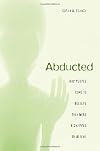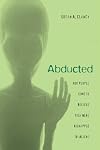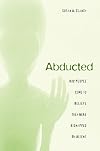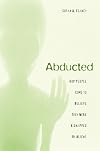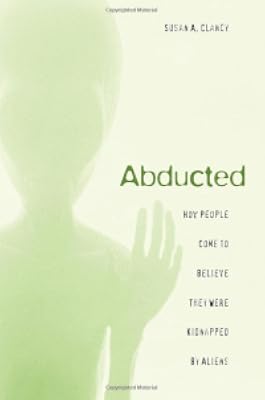
Abducted: How People Come to Believe They Were Kidnapped by Aliens
by Susan A. Clancy
On This Page
Description
Clancy argues that abductees are sane, intelligent people who have unwittingly created vivid false memories from a mølange of nightmares, culturally available texts, and a drive for meaning that science is unable to satisfy. This book is not only a subtle exploration of the workings of memory, but a sensitive inquiry into the nature of belief.Tags
Recommendations













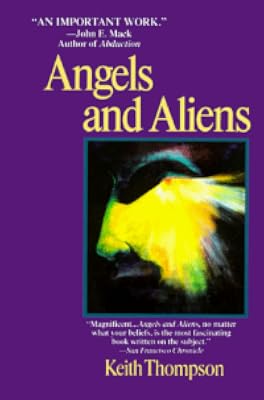

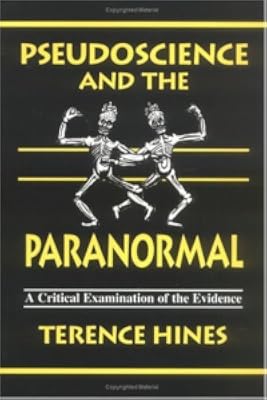

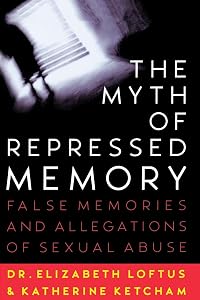




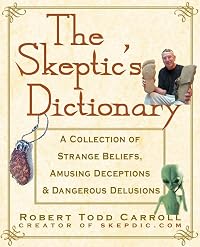










Member Reviews
This book was a hoot! I am a sucker for anything wherein I get to read people’s profiles (especially psychological profiles of less than normal people) and this book did not disappoint. But ultimately, this is not a book to groove on the oddness, because Clancy’s explanations of how people really do come to believe they were kidnapped by aliens seem sound to a layperson like me and make for fascinating and not always odd reading. But never fear! The book is peppered with enough oddness to make it worth a read from those who can only stomach the oddest of the odd.
Rest the rest here: http://ireadoddbooks.com/?p=214
Rest the rest here: http://ireadoddbooks.com/?p=214
Overall, this book contains a lot of really excellent information. Clancy firmly believes in taking weird beliefs seriously, but not literally; she is not a believer in alien abduction, but she is deeply curious about why abductees choose alien abduction as the explanation for weirdness in their life, when there are so many other more plausible explanations. She outlines the typical process by which abductees come to believe they have been abducted, and discusses a number of explanations, including false memories exacerbated by poor hypnosis techniques, sleep paralysis, and her findings that abductees score high on scales that measure schizotypy (which is characterized by a certain amount of fantasy-prone-ness and a tendency toward show more magical thinking).
One of the unexpectedly interesting things for me about this book is that it turns out she assisted Richard McNally in the research described in his book Remembering Trauma, which I read earlier this year. In Remembering Trauma, McNally (assisted by Clancy, as it turns out) used alien abductees as a less controversial alternative to those with recovered memories of sexual or ritual abuse in many of his memory studies.
The reason I didn't rate this book higher is that it ended up being much more lightweight than I had hoped, in terms of the tone and the detail of discussion. Clancy adopts a slightly humorous, conversational tone throughout, which occasionally feels forced and did not always make me feel that she was treating her subjects with respect. Granted, it is sometimes difficult to take some of the abductees stories seriously, but I sometimes felt she took a bit too much glee in relating stories of particularly weird encounters. By and large, interesting stuff, but I wanted more. show less
One of the unexpectedly interesting things for me about this book is that it turns out she assisted Richard McNally in the research described in his book Remembering Trauma, which I read earlier this year. In Remembering Trauma, McNally (assisted by Clancy, as it turns out) used alien abductees as a less controversial alternative to those with recovered memories of sexual or ritual abuse in many of his memory studies.
The reason I didn't rate this book higher is that it ended up being much more lightweight than I had hoped, in terms of the tone and the detail of discussion. Clancy adopts a slightly humorous, conversational tone throughout, which occasionally feels forced and did not always make me feel that she was treating her subjects with respect. Granted, it is sometimes difficult to take some of the abductees stories seriously, but I sometimes felt she took a bit too much glee in relating stories of particularly weird encounters. By and large, interesting stuff, but I wanted more. show less
The author set out to investigate the alien abduction phenomenon to see how people come to believe things without, or in spite of, the evidence. Originally interested in the repressed memory phenomenon, the amount of controversy generated led her to this topic, which she felt she might be able to investigate without death threats. A good discussion of the history of the alien abduction movement, and the research that's been done on the topic.
At each stage of the reading I kept thinking, wow can't wait to share this part on Facebook. Then a few pages more I thought the same thing, and then the same thing and finally I just gave up remembering the best parts and just enjoyed the book. Great reference I'm sure I will revisit this book.
A well written book on the psychological basis for belief in alien abduction. There is, however, one glaring error which, while it's not directly relevant to the book's thesis, is still annoying.
Ratings
Members
- Recently Added By
Author Information

2+ Works 170 Members
Susan A. Clancy is a Visiting Professor at INCAE, the Central American Institute for Business Administration.
Common Knowledge
- Original publication date
- 2005
- Important events
- Alien Abduction
- Dedication
- To my husband
Neils Ketelholm
(the alien who abducted me)
and our two daughters
Caroline and Elinor - First words
- Will Andrews is an articulate, handsome forty-two-year-old. (Introduction)
How did I come to study alien abductions in the first place? - Last words
- (Click to show. Warning: May contain spoilers.)Being abducted by aliens may be a baptism into the new religion of our technological age.
- Publisher's editor
- Ascher, Maria
- Blurbers
- Loftus, Elizabeth; Shermer, Michael; Tavris, Carol
- Canonical DDC/MDS
- 001.9422
Classifications
- Genres
- Nonfiction, General Nonfiction, Science & Nature
- DDC/MDS
- 001.9422 — Computer science, information & general works Computer science, knowledge & systems Knowledge and learning in general Aliens/UFOs Mysteries (Atlantis, Bermuda Triangle) Unidentified flying objects (UFOs) Alien abduction
- LCC
- BF2050 .C56 — Philosophy, Psychology and Religion Psychology Occult sciences Human-alien encounters. Contact between humans and
- BISAC
Statistics
- Members
- 117
- Popularity
- 275,912
- Reviews
- 5
- Rating
- (3.66)
- Languages
- English
- Media
- Paper, Ebook
- ISBNs
- 4
- ASINs
- 1