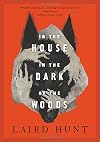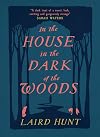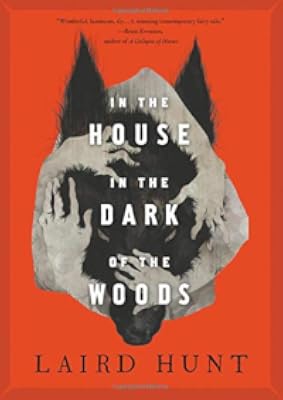
In the House in the Dark of the Woods
by Laird Hunt
On This Page
Description
The eerie, disturbing story of one of our perennial fascinations--witchcraft in colonial America--wrapped up in a lyrical novel of psychological suspense. In this horror story set in colonial New England, a law-abiding Puritan woman goes missing. Or perhaps she has fled or abandoned her family. Or perhaps she's been kidnapped, and set loose to wander in the dense woods of the north. Alone and possibly lost, she meets another woman in the forest. Then everything changes. On a journey that show more will take her through dark woods full of almost-human wolves, through a deep well wet with the screams of men, and on a living ship made of human bones, our heroine may find that the evil she flees has been inside her all along. In the House in the Dark of the Woods is a novel of psychological horror and suspense told in Laird Hunt's characteristically lyrical prose style. It is the story of a bewitching, a betrayal, a master huntress and her quarry. It is a story of anger, of evil, of hatred and of redemption. It is the story of a haunting, a story that makes up the bedrock of American mythology, but told in a vivid way you will never forget. show lessTags
Recommendations
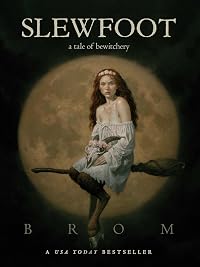
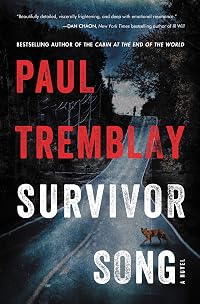
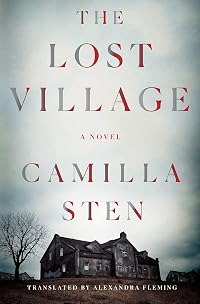
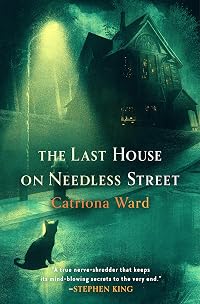
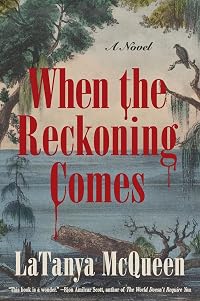
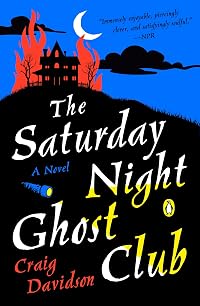
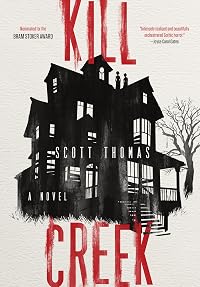
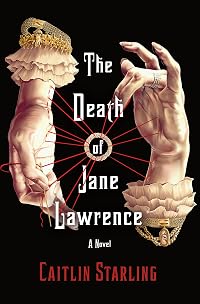

Member Reviews
Using traditional fairy tale elements, Hunt tells a story that starts with fairy-tale calm and rapidly descends into madness and horror.
The novel strongly recalls the work of the great German Romantics, in a way I never would have guessed a modern author could evoke. One of my favorite reads of all time is [b:Der blonde Eckbert|1573511|Der blonde Eckbert / Der Runenberg|Ludwig Tieck|https://images.gr-assets.com/books/1447165032s/1573511.jpg|1566226] by German Romantic author Ludwig Tieck. Hunt's short novel exploits channels of feeling that are probably instinctive in us humans, such a fear dark places and of unknown enemies--feelings that are plumbed in fairy tales all over the world. But in this novel there is no happy ending. The show more irrational wins. What we think of as reality is revealed to be an illusion, and what is really-real is a world filled with irrational rules, rules that have nothing to do with human morals or human sympathy, and where terror is lurking just beneath the veil of calm that we fool ourselves into believing, just so we can continue living.
The flat calm tone of the narrator makes the outcome all the more terrifying. She continues to believe in the goodwill of all those she meets, and to believe in her own innocence. in the end she is implicated deeply in her own fate, in a way that again evokes the great German Romantics, who also wrote stories in which everyone gets what is coming to them.
There is so much going on here. Let the story lead you. It's an eerie and unexpected journey all the way. show less
The novel strongly recalls the work of the great German Romantics, in a way I never would have guessed a modern author could evoke. One of my favorite reads of all time is [b:Der blonde Eckbert|1573511|Der blonde Eckbert / Der Runenberg|Ludwig Tieck|https://images.gr-assets.com/books/1447165032s/1573511.jpg|1566226] by German Romantic author Ludwig Tieck. Hunt's short novel exploits channels of feeling that are probably instinctive in us humans, such a fear dark places and of unknown enemies--feelings that are plumbed in fairy tales all over the world. But in this novel there is no happy ending. The show more irrational wins. What we think of as reality is revealed to be an illusion, and what is really-real is a world filled with irrational rules, rules that have nothing to do with human morals or human sympathy, and where terror is lurking just beneath the veil of calm that we fool ourselves into believing, just so we can continue living.
The flat calm tone of the narrator makes the outcome all the more terrifying. She continues to believe in the goodwill of all those she meets, and to believe in her own innocence. in the end she is implicated deeply in her own fate, in a way that again evokes the great German Romantics, who also wrote stories in which everyone gets what is coming to them.
There is so much going on here. Let the story lead you. It's an eerie and unexpected journey all the way. show less
I enjoyed “In the House in the Dark of the Woods” very much. It has a del Toro-esque atmosphere mixed with dark Studio Ghibli surrealism. I honestly thought our protagonist was dead from the beginning, lost in a purgatory world in the woods. And Captain Jane and Eliza were there to guide lost souls through, whether they be other Puritans (heavily implied), Native Americans (“first-folk”) or slaves (the group in shackles.) Our main is referred to as “Goody” but her real name is revealed early on if you’re sharp. There are other clues as well: the robin redbreast means rebirth but also a messenger for the dead, crows represent illness and death, purple connects to the spiritual unknown, and owls represent prophecy. But the show more ending was satisfying and the state of Goody's family is kept vague until the very end, which I appreciated. show less
Maybe 5 stars with better timing. Unfortunately reading this in the wrong season - much better suited for Halloween than Christmas, which is probably when I sought it out, but didn't get to it. I loved Hunt's Zorrie - his writing was phenomenal and characterization was excellent, so I was eager to read more by him. This is equally well-written, but much less relatable in that it is essentially a fable/fairy tale with a whole lot of psychological depth and theme. The book jacket calls it a 'horror' story, which isn't wrong, but it is not the kind of gory, evil horror I avoid. This is the horror that lives within humanity, and also focuses on the horror done to women in the perpetual perception of them as second class citizens/property. show more Thankfully, not overtly sexual. It also acknowledges women's power and why throughout time that has been feared. Both Women Who Run with the Wolves and The Power came to mind as I read. Here, the narrator, only referred to as Goody, for the 'Good woman' appellation of olden days has wandered into the forest, farther and farther from her home, husband, and son, though hard to tell if it's intentional or accidental. There is lots of ambiguity here. Though described in many ways as dark, dangerous and sinister, Goody telly us "A woods can be a miracle of light and shadow. A woods can be a place to dream." (5) Hard to tell who she is trying to convince. She meets several other women characters with secrets and secret powers, Captain Jane, Eliza, Granny Someone. Some have hard-won status and others are still trying to earn it. All seek to help Goody, though it is hard to tell (for her and us) if their motives are pure. Vague time and place (mountains, forest, sea) make this a story of almost any age prior to modernity, and Goody's desire to go home drives the action for much of the book, though so many things prevent it. When she is home again, it is not the place we assumed it to be and she has a choice to resume her life or return to the forest's potential of freedom. Either way a price will be paid. This short book could easily be a semester's worth of course material and would only be enriched by discussion. show less
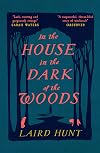
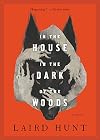
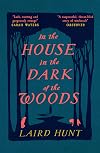
I picked up this book from the shop purely from liking it's cover.
I loved it. It was a little tricky to get into I'll admit, but I got hooked. I had to let go of my inquisitive thoughts and just let myself take in the story.
The atypical writing style only makes it feel more fairytale-like. It felt like a dream, or some kind of nightmare, it was hard to tell. I loved the feeling of only getting drips and drops of information as and when the character feels like disclosing anything, this is something there should be more of in literature. It's not just reading a linear story, it's experiencing something new, or maybe something like witchcraft itself.
I was surprised when I saw so many negative reviews, especially about it not having a show more conclusion, I found the ending quite satisfying. show less
I loved it. It was a little tricky to get into I'll admit, but I got hooked. I had to let go of my inquisitive thoughts and just let myself take in the story.
The atypical writing style only makes it feel more fairytale-like. It felt like a dream, or some kind of nightmare, it was hard to tell. I loved the feeling of only getting drips and drops of information as and when the character feels like disclosing anything, this is something there should be more of in literature. It's not just reading a linear story, it's experiencing something new, or maybe something like witchcraft itself.
I was surprised when I saw so many negative reviews, especially about it not having a show more conclusion, I found the ending quite satisfying. show less
I think I found this in a list of recommended Halloween reads from Audible. I had no expectations whatsoever.
Devil, devil, devil
Angel, angel, angel
Of Hope's sweet sting
In dark night sing
This book is almost like a modern fairytale or myth--like a brand new one, not a retelling of an existing one. There are lessons and cautions in it, similar to Aesop's fables. Now, though it is not a retelling outright and is certainly a unique story, near the end, I did begin to realize (at least to me) that there are some vague Greek, pagan, and Grimm's Brothers undertones. So, maybe it's more of a retelling than I realized, but it's more of an interpretation than a retelling.
During this meandering tale, which feels like a dream, many things happen; show more however, it is done in a mostly linear way. Sometimes the story would suddenly switch between characters (or it was really more like you realized that several characters are the same character), though this, too, was understandable, if not a little jarring at times, given how I was interpreting things. Either way, I was never truly annoyed, lost, or mystified as I have been in other dream-like books (like Spindle's End or Matryoshka). This book "feels" like a poem, but "reads" like prose. That is the only way I can describe it.
I am probably reading way too much into it, but I also can't help that this is where my mind went in interpreting this book: an exploration of human nature (which, really, is I guess what all fairytales/myths/parables/fables are about).
At its simplest, this is a tale of a woman who takes a walk in the woods, then gets lost along the way as she enters a sort of hidden world. I think this is meant to show that... I don't know... her conscious mind is open to seeing "other" things, rather than what she has been taught is the only reality? This turns into a sort of quest, where she encounters different people and creatures and fulfills tasks for them--in doing so, she is not just lost literally but also metaphorically as she winds up in an intense journey of self-discovery.
What she discovers is that there is ourselves and our shadow selves (we are each an angel and we are each a devil); the masks we wear when interacting with others and the love/hate relationship we can have with others; we are one and we are many; we have expectations and we have things expected of us; we have wants and needs and when we don't listen to them in an effort to please others, we only make everyone (includes ourselves) unhappy; we make choices and from those we may have regrets and through those we draw our path and we write our story as we walk it; our character is determined as we decide where to go from there.
We remember the little pieces we take in over time until they coalesce, thereby shaping us, our choices, our perspective, our life as we know it and see it. So, in this way, I think if this book had any moral, it would be to live in the moment. Only in doing that can we be happy and true to ourselves. If we live in the past, we only have regret. If we live in the future, we only have dreams.
To support this journey, there is abundant and repeated symbolism. I began to write out here in a list all the objects and references in this story and what I felt they represent, but I took it all out. For one thing, it began to read like a college essay. For another, I realized doing such a thing would defeat the purpose of this book, which I ended feeling a bit like I did after rereading Life of Pi. Not because it is spiritual like Life of Pi, but because I could see it being a book that many people may be on the fence about reading. I'd err on the side of reading it, if nothing else to form your own opinion on it and find your own meaning in it. show less
Devil, devil, devil
Angel, angel, angel
Of Hope's sweet sting
In dark night sing
This book is almost like a modern fairytale or myth--like a brand new one, not a retelling of an existing one. There are lessons and cautions in it, similar to Aesop's fables. Now, though it is not a retelling outright and is certainly a unique story, near the end, I did begin to realize (at least to me) that there are some vague Greek, pagan, and Grimm's Brothers undertones. So, maybe it's more of a retelling than I realized, but it's more of an interpretation than a retelling.
During this meandering tale, which feels like a dream, many things happen; show more however, it is done in a mostly linear way. Sometimes the story would suddenly switch between characters (or it was really more like you realized that several characters are the same character), though this, too, was understandable, if not a little jarring at times, given how I was interpreting things. Either way, I was never truly annoyed, lost, or mystified as I have been in other dream-like books (like Spindle's End or Matryoshka). This book "feels" like a poem, but "reads" like prose. That is the only way I can describe it.
I am probably reading way too much into it, but I also can't help that this is where my mind went in interpreting this book: an exploration of human nature (which, really, is I guess what all fairytales/myths/parables/fables are about).
At its simplest, this is a tale of a woman who takes a walk in the woods, then gets lost along the way as she enters a sort of hidden world. I think this is meant to show that... I don't know... her conscious mind is open to seeing "other" things, rather than what she has been taught is the only reality? This turns into a sort of quest, where she encounters different people and creatures and fulfills tasks for them--in doing so, she is not just lost literally but also metaphorically as she winds up in an intense journey of self-discovery.
What she discovers is that there is ourselves and our shadow selves (we are each an angel and we are each a devil); the masks we wear when interacting with others and the love/hate relationship we can have with others; we are one and we are many; we have expectations and we have things expected of us; we have wants and needs and when we don't listen to them in an effort to please others, we only make everyone (includes ourselves) unhappy; we make choices and from those we may have regrets and through those we draw our path and we write our story as we walk it; our character is determined as we decide where to go from there.
We remember the little pieces we take in over time until they coalesce, thereby shaping us, our choices, our perspective, our life as we know it and see it. So, in this way, I think if this book had any moral, it would be to live in the moment. Only in doing that can we be happy and true to ourselves. If we live in the past, we only have regret. If we live in the future, we only have dreams.
To support this journey, there is abundant and repeated symbolism. I began to write out here in a list all the objects and references in this story and what I felt they represent, but I took it all out. For one thing, it began to read like a college essay. For another, I realized doing such a thing would defeat the purpose of this book, which I ended feeling a bit like I did after rereading Life of Pi. Not because it is spiritual like Life of Pi, but because I could see it being a book that many people may be on the fence about reading. I'd err on the side of reading it, if nothing else to form your own opinion on it and find your own meaning in it. show less
A modern fable set in colonial New England. It's a witchy and playful narrative that absolutely implies a parable feel. It's a masterful stroke in setting and tone and is a great companion piece to the 2015 movie "The Witch". The story won't be for everyone, it is not a traditional style in the storytelling, but I find that refreshing, hypnotic, and once you latch onto the story and accept it, there are plenty of delightfully creepy moments. A brisk read, but stays in the head. After finishing the book, I reflected a bit, trying to grasp the ending and meaning, and then I relayed the whole story to my wife. As I was reciting the tale, in my own way, I had the epiphany moment. Aha! This is a novel that is giving me the opportunity to show more retell the tale with my own nuances and impressions. Laird Hunt understands the idea of storytelling and oral tradition and creates this terrific haunting story for us to retell it as if it were Washington Irving or Poe. Brilliant work. show less
This is a tough one. I really admire Laird Hunt. I wish I could write books like his—proportional,
upending, unresolvable, unputdownable. I probably thought more about this book after reading it than almost any other. No, I didn’t think about it, it haunted me. I wanted it to go away. It is sppppoooooooooky when it is spooky but it is also annoying through much of the middle with a kind of goth Alice in Wonderland oopsie daisy quality to the plot that got boring. It was like these moves were needed thematically perhaps but not needed for the narrative. So you can start to feel talked at and then the lecture is in very dark riddles. I think what haunted me is that women seemed to be blamed on some level for the abuse they endure… show more LH, you are a spinner of nightmares. show less
upending, unresolvable, unputdownable. I probably thought more about this book after reading it than almost any other. No, I didn’t think about it, it haunted me. I wanted it to go away. It is sppppoooooooooky when it is spooky but it is also annoying through much of the middle with a kind of goth Alice in Wonderland oopsie daisy quality to the plot that got boring. It was like these moves were needed thematically perhaps but not needed for the narrative. So you can start to feel talked at and then the lecture is in very dark riddles. I think what haunted me is that women seemed to be blamed on some level for the abuse they endure… show more LH, you are a spinner of nightmares. show less
Members
- Recently Added By
Lists

did I say that I didn't mean that (unreliable narrators)
34 works; 7 members

Books Read in 2023
5,547 works; 145 members

Books Read in 2020
4,379 works; 124 members

Feminism
167 works; 4 members

Fiction: Supernatural Horror
97 works; 1 member

2010s
241 works; 3 members

I Could Live There
185 works; 12 members

Witches and Wizards Oh My
135 works; 12 members
Author Information

20+ Works 2,073 Members
Some Editions
Awards and Honors
Awards
Common Knowledge
- Original publication date
- 2018
- People/Characters
- Goody Faith; Captain Jane; Eliza; Granny Someone; Red Boy; Hope (show all 10); Welcome; Thomas; Mercy; Glory
- Epigraph
- Deep into that darkness peering,
Long I stood there
Wondering, fearing - First words
- I told my man I was off to pick berries and that he should watch our son for I would be gone some good while.
- Last words
- (Click to show. Warning: May contain spoilers.)For as it rose, the good sun lit a line down the middle of the long field I found before me and seemed to set the air of the trees in the distance, and the whole wide world beyond them, to burn.
- Blurbers
- Awad, Mona; Kent, Kathleen; Jemc, Jac; Nesbit, TaraShea
- Canonical DDC/MDS
- 813.6
- Canonical LCC
- PS3608.U58
Classifications
Statistics
- Members
- 509
- Popularity
- 59,019
- Reviews
- 28
- Rating
- (3.54)
- Languages
- English
- Media
- Paper, Audiobook, Ebook
- ISBNs
- 13
- ASINs
- 3