On This Page
Description
Monday 9th September "I left London today and met Bingley at Netherfield Park. I had forgotten what good company he is; always ready to be pleased and always cheerful. After my difficult summer, it is good to be with him again. ..." The only place Darcy could share his innermost feelings was in the private pages of his diary... Torn between his sense of duty to his family name and his growing passion for Elizabeth Bennet, all he can do is struggle not to fall in love. Mr. Darcy's Diary show more presents the story of the unlikely courtship of Elizabeth Bennet and Fitzwilliam Darcy from Darcy's point of view. This graceful imagining and sequel to Pride and Prejudice explains Darcy's moodiness and the difficulties of his reluctant relationship as he struggles to avoid falling in love with Miss Bennet. Though seemingly stiff and stubborn at times, Darcy's words prove him also to be quite devoted and endearing - qualities that eventually win over Miss Bennet's heart. This continuation of a classic romantic novel is charming and elegant, much like Darcy himself. Pride and Prejudice has inspired a large number of modern day sequels, the most successful of which focus on the rich, proud Mr. Darcy. show lessTags
Recommendations
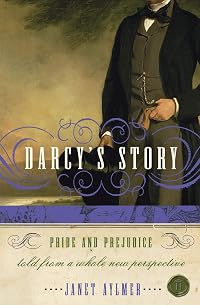
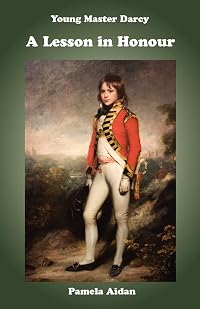
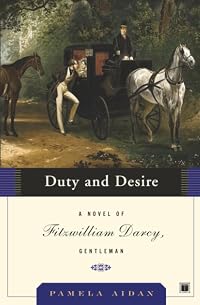
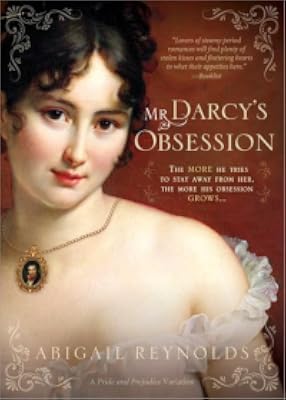

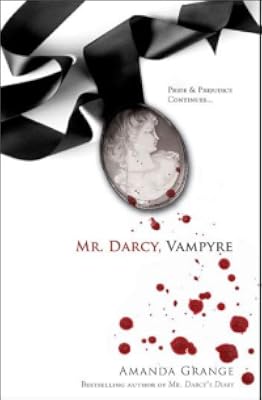
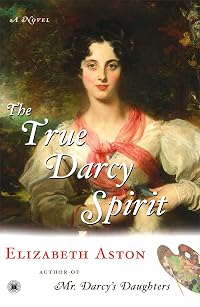
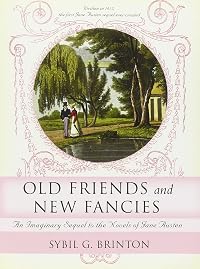

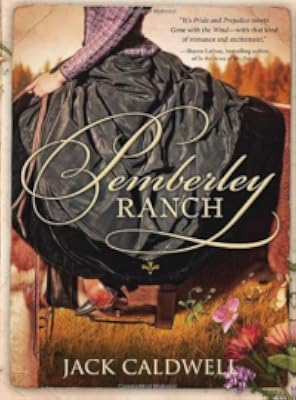


Member Reviews
Muchos dirán que es un sacrilegio que a Grange se le ocurriera sacar este libro, que no esta a la altura, que este libro ofendería a Jane Austen, que no es posible que se atreviera a escribirlo y que como es posible que haya quien se atreva a leerlo.
Pues bien, yo les digo, que yo me atreví y no solo eso ¡El libro me encantó!
Soy una admiradora de Jane Austen desde que era una pre adolescente, soy una de las muchas enamoradas de Mr. Darcy y aun y cuando no soy mucho de leer literatura del genero Romántico, lo cierto es, que Orgullo y Prejuicio es uno de mis libros favoritos.
Este libro es, como dice su nombre un Diario de Darcy, comienza cuando Darcy nos comparte que llevó a su hermana de regreso a Londres, para después pasar a show more contarnos que tiene que acompañar a Charles a ver una nueva propiedad, porque es tan ingenuo que es fácil que le vean la cara, no lo dice así, pero casi.
Y Así vemos como Darcy acompaña a Charles y sus hermanas a pasar una temporada a su nueva propiedad, como conoce a las Bennet, lo que realmente piensa y opina de Elizabeth, como va creciendo su admiración por ella y como lucha en contra de eso y su razones.
La verdad, nada que no pudiéramos imaginarnos con el libro original, pero tengo que decir que el libro es acertadisimo en cuanto a la personalidad de Darcy, el pasaje donde él le escribe su carta a Elizabeth después de que ella rechaza su proporción, es extraordinariamente bueno, incluso estoy segura que de este libro tomaron la escena que vemos en la serie de la BBC con Colin Firth.
No puedo mas que decir que el libro me encantó y aunque ésta autora ha escrito aberraciones de versiones de Orgullo y Prejuicio, en este caso tuvo un gran acierto, me encanto el libro y realmente lo disfrute mucho.
No voy a decir que es una gran escritora y que su narración es lo mejor que he visto porque mentiría, pero el acercamiento que tuvo en este caso hacia la historia, me encanto, vamos, que si ya estaba enamora de Darcy, caí muerta a sus pies, porque aun y cuando en el libro original podemos ver la personalidad de Darcy y por ello nos enamoramos, en este libro lo constatamos, vemos sus mas profundos sentimientos, sus pensamientos, sus defectos y la nobleza de su personalidad.
El caso es que si eres fan, yo te lo recomiendo, ya me contarás que opinas tu show less
Pues bien, yo les digo, que yo me atreví y no solo eso ¡El libro me encantó!
Soy una admiradora de Jane Austen desde que era una pre adolescente, soy una de las muchas enamoradas de Mr. Darcy y aun y cuando no soy mucho de leer literatura del genero Romántico, lo cierto es, que Orgullo y Prejuicio es uno de mis libros favoritos.
Este libro es, como dice su nombre un Diario de Darcy, comienza cuando Darcy nos comparte que llevó a su hermana de regreso a Londres, para después pasar a show more contarnos que tiene que acompañar a Charles a ver una nueva propiedad, porque es tan ingenuo que es fácil que le vean la cara, no lo dice así, pero casi.
Y Así vemos como Darcy acompaña a Charles y sus hermanas a pasar una temporada a su nueva propiedad, como conoce a las Bennet, lo que realmente piensa y opina de Elizabeth, como va creciendo su admiración por ella y como lucha en contra de eso y su razones.
La verdad, nada que no pudiéramos imaginarnos con el libro original, pero tengo que decir que el libro es acertadisimo en cuanto a la personalidad de Darcy, el pasaje donde él le escribe su carta a Elizabeth después de que ella rechaza su proporción, es extraordinariamente bueno, incluso estoy segura que de este libro tomaron la escena que vemos en la serie de la BBC con Colin Firth.
No puedo mas que decir que el libro me encantó y aunque ésta autora ha escrito aberraciones de versiones de Orgullo y Prejuicio, en este caso tuvo un gran acierto, me encanto el libro y realmente lo disfrute mucho.
No voy a decir que es una gran escritora y que su narración es lo mejor que he visto porque mentiría, pero el acercamiento que tuvo en este caso hacia la historia, me encanto, vamos, que si ya estaba enamora de Darcy, caí muerta a sus pies, porque aun y cuando en el libro original podemos ver la personalidad de Darcy y por ello nos enamoramos, en este libro lo constatamos, vemos sus mas profundos sentimientos, sus pensamientos, sus defectos y la nobleza de su personalidad.
El caso es que si eres fan, yo te lo recomiendo, ya me contarás que opinas tu show less
In 2005 author Amanda Grange gave Pride and Prejudice fans what they had been craving for centuries—Jane Austen’s classic story retold entirely from the perspective of its iconic romantic hero—Mr. Darcy. It was certainly not the first novel to explore this concept, but Mr. Darcy’s Diary remains, after many other attempts, the best in a very crowded field of Darcyiana.
I first read Darcy’s Diary eight years ago when it was released in the UK. I paid a fortune for the first edition to be shipped to the US. I did not regret it. My copy retains its place of honor on my Austen sequel bookshelf, along with the five other novels in her Austen Hero Diaries Series that Grange has since produced. She has a large international following show more for her work which she has earned through honest homage and clever craftsmanship.
Writing a first person narrative of a classic hero who is a bit of a prig in the original story has its challenges. In Pride and Prejudice the reader sympathizes with the heroine Elizabeth Bennet in her dislike of Mr. Darcy. We meet him and draw our conclusions of his personality from her perspective—he is a proud and disagreeable man—we see why she thinks so, but we do not know why.
Seeing the same events unfold from his eyes does not absolve him of his bad behavior, but as the narrative progresses, we are more sympathetic to his reasons. As we discover his inner thoughts and outward actions, our second impressions countermand his arrogant noble mien: we learn details of his chance intervention of the elopement of his sixteen-year old sister Georgiana with his nemesis George Wickham; we see his management of his soft-hearted friend Charles Bingley and learn why he is guiding him by the manipulation of his confidence and Bingley’s sisters; we see his attraction to Elizabeth Bennet spark and grow from his original cool intolerance to his admiration of her “fine eyes” and saucy impertinence—and his puzzlement of her brusque behavior to him.
‘Oh,’ she said, ‘I heard you before; but could not immediately determine what to say in reply. You wanted me, I know, to say “Yes,” that you might have the pleasure of despising my taste; but I always delight in overthrowing those kind of schemes. I have therefore made up my mind to tell you, that I do not want to dance a reel at all – and now despise me if you dare.’
‘Did I really seem so perverse to her? I wondered. And yet I could not help smiling at her sally, and her bravery in uttering it.’ p. 40
Close readers of Pride and Prejudice will recognize lines of Austen’s original dialogue (like Elizabeth’s speech to Darcy quoted above) interlaced with Grange’s new text. This ingenious co-mingling is seamless and we partake in many of the important passages where Darcy interacts with Elizabeth in the original novel, and then his private reaction. This works for this reader because Grange does not try to write like Austen in Elizabeth head, but as Grange in Darcy’s.
For those who are a student of character (like our heroine Elizabeth) it is interesting to observe our hero Darcy’s view of events from a male perspective. The whole Men are from Mars, Women are from Venus theory plays out beautifully and Grange takes full advantage of the differences in the sexes and how they think and react to the same scene when Elizabeth arrives at the Netherfield Ball.
“I continued walking towards her. ‘I am glad to see you here. I hope you had a pleasant journey?’ I asked. ‘This time, I hope you did not have to walk!’
‘No, I thank you,’ she said stiffly. ‘I came in a carriage.’
I wondered if I had offended her. Perhaps she felt I had meant my remark as a slight on her family’s inability to keep horses purely for their carriage. I tried to repair the damage of my first remark.’” p. 51
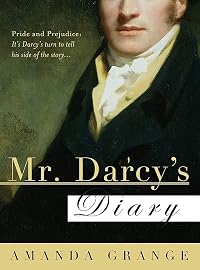
Image of the book cover of Mr. Darcys Diary, by Amanda Grange, US ed. © 2007 Sourcebooks Clueless! There is some hope of improvement. As Darcy’s admiration of Elizabeth grows, it begins to humble his pride. While he is in Kent visiting his aunt Lady Catherine de Bourgh, we begin to see the change as he reacts to Elizabeth’s explanation to Darcy’s cousin Colonel Fitzwilliam of his behavior when they first met at the Meryton Assembly.
“In her eyes, my refusal to dance became ridiculous, and I saw it so myself, for the first time. To stride about in all my pride, instead of enjoying myself as any well-regulated man would have done. Absurd! I would not ordinarily have tolerated any such teasing, and yet there was something in her manner that removed any sting, and instead made it a cause for laughter.” p. 78
Even though many will know the final outcome of the story, Grange keeps us in suspense by adding new scenes and inner thoughts that only Darcy would be privy too—and now we are too. What fan of Pride and Prejudice, and Mr. Darcy, could possibly resist reliving a cherished novel and walking in his shiny, black Hessian boots? I couldn’t.
Laurel Ann, Austenprose show less
I first read Darcy’s Diary eight years ago when it was released in the UK. I paid a fortune for the first edition to be shipped to the US. I did not regret it. My copy retains its place of honor on my Austen sequel bookshelf, along with the five other novels in her Austen Hero Diaries Series that Grange has since produced. She has a large international following show more for her work which she has earned through honest homage and clever craftsmanship.
Writing a first person narrative of a classic hero who is a bit of a prig in the original story has its challenges. In Pride and Prejudice the reader sympathizes with the heroine Elizabeth Bennet in her dislike of Mr. Darcy. We meet him and draw our conclusions of his personality from her perspective—he is a proud and disagreeable man—we see why she thinks so, but we do not know why.
Seeing the same events unfold from his eyes does not absolve him of his bad behavior, but as the narrative progresses, we are more sympathetic to his reasons. As we discover his inner thoughts and outward actions, our second impressions countermand his arrogant noble mien: we learn details of his chance intervention of the elopement of his sixteen-year old sister Georgiana with his nemesis George Wickham; we see his management of his soft-hearted friend Charles Bingley and learn why he is guiding him by the manipulation of his confidence and Bingley’s sisters; we see his attraction to Elizabeth Bennet spark and grow from his original cool intolerance to his admiration of her “fine eyes” and saucy impertinence—and his puzzlement of her brusque behavior to him.
‘Oh,’ she said, ‘I heard you before; but could not immediately determine what to say in reply. You wanted me, I know, to say “Yes,” that you might have the pleasure of despising my taste; but I always delight in overthrowing those kind of schemes. I have therefore made up my mind to tell you, that I do not want to dance a reel at all – and now despise me if you dare.’
‘Did I really seem so perverse to her? I wondered. And yet I could not help smiling at her sally, and her bravery in uttering it.’ p. 40
Close readers of Pride and Prejudice will recognize lines of Austen’s original dialogue (like Elizabeth’s speech to Darcy quoted above) interlaced with Grange’s new text. This ingenious co-mingling is seamless and we partake in many of the important passages where Darcy interacts with Elizabeth in the original novel, and then his private reaction. This works for this reader because Grange does not try to write like Austen in Elizabeth head, but as Grange in Darcy’s.
For those who are a student of character (like our heroine Elizabeth) it is interesting to observe our hero Darcy’s view of events from a male perspective. The whole Men are from Mars, Women are from Venus theory plays out beautifully and Grange takes full advantage of the differences in the sexes and how they think and react to the same scene when Elizabeth arrives at the Netherfield Ball.
“I continued walking towards her. ‘I am glad to see you here. I hope you had a pleasant journey?’ I asked. ‘This time, I hope you did not have to walk!’
‘No, I thank you,’ she said stiffly. ‘I came in a carriage.’
I wondered if I had offended her. Perhaps she felt I had meant my remark as a slight on her family’s inability to keep horses purely for their carriage. I tried to repair the damage of my first remark.’” p. 51
Image of the book cover of Mr. Darcys Diary, by Amanda Grange, US ed. © 2007 Sourcebooks Clueless! There is some hope of improvement. As Darcy’s admiration of Elizabeth grows, it begins to humble his pride. While he is in Kent visiting his aunt Lady Catherine de Bourgh, we begin to see the change as he reacts to Elizabeth’s explanation to Darcy’s cousin Colonel Fitzwilliam of his behavior when they first met at the Meryton Assembly.
“In her eyes, my refusal to dance became ridiculous, and I saw it so myself, for the first time. To stride about in all my pride, instead of enjoying myself as any well-regulated man would have done. Absurd! I would not ordinarily have tolerated any such teasing, and yet there was something in her manner that removed any sting, and instead made it a cause for laughter.” p. 78
Even though many will know the final outcome of the story, Grange keeps us in suspense by adding new scenes and inner thoughts that only Darcy would be privy too—and now we are too. What fan of Pride and Prejudice, and Mr. Darcy, could possibly resist reliving a cherished novel and walking in his shiny, black Hessian boots? I couldn’t.
Laurel Ann, Austenprose show less
Grange relies heavily on Austen’s work and this novel contains, at the very least, 90% of Austen’s material verbatim. Yet, Grange has peppered the pages with Darcy’s internal monologue that stays surprisingly true to the character and is quite an enjoyable read. Mr. Darcy in this book, while he is tormented internally by his affections for Elizabeth Bennet, does not betray his stature or position and act out of the ordinary. Instead, he writes of his inner torment in his diary and tries to hold his composure because of his status (and because of Elizabeth’s). With his entries, we see Mr. Darcy as a red-blooded man, someone who can love most passionately, and someone who can grieve over his mistakes.
But, perhaps the most show more enjoyable is the author’s additions of Darcy and Elizabeth’s life after they are wed. We are given several entries from Darcy as a married man and given a glimpse of what the character’s married life might have been like.
It was a refreshing read, in that many secondary characters are given more dialogue, and Darcy has been given more depth as a character while not straying too far from Austen’s portrayal of him. show less
But, perhaps the most show more enjoyable is the author’s additions of Darcy and Elizabeth’s life after they are wed. We are given several entries from Darcy as a married man and given a glimpse of what the character’s married life might have been like.
It was a refreshing read, in that many secondary characters are given more dialogue, and Darcy has been given more depth as a character while not straying too far from Austen’s portrayal of him. show less
Mr Darcy's Diary by Amanda Grange follows the same Pride and Prejudice plot but through the eyes of our beloved moody Mr Darcy. The book is written in epistolary format (ie; as a diary, naturally) so some who aren't used to this may take a while to get used to. I haven't read many epistolary novels much but this one flows evenly and it's not choppy so reading it isn't difficult or hard. In fact, it makes the experience nice and enjoyable.
I have to admit, I thought it was going to be a serious novel as, seeing it was through Mr Darcy's perspective he's going to be dour, moody and serious so it only fits that the novel should reflect that. It's not entirely what I expected. I found myself chuckling and laughing at some parts especially at show more how Darcy has to look after Bingley most of the time. Bingley is shown in this novel as very scatterbrained, impulsive and comical (in fact, the exact opposite of Mr Darcy) and Mr Darcy is seen as having to steer him onto the proper road all the time. Although, when the story starts out when them arriving at Netherfield and Darcy completely hating being there with "country folk" I have to say I thought Darcy and Caroline were two of the biggest snobs I have ever read in my entire life. I couldn't stand their talk and thought it was absolutely cruel of them to purposely separate Jane and Bingley like that. It made you almost want to punch Darcy in the face.
What gave me the chuckles the most was his constant denial of trying to not think about Elizabeth. In most of his diary entries in the beginning he swears to not think about her but then you see him mention something of her character, or how she looked. It was funny but at the same time it was interesting because it gave the reader the opportunity to see what Darcy was really thinking when certain climaxes happened to take place through the Pride and Prejudice plot. I loved his thoughts when he was around Mrs Bennet or even Mr Collins. I knew I laughed out loud at parts where he write of his opinion of these people. It was also nice to see more detail into his bantering back and forth with Elizabeth which is seen as almost a means of flirtation but in a very subtle manner that only both of them could understand.
The story stays close and highlights the most important parts of Pride and Prejudice with tidbits of what happens in between those events but what's more important is towards the end it gives you a little more of what happened after the ending and I thought that was the most interesting. I liked how a tiny addition could make the novel even better. I liked how there were knots tied to characters I was curious about and how the happy ending was made even more happier.
Overall, Amanda Grange does a wonderful job with this book and I'm hoping fans of Pride and Prejudice will enjoy this book as much as I did. It was a great, entertaining and very light hearted read. show less
I have to admit, I thought it was going to be a serious novel as, seeing it was through Mr Darcy's perspective he's going to be dour, moody and serious so it only fits that the novel should reflect that. It's not entirely what I expected. I found myself chuckling and laughing at some parts especially at show more how Darcy has to look after Bingley most of the time. Bingley is shown in this novel as very scatterbrained, impulsive and comical (in fact, the exact opposite of Mr Darcy) and Mr Darcy is seen as having to steer him onto the proper road all the time. Although, when the story starts out when them arriving at Netherfield and Darcy completely hating being there with "country folk" I have to say I thought Darcy and Caroline were two of the biggest snobs I have ever read in my entire life. I couldn't stand their talk and thought it was absolutely cruel of them to purposely separate Jane and Bingley like that. It made you almost want to punch Darcy in the face.
What gave me the chuckles the most was his constant denial of trying to not think about Elizabeth. In most of his diary entries in the beginning he swears to not think about her but then you see him mention something of her character, or how she looked. It was funny but at the same time it was interesting because it gave the reader the opportunity to see what Darcy was really thinking when certain climaxes happened to take place through the Pride and Prejudice plot. I loved his thoughts when he was around Mrs Bennet or even Mr Collins. I knew I laughed out loud at parts where he write of his opinion of these people. It was also nice to see more detail into his bantering back and forth with Elizabeth which is seen as almost a means of flirtation but in a very subtle manner that only both of them could understand.
The story stays close and highlights the most important parts of Pride and Prejudice with tidbits of what happens in between those events but what's more important is towards the end it gives you a little more of what happened after the ending and I thought that was the most interesting. I liked how a tiny addition could make the novel even better. I liked how there were knots tied to characters I was curious about and how the happy ending was made even more happier.
Overall, Amanda Grange does a wonderful job with this book and I'm hoping fans of Pride and Prejudice will enjoy this book as much as I did. It was a great, entertaining and very light hearted read. show less
The book begins not with Bingley's occupation of Netherfield, but rather with the original incident involving Georgiana and Mr. Wickham. In this area, the author takes creative license, expanding upon circumstances and giving one a different view upon Georgiana's character as well as that of Ms. Younge. This sets the stage for the events that follow and Darcy's take upon them. It also elucidates his feelings towards both his sister and his former steward's son.
My favorite scenes in this novel are the ones created entirely from the author's own mind. Ms. Bingley was always faithfully represented, as were Mrs. Bennet and Lady Catherine. The incidences that Grange created give us more insight into the characters of minor players and even show more ones who figured prominently in Pride and Prejudice without ever being fleshed out. By this I refer to Bingley, who was only ever shown to be an amiable gentleman who is easily swayed. Grange's take on his personality made him less of an idea and more of a person one can believe in.
The entire book is written as a diary, adding in various events to fill in the gaps in time that existed between Darcy's appearances in the original novel. The dialogue from the original was retained, and while I can see the attempt to maintain authenticity, it came at the price of my belief in the premise of this work. In writing in one's journal, it seems unlikely that one would set about scripting out conversations as one would if writing an actual book. The insertions seemed forced, reminding me that this is an homage to another author's work.
Part of the reason that the quotations stood out was due to vocabulary and style. Grange does quite well in some instances in terms of her sentence structure and removal of the contractions we are so fond of these days. In spite of all of this, however, I was struck by the simplicity of the journal entries. Bingley once commented upon Darcy's use of long words, suggesting a verbosity that was sorely lacking here. The repetition of words and phrases also seemed uncharacteristic when compared to Austen's original dialogue.
More than a Darcy-centered play-by-play, I came into this experience wanting to see an interpretation of his inner thoughts and reasoning, as well as the changes in his character over time. These are present in the passages fabricated by the author; unfortunately, they are absent in those already established by the original work. Instead, preexisting sections become summaries of Austen's scenes, limiting Darcy's emotions to those that she already laid out. They did not improve my understanding of the man in question.
One of the many dangers of writing historical fiction is in keeping everything true to the time period, and I applaud the author's bravery in attempting such a daunting undertaking. Even so, I couldn't help but notice the instances in which this became an issue in Mr. Darcy's Diary. An anachronism that came up several times was the lack of proper use of subjunctives. Many twenty-first century writers will use "I was" when "I were" is technically correct, but this sort of rule-breaking should not have been present given the thorough education that Darcy undoubtedly received. These moments jolted me out of Grange's take on Austen's world every time they occurred, making it difficult to believe that this book is indeed a journal penned by Fitzwilliam Darcy's hand.
It isn't easy trying to fill Jane Austen's shoes. In Mr. Darcy's Diary, the author succeeds best when deviating from the predetermined track and channeling her own take on these beloved characters. An original work may do more justice to her talents. show less
My favorite scenes in this novel are the ones created entirely from the author's own mind. Ms. Bingley was always faithfully represented, as were Mrs. Bennet and Lady Catherine. The incidences that Grange created give us more insight into the characters of minor players and even show more ones who figured prominently in Pride and Prejudice without ever being fleshed out. By this I refer to Bingley, who was only ever shown to be an amiable gentleman who is easily swayed. Grange's take on his personality made him less of an idea and more of a person one can believe in.
The entire book is written as a diary, adding in various events to fill in the gaps in time that existed between Darcy's appearances in the original novel. The dialogue from the original was retained, and while I can see the attempt to maintain authenticity, it came at the price of my belief in the premise of this work. In writing in one's journal, it seems unlikely that one would set about scripting out conversations as one would if writing an actual book. The insertions seemed forced, reminding me that this is an homage to another author's work.
Part of the reason that the quotations stood out was due to vocabulary and style. Grange does quite well in some instances in terms of her sentence structure and removal of the contractions we are so fond of these days. In spite of all of this, however, I was struck by the simplicity of the journal entries. Bingley once commented upon Darcy's use of long words, suggesting a verbosity that was sorely lacking here. The repetition of words and phrases also seemed uncharacteristic when compared to Austen's original dialogue.
More than a Darcy-centered play-by-play, I came into this experience wanting to see an interpretation of his inner thoughts and reasoning, as well as the changes in his character over time. These are present in the passages fabricated by the author; unfortunately, they are absent in those already established by the original work. Instead, preexisting sections become summaries of Austen's scenes, limiting Darcy's emotions to those that she already laid out. They did not improve my understanding of the man in question.
One of the many dangers of writing historical fiction is in keeping everything true to the time period, and I applaud the author's bravery in attempting such a daunting undertaking. Even so, I couldn't help but notice the instances in which this became an issue in Mr. Darcy's Diary. An anachronism that came up several times was the lack of proper use of subjunctives. Many twenty-first century writers will use "I was" when "I were" is technically correct, but this sort of rule-breaking should not have been present given the thorough education that Darcy undoubtedly received. These moments jolted me out of Grange's take on Austen's world every time they occurred, making it difficult to believe that this book is indeed a journal penned by Fitzwilliam Darcy's hand.
It isn't easy trying to fill Jane Austen's shoes. In Mr. Darcy's Diary, the author succeeds best when deviating from the predetermined track and channeling her own take on these beloved characters. An original work may do more justice to her talents. show less
My Dear Readers,
It is with grave misfortune that I dissuade you from whatever excitement you may have upon learning of the existence of this novel. Jane Austen, the wonderful authoress that she is, has created such a wealth of characters and a story so beloved that more modern writers cannot help but continue to revisit the story and attempt to put a new stamp on things, but to no avail.
Mr. Darcy's Diary is a straight retelling of Pride and Prejudice, even directly quoting the original during key points in the plot. Grange has done a very admirable job of spinning the story from Darcy's point of view, but she hasn't been able to do it in an interesting or original way. Her efforts to recreate Darcy's formal and reserved personality show more within this diary-as-a-novel format have resulted in a very bland and wooden book where every twist of the story is predictable. Please take my assurance that it would be much more entertaining to reread Austen's original yet again.
In short, Grange's rendition of Mr. Darcy's side of Pride and Prejudice never enflamed my passions. And for all its formality in tone, the book is so familiar that it can only cause a brief entertainment. I'd recommend this book only to particular friends of the original story.
Kindest regards,
An Opinionated Lady show less
It is with grave misfortune that I dissuade you from whatever excitement you may have upon learning of the existence of this novel. Jane Austen, the wonderful authoress that she is, has created such a wealth of characters and a story so beloved that more modern writers cannot help but continue to revisit the story and attempt to put a new stamp on things, but to no avail.
Mr. Darcy's Diary is a straight retelling of Pride and Prejudice, even directly quoting the original during key points in the plot. Grange has done a very admirable job of spinning the story from Darcy's point of view, but she hasn't been able to do it in an interesting or original way. Her efforts to recreate Darcy's formal and reserved personality show more within this diary-as-a-novel format have resulted in a very bland and wooden book where every twist of the story is predictable. Please take my assurance that it would be much more entertaining to reread Austen's original yet again.
In short, Grange's rendition of Mr. Darcy's side of Pride and Prejudice never enflamed my passions. And for all its formality in tone, the book is so familiar that it can only cause a brief entertainment. I'd recommend this book only to particular friends of the original story.
Kindest regards,
An Opinionated Lady show less
A retelling of 'Pride & Prejudice' through Mr. Darcy's diary. Though I thought the beginning was slow, it set the rest of the story up well. Because the plot is so familiar, it's a really quick read. Overall, I liked it a lot.
Members
- Recently Added By
Lists

Books Read in 2020
4,379 works; 124 members

Austenesque - Pride and Prejudice Variations
40 works; 1 member

Books Read in 2012
816 works; 31 members

Favorite Epistolary Fiction
143 works; 144 members
Author Information

34+ Works 3,828 Members
Amanda Grange lives in Cheshire. Robert Hale previously published many of her novels, including Lord Deverill¿s Secret, Stormcrow Castle, Darcy¿s Diary, Mr Knightley¿s Diary and Captain Wentworth¿s Diary. Visit her website at www.amandagrange.com.
Series

Belongs to Publisher Series
Work Relationships
Is a retelling of
Common Knowledge
- Canonical title
- Mr. Darcy's Diary
- Original title
- Mr. Darcy's Diary
- Original publication date
- 2007
- People/Characters
- Fitzwilliam Darcy; Elizabeth Bennet; Georgiana Darcy; Jane Bennet; Charles Bingley; Caroline Bingley (show all 39); George Wickham; Mrs. Bennet; Mr. Bennet; Lydia Bennet; Mrs. Gardiner; Mr. Gardiner; Colonel Fitzwilliam; Lady Catherine de Bourgh; Anne de Bourgh; William Collins; Charlotte Lucas Collins; Lady Lucas; William Lucas; Mrs. Reynolds; Mrs. Annesley; Mary Bennet; Kitty Bennet; Mr. Hurst; Louisa Hurst; Mr. Gardiner; Mrs. Gardiner; Colonel Forster; Mr. Jones; Mrs. Reynolds; Mr. Denny; Maria Collins; Mrs. Jenkinson; Susan Wigham; Cordelia Farnham; Mrs. Pargeter; Margaret Pargeter; Miss Howard; Mrs. Younge
- First words
- Monday 1st July
Have I done the right thing in establishing Georgiana in London, I wonder? - Last words
- (Click to show. Warning: May contain spoilers.)I thought last year was the happiest of my life, but I think this one is going to be even better.
- Original language
- English
Classifications
Statistics
- Members
- 1,238
- Popularity
- 19,882
- Reviews
- 47
- Rating
- (3.49)
- Languages
- English, French, Italian
- Media
- Paper, Audiobook, Ebook
- ISBNs
- 19
- UPCs
- 1
- ASINs
- 12