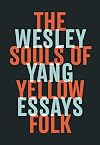
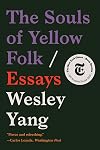
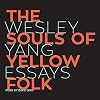
The Souls of Yellow Folk: Essays
by Wesley Yang
On This Page
Description
"One of the most acclaimed essayists of his generation, Wesley Yang writes about race and sex without the jargon, formulas, and polite lies that bore us all. His powerful debut, The Souls of Yellow Folk, does more than collect a decade's worth of cult-reputation essays -- it corrals new American herds of pickup artists, school shooters, mandarin zombies, and immigrant strivers, and exposes them to scrutiny, empathy, and polemical force.In his celebrated and prescient essay "The Face of show more Seung-Hui Cho," Yang explores the deranged logic of the Virginia Tech shooter. In his National Magazine Award-winning "Paper Tigers," he explores the intersection of Asian values and the American dream, and the inner torment of the child exposed to "tiger mother" parenting. And in his close reading of New York Magazine's popular Sex Diaries, he was among the first critics to take seriously today's Internet-mediated dating lives.Yang catches these ugly trends early because he has felt at various times implicated in them, and he does not exempt himself from his radical honesty. His essays retain the thrill of discovery, the wary eye of the first explorer, and the rueful admission of the first exposed."--Dust jacket. show lessTags
Recommendations






Member Reviews
“In an age characterized by the politics of resentment, the Asian man knows something of the resentment of the embattled white man, besieged on all sides by grievances and demands for reparation, and something of the resentments of the rising social-justice warrior, who feels with every fiber of their being that all that stands in the way of the attainment of their thwarted ambitions is nothing so much as a white man. Tasting of the frustrations of both, he is denied the entitlements of either."
What a good book Wesley Yang's collection is. His insights are sometimes unsettling; at other times they're darkly hilarious. I don't agree with all of Yang's arguments, but I was glad to be along for the ride nevertheless. This is a show more thought-provoking book that relentlessly challenges our complacency. It's also an impressively wide-ranging collection -- there doesn't seem to be any subject that Yang can't write on successfully. He ventures into surprising and unexpected places, and he's consistently clever and entertaining.
I had previously read "The Face of Seung-Hui Cho," Yang's provocative essay about the Virginia Tech shooter. The other pieces were new to me. My favorite was "The Liveliest Mind in New York," about Tony Judt, a historian I admire very much. Other high points for me were: "On Reading the Sex Diaries" and "Eddie Huang Against the World."
This is an uneven but strong collection. It's also a collection with coherence. Like all good collections, the essays here work together to provide a whole that is even stronger than the sum of its parts. And it's a collection that couldn't be more relevant for our divisive times and the crazy pop-culture world we live in.
Lastly, the narration by David Shih is excellent. His style was pleasing on my ear, and he got Yang's wit and humor (and anger) just right.
Strongly recommended.
(Thank you to W. W. Norton and Tantor Audio for a complimentary copy in exchange for an unbiased review.) show less
What a good book Wesley Yang's collection is. His insights are sometimes unsettling; at other times they're darkly hilarious. I don't agree with all of Yang's arguments, but I was glad to be along for the ride nevertheless. This is a show more thought-provoking book that relentlessly challenges our complacency. It's also an impressively wide-ranging collection -- there doesn't seem to be any subject that Yang can't write on successfully. He ventures into surprising and unexpected places, and he's consistently clever and entertaining.
I had previously read "The Face of Seung-Hui Cho," Yang's provocative essay about the Virginia Tech shooter. The other pieces were new to me. My favorite was "The Liveliest Mind in New York," about Tony Judt, a historian I admire very much. Other high points for me were: "On Reading the Sex Diaries" and "Eddie Huang Against the World."
This is an uneven but strong collection. It's also a collection with coherence. Like all good collections, the essays here work together to provide a whole that is even stronger than the sum of its parts. And it's a collection that couldn't be more relevant for our divisive times and the crazy pop-culture world we live in.
Lastly, the narration by David Shih is excellent. His style was pleasing on my ear, and he got Yang's wit and humor (and anger) just right.
Strongly recommended.
(Thank you to W. W. Norton and Tantor Audio for a complimentary copy in exchange for an unbiased review.) show less
 This review was written for LibraryThing Early Reviewers.
As one would expect from the title The Souls of Yellow Folks there is much on race in current America but there is a larger varied commentary included in these essays. While we read sensitive memorials of Adam Swartz and Tony Judt we must also face white supremacists and the grievances of Asians. (As an aside, I wonder if the society we live in is particularly organized in a way that we all feel grieved and justifiably so.) These essays came out in different times and publications but ,as a book, hold one's interest together and nicely. So, as so often happens to me in my old age, I wonder why it took me so long to discover this gifted seeing writer.
Quotes: (ages 17-18) “Cho imagines the one thing that can never exist --- the coming show more to consciousness and the joining in solidarity of the modern class of losers. Though his soft Asian face could only have been a hindrance to him, Cho did not perceive his pain as stemming from being Asian: he did not perceive himself in a world of identity politics, of groups and fragments of groups, of groups oppressing and fighting other groups. Cho's world is a world of individually determined fortunes, of winners and losers in the marketplace of status, cash, and expression. Cho sees a system of social competition that renders some people absolutely immiserated while others grow obscenely rich.”
(page 57) “Often I think my defiance is delusional, self glorifying bullshit that artists have always told themselves to compensate for their poverty and powerlessness. But sometimes I think it's the only thing that has preserved me intact, and that what has been preserved is not just haughty caprice but in fact the meaning of my life. So this is what I told Mao: in lieu of loving the world twice as hard, I care, in the end, about expressing my obdurate singularity at any cost.”
(pages 98-99) “Fancois de La Rocheoucauld once observed that it's not enough to have great virtues; one must use them with economy. As I listened to the tributes to Aaron Swartz in Highland Park and New York online, this aphorism came to mind. Swartz had skipped out on the lessons taught by American high school --- the lessons in cynical acquiescence, conformity, and obedience to the powers that be. He was right to think these lessens injure peope;s innate sense of curiosity and morality and insure them mediocrity. He was right to credit his 'arrogance' for the excellence of life he lived. But if nothing else, these lessens prepare people for a world that can often be met in no other way; a world whose irrational power must sometimes simply be endured.”
(page 193) “The whole point of living in a culture is that much of the labor of perception and judgment is done for you, spread through media, and absorbed through imperceptible process that has no single author. Perhaps you, too, can envision being surrounded by Asian faces, all of them merging into one another in their meek self-effacement.”
(page 213) “The troubling aspect of this campaign, in my view, is not the substantive politics that antiracists wish to pursue. There is a body of critical and revisionist scholarship that makes a serious case for the necessity of exertions on the behalf of historically disadvantaged minorities that exceed what a doctrine of limited government and individual rights would be willing to contemplate. But the manner in which activists are seeking to win a debate is not through scholarship, persuasion, and debate. It's through the subornation of administrative and disciplinary power to de legitimize, stigmatize, disqualify, surveil, forbid, shame, and punish holders of contrary views.” show less
Quotes: (ages 17-18) “Cho imagines the one thing that can never exist --- the coming show more to consciousness and the joining in solidarity of the modern class of losers. Though his soft Asian face could only have been a hindrance to him, Cho did not perceive his pain as stemming from being Asian: he did not perceive himself in a world of identity politics, of groups and fragments of groups, of groups oppressing and fighting other groups. Cho's world is a world of individually determined fortunes, of winners and losers in the marketplace of status, cash, and expression. Cho sees a system of social competition that renders some people absolutely immiserated while others grow obscenely rich.”
(page 57) “Often I think my defiance is delusional, self glorifying bullshit that artists have always told themselves to compensate for their poverty and powerlessness. But sometimes I think it's the only thing that has preserved me intact, and that what has been preserved is not just haughty caprice but in fact the meaning of my life. So this is what I told Mao: in lieu of loving the world twice as hard, I care, in the end, about expressing my obdurate singularity at any cost.”
(pages 98-99) “Fancois de La Rocheoucauld once observed that it's not enough to have great virtues; one must use them with economy. As I listened to the tributes to Aaron Swartz in Highland Park and New York online, this aphorism came to mind. Swartz had skipped out on the lessons taught by American high school --- the lessons in cynical acquiescence, conformity, and obedience to the powers that be. He was right to think these lessens injure peope;s innate sense of curiosity and morality and insure them mediocrity. He was right to credit his 'arrogance' for the excellence of life he lived. But if nothing else, these lessens prepare people for a world that can often be met in no other way; a world whose irrational power must sometimes simply be endured.”
(page 193) “The whole point of living in a culture is that much of the labor of perception and judgment is done for you, spread through media, and absorbed through imperceptible process that has no single author. Perhaps you, too, can envision being surrounded by Asian faces, all of them merging into one another in their meek self-effacement.”
(page 213) “The troubling aspect of this campaign, in my view, is not the substantive politics that antiracists wish to pursue. There is a body of critical and revisionist scholarship that makes a serious case for the necessity of exertions on the behalf of historically disadvantaged minorities that exceed what a doctrine of limited government and individual rights would be willing to contemplate. But the manner in which activists are seeking to win a debate is not through scholarship, persuasion, and debate. It's through the subornation of administrative and disciplinary power to de legitimize, stigmatize, disqualify, surveil, forbid, shame, and punish holders of contrary views.” show less
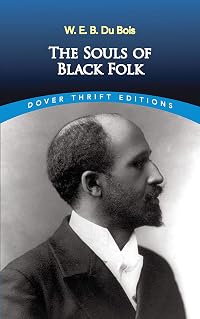
Yang is a great essayist, no doubt, and covers a lot of territory here, a considerable amount that doesn't have anything directly to do with "yellow folk" or, more generally, race/racism/etc. (Though almost all of which -almost- does have to do with 'identity' from one angle or another; that is a leitmotif in his writing.) To be honest, I'm not sure why the editor/publisher went with the du Bois title (well, maybe to sell more books) and I do understand why some people express disappointment or even anger at what seems like a bait-and-switch.
I think my favorites were... well half the book. "Paper Tigers" and "Eddie Huang Against the World" (which gave me the germ of a thought, still undeveloped, about a certain kind of usually-male show more distrust-the-universe and fuck-the-unbelievers strain that must have run through Vice Media and points to something common in e.g. Eddit Huang and e.g. Gavin McInnes.), "On Francis Fukuyama" especially. His last section where he begins wrestling with the current progressive orthodoxy, liberalism, etc. are interesting, but not as cohesive... or, maybe, strong? I feel like there is a really compelling essay waiting to be written here but he hasn't yet figured out how to do it. show less
I think my favorites were... well half the book. "Paper Tigers" and "Eddie Huang Against the World" (which gave me the germ of a thought, still undeveloped, about a certain kind of usually-male show more distrust-the-universe and fuck-the-unbelievers strain that must have run through Vice Media and points to something common in e.g. Eddit Huang and e.g. Gavin McInnes.), "On Francis Fukuyama" especially. His last section where he begins wrestling with the current progressive orthodoxy, liberalism, etc. are interesting, but not as cohesive... or, maybe, strong? I feel like there is a really compelling essay waiting to be written here but he hasn't yet figured out how to do it. show less
Essays about a minority group that I at least have heard relatively little from or about, apart from regularly being held up as an example of immigration going well - people with South-East Asian background. Yang makes it clear that Asian-Americans also have various forms of racism and other challenges to struggle with and that not everything is good. The racism they experience is often less overt than racism against blacks. Stereotypes about Asians being obedient, lacking in initiative and boring is a big issue. Yang is often ambiguous about these things, giving the impression that he both feels that they contain some truth while at the same time thinking them, or at least their application, unfair. The best essay is the first one, show more "The Face of Seung-Hui Cho", where Yang ponders the question of whether he could have done what Cho did and what role being Asian-American played. Cho killed 32 people and wounded 17 in the Virginia Tech shootings in 2007. The other essays deal with anti-Asian racism and animus in other ways. I read the book after reading a glowing review from Noah Smith-http://noahpinionblog.blogspot.com/2019/01/book-review-souls-of-yellow-folk-by.html. Recommended. show less
the standout essay here is the one on the asian shooter. the rest range from good to meandering. yang is an interesting writer and figure, even though he seems kind of lazy at times. saw a review of this saying it was too male-oriented, which is probably true. guess "the souls of yellow men" wasn't as captivating
The Face of Seung-Hui Cho - The author explains his conflicting emotions around being asked to write about an Asian mass shooter. He is repelled by the silent implication that he and this killer have something in common while simultaneously being struck profoundly by their similarities. He uses this premise as a platform to discuss the place of the Asian man in modern America. He does discuss the crime, but he also discusses the racial and social implications and drives behind it.
Paper Tigers - The author dives into the complex racial issues surrounding being a person of Asian decent in the American marketplace. He discusses the "Bamboo Ceiling" in many corporations and the causes of it. He also looks at various schemes and strategies show more sold by entrepreneurs to combat this issue.
Eddie Huang Against the World - The controversial figure of Eddie Huang is discussed at length. The author interviews Eddie and provides background on his rise to fame and some of his greatest disappointments.
The Life and Afterlife of Aaron Swartz - Aaron Swartz was a young man with an amazing flair for programming, hacking, and new technologies. He became a very active hacktivist, taking on JSTOR and other similar for-profit entities that have essentially locked knowledge and culture behind a payment wall. Eventually, he was sued by the government and faced serious, punishing charges for victim-less crimes committed by most people of his generation. Driven to desperation by his situation, he killed himself. This essay delves into his life, ideals, and the causes of his tragic death.
The Liveliest Mind in New York - A brief biography of Tony Judt who continued to write prolifically after being diagnosed with ALS.
The Terrorist Search Engine - A fascinating article about how the internet is being used to track and catch terrorists before they strike. How can law enforcement harness terrorism blogs, boards, and chat rooms to combat threats to security both abroad and at home. At the focal point of this article is one man who uncovered these public spaces where terrorists discuss their ideas and make threats.
On Francis Fukuyama - Thoughts about and interviews with a very influential political thinker.
Inside the Box - A reflection upon technology and the way it has changed our connection to culture, pleasure, and connection.
On Reading the Sex Diaries - Asked to read over 800 pages of a "sex diary" column and give broad analysis of the state of dating in New York City, the author provides a fascinating look into the intimate lives of modern people. How has technology effected the way that people meet, connect, have sex, and fall in love? Are these changes helping or hurting and can anything be done about it now?
Game Theory - The author does a deep dive into the world of pick-up artists and their rise to prominence in the early 2000s.
We Out Here - An essays that examines the complex world of internal biases that feed institution racism and racial inequality.
Is It Okay to Be White? - An examination of the evolution of white supremacist rhetoric by examining a case study of the prankish placement of protest signs that say "It's Okay to be White." Borrowing from the Black Lives Matter movement, racist organizations have begun to modify their marketing to better capture mainstream audiences.
What Is White Supremacy? - An examination of the changing definition of White Supremacy and its invasion of the American culture.
This collection of essays is thought-provoking and contemplative. Don't rush through this one, there's a lot to consider! show less
Paper Tigers - The author dives into the complex racial issues surrounding being a person of Asian decent in the American marketplace. He discusses the "Bamboo Ceiling" in many corporations and the causes of it. He also looks at various schemes and strategies show more sold by entrepreneurs to combat this issue.
Eddie Huang Against the World - The controversial figure of Eddie Huang is discussed at length. The author interviews Eddie and provides background on his rise to fame and some of his greatest disappointments.
The Life and Afterlife of Aaron Swartz - Aaron Swartz was a young man with an amazing flair for programming, hacking, and new technologies. He became a very active hacktivist, taking on JSTOR and other similar for-profit entities that have essentially locked knowledge and culture behind a payment wall. Eventually, he was sued by the government and faced serious, punishing charges for victim-less crimes committed by most people of his generation. Driven to desperation by his situation, he killed himself. This essay delves into his life, ideals, and the causes of his tragic death.
The Liveliest Mind in New York - A brief biography of Tony Judt who continued to write prolifically after being diagnosed with ALS.
The Terrorist Search Engine - A fascinating article about how the internet is being used to track and catch terrorists before they strike. How can law enforcement harness terrorism blogs, boards, and chat rooms to combat threats to security both abroad and at home. At the focal point of this article is one man who uncovered these public spaces where terrorists discuss their ideas and make threats.
On Francis Fukuyama - Thoughts about and interviews with a very influential political thinker.
Inside the Box - A reflection upon technology and the way it has changed our connection to culture, pleasure, and connection.
On Reading the Sex Diaries - Asked to read over 800 pages of a "sex diary" column and give broad analysis of the state of dating in New York City, the author provides a fascinating look into the intimate lives of modern people. How has technology effected the way that people meet, connect, have sex, and fall in love? Are these changes helping or hurting and can anything be done about it now?
Game Theory - The author does a deep dive into the world of pick-up artists and their rise to prominence in the early 2000s.
We Out Here - An essays that examines the complex world of internal biases that feed institution racism and racial inequality.
Is It Okay to Be White? - An examination of the evolution of white supremacist rhetoric by examining a case study of the prankish placement of protest signs that say "It's Okay to be White." Borrowing from the Black Lives Matter movement, racist organizations have begun to modify their marketing to better capture mainstream audiences.
What Is White Supremacy? - An examination of the changing definition of White Supremacy and its invasion of the American culture.
This collection of essays is thought-provoking and contemplative. Don't rush through this one, there's a lot to consider! show less
This review was written for LibraryThing Early Reviewers.Great perspectives and well-discussed themes of racial identity and America's obsession with race and racism, that prefaces the Asian realities in dealing with being POC's or Persons of Color in an America in which African American slavery and continued denouncement of contributions lend itself to voices in America of Asian descent.
This review was written for LibraryThing Early Reviewers.Members
- Recently Added By
Lists

History: Asia
103 works; 1 member
Author Information
2+ Works 139 Members
Wesley Yang has written for the New York Times Magazine. Harper's, the New York Times Book Reviews, New York Magazine, Esquire, Tablet, and n+1. His work has appeared in Best America Essays, Best American Magazine Writing, Best Creative Nonfiction, and Best American Norequired Reading. He lives in Montreal.
Awards and Honors
Classifications
- Genres
- Nonfiction, General Nonfiction, History
- DDC/MDS
- 973.0495 — History & geography History of North America United States United States Ethnic And National Groups Other Groups Asian Americans
- LCC
- E184 .A75 .Y38 — History of the United States United States Elements in the population Afro-Americans
- BISAC
Statistics
- Members
- 132
- Popularity
- 245,970
- Reviews
- 12
- Rating
- (3.67)
- Languages
- English
- Media
- Paper, Audiobook, Ebook
- ISBNs
- 7
- ASINs
- 2