
Amitava Kumar
Author of Immigrant, Montana
About the Author
Amitava Kumar is Helen D. Lockwood Professor of English at Vassar College and the author of numerous books, including Lunch with a Bigot: The Writer in the World; A Matter of Rats: A Short Biography of Patna; and Nobody Does the Right Thing, all also published by Duke University Press; and most show more recently, Immigrant, Montana: A Novel. show less
Image credit: By Vassar_2013 (talk) (Uploads) - Own work, CC0, https://commons.wikimedia.org/w/index.php?curid=107755569
Works by Amitava Kumar
Associated Works
Eat Joy: Stories and Comfort Food from 31 Celebrated Writers (2019) — Contributor — 84 copies, 3 reviews
Premonitions: The Kaya Anthology of New Asian North American Poetry (1995) — Contributor — 27 copies
Another English: Anglophone Poems from Around the World (Poets in the World) (2014) — Contributor — 11 copies
Tagged
Common Knowledge
- Canonical name
- Kumar, Amitava
- Birthdate
- 1963-03-17
- Gender
- male
- Occupations
- professor
novelist
poet - Organizations
- Vassar College (professor of English)
Members
Reviews
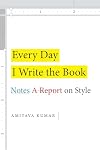
Kumar captures the quirks as well as the slings and arrows of writing in academia through a mish-mosh of anecdotes, short essays, and what feels at times to be scrapbooking (in a good way). The book is divided into nine parts: I) Self-Help; II) Writing A Book: A Brief History; III) Credos; IV) Form; V) Academic Interest; VI) Style; VII) Exercises; VIII) The Groves of Academe and IX) Materials.
Those interested in a writing "guide" can just skip to Appendix A: "Ten Rules of Writing", but as show more the strikeout text on the book's cover implies, this is not a guide (in the traditional sense) nor a report on style. Instead, it is a memoir (in parts) of a writing life, interspersed with nuggets of widsom, dry humor. Fans of Anne Lamott's Bird by Bird may recognize Kumar's small pencil and folded index card that he carries in his pocket, and indeed many of his recommendations align with Lamott's, albeit with a slightly less sardonic tone.
While one would expect Kumar to be "well-read," he shares his knowledge pragmatically, without pomp, and always with clarity of meaning. We don't just get a vast bibliography shared through an eclectic set of "notes", but actual motivation to read those essays and books. There's an earthiness and honesty in Kumar's voice, that manages to critique academia while still acknowledging his own role within. A few bits felt more self-indulgent than instructive, although sometimes the shortest offerings packed a punch, such as the final note of part III: "Credos remain meaningless abstractions unless put to use." (68). He reminds us that one can read endlessly about writing, but to be a writer, one must... write. And let's face it -- reading about writing provides comfort, as if filling our brains with what we ought to do is a substitute for actually doing it (and is a better alternative to binge-watching television).
Struggling academic writers would be well-advised to keep this book close at hand, as even picking one bit of it at random might help jolt you out of a slump. It can also be read in small doses, rather than cover to cover, and I might even suggest out of order, depending on your need at one moment (although there's a certain joy to the sections Kumar offers, and fun little surprises such as the wit about credos mentioned above). show less
Those interested in a writing "guide" can just skip to Appendix A: "Ten Rules of Writing", but as show more the strikeout text on the book's cover implies, this is not a guide (in the traditional sense) nor a report on style. Instead, it is a memoir (in parts) of a writing life, interspersed with nuggets of widsom, dry humor. Fans of Anne Lamott's Bird by Bird may recognize Kumar's small pencil and folded index card that he carries in his pocket, and indeed many of his recommendations align with Lamott's, albeit with a slightly less sardonic tone.
While one would expect Kumar to be "well-read," he shares his knowledge pragmatically, without pomp, and always with clarity of meaning. We don't just get a vast bibliography shared through an eclectic set of "notes", but actual motivation to read those essays and books. There's an earthiness and honesty in Kumar's voice, that manages to critique academia while still acknowledging his own role within. A few bits felt more self-indulgent than instructive, although sometimes the shortest offerings packed a punch, such as the final note of part III: "Credos remain meaningless abstractions unless put to use." (68). He reminds us that one can read endlessly about writing, but to be a writer, one must... write. And let's face it -- reading about writing provides comfort, as if filling our brains with what we ought to do is a substitute for actually doing it (and is a better alternative to binge-watching television).
Struggling academic writers would be well-advised to keep this book close at hand, as even picking one bit of it at random might help jolt you out of a slump. It can also be read in small doses, rather than cover to cover, and I might even suggest out of order, depending on your need at one moment (although there's a certain joy to the sections Kumar offers, and fun little surprises such as the wit about credos mentioned above). show less
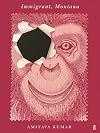
"Airports, Your Honor, are the places where immigrants feel most at home. And also most uneasy."
Entirely agreed.
Alas, that was the one line in the whole book that spoke to me. Admittedly, I went to the library about 2/3rds of the way through and got out three books I'm immensely excited to read, and thus skimmed the last third instead of reading properly, but I don't think I missed anything.
This book had so many things going for it. It has MONTANA in the title. You know what my favourite show more state is? Yeah, it's Montana. And I'm always up for a good immigrant story. And it's set up in seven parts, all revolving around a girl, and y'know, even that is a concept that's super fascinating to me.
But! It kind of...sucked? There are no moments that are interesting. I was glad to realise a chapter in that it was fiction, which made all the delusions of grandeur slightly more bearable.
Also, majorly explicit content warning! So! Much! Sex! Ugh! Seriously, publishing industry, let's get some content flags 'cause I'll happily live my life without reading about people fornicating in strange mannerisms. Sometimes it can add value, but when it becomes the focal point such as in this, well.
This is what I get for getting too excited about books based on their titles. And what I get for assuming that intriguing copy makes an intriguing book. Sigh. show less
Entirely agreed.
Alas, that was the one line in the whole book that spoke to me. Admittedly, I went to the library about 2/3rds of the way through and got out three books I'm immensely excited to read, and thus skimmed the last third instead of reading properly, but I don't think I missed anything.
This book had so many things going for it. It has MONTANA in the title. You know what my favourite show more state is? Yeah, it's Montana. And I'm always up for a good immigrant story. And it's set up in seven parts, all revolving around a girl, and y'know, even that is a concept that's super fascinating to me.
But! It kind of...sucked? There are no moments that are interesting. I was glad to realise a chapter in that it was fiction, which made all the delusions of grandeur slightly more bearable.
Also, majorly explicit content warning! So! Much! Sex! Ugh! Seriously, publishing industry, let's get some content flags 'cause I'll happily live my life without reading about people fornicating in strange mannerisms. Sometimes it can add value, but when it becomes the focal point such as in this, well.
This is what I get for getting too excited about books based on their titles. And what I get for assuming that intriguing copy makes an intriguing book. Sigh. show less
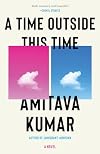
For a while I thought this book was incredible. Then COVID arrived in the storyline and I didn't find it nearly as good. But I think I've now simply read too many books where that happens. It's a "plot device" too many authors have made use of recently and they all seem to do so in more or less the same way. Five stars for the part of this book that takes place before COVID hits. (I of course lived through it too so in some sense I understand. But I also don't really understand why at all.)
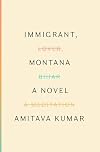
Good Lord, what a stinker! From the book description, I thought this would be an interesting story of a young Indian immigrant adjusting to life in the US. What I got was a little bit of Indian history in between the author's sexual experimentation. And believe me, he doesn't leave out any details. I'm no prude; I'm fine with sexual episodes in a book if they are part of the main story. But not when they ARE the story. I listened to the audio version, which probably made it even worse. If show more this is a memoir, he wrote it for himself, not for other people to enjoy. every time he reminisced about a woman in his past, he inevitably concluded, "I could almost taste her in my mouth." That's really all I have to say, and probably all you need to know.
It was so bad that I tried to return it to Audible, but they wouldn't let me because I had returned another stinker a month or so ago. show less
It was so bad that I tried to return it to Audible, but they wouldn't let me because I had returned another stinker a month or so ago. show less
Lists
Awards


You May Also Like


Associated Authors
Statistics
- Works
- 22
- Also by
- 7
- Members
- 568
- Popularity
- #44,050
- Rating
- 3.6
- Reviews
- 10
- ISBNs
- 93
- Languages
- 3
- Favorited
- 1
