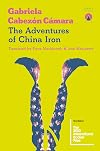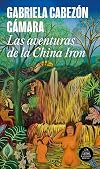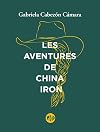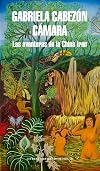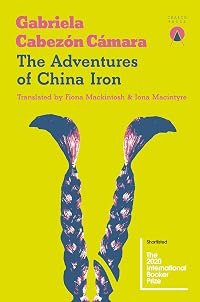
The Adventures of China Iron
by Gabriela Cabezón Cámara
On This Page
Description
"This is a riotous romp taking the reader from the turbulent frontier culture of the pampas deep into indigenous territories. It charts the adventures of Mrs. China Iron, Martín Fierro's abandoned wife, in her travels across the pampas in a covered wagon with her new-found friend, soon to become lover, a Scottish woman named Liz. While Liz provides China with a sentimental education and schools her in the nefarious ways of the British Empire, their eyes are opened to the wonders of show more Argentina's richly diverse flora and fauna, cultures and languages, as well as to its national struggles. After a clash with Colonel Hernández (the author who 'stole' Martín Fierro's poems) and a drunken orgy with gauchos, they eventually find refuge and a peaceful future in a utopian indigenous community, the river-dwelling Iñchiñ people. Seen from an ox-drawn wagon, the narrative moves through the Argentinian landscape, charting the flora and fauna of the Pampas, Gaucho culture, Argentinian nation-building and British colonial projects."--Provided by publisher. show lessTags
Recommendations


















Member Reviews
I LOVED THIS BOOK. What did I know about Argentina before reading it? Hardly anything I didn't read in The Satanic Verses, of all places, as I spent my school years studiously avoiding any non-required history courses and skipping World History every time. This is a retelling of "Argentina's foundational guacho epic Martin Fierro," which I also of course knew nothing about, but center a woman, and make it queer, and polyamorous, and anti-colonial, and mushroom-tripping indigenous Utopia in the end. Some terrible things happen in this book, but it has Big Myth Energy, so it still ends up feeling kind of rompy throughout. It does feel a little weird that our two heroes are both white? But that may be a function of the original story it show more expands on, and like I said, there is plenty of colonial critique here. I enjoyed it so much. show less
Some basic background in Argentine-Gaucho poetry is very helpful in enjoying this book. Specifically an epic poem Martin Fierro. As I understand it, this poem holds a similar place of pride as The New Colossus by Emma Lazarus on the base of the Statue of Liberty. Only Martin Fierro is over 2,300 lines long. Luckily, you don't need to actually read Martin Fierro to enjoy this book, just a base-line understanding.
The book is a modern feminist reply to Martin Fierro. The main character is Martin's wife. When we meet her, her name is China, pronounced cheena - basically a common and somewhat belittling word for girl or young woman. China is an orphan and abandoned wife who no one ever bothered to name.
She meets up with an English woman show more named Liz and they go off on a magical adventure across the Argentina pampas - a prairie/plains landscape. Liz gives China a real name - Josephine, and also becomes her first love and true lover.
Liz and Josephine (later shortened to Jo) travel in what seems to be a magical wagon full of food, books, art, dishes and silverware, clothes of all descriptions, a barrel of whiskey, a giant bed - I can only imagine how big this wagon is. They are accompanied by Jo's dog Estraya and quickly collect a fellow traveler on the way Rosario - later shortened to Rosa.
For such a short book, there is a ton going on. Big themes of the violence and brutality of colonialism, Class differences between Spanish, English, Gauchos and Indians. Plenty vs want. Farming vs ranching.
And lots and lots of everybody having sex with just about everybody else. Lots of emphasis on expressions of gender.
Fair warnings - the book isn't over the top graphic, but it was a little more on the erotica side than I thought I was signing up for when I picked up the book. Alternating with the sex scenes, the violence is even more graphic and sometimes really disturbing. show less
The book is a modern feminist reply to Martin Fierro. The main character is Martin's wife. When we meet her, her name is China, pronounced cheena - basically a common and somewhat belittling word for girl or young woman. China is an orphan and abandoned wife who no one ever bothered to name.
She meets up with an English woman show more named Liz and they go off on a magical adventure across the Argentina pampas - a prairie/plains landscape. Liz gives China a real name - Josephine, and also becomes her first love and true lover.
Liz and Josephine (later shortened to Jo) travel in what seems to be a magical wagon full of food, books, art, dishes and silverware, clothes of all descriptions, a barrel of whiskey, a giant bed - I can only imagine how big this wagon is. They are accompanied by Jo's dog Estraya and quickly collect a fellow traveler on the way Rosario - later shortened to Rosa.
For such a short book, there is a ton going on. Big themes of the violence and brutality of colonialism, Class differences between Spanish, English, Gauchos and Indians. Plenty vs want. Farming vs ranching.
And lots and lots of everybody having sex with just about everybody else. Lots of emphasis on expressions of gender.
Fair warnings - the book isn't over the top graphic, but it was a little more on the erotica side than I thought I was signing up for when I picked up the book. Alternating with the sex scenes, the violence is even more graphic and sometimes really disturbing. show less
Read Around the World. Argentina
“…everything alive lives off the death of someone or something else. Because nothing comes from nothing…”
The Adventures of China Iron by Argentinian author Gabriela Cabezón Cámara was shortlisted for the 2020 International Man Booker prize. It is a queer postcolonial retelling of the 1872 epic poem about gaucho Martín Fierro by José Hernández. The main character is Martín Fierro’s teenage wife China. China (“Cheena”) is actually a generic Spanish word for wife or girl. After Martín is press-ganged into the army, as part of the Argentinian authorities’ attempt to clear rural gaucho communities, she sets off with her dog Estreya (Star) to find her own freedom. China renames herself show more Josephine Star Iron (the English version of Fierro).
What follows, as they join the wagon journey of red-headed Scottish Liz across the Argentinian pampas, can only be described as a fever-dream riotous adventure. Liz and China meet up with Rosarió, who represents the wild nomadic life and horsemanship of the gauchos, herding cattle across the plains. The three, along with the dog Estreya form an unlikely alliance as a found family, and make their way to General Hernández’ fort in search of Liz’s husband. Hernández is a pompous example of colonialism and has stolen and published Martín Fierro’s poetry as his own. Liz and China (now Jo) succumb to the sexual tension building between them and instigate an orgy to facilitate their escape from the fort.
In the later part of the novel the three join the Indigenous Iñchiñ and become part of their peace-loving community. The retelling of the poem shifts the portrayal of the Indigeneous people as savage and violent to an opposite stereotype, that of a hallucinogen consuming, free-loving commune.
I found this an exuberant story with a surreal quality to it. It incorporates vivid descriptions of the natural habitat of the pampas and both some Spanish and Guaraní vocabulary. There were some disturbing scenes along the way, and sexual violence presented in a Baz Luhrmann-esque fashion. Overall this was an entertaining and unique read. show less
“…everything alive lives off the death of someone or something else. Because nothing comes from nothing…”
The Adventures of China Iron by Argentinian author Gabriela Cabezón Cámara was shortlisted for the 2020 International Man Booker prize. It is a queer postcolonial retelling of the 1872 epic poem about gaucho Martín Fierro by José Hernández. The main character is Martín Fierro’s teenage wife China. China (“Cheena”) is actually a generic Spanish word for wife or girl. After Martín is press-ganged into the army, as part of the Argentinian authorities’ attempt to clear rural gaucho communities, she sets off with her dog Estreya (Star) to find her own freedom. China renames herself show more Josephine Star Iron (the English version of Fierro).
What follows, as they join the wagon journey of red-headed Scottish Liz across the Argentinian pampas, can only be described as a fever-dream riotous adventure. Liz and China meet up with Rosarió, who represents the wild nomadic life and horsemanship of the gauchos, herding cattle across the plains. The three, along with the dog Estreya form an unlikely alliance as a found family, and make their way to General Hernández’ fort in search of Liz’s husband. Hernández is a pompous example of colonialism and has stolen and published Martín Fierro’s poetry as his own. Liz and China (now Jo) succumb to the sexual tension building between them and instigate an orgy to facilitate their escape from the fort.
In the later part of the novel the three join the Indigenous Iñchiñ and become part of their peace-loving community. The retelling of the poem shifts the portrayal of the Indigeneous people as savage and violent to an opposite stereotype, that of a hallucinogen consuming, free-loving commune.
I found this an exuberant story with a surreal quality to it. It incorporates vivid descriptions of the natural habitat of the pampas and both some Spanish and Guaraní vocabulary. There were some disturbing scenes along the way, and sexual violence presented in a Baz Luhrmann-esque fashion. Overall this was an entertaining and unique read. show less
Saben lo que me pasa con este libro? Que quería que me guste. No tenía expectativas altas pero es de esos libros que vos escuchas de que tratan y suenan que te van a gustar. Pero me pareció un libro vacío, una novela que intenta hacer varias cosas pero no hace ninguna, que intenta hacer críticas de la sociedad de la época pero no lo logra, que intenta hacer un meta comentario sobre la obra en la que se inspiró pero no llega a ningún lado. Lo peor es que me parece que acá,si le cambias un par de cosas tenés un libro genial. Tenés a los personajes del Martín Fierro siendo gay y trans, tenés a una historia de amor increíble(o por lo menos eso parece al principio,después Liz queda como tremenda garca que parece como si solo show more se hubiera acostado con la china porque tenía ganas de coger con alguien en el camino, intentan hacer un comentario sobre las relaciones poliamorosas pero no les sale bien) y en general tenes una historia de road trip con tres personajes carismáticos y agradables.
Sigo sin entender cómo el libro falla tanto en algo que se supone que tenía regalado. No entiendo cómo es que alguien puede agarrar un concepto tan bueno que podría dar para tanto pero escribe un libro tan... mediocre? No sé si es la palabra, porque el estilo de escritura es hermoso y solo por eso me parece que vale la pena leer partes de este libro. Pero aún así me parece como si fuese una hamburguesa que se ve rica pero que el pan está viejo y la carne está cruda.
Perdón si soy cruel en está reseña, me parece que la autora escribe muy bien y tiene ideas y conceptos muy buenos. No veo a otra persona en la literatura argentina hablando de esto de esta manera y me parece que en ese sentido tiene una voz única que merece ser escuchada. Pero simplemente no me gustó y me pareció un libro blando que merecía un par de re escrituras y una mano editorial más fuerte show less
Sigo sin entender cómo el libro falla tanto en algo que se supone que tenía regalado. No entiendo cómo es que alguien puede agarrar un concepto tan bueno que podría dar para tanto pero escribe un libro tan... mediocre? No sé si es la palabra, porque el estilo de escritura es hermoso y solo por eso me parece que vale la pena leer partes de este libro. Pero aún así me parece como si fuese una hamburguesa que se ve rica pero que el pan está viejo y la carne está cruda.
Perdón si soy cruel en está reseña, me parece que la autora escribe muy bien y tiene ideas y conceptos muy buenos. No veo a otra persona en la literatura argentina hablando de esto de esta manera y me parece que en ese sentido tiene una voz única que merece ser escuchada. Pero simplemente no me gustó y me pareció un libro blando que merecía un par de re escrituras y una mano editorial más fuerte show less
This feels endless to me (as in, I keep checking how much further until the end).
It's supposed to be the feminist/queer/anti-colonial/etc. take on The Gaucho Martín Fierro. (Hooray!) And I suppose it is, but mostly feels like it's so over the top that it's sheer farce. Normally I would welcome these topics & upending of the old for something new but I find myself plodding through rather than enjoying it. I think I would have better appreciated something a bit more subtle rather than feeling like I'm being hit over the head with a cinder block.
I just don't understand the hype.
It's supposed to be the feminist/queer/anti-colonial/etc. take on The Gaucho Martín Fierro. (Hooray!) And I suppose it is, but mostly feels like it's so over the top that it's sheer farce. Normally I would welcome these topics & upending of the old for something new but I find myself plodding through rather than enjoying it. I think I would have better appreciated something a bit more subtle rather than feeling like I'm being hit over the head with a cinder block.
I just don't understand the hype.
Shortlisted for the Booker International Prize 2020
In this enjoyable historical fantasy, Cámara takes the epic nineteenth century Argentine gaucho poem Martín Fierro as her starting point, but in her version the narrator is his wife China, and Fierro is a peripheral character, as is the poem's writer José Hernández.
Both Hernández and Martín Fierro were new to me, but although familiarity might help, it is not essential, as the book itself tells you plenty about the poem, which is quoted in places and rewritten in others.
Bored and frustrated with a life of drudgery, China joins Liz, a Scottish adventurer in search of her husband, who has bought rights to some frontier land where they plan to settle. The first part describes their show more journey to the frontier in Liz's wagon. Their relationship becomes sexual. China and Liz are accompanied by a dog Estreya and join forces with an old gaucho Rosario and a herd of cattle.
In the second part they arrive at the frontier estancia where they meet its owner Hernández, hear what he has done with Fierro's poetry and plot their escape.
In the final part they meet and join a free spirited Indian tribe, with whom they also find Fierro a changed man, and Liz finds her husband. This unlikely band form their own utopian community.
The landscape and wildlife are prominent throughout, and I found it very enjoyable to read. show less
In this enjoyable historical fantasy, Cámara takes the epic nineteenth century Argentine gaucho poem Martín Fierro as her starting point, but in her version the narrator is his wife China, and Fierro is a peripheral character, as is the poem's writer José Hernández.
Both Hernández and Martín Fierro were new to me, but although familiarity might help, it is not essential, as the book itself tells you plenty about the poem, which is quoted in places and rewritten in others.
Bored and frustrated with a life of drudgery, China joins Liz, a Scottish adventurer in search of her husband, who has bought rights to some frontier land where they plan to settle. The first part describes their show more journey to the frontier in Liz's wagon. Their relationship becomes sexual. China and Liz are accompanied by a dog Estreya and join forces with an old gaucho Rosario and a herd of cattle.
In the second part they arrive at the frontier estancia where they meet its owner Hernández, hear what he has done with Fierro's poetry and plot their escape.
In the final part they meet and join a free spirited Indian tribe, with whom they also find Fierro a changed man, and Liz finds her husband. This unlikely band form their own utopian community.
The landscape and wildlife are prominent throughout, and I found it very enjoyable to read. show less
DNF'D 26% I lost interest.
Members
- Recently Added By
Lists

Books Read in 2020
4,379 works; 124 members

Books Read in 2025
4,091 works; 97 members
Author Information

10+ Works 541 Members
Some Editions
Awards and Honors
Work Relationships
Was inspired by
Common Knowledge
- Canonical title
- The Adventures of China Iron
- Original title
- Las aventuras de la China Iron
- Original publication date
- 2017
- Important places
- Argentina
- First words
- It was the brightness of the light.
- Last words
- (Click to show. Warning: May contain spoilers.)And so we go.
- Original language
- Spanish
Classifications
- Genres
- Fiction and Literature, General Fiction, Historical Fiction
- DDC/MDS
- 863.7 — Literature & rhetoric Spanish Literature Spanish fiction 21st Century
- LCC
- PQ7798.413 .A3 .A9413 — Language and Literature French, Italian, Spanish and Portuguese literatures Spanish literature Provincial, local, colonial, etc. Spanish America
- BISAC
Statistics
- Members
- 276
- Popularity
- 116,519
- Reviews
- 7
- Rating
- (3.65)
- Languages
- English, French, Spanish
- Media
- Paper, Audiobook, Ebook
- ISBNs
- 10
- ASINs
- 4