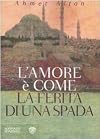
On This Page
Description
Altan's Ottoman Quartet spans the fifty years between the final decades of the 19th century and the post-WWI rise of Atatürk as both unchallenged leader and visionary reformer of the new Turkey. The four books tell the stories of an unforgettable cast of characters, among them: an Ottoman army officer, the Sultan's personal doctor, a scion of the royal house whose Western education brings him into conflict with his family's legacy, and a beguiling Turkish aristocrat who, while fond of her show more emancipated life in Paris, finds herself drawn to a conservative Muslim spiritual leader. Intrigue, betrayal, love, war, progress, and tradition provide a colourful backdrop against which their lives play out. All the while, the society to which they belong is transforming, and the Sublime Empire disintegrates. Here is a Turkish saga reminiscent of War and Peace, that traces not only the social currents of the time but also the erotic and emotional lives of its characters. show lessTags
Recommendations











Member Reviews
Rating: 3.5* of five
The Publisher Says: Volume 1 of the Ottoman Quartet
A powerful, beautifully written saga set during the fall of one of history’s greatest empires.
Altan’s “Ottoman Quartet” spans the fifty years between the final decades of the 19th century and the post-WWI rise of Atatürk as both unchallenged leader and visionary reformer of the new Turkey.The four books in the quartet tell the gripping stories of an unforgettable cast of characters, among them: an Ottoman army officer, the Sultan’s personal doctor, a scion of the royal house whose Western education brings him into conflict with his family’s legacy, and a beguiling Turkish aristocrat who, while fond of her emancipated life in Paris, finds herself drawn to show more a conservative Muslim spiritual leader.
Intrigue, betrayal, love, war, progress, and tradition provide a colorful backdrop against which the lives of these characters play out. All the while, the society that spawned them is transforming and the Sublime Empire disintegrating.
Here is a Turkish saga reminiscent of War and Peace, written in lively, contemporary prose that traces not only the social currents of the time but also the erotic and emotional lives of its characters. The female characters in Altan’s gripping saga will upend prejudices about Turkey, the Middle East, and Muslim nations.
I RECEIVED A DRC FROM THE PUBLISHER VIA EDELWEISS+. THANK YOU.
My Review: This early-20th Century-set Turkish soap opera is just about as much fun as there is to have reading. There are women with agency, there are men with Yearnings, there are Grand Historical Changes! It is just as juicy as you could wish, it is volume one of four...written by a novelist imprisoned for his liberal politics, therefore without any serious distractions...and it will appeal to any historical-fiction lover as well as those whose taste for magical realism (ghosts! Plenty o' ghosts!) is on the restrained side.
I'm suggesting reading it pretty strongly, right? Mostly because I think you'll enjoy that it's a great value at $2.99 on Kindle the absolute most. show less
The Publisher Says: Volume 1 of the Ottoman Quartet
A powerful, beautifully written saga set during the fall of one of history’s greatest empires.
Altan’s “Ottoman Quartet” spans the fifty years between the final decades of the 19th century and the post-WWI rise of Atatürk as both unchallenged leader and visionary reformer of the new Turkey.The four books in the quartet tell the gripping stories of an unforgettable cast of characters, among them: an Ottoman army officer, the Sultan’s personal doctor, a scion of the royal house whose Western education brings him into conflict with his family’s legacy, and a beguiling Turkish aristocrat who, while fond of her emancipated life in Paris, finds herself drawn to show more a conservative Muslim spiritual leader.
Intrigue, betrayal, love, war, progress, and tradition provide a colorful backdrop against which the lives of these characters play out. All the while, the society that spawned them is transforming and the Sublime Empire disintegrating.
Here is a Turkish saga reminiscent of War and Peace, written in lively, contemporary prose that traces not only the social currents of the time but also the erotic and emotional lives of its characters. The female characters in Altan’s gripping saga will upend prejudices about Turkey, the Middle East, and Muslim nations.
I RECEIVED A DRC FROM THE PUBLISHER VIA EDELWEISS+. THANK YOU.
My Review: This early-20th Century-set Turkish soap opera is just about as much fun as there is to have reading. There are women with agency, there are men with Yearnings, there are Grand Historical Changes! It is just as juicy as you could wish, it is volume one of four...written by a novelist imprisoned for his liberal politics, therefore without any serious distractions...and it will appeal to any historical-fiction lover as well as those whose taste for magical realism (ghosts! Plenty o' ghosts!) is on the restrained side.
I'm suggesting reading it pretty strongly, right? Mostly because I think you'll enjoy that it's a great value at $2.99 on Kindle the absolute most. show less
Whew! I'll take a long shower, a longer bath, a spell in the sauna and an icy plunge to wash this one off! Great if you like being drowned in poisonous honey and watch the unlovable men whinge about being unloved by women they raped as children under the guise of marriage. A profoundly misogynistic exercise in creating straw women to absorb the anger generated by the lusts and passions of a bunch of jerks. Oh, and there's Turkish politics, which is it's own cesspit! Very accomplished language, though how anyone survived translating this I can't imagine.
This is an historical fiction piece out of Turkey, about the Ottoman Empire. Organ Pamuk he's not. I think, more accurately, it is historical melodrama fitting into a medium light reading category. Intrigue, infighting, and unending lusts characterize what I read. I will be honest and say that I didn't finish it, but that is likely due to the reading mood I am in at the moment. Give it a chance.
Hikmète Bey se garda d’expliquer à sa femme qu’en cherchant « la liberté » au cours de conversations et de réunions auxquelles il participait avec ses amis journalistes, il avait découvert dans leurs propos ou encore dans les articles qu’ils lui demandaient de traduire, la notion nouvelle de « peuple » dont il ne voyait pas très bien en quoi elle consistait, mais qui lui avait plu dans la mesure où elle était synonyme d’opposition à la tyrannie.
(p. 280, Chapitre 19).
J’ai découvert Ahmet Altan par le court texte qu’il a écrit en prison en 2018, alors qu’il est condamné à perpétuité pour avoir fomenté un coup d’État et avoir passé un message subliminal (sic) à la télévision dans ce sens… Ce show more texte lumineux malgré l’iniquité de la peine m’avait fait forte impression et c’est les yeux fermés que j’avais acheté dans la foulée les deux seuls romans de lui qui étaient alors disponibles en français (un autre a été publié à l’automne 2021). Je me suis enfin décidée à les ouvrir, alors qu’Ahmet Altan a entre-temps été libéré, puis emprisonné à nouveau, et encore libéré en novembre dernier, avant on ne sait encore quelle péripétie.
Comme une blessure de sabre nous amène à Istanbul à la fin du XIXème siècle et au début du XXème. En suivant une galerie de personnages tous plus ou moins connectés entre eux, on pénètre dans les sphères aisées et éduquées de la société et on approche au plus près des intrigues de cours et des mesquineries de courtisans. On se retrouve plongé dans un climat de suspicion où chacun est soit espion, soit espionné, voire les deux. C’est dans ces milieux que se dessine peu à peu une opposition d’abord sourde, puis qui ose se dire, puis s’organiser et enfin agir.
C’est surtout la façon dont sont traités les personnages féminins que j’ai trouvée dérangeante : Une femme ne compte finalement que par sa beauté (ou son absence de beauté, mais celles-là sont reléguées dans le fond et ont autant de consistance que des potiches) et par sa volupté (ou son absence de volupté, mais là aussi, malheur à celles que les plaisirs de la chair ne transportent pas au septième ciel, elles devraient s’excuser d’exister). Mehparé Hamin, qui pourrait être le personnage principal de ce roman est donc belle d’une beauté inégalée et voluptueuse au-delà de toute description. La façon dont Ahmet Altan décrit ses personnages féminins m’a donc beaucoup gênée, et je ne pense pas faire preuve d’anachronisme. Que les femmes de cette époque ne soient pas, pour l’immense majorité, au fait de la chose politique, c’est compréhensible. Mais en faire des êtres uniquement préoccupées par l’assouvissement de leur jouissance personnelle, cela me paraît une psychologie un peu courte.
En définitive, et à mon grand regret, je n’ai pas aimé ce livre. Le sujet aurait pu être intéressant mais, noyé dans ces descriptions d’alcôves, il n’est traité que d’une façon superficielle qui m’a laissée sur ma faim. On sent aussi tout l’amour que l’auteur porte à sa ville, telle qu’elle est aujourd’hui et telle qu’elle était alors, mais tout cela n’est pas suffisant pour racheter le livre à mes yeux. J’ai le deuxième tome, acheté en même temps que le premier. Je me mets à le lire tout de suite, je sais que sinon je ne le lirai jamais. J’espère, sans trop y croire, que la lecture en sera plus intéressante. show less
Jan 20, 2022 (Edited)French
Ratings
Members
- Recently Added By
Author Information

39+ Works 649 Members
Some Editions
Awards and Honors
Notable Lists
Series

Belongs to Publisher Series
Dal mondo [edizioni E/O] (Turchia)
Common Knowledge
- Canonical title
- Like a Sword Wound
- Original title
- Kılıç Yarası Gibi
- Original publication date
- 1998
- Original language
- Turkish
Classifications
- Genres
- Fiction and Literature, General Fiction, Historical Fiction
- DDC/MDS
- 894.3533 — Literature & rhetoric Literatures of other languages Literatures of Altaic, Uralic, Hyperborean, Dravidian languages; literatures of miscellaneous languages of south Asia Turkic languages Turkish Turkish fiction 1850–2000
- LCC
- PL248 .A525 .L5513 — Language and Literature Languages and literatures of Eastern Asia, Africa, Oceania Languages of Eastern Asia, Africa, Oceania Turkic languages
- BISAC
Statistics
- Members
- 128
- Popularity
- 253,914
- Reviews
- 4
- Rating
- (4.03)
- Languages
- 6 — Dutch, English, French, German, Italian, Turkish
- Media
- Paper, Ebook
- ISBNs
- 15
- ASINs
- 3