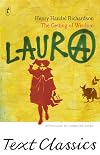
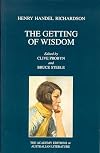
The Getting of Wisdom
by Henry Handel Richardson
On This Page
Description
Laura, a spirited and unconventional heroine, attempts to adapt herself to the discipline of school and the unrelenting judgements of her classmates. The freedom of her country childhood seems far behind, as she struggles for dignity and true friendshipTags
Recommendations




Member Recommendations
thesmellofbooks The Getting of Wisdom is the rare sort of book that provokes deep self-reflection and a nudge in the direction of peace-making with self and life, and in this way brings to mind [[George Eliot]]'s [Middlemarch].
I am gobsmacked. The novel begins as an entertaining tale of a headstrong young Australian girl going to meet the world at boarding school. It gradually evolves into a subtle, simple, and stunningly real observation of the pressures of conformity and the intolerance of naïveté, which, when paired with a strong desire to be accepted, can lead to many and often rending responses in an imaginative young person.
Yet it is not a tragedy. I am left moved, affectionate, a little worried about the future, and yet joyful at the intactness of the protagonist's resilient soul.
Bravo, Ms Richardson.
Member Reviews
Laura is a country girl whose ambitious single mother saves up the money she makes from embroidery and sends Laura to a snobby private girls' school in Melbourne. Laura is something of a diamond in the rough - intellectually curious and vivacious, but wild and untamed. The wisdom she attains at school hinges mostly on gaining emotional intelligence, as she learns to navigate the hierarchies of schoolgirl life.
Henry Handel Richardson is, of course, the pen-name of Ethel Richardson, one of Australia's great canonical novelists. Based on her own experiences at Presbyterian Ladies College (PLC), The Getting of Wisdom was her second novel, and what a novel it is. Laura is not always likable, but she is always engaging, and her thirst for show more knowledge and acceptance are immediately relatable qualities. I particularly loved her discovery of Ibsen's A Doll's House, although there were other wonderful references - the amusing mistake she makes in thinking that Dante wrote Faust, or her fervently wishing the Oliver Cromwell never existed so she could get out of a particularly difficult history test.
It is particularly extraordinary to think that The Getting of Wisdom was published in 1910, before the two World Wars, before the flowering of modernism, indeed, before all the vastly traumatic history of the twentieth century, and yet it still rings with a freshness and insight that feels authentic more than a hundred years later. show less
Henry Handel Richardson is, of course, the pen-name of Ethel Richardson, one of Australia's great canonical novelists. Based on her own experiences at Presbyterian Ladies College (PLC), The Getting of Wisdom was her second novel, and what a novel it is. Laura is not always likable, but she is always engaging, and her thirst for show more knowledge and acceptance are immediately relatable qualities. I particularly loved her discovery of Ibsen's A Doll's House, although there were other wonderful references - the amusing mistake she makes in thinking that Dante wrote Faust, or her fervently wishing the Oliver Cromwell never existed so she could get out of a particularly difficult history test.
It is particularly extraordinary to think that The Getting of Wisdom was published in 1910, before the two World Wars, before the flowering of modernism, indeed, before all the vastly traumatic history of the twentieth century, and yet it still rings with a freshness and insight that feels authentic more than a hundred years later. show less
This is one of the classics of Australian literature, a hectic, ironic description of a young girl's experience at a classy but morally and intellectually stultifying boarding school in Melbourne somewhere around 1900. She arrives there lively, spontaneous and imaginative; when she leaves four or five years later she's turned into a calculating, rather snobbish hypocrite. In the meantime she faces humiliation from classmates finding out about her family's relative poverty (her mother is a widow who works to support the children) and she goes through all the classic boarding school experiences: "crushes", jealousies, deceptions, religious and literary enthusiasms, bullying and being bullied, etc. But it all happens at a breathless pace, show more and we really get the feeling that poor Laura has no time to draw breath and grow up in peace.
It's a formidable attack on contemporary notions of what middle-class young women were supposed to grow up into, as well as on the low quality of the education available to them. And by the standards of the time, it's also pretty outspoken about things like the total lack of sex-education. No wonder that H.G. Wells admired it (although one suspects that H.G. Wells would have enjoyed any book that featured teenage girls in an atmosphere of hothouse sexuality...). Despite being very political, it's always light and often very funny in tone, and it even has something very like an optimistic ending. If you think about other campaigning novels about education set about the same time - Young Torless and The child Manuela were the two that sprang to my mind, for instance - that's quite something. show less
It's a formidable attack on contemporary notions of what middle-class young women were supposed to grow up into, as well as on the low quality of the education available to them. And by the standards of the time, it's also pretty outspoken about things like the total lack of sex-education. No wonder that H.G. Wells admired it (although one suspects that H.G. Wells would have enjoyed any book that featured teenage girls in an atmosphere of hothouse sexuality...). Despite being very political, it's always light and often very funny in tone, and it even has something very like an optimistic ending. If you think about other campaigning novels about education set about the same time - Young Torless and The child Manuela were the two that sprang to my mind, for instance - that's quite something. show less
This is a classic boarding school novel, but in contrast to the typical chronicle of boys’ hijinks, The Getting of Wisdom offers a feminine perspective. Laura Ramsbotham is from a modest Australian family, where her widowed mother earns a living as a seamstress. She has scrimped and saved to provide Laura with higher education, soLaura is shipped off to a girls’ boarding school when she’s about 11. Anyone who has been an 11-year-old girl knows how difficult it is to assimilate into established social groups, and Laura is no exception. The head of school and the teachers -- all women who should know better -- are of the “spare the rod and spoil the child” variety, and just expect everyone to get on with it, already. And of show more course Laura does, with some success but also pain and heartbreak.
The early chapters of this book are exceptionally well done, as you can’t help feeling sad for Laura and applauding even the tiniest positive happening. Laura eventually makes a couple friends, and then commits a huge blunder that is difficult for her to recover from. I felt the story lost some pacing after that and her last few years of school felt rushed. But the novel ends with an evocative metaphor that was, in fact, the perfect summing up of Laura’s school experience. show less
The early chapters of this book are exceptionally well done, as you can’t help feeling sad for Laura and applauding even the tiniest positive happening. Laura eventually makes a couple friends, and then commits a huge blunder that is difficult for her to recover from. I felt the story lost some pacing after that and her last few years of school felt rushed. But the novel ends with an evocative metaphor that was, in fact, the perfect summing up of Laura’s school experience. show less
I am gobsmacked.
The novel begins as an entertaining tale of a headstrong young Australian girl going to meet the world at boarding school. It gradually evolves into a subtle, simple, and stunningly real observation of the pressures of conformity and the intolerance of naïveté, which, when paired with a strong desire to be accepted, can lead to many and often rending responses in an imaginative young person.
Yet it is not a tragedy. I am left moved, affectionate, a little worried about the future, and yet joyful at the intactness of the protagonist's resilient soul.
It is the rare sort of book that provokes deep self-reflection and a nudge in the direction of peace-making with self and life, and in this way brings to mind [[George show more Eliot]]'s [Middlemarch].
Bravo, Ms Richardson. show less
The novel begins as an entertaining tale of a headstrong young Australian girl going to meet the world at boarding school. It gradually evolves into a subtle, simple, and stunningly real observation of the pressures of conformity and the intolerance of naïveté, which, when paired with a strong desire to be accepted, can lead to many and often rending responses in an imaginative young person.
Yet it is not a tragedy. I am left moved, affectionate, a little worried about the future, and yet joyful at the intactness of the protagonist's resilient soul.
It is the rare sort of book that provokes deep self-reflection and a nudge in the direction of peace-making with self and life, and in this way brings to mind [[George show more Eliot]]'s [Middlemarch].
Bravo, Ms Richardson. show less
How I love this book… just as much now as when I read it for the first time as a teenager!
Set at the turn of the 20th century, it is the story of Laura Rambotham, a clever and spirited child, who leaves home to attend a prestigious Melbourne boarding school for young ladies at the insistence of her mother, even though it is a financial struggle for the family. Laura finds herself in a social setting that she neither understands, nor that understands her. She is a misfit who struggles valiantly to blend in and win friends—to be like the others—but never quite succeeds. This creates some sad, but also amusing incidents.
Ultimately, the book is a celebration of the freedom that comes from being yourself—a poignant, timeless lesson show more for us all. show less
Set at the turn of the 20th century, it is the story of Laura Rambotham, a clever and spirited child, who leaves home to attend a prestigious Melbourne boarding school for young ladies at the insistence of her mother, even though it is a financial struggle for the family. Laura finds herself in a social setting that she neither understands, nor that understands her. She is a misfit who struggles valiantly to blend in and win friends—to be like the others—but never quite succeeds. This creates some sad, but also amusing incidents.
Ultimately, the book is a celebration of the freedom that comes from being yourself—a poignant, timeless lesson show more for us all. show less
I don’t know a great deal about Ethel Richardson – who adopted a male pseudonym when she wrote – but I do know that this story, the story of an Australian girl sent to boarding school, is said to be autobiographical, and, if that is the case, I suspect that I would like her very much.
The book dates from 1910, but the story that it tells could easily have happened years earlier or years later.
I loved twelve- year old Laura Rambotham. At home she was a benevolent queen, ruling over her younger siblings, leading them in wonderful games, enchanting them with lovely stories; while her widowed mother worked had as a needlewoman to support her children, and give them the education that they needed to get on in the world,
Of course her show more mother sent Laura to school, of course Laura was not happy about it, and of course neither could quite see the other’s point of view.
Miss Richardson began her story beautifully, illuminating her characters and their situations with both clarity and subtlety.
I had high hopes for the school story that was to come.
Laura struggled to fit in with her school-mate. They were from the town, and she was from a rural backwater. They were from wealthy families, she was the daughter of a widow with aspirations …. but Laura was set apart by more that that.
She was artistic she was creative. She couldn’t understand that no one shared her appreciation of the writing of Sir Walter Scott, that no one appreciated the descriptions of the English countryside that she had to share. And nobody could really explain to her satisfaction why it was necessary to be able to be able to pinpoint English towns on a map, or to learn the foreign policy of Oliver Cromwell.
And Laura never really learned to compromise, to learn from her mistakes, to do what she needed to do to get by.
She did try to fit in, and often she did, but there were slips. She lost standing when it became known that her mother had to work to support her family. She lavishly embroidered her account of a day out to make a good story, but when the truth came out she was accused of deception and sent to Coventry.
But I had to love Laura. Her letter’s home were a riot. I loved that she delighted the invitations to tea that the other girls dreaded, because it gave her a chance to examine new bookshelves, and that made the fear of being called on to recite or perform fade into insignificance. I loved her joy when an older girl look her under her wing; and her outrage when she found that she had a young man.
Miss Richardson brought the school, and a wonderful cast of girls around Laura to life. It was very easy to believe in the time and the place and the story.
There was just one wrong note at the very end of the story. Laura did something I wished she hadn’t, she wasn’t called to account for it, and she should have been. Maybe it was something she would have to live with, maybe there was to have been another story. But there wasn’t.
This story ends as Laura leaves school, still not sure what her future might be, what it could be, what she wants it to be.
It makes the point quite clearly that education offered nothing to the creative and the artistic.
But it lacked structure – it was difficult to know how much time was passing – and it lacked a sense of purpose. There was no real journey, for Laura, no real lesson learned.
Maybe that was the point ….
Certainly this was a very fine school story, and an engaging and believable tale of one girl’s life at school. show less
The book dates from 1910, but the story that it tells could easily have happened years earlier or years later.
I loved twelve- year old Laura Rambotham. At home she was a benevolent queen, ruling over her younger siblings, leading them in wonderful games, enchanting them with lovely stories; while her widowed mother worked had as a needlewoman to support her children, and give them the education that they needed to get on in the world,
Of course her show more mother sent Laura to school, of course Laura was not happy about it, and of course neither could quite see the other’s point of view.
Miss Richardson began her story beautifully, illuminating her characters and their situations with both clarity and subtlety.
I had high hopes for the school story that was to come.
Laura struggled to fit in with her school-mate. They were from the town, and she was from a rural backwater. They were from wealthy families, she was the daughter of a widow with aspirations …. but Laura was set apart by more that that.
She was artistic she was creative. She couldn’t understand that no one shared her appreciation of the writing of Sir Walter Scott, that no one appreciated the descriptions of the English countryside that she had to share. And nobody could really explain to her satisfaction why it was necessary to be able to be able to pinpoint English towns on a map, or to learn the foreign policy of Oliver Cromwell.
And Laura never really learned to compromise, to learn from her mistakes, to do what she needed to do to get by.
She did try to fit in, and often she did, but there were slips. She lost standing when it became known that her mother had to work to support her family. She lavishly embroidered her account of a day out to make a good story, but when the truth came out she was accused of deception and sent to Coventry.
But I had to love Laura. Her letter’s home were a riot. I loved that she delighted the invitations to tea that the other girls dreaded, because it gave her a chance to examine new bookshelves, and that made the fear of being called on to recite or perform fade into insignificance. I loved her joy when an older girl look her under her wing; and her outrage when she found that she had a young man.
Miss Richardson brought the school, and a wonderful cast of girls around Laura to life. It was very easy to believe in the time and the place and the story.
There was just one wrong note at the very end of the story. Laura did something I wished she hadn’t, she wasn’t called to account for it, and she should have been. Maybe it was something she would have to live with, maybe there was to have been another story. But there wasn’t.
This story ends as Laura leaves school, still not sure what her future might be, what it could be, what she wants it to be.
It makes the point quite clearly that education offered nothing to the creative and the artistic.
But it lacked structure – it was difficult to know how much time was passing – and it lacked a sense of purpose. There was no real journey, for Laura, no real lesson learned.
Maybe that was the point ….
Certainly this was a very fine school story, and an engaging and believable tale of one girl’s life at school. show less
This book was mentioned in Dictionary of Lost Words and I took the hint.
Published in 1910 it tells the semi-autobiographical story of a girl from rural Australia going to boarding school in Melbourne, and her growing maturity in thought and action.
The writing is good, and the lead character is very 'alive', making the whole thing an enjoyable experience.
More than 100 years old now, I was taken by both how much the world had changed, and how so many things were much the same. Thought provoking.
Published in 1910 it tells the semi-autobiographical story of a girl from rural Australia going to boarding school in Melbourne, and her growing maturity in thought and action.
The writing is good, and the lead character is very 'alive', making the whole thing an enjoyable experience.
More than 100 years old now, I was taken by both how much the world had changed, and how so many things were much the same. Thought provoking.
Members
- Recently Added By
Lists

Favourite Virago Modern Classics
183 works; 38 members

Best Books Set in Boarding Schools
160 works; 56 members

500 Great Books by Women
507 works; 60 members

all aboard for malory towers (grownups)
28 works; 5 members

Booktopia's 50 Must Read Australian Novels
50 works; 5 members

Australian Classics: Fifty Great Writers and Their Celebrated Works
43 works; 1 member

Children's Literature 1900 - 1950 in order
413 works; 8 members
Author Information

28+ Works 1,563 Members
Henry Handel Richardson: January 3, 1870 - March 20, 1946 An expatriate writer, Henry Handel Richardson wrote one of Australia's classic works, The Fortunes of Richard Mahony (1917--1929). This was a pen name used by Ethel Florence Lindesay Richardson. The three novels that make up her trilogy, Australia Felix (1917), The Way Home (1925), and show more Ultima Thule (1929), unfold the saga of Richard Mahony, a character loosely based on Richardson's physician-father. The trilogy is often labeled---not always in a complimentary manner---as "naturalistic," a literary form not currently popular. In recent years, however, readers have begun to approach it in different ways. For example, feminist critics have called attention to the novels' strong women, who provide the strength for the new nation. The trilogy has also been examined as an incisive psychological study of failure revealed through the complex character of Mahony. The novels are so rich in texture that they can also be read as late nineteenth- and early twentieth-century social history, depicting as they do day-to-day life in the goldmining town of Balaraat and the colonial city of Melbourne. Richardson was born in Melbourne on January 3, 1870. At the age of 13, she became a boarder at the Presbyterian Ladies' College in Melbourne. The experiences there she later used as the basis for The Getting of Wisdom (1910), which was turned into a highly successful film that helped to revive interest in Richardson's work. After graduating from this preparatory school, she received a musical scholarship to provide for further training in Leipzig. Later Richardson would use her experiences in Germany as the basis of her first novel, Maurice Guest (1908). Richardson married a Scottish professor of German and settled in London, remaining there and in the English countryside until her death. She returned to Australia only once or twice after her departure as a young girl; but in her imagination she must have gone back many times. In recognition of her literary achievements, Richardson was awarded the Australian Gold Medal and the King George Jubilee Medal. Richardson died of cancer on 20 March 1946 in Hastings, East Sussex, England. Her cremated remains were scattered by her wish with her husband's at sea. (Bowker Author Biography) show less
Some Editions
Awards and Honors
Series
Belongs to Publisher Series
Work Relationships
Is contained in
Common Knowledge
- Canonical title
- The Getting of Wisdom
- Original publication date
- 1910-10-01
- People/Characters
- Laura Ramsbotham
- Important places
- Australia; Melbourne, Victoria, Australia; Ormond College, University of Melbourne; Presbyterian Ladies College; Trinity College, University of Melbourne; Victoria, Australia
- Related movies
- The Getting of Wisdom (1978 | IMDb); Telling Schoolgirl Tales: The Making of 'The Getting of Wisdom' (2006 | IMDb)
- Epigraph
- Wisdom is the principal thing; therefore get wisdom: and with all thy getting get understanding.
Proverbs, iv, 7 - Dedication
- To my unnamed little collaborator
- First words
- The four children were lying on the grass.
Henry Handel Richardson was the name in which Ethel Florence Lindesay Richardson chose to make her bid for fame as a novelist. (Introduction) - Last words
- (Click to show. Warning: May contain spoilers.)She shot round it, and was lost to sight.
(Click to show. Warning: May contain spoilers.)Nevertheless, despite the fact that the great lady herself would disagree, the enduring truth is that The Getting of Wisdom is Richardson's only great book, precisely because the subject is like the rest of us, ordinary, and therefore deeply important. (Introduction) - Blurbers
- Wells, H. G.
Classifications
Statistics
- Members
- 603
- Popularity
- 48,512
- Reviews
- 14
- Rating
- (3.59)
- Languages
- English, Spanish, Swedish
- Media
- Paper, Audiobook, Ebook
- ISBNs
- 70
- ASINs
- 15