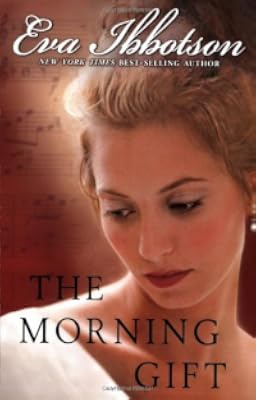
The Morning Gift
by Eva Ibbotson
On This Page
Description
Ruth Berger tries to escape Vienna with her Jewish-Austrian family before the Nazis arrive, but the plan goes wrong. Ruth meets British college professor Quin Sommerville. They agree to a marriage of convenience, to be annulled as soon as they return to safety, but dissolving the marriage proves to be more difficult than either of them thought.Tags
Recommendations












Member Reviews
I am in love.
I loved all the characters. I loved Ibboston’s style of writing. I loved the story (though highly predictable I did not even care as all I wanted to happen finally happened).
Reading The Morning Gift was similar to drinking a delicious and indulgent hot chocolate. As you slurp it down in one sitting it warms you from the inside and leaves you feeling satisfied (if not a little tiny bit sick - as I don’t usually read romances and happy endings almost seem mythological).
Ruth was my favourite character, she is intelligent, though occasionally lacking in common sense. The description of her beauty increases throughout the novel... I felt this was in parallel with how Somerville was seeing her? From a young girl in need of show more rescuing to a bright, strong and passionate individual.
I loved it. I was totally absorbed. Ibboston has a way of breathing life into characters you do not see often.
Even Heini and Verena, I could not bring myself to hate (as irritating as they were). I understood their views on the world because of “who they are”, they’re entitled and pompous, but they believed they were owed something.
I will definitely reread and recommend to anyone wanting a delightful romance featuring many endearing and fully-fleshed out characters. show less
I loved all the characters. I loved Ibboston’s style of writing. I loved the story (though highly predictable I did not even care as all I wanted to happen finally happened).
Reading The Morning Gift was similar to drinking a delicious and indulgent hot chocolate. As you slurp it down in one sitting it warms you from the inside and leaves you feeling satisfied (if not a little tiny bit sick - as I don’t usually read romances and happy endings almost seem mythological).
Ruth was my favourite character, she is intelligent, though occasionally lacking in common sense. The description of her beauty increases throughout the novel... I felt this was in parallel with how Somerville was seeing her? From a young girl in need of show more rescuing to a bright, strong and passionate individual.
I loved it. I was totally absorbed. Ibboston has a way of breathing life into characters you do not see often.
Even Heini and Verena, I could not bring myself to hate (as irritating as they were). I understood their views on the world because of “who they are”, they’re entitled and pompous, but they believed they were owed something.
I will definitely reread and recommend to anyone wanting a delightful romance featuring many endearing and fully-fleshed out characters. show less
The Morning Gift is a confection of a tale, a combination of Cinderella and Anne of Green Gables for adults. It’s romantic and sweet but also explores a number of serious issues, including gender roles, standards of beauty, class distinctions, and the behavior of bystanders to the Nazi onslaught. Ibbotson herself once said her books were “for the intelligent woman with the flu."
As the story begins, Ruth Berger is a lovely vivacious girl in pre-World War II Vienna, who enjoys assisting her zoologist father with his investigations. All her parents’ friends and her father’s co-workers are charmed by Ruth and by her love of music, expressed most concretely by her devotion to Heini, a piano prodigy who lives with Ruth and her family. show more But Ruth, like her father, plans to be a scientist.
When Ruth, now 20, gets stuck in Vienna after the Nazi Anschluss [the incorporation of Austria into Germany in 1938], one of her father’s colleagues - the British paleontologist Quin Sommerville, tries to rescue her. It turns out the only way he can get her out is to marry her, and so they have a “paper” marriage, with the intention of getting an annulment as soon as Ruth is safe.
Once in London, Quin delivers Ruth to Belsize Park in North London, with her family and other newly-poor refugees. Quin goes to his stately home in Bowmont in Northumberland, and charges his London attorney with the task of getting the marriage dissolved. But in spite of their intentions not to see each other, Ruth becomes Quin’s student at Thameside University, and soon they are enmeshed in each other’s lives.
During the course of this delightful and predictable-but-who-cares romp, we also get to meet Ruth’s fellow students, Quin’s family and friends, and a cross-section of the Belsize Park Jewish refugees. They are each endearing or dreadful in unique ways, and add drama, humor, and layers to the plot. In fact, it is quite impressive how real the secondary characters become despite the fact that most of them receive relatively little coverage. Ibbotson’s deft conveyance of a world through a phrase makes us feel like we have known them all of our lives.
The resolution to the story fulfills Ibbotson’s sina qua non (according to her son) “that people will eventually find the right person for them and find the right place to be.”
Discussion: There is so much to recommend in this book aside from its Cinderella aspects. It is, for one, a good look at what life was like for one upper middle class family that managed to get out of Austria before it was too late. In fact, the bare outline of the story comes from the author’s own life. She was born in Vienna to non-practicing Jewish parents. (In the book, both of Ruth’s parents are non-practicing, but one is Jewish and one is Catholic.) Ibbotson’s father, like Ruth’s, was also a scientist and lecturer at a university. After their escape from Vienna, Ibbotson and her mother (the parents got separated), settled in impoverished Belsize Park in London. And like her character Ruth, Ibbotson intended to follow in her father’s footsteps.
Ibbotson takes the opportunity afforded by every Cinderella story to contrast the lifestyle and pressures of the lower and the upper classes, and invariably sets up some of the upper class for ridicule. Some, however, are drawn sympathetically – particularly the handsome-prince-to-be. But she does not vitiate her credibility by portraying the lower classes as a uniform collection of saints. Her work is quite nuanced, even if the heroine is a bit too beautiful and entrancing, albeit definitely not without faults.
(In this regard, I was a bit appalled that so much of the story was devoted to singing the praises of Ruth’s golden-haired, snub-nosed beauty, specifically stated to be in direct contrast to what she might have been expected to look like with a Semitic background. I’m not sure what Ibbotson’s agenda was with this, or if it was even conscious.)
The story also delves into the attitudes of the British about the onslaught of war refugees inundating London. Anti-semitism played an important role in Britain in the 1930s, and included violence by “Blackshirts” against Jewish refugees from Nazi terror. And, as in the U.S., there was much political resistance to accepting further Jewish refugees as their numbers threatened to balloon. Ibbotson seamlessly weaves into her story the attitudes and erroneous preconceptions of the upper classes toward such “foreigners,” including of course Ruth, her family, and fellow refugees, who were definitely considered undesirable. Although the distaste would have been extended to rich as well as poor Jews, part of the problem for the British upper class was that Jews were forced to leave their wealth behind in Germany, and so appeared to be like paupers (and indeed, were often transformed into beggars) and so they aroused class disgust as well as ethnic prejudice.
Finally, Ibbotson does not hesitate to take on gender roles, contrasting Heini’s egregiously self-centered traditionalist expectations of Ruth with Quin’s more enlightened approach to women.
Evaluation: I loved this book and I love Ibbotson’s style of writing. I have enjoyed every moment I have spent with the two books of Ibbotson’s that I have read so far, and fully intend to catch up on her entire oeuvre. show less
As the story begins, Ruth Berger is a lovely vivacious girl in pre-World War II Vienna, who enjoys assisting her zoologist father with his investigations. All her parents’ friends and her father’s co-workers are charmed by Ruth and by her love of music, expressed most concretely by her devotion to Heini, a piano prodigy who lives with Ruth and her family. show more But Ruth, like her father, plans to be a scientist.
When Ruth, now 20, gets stuck in Vienna after the Nazi Anschluss [the incorporation of Austria into Germany in 1938], one of her father’s colleagues - the British paleontologist Quin Sommerville, tries to rescue her. It turns out the only way he can get her out is to marry her, and so they have a “paper” marriage, with the intention of getting an annulment as soon as Ruth is safe.
Once in London, Quin delivers Ruth to Belsize Park in North London, with her family and other newly-poor refugees. Quin goes to his stately home in Bowmont in Northumberland, and charges his London attorney with the task of getting the marriage dissolved. But in spite of their intentions not to see each other, Ruth becomes Quin’s student at Thameside University, and soon they are enmeshed in each other’s lives.
During the course of this delightful and predictable-but-who-cares romp, we also get to meet Ruth’s fellow students, Quin’s family and friends, and a cross-section of the Belsize Park Jewish refugees. They are each endearing or dreadful in unique ways, and add drama, humor, and layers to the plot. In fact, it is quite impressive how real the secondary characters become despite the fact that most of them receive relatively little coverage. Ibbotson’s deft conveyance of a world through a phrase makes us feel like we have known them all of our lives.
The resolution to the story fulfills Ibbotson’s sina qua non (according to her son) “that people will eventually find the right person for them and find the right place to be.”
Discussion: There is so much to recommend in this book aside from its Cinderella aspects. It is, for one, a good look at what life was like for one upper middle class family that managed to get out of Austria before it was too late. In fact, the bare outline of the story comes from the author’s own life. She was born in Vienna to non-practicing Jewish parents. (In the book, both of Ruth’s parents are non-practicing, but one is Jewish and one is Catholic.) Ibbotson’s father, like Ruth’s, was also a scientist and lecturer at a university. After their escape from Vienna, Ibbotson and her mother (the parents got separated), settled in impoverished Belsize Park in London. And like her character Ruth, Ibbotson intended to follow in her father’s footsteps.
Ibbotson takes the opportunity afforded by every Cinderella story to contrast the lifestyle and pressures of the lower and the upper classes, and invariably sets up some of the upper class for ridicule. Some, however, are drawn sympathetically – particularly the handsome-prince-to-be. But she does not vitiate her credibility by portraying the lower classes as a uniform collection of saints. Her work is quite nuanced, even if the heroine is a bit too beautiful and entrancing, albeit definitely not without faults.
(In this regard, I was a bit appalled that so much of the story was devoted to singing the praises of Ruth’s golden-haired, snub-nosed beauty, specifically stated to be in direct contrast to what she might have been expected to look like with a Semitic background. I’m not sure what Ibbotson’s agenda was with this, or if it was even conscious.)
The story also delves into the attitudes of the British about the onslaught of war refugees inundating London. Anti-semitism played an important role in Britain in the 1930s, and included violence by “Blackshirts” against Jewish refugees from Nazi terror. And, as in the U.S., there was much political resistance to accepting further Jewish refugees as their numbers threatened to balloon. Ibbotson seamlessly weaves into her story the attitudes and erroneous preconceptions of the upper classes toward such “foreigners,” including of course Ruth, her family, and fellow refugees, who were definitely considered undesirable. Although the distaste would have been extended to rich as well as poor Jews, part of the problem for the British upper class was that Jews were forced to leave their wealth behind in Germany, and so appeared to be like paupers (and indeed, were often transformed into beggars) and so they aroused class disgust as well as ethnic prejudice.
Finally, Ibbotson does not hesitate to take on gender roles, contrasting Heini’s egregiously self-centered traditionalist expectations of Ruth with Quin’s more enlightened approach to women.
Evaluation: I loved this book and I love Ibbotson’s style of writing. I have enjoyed every moment I have spent with the two books of Ibbotson’s that I have read so far, and fully intend to catch up on her entire oeuvre. show less
When Quin Somerville discovers Ruth Berger, daughter of an old friend, stranded in Vienna days after the Anschluss, there's only one way he can find to get her out: as his wife. He promises to start working toward a divorce or annulment immediately, so Ruth can go ahead with her plan to marry Heini, her childhood sweetheart. However, circumstances conspire to throw them together, and eventually, they begin to wonder if the marriage needs to be dissolved, after all...
This book is a mixed bag, for me. The characters are on point, especially the refugee community in London where Ruth's family ends up. They're all adorable. And Ruth's university friends are likewise charming. The romance kind of stutters along, and then the last eighth of show more the book is melodrama that could easily have been avoided if the characters had talked to each other instead of jumping to conclusions. As in most of these romances, Ibbotson pairs an ingenue with an experienced older man, which can start to feel a little icky, especially in this case, where he knew her briefly as a child. I actually like this book a little better than A Company of Swans, but it's not among my favorites. Read it for the characterization, and for Ibbotson's writing, which continues to delight. show less
This book is a mixed bag, for me. The characters are on point, especially the refugee community in London where Ruth's family ends up. They're all adorable. And Ruth's university friends are likewise charming. The romance kind of stutters along, and then the last eighth of show more the book is melodrama that could easily have been avoided if the characters had talked to each other instead of jumping to conclusions. As in most of these romances, Ibbotson pairs an ingenue with an experienced older man, which can start to feel a little icky, especially in this case, where he knew her briefly as a child. I actually like this book a little better than A Company of Swans, but it's not among my favorites. Read it for the characterization, and for Ibbotson's writing, which continues to delight. show less
"I’ll have a starling shall be taught to speak ..."
-- Shakespeare Henry IV Part 1
Here is a publishing curiosity. The Morning Gift was originally written in the 1990s for an adult readership but then, to the author's surprise, reissued as a teen read in 2007 (presumably slightly revised then by the author, as a copyright notice suggests). I can see how the temptation to repackage may have arisen: it's a sort of Rags-to-Riches story, with the young heroine (she's around twenty, I should add) playing a Cinderella role until she and her Prince Charming finally get together. But within the Boy Meets Girl trope, where the course of true love rarely runs smooth, there is so much more to enjoy. For a start, there's a generous dose of show more autobiographical detail that lends both honesty and authenticity to the narrative.
The Morning Gift opens with a paean to Vienna, "a city of myths" from which "thirteen nationalities were governed" and where music and psychology and artists and philosophers reigned supreme. Until the coming of the Nazis. Ruth Berger (like the real-life Maria Charlotte Michelle Wiesner, as Eva Ibbotson was then) came from academic non-practising Jewish stock, and had fallen in love with promising young Hungarian pianist Heini Radek. All is proceeding well until March 12th 1938, when Hitler's Nazi Germany annexes Austria. Ruth returns to the family apartment to find it abandoned, soon to be trashed; her extended family has fled to England, her boyfriend to Hungary, but she has been kicked off a train as she is unable to prove she hasn't been politically active.
At this point Professor Quinton Somerville, an old friend of the family from England, arrives at the apartment to hear a bird-like tune sadly played over and over again on a piano. This is the Rondo theme from Mozart's G major Piano Concerto K453, the 'Starling', which Mozart had taught a caged starling (though the bird always added the pause and the G sharp) and which Ruth is despondently picking out on the piano keys.
To get Ruth safely abroad to England he proposes a solution, that they partake in a so-called morganatic marriage. Quin explains it thus: "The word morganatic comes from the Latin matrimonium ad morganaticum -- a marriage based on the morning gift. It's a gift given the morning after the bridal night with which the husband, by bestowing it, frees himself from any liability to the wife ..." It'll be a marriage of convenience from which they will extricate themselves in England, leaving Ruth free to marry her pianist. Or so runs the theory.
I can't tell you how delighted and moved I was by this novel. Not only Ruth, a starling who has her own voice, but a range of believable characters, some flawed but all human; a timescale that, beginning before and ending after the war, captures societies in transition; a treatment that doesn't neglect to address the inevitable prejudices that rear up when refugees and migrants appear in communities; an examination of tensions and class divisions between not just the haves and have-nots but also the intelligentsia, landed gentry and the upwardly-thrusting nouveau riche. The burgeoning teacher-pupil relationship is also sensitively handled, not the abusive Svengali type but rather that in, say, Charlotte Brontë's The Professor.
Above all, Ibbotson has melded it all together with a sure touch that expertly paces the ups and downs of relationships and charts the misunderstandings, all against a background of distinctive settings and landscapes -- Vienna before and during the Anschluss, Belsize Park and the fictional Thameside University in London, and the equally fictional ancestral pile of Bowmont on the Northumbrian coast.
Weaving through all like themes in a composition are Ibbotson's own loves: classical music and natural science. And this brings us back to the iridescent starling, for the European bird which gave its name to one of Mozart's concertos is of course, where Britain is concerned, usually a migrant that spends the winters in the UK in large gregarious flocks. Some may cavil at the noise they produce and regard them as pests; others instead marvel at their spectacular murmurations which can so uplift the heart and enrich our experience. I know which group I belong to.
http://wp.me/s2oNj1-morning show less
-- Shakespeare Henry IV Part 1
Here is a publishing curiosity. The Morning Gift was originally written in the 1990s for an adult readership but then, to the author's surprise, reissued as a teen read in 2007 (presumably slightly revised then by the author, as a copyright notice suggests). I can see how the temptation to repackage may have arisen: it's a sort of Rags-to-Riches story, with the young heroine (she's around twenty, I should add) playing a Cinderella role until she and her Prince Charming finally get together. But within the Boy Meets Girl trope, where the course of true love rarely runs smooth, there is so much more to enjoy. For a start, there's a generous dose of show more autobiographical detail that lends both honesty and authenticity to the narrative.
The Morning Gift opens with a paean to Vienna, "a city of myths" from which "thirteen nationalities were governed" and where music and psychology and artists and philosophers reigned supreme. Until the coming of the Nazis. Ruth Berger (like the real-life Maria Charlotte Michelle Wiesner, as Eva Ibbotson was then) came from academic non-practising Jewish stock, and had fallen in love with promising young Hungarian pianist Heini Radek. All is proceeding well until March 12th 1938, when Hitler's Nazi Germany annexes Austria. Ruth returns to the family apartment to find it abandoned, soon to be trashed; her extended family has fled to England, her boyfriend to Hungary, but she has been kicked off a train as she is unable to prove she hasn't been politically active.
At this point Professor Quinton Somerville, an old friend of the family from England, arrives at the apartment to hear a bird-like tune sadly played over and over again on a piano. This is the Rondo theme from Mozart's G major Piano Concerto K453, the 'Starling', which Mozart had taught a caged starling (though the bird always added the pause and the G sharp) and which Ruth is despondently picking out on the piano keys.
To get Ruth safely abroad to England he proposes a solution, that they partake in a so-called morganatic marriage. Quin explains it thus: "The word morganatic comes from the Latin matrimonium ad morganaticum -- a marriage based on the morning gift. It's a gift given the morning after the bridal night with which the husband, by bestowing it, frees himself from any liability to the wife ..." It'll be a marriage of convenience from which they will extricate themselves in England, leaving Ruth free to marry her pianist. Or so runs the theory.
I can't tell you how delighted and moved I was by this novel. Not only Ruth, a starling who has her own voice, but a range of believable characters, some flawed but all human; a timescale that, beginning before and ending after the war, captures societies in transition; a treatment that doesn't neglect to address the inevitable prejudices that rear up when refugees and migrants appear in communities; an examination of tensions and class divisions between not just the haves and have-nots but also the intelligentsia, landed gentry and the upwardly-thrusting nouveau riche. The burgeoning teacher-pupil relationship is also sensitively handled, not the abusive Svengali type but rather that in, say, Charlotte Brontë's The Professor.
Above all, Ibbotson has melded it all together with a sure touch that expertly paces the ups and downs of relationships and charts the misunderstandings, all against a background of distinctive settings and landscapes -- Vienna before and during the Anschluss, Belsize Park and the fictional Thameside University in London, and the equally fictional ancestral pile of Bowmont on the Northumbrian coast.
Weaving through all like themes in a composition are Ibbotson's own loves: classical music and natural science. And this brings us back to the iridescent starling, for the European bird which gave its name to one of Mozart's concertos is of course, where Britain is concerned, usually a migrant that spends the winters in the UK in large gregarious flocks. Some may cavil at the noise they produce and regard them as pests; others instead marvel at their spectacular murmurations which can so uplift the heart and enrich our experience. I know which group I belong to.
http://wp.me/s2oNj1-morning show less
I've been reading a lot of good books lately, but Eva Ibbotson's great gift is that you can completely lose yourself in her stories. This one -- such delight! Such despair (there for a bit, anyway). And such funny lines unexpectedly sprinkled throughout.
Perhaps it is simply that I am in the mood to be delighted by a book or perhaps it is simply that the Morning Gift is truly a book to be delighted in, but I found myself smiling and giggling and railing against the characters when they did stupid things.
It's not a deep book, by any means, or one that offers many twists and turns, but I found myself caring about the brilliant and somewhat ridiculous Ruth, a Jewish girl who is forced to marry a British professor to escape from Austria as Hitler's forces begin to engulf the continent. She quotes German poetry to sheep, earns the affection of even the crustiest of elderly personages, and makes the most dreadful mistakes sometimes.
I'll be adding Eva Ibbotson to the list of authors that I show more need to read more of. show less
It's not a deep book, by any means, or one that offers many twists and turns, but I found myself caring about the brilliant and somewhat ridiculous Ruth, a Jewish girl who is forced to marry a British professor to escape from Austria as Hitler's forces begin to engulf the continent. She quotes German poetry to sheep, earns the affection of even the crustiest of elderly personages, and makes the most dreadful mistakes sometimes.
I'll be adding Eva Ibbotson to the list of authors that I show more need to read more of. show less
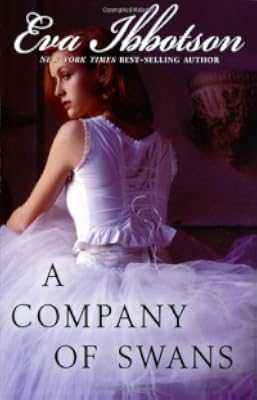
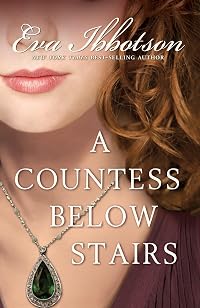
Many years ago I read Ibbotson’s book A Company of Swans and absolutely adored it. I immediately went out and bought both A Countess Below Stairs and The Morning Gift. I did not enjoy The Morning Gift nearly as much as A Company of Swans. The story just starts out too slowly and wanders too much.
Ruth lives in Vienna and worships the wonderful pianist Heini who she assists in all things and is destined to marry. Then everything changes when Hilter invades Austria and Ruth and her family are forced to flee. Ruth is supposed to be on her way to University in England and meet her parents there. However things get all botched up and Ruth ends up trapped in Vienna. While there she meets the Quin Sommerset a young professor whom was a family show more friend when Ruth was younger. Quin has British citizenship and suggests that he and Ruth get married as a way to get her out of Austria and to London where it is safe. Then when they arrive in London they will annul the marriage. However things get complicated when the marriage is more difficult to annul than expected, Ruth ends up with Quin as her professor, and Heini arrives expecting to marry Ruth.
The first 150 or so pages of this book were very difficult to get through. A ton of characters and places and names are thrown at the reader and they are only looslely connected. A lot of this could have been left out of the story and it would have been a much better book.
As the book continues it focuses more on the main character, Ruth, the story gets much more engaging. Ruth is a magical character, she sees so much joy in everything and is just so full of life. I loved reading about her. I also loved how she was determined to make it through University and make it through the Natural Sciences.
This book is a book full of wonderful people and especially strong woman characters; it was a joy to read about these people. I also really loved the history throughout and learning about Hitler’s invasion affected even non-occupied countries like Britain.
I think the relationship between Quin and Ruth could have been much more well done. The two skate around each other forever, barely even speaking, then suddenly BAM! they are hopelessly in love. It was a bit awkward and unbelievable.
Overall this was an okay book. The first half was awful and slow and ponderous to get through; I also stopped reading it. The second half was much more engaging and interesting and I enjoyed it a lot. I loved the history throughout the book, the kindness of the characters, and Ibbotson’s beautiful (if sometimes a bit too rambling) writing style. I wish the story had been better paced and that the relationship between Quin and Ruth had been better developed. Honestly I wouldn’t really recommend this book unless you are a diehard Ibbotson fan; go read A Company of Swans instead...that was a much better historical fiction than this book. show less
Ruth lives in Vienna and worships the wonderful pianist Heini who she assists in all things and is destined to marry. Then everything changes when Hilter invades Austria and Ruth and her family are forced to flee. Ruth is supposed to be on her way to University in England and meet her parents there. However things get all botched up and Ruth ends up trapped in Vienna. While there she meets the Quin Sommerset a young professor whom was a family show more friend when Ruth was younger. Quin has British citizenship and suggests that he and Ruth get married as a way to get her out of Austria and to London where it is safe. Then when they arrive in London they will annul the marriage. However things get complicated when the marriage is more difficult to annul than expected, Ruth ends up with Quin as her professor, and Heini arrives expecting to marry Ruth.
The first 150 or so pages of this book were very difficult to get through. A ton of characters and places and names are thrown at the reader and they are only looslely connected. A lot of this could have been left out of the story and it would have been a much better book.
As the book continues it focuses more on the main character, Ruth, the story gets much more engaging. Ruth is a magical character, she sees so much joy in everything and is just so full of life. I loved reading about her. I also loved how she was determined to make it through University and make it through the Natural Sciences.
This book is a book full of wonderful people and especially strong woman characters; it was a joy to read about these people. I also really loved the history throughout and learning about Hitler’s invasion affected even non-occupied countries like Britain.
I think the relationship between Quin and Ruth could have been much more well done. The two skate around each other forever, barely even speaking, then suddenly BAM! they are hopelessly in love. It was a bit awkward and unbelievable.
Overall this was an okay book. The first half was awful and slow and ponderous to get through; I also stopped reading it. The second half was much more engaging and interesting and I enjoyed it a lot. I loved the history throughout the book, the kindness of the characters, and Ibbotson’s beautiful (if sometimes a bit too rambling) writing style. I wish the story had been better paced and that the relationship between Quin and Ruth had been better developed. Honestly I wouldn’t really recommend this book unless you are a diehard Ibbotson fan; go read A Company of Swans instead...that was a much better historical fiction than this book. show less
Members
- Recently Added By
Lists

Books Read in 2013
1,630 works; 51 members

Books We Love to Reread
688 works; 296 members
Author Information

40+ Works 22,418 Members
Eva Ibbotson was born in Vienna, Austria, on January 21, 1925. She graduated from Bedford College, London with a degree in physiology in 1945 and the University of Durham with a degree in education in 1965. Her first book, The Great Ghost Rescue, was published in 1975. She primarily wrote children's book and romance novels for adults and young show more adults. Her other works include The Secret of Platform 13, The Star of Kazan, Which Witch?, Island of the Aunts, Dial-a-Ghost, The Ogre of Oglefort, A Company of Swans, and A Song For Summer. She won the Nestlé Smarties Book Prize for Journey to the River Sea. She died on October 20, 2010 at the age of 85. (Bowker Author Biography) show less
Some Editions
Series
Belongs to Publisher Series
Work Relationships
Common Knowledge
- Canonical title
- The Morning Gift
- Original title
- The Morning Gift
- Original publication date
- 1993
- People/Characters
- Ruth Berger; Leonie Berger; Kurt Berger; Quinton Somerville
- Important places
- Austria
- First words
- Vienna has always been a city of myths.
- Last words
- (Click to show. Warning: May contain spoilers.)"I buy you a cake?" said Mrs Weiss.
- Original language
- English
Classifications
Statistics
- Members
- 1,007
- Popularity
- 25,891
- Reviews
- 23
- Rating
- (3.92)
- Languages
- 7 — Dutch, English, French, German, Norwegian (Bokmål), Spanish, Swedish
- Media
- Paper, Audiobook, Ebook
- ISBNs
- 37
- ASINs
- 7