On This Page
Description
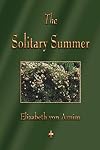
This delightful companion to the famous Elizabeth and Her German Garden is a witty, lyrical account of a rejuvenating summer. Descriptions of magnificent larkspurs and burning nasturtiums give way to those of cooling forest walks - and of clambering up the mud bank when the miller is not in view. Rainy days prompt a little philanthropy, until the sun returns the gardener to the refuge of her beloved plants. Yet the months are not as solitary as she'd planned: there's the Man of Wrath to show more pacify and the April, May and June babies to amuse. Here, with the pleasing astringency for which she is noted, Elizabeth von Arnim returns to the heroine and the garden she immortalised. show lessTags
Recommendations


















Member Recommendations

Member Reviews
This sequel to the semi-autobiographical Elizabeth and Her German Garden is just as delightful! (I would wonder why on earth I didn’t think to read it before now -- prompted by discovering the audiobook on Everand -- but I read Elizabeth and her German Garden March 2020, so understandably I was Very Distracted By Other Things at that time.)
Elizabeth has persuaded her husband (“The Man of Wrath”) that she wants to spend a summer uninterrupted by having to entertain guests. I particularly enjoyed her descriptions of her garden and of her approach to reading, and her anecdotes about her small daughters.
For a very short book (novella length), and for an audiobook (which meant I couldn’t easily bookmark quotes as I went), there show more were A LOT of memorable passages, which I made a point of looking up afterwards. For instance:
I remembered wondering about Elizabeth and Her German Garden why she wasn’t more involved in gardening in a hands-on way, so I was interested to get this explanation. It makes more sense to me, too, when I consider that Elizabeth was a countess (a “Gräfin”), too -- a fact that I don’t believe the books mention. Maybe one can infer, from the hints about her life, what her social class must have been? I am not sufficiently informed about German society in the late 19th century.
Elizabeth has persuaded her husband (“The Man of Wrath”) that she wants to spend a summer uninterrupted by having to entertain guests. I particularly enjoyed her descriptions of her garden and of her approach to reading, and her anecdotes about her small daughters.
For a very short book (novella length), and for an audiobook (which meant I couldn’t easily bookmark quotes as I went), there show more were A LOT of memorable passages, which I made a point of looking up afterwards. For instance:
[...] but of what use is it to buy good seeds and plants and bulbs if you are forced to hand them over to a gardener who listens with ill-concealed impatience to the careful directions you give him, says Jawohl a great many times, and then goes off and puts them in in the way he has always done, which is invariably the wrong way? My hands were tied because of the unfortunate circumstance of sex, or I would gladly have changed places with him and requested him to do the talking while I did the planting, and as he probably would not have talked much there would have been a distinct gain in the peace of the world, which would surely be very materially increased if women's tongues were tied instead of their hands, and those that want to could work with them without collecting a crowd. And is it not certain that the more one's body works the fainter grow the waggings of one's tongue? I sometimes literally ache with envy as I watch the men going about their pleasant work in the sunshine, turning up the luscious damp earth, raking, weeding, watering, planting, cutting the grass, pruning the trees — not a thing that they do from the first uncovering of the roses in the spring to the November bonfires but fills my soul with longing to be up and doing it too. A great many things will have to happen, however, before such a state of popular large-mindedness as will allow of my digging without creating a sensation is reached, so I have plenty of time for further grumblings [...] After having driven through vast tracts of forest and heath for hours, and never meeting a soul or seeing a house, it is surprising to be told that on such a day you took such a drive and were at such a spot; yet this has happened to me more than once. And if even this is watched and noted, with what lightning rapidity would the news spread that I had been seen stalking down the garden path with a hoe over my shoulder and a basket in my hand, and weeding written large on every feature! Yet I should love to weed.
I remembered wondering about Elizabeth and Her German Garden why she wasn’t more involved in gardening in a hands-on way, so I was interested to get this explanation. It makes more sense to me, too, when I consider that Elizabeth was a countess (a “Gräfin”), too -- a fact that I don’t believe the books mention. Maybe one can infer, from the hints about her life, what her social class must have been? I am not sufficiently informed about German society in the late 19th century.
What a blessing it is to love books. Everybody must love something, and I know of no objects of love that give such substantial and unfailing returns as books and a garden. And how easy it would have been to come into the world without this, and possessed instead of an all-consuming passion, say, for hats, perpetually raging round my empty soul! I feel I owe my forefathers a debt of gratitude, for I suppose the explanation is that they too did not care for hats.show less
This was a buddy read with Themis Athena.
The Solitary Summer is a follow up to Elizabeth and Her German Garden; they don't have to be read in any order, but Solitary Summer takes place in the same garden, about three years later.
I went into this book naively assuming that the "Solitary" in the title mean Elizabeth at home, alone, in her garden, for the entire summer. While I made allowances for servants, I figured she'd sent Man of Wrath and her three children off somewhere for the summer, either together or separately.
Shows what I know; the Solitary in the title means nothing of the sort. It simply means Elizabeth and her husband agree that for one summer, May through August, there will be no guests descending on the house, show more expecting Elizabeth to perform hostess duties. 100 years ago, I suppose that would feel like a kind of solitude, but personally, if I were being subjected to the daily demands of husband and three daughters, I'd have long before whipped out my Sharpie pen and blacked out the entry for 'solitude' in all my dictionaries and been done with the concept.
Moving on from my luxurious pre-conceived notions, the book is ostensibly about Elizabeth spending the summer in her garden, free from hostessing duties, and therefore free to loll about in her garden all day, book in hand, alternately reading and soaking in the paradise surrounding anyone in a garden, wood, and field. When she's not feeding her family, or handing out food to the servants, or entertaining her daughters. The solitary moments do happen, in May and most of June, but after a spate of gales whip through, the tone of the book alters perceptibly; less garden, more musings on philosophy, reading, morality, class and village life.
In my opinion, even though I picked this up in eager anticipation of the garden-geek-fest, it's the second half that should not be missed. Elizabeth is a rare breed; she's able to stand apart from herself, to see herself and events around her with objectivity, brutal honesty, and wry wit. She does not rationalise, she does not excuse or defend, she simply observes: this is they way things/I should be, this is the way things/I are(am). It's refreshing to hear this kind of voice, and if it doesn't make you think one way or the other, ... well, never mind. But the issues she addresses in her musings are at least as relevant today as they were 100 years ago, with the exception of enforced quartering of troops and servant housing.
From what little I know so far about Elizabeth von Arnim's background, her husband isn't what anyone today would call a gem; she calls him Man of Wrath for heaven's sake, and I doubt she's using the term ironically. But there are moments of accord between the two, as well as many scenes of shared humour and witty banter that lead me to suspect their relationship was far more complex than history will likely remember it being, and I'm eager to find out more about them both to see if my suspicions stand up to available facts.
Either way, I like her. I suspect, were we contemporaries and life brought us into each other's orbit, we'd be friends - or at least appreciate each other's love of nature, sarcasm, and our disdain for too many guests. show less
The Solitary Summer is a follow up to Elizabeth and Her German Garden; they don't have to be read in any order, but Solitary Summer takes place in the same garden, about three years later.
I went into this book naively assuming that the "Solitary" in the title mean Elizabeth at home, alone, in her garden, for the entire summer. While I made allowances for servants, I figured she'd sent Man of Wrath and her three children off somewhere for the summer, either together or separately.
Shows what I know; the Solitary in the title means nothing of the sort. It simply means Elizabeth and her husband agree that for one summer, May through August, there will be no guests descending on the house, show more expecting Elizabeth to perform hostess duties. 100 years ago, I suppose that would feel like a kind of solitude, but personally, if I were being subjected to the daily demands of husband and three daughters, I'd have long before whipped out my Sharpie pen and blacked out the entry for 'solitude' in all my dictionaries and been done with the concept.
Moving on from my luxurious pre-conceived notions, the book is ostensibly about Elizabeth spending the summer in her garden, free from hostessing duties, and therefore free to loll about in her garden all day, book in hand, alternately reading and soaking in the paradise surrounding anyone in a garden, wood, and field. When she's not feeding her family, or handing out food to the servants, or entertaining her daughters. The solitary moments do happen, in May and most of June, but after a spate of gales whip through, the tone of the book alters perceptibly; less garden, more musings on philosophy, reading, morality, class and village life.
In my opinion, even though I picked this up in eager anticipation of the garden-geek-fest, it's the second half that should not be missed. Elizabeth is a rare breed; she's able to stand apart from herself, to see herself and events around her with objectivity, brutal honesty, and wry wit. She does not rationalise, she does not excuse or defend, she simply observes: this is they way things/I should be, this is the way things/I are(am). It's refreshing to hear this kind of voice, and if it doesn't make you think one way or the other, ... well, never mind. But the issues she addresses in her musings are at least as relevant today as they were 100 years ago, with the exception of enforced quartering of troops and servant housing.
From what little I know so far about Elizabeth von Arnim's background, her husband isn't what anyone today would call a gem; she calls him Man of Wrath for heaven's sake, and I doubt she's using the term ironically. But there are moments of accord between the two, as well as many scenes of shared humour and witty banter that lead me to suspect their relationship was far more complex than history will likely remember it being, and I'm eager to find out more about them both to see if my suspicions stand up to available facts.
Either way, I like her. I suspect, were we contemporaries and life brought us into each other's orbit, we'd be friends - or at least appreciate each other's love of nature, sarcasm, and our disdain for too many guests. show less
"May 2nd.—Last night after dinner, when we were in the garden, I said, "I want to be alone for a whole summer, and get to the very dregs of life. I want to be as idle as I can, so that my soul may have time to grow. Nobody shall be invited to stay with me, and if any one calls they will be told that I am out, or away, or sick. I shall spend the months in the garden, and on the plain, and in the forests. I shall watch the things that happen in my garden, and see where I have made mistakes. On wet days I will go into the thickest parts of the forests, where the pine needles are everlastingly dry, and when the sun shines I'll lie on the heath and see how the broom flares against the clouds. I shall be perpetually happy, because there show more will be no one to worry me. Out there on the plain there is silence, and where there is silence I have discovered there is peace."
"Mind you do not get your feet damp," said the Man of Wrath, removing his cigar."
This sequel to Elizabeth and Her German Garden is another delightful adventure in gardening with Elizabeth, the Man of Wrath and the April, May and June babies. For those who have no idea what I'm talking about, Elizabeth and Her German Garden and The Solitary Summer are two semi-autobiographical novels in diary form about Elizabeth von Arnim and her attempts to escape her hectic German upper-class social life by retreating to the garden of her country house. It sounds like the sort of situation that might be difficult to sympathise with (how awful it must be to have so much money etc.) but Elizabeth is surprisingly down to earth about what I think of as the important things in life (books, peace and quiet, absence of annoying people) and her frustrations at the restrictions imposed on upper-class women at the end of the 19th century are genuine. show less
"Mind you do not get your feet damp," said the Man of Wrath, removing his cigar."
This sequel to Elizabeth and Her German Garden is another delightful adventure in gardening with Elizabeth, the Man of Wrath and the April, May and June babies. For those who have no idea what I'm talking about, Elizabeth and Her German Garden and The Solitary Summer are two semi-autobiographical novels in diary form about Elizabeth von Arnim and her attempts to escape her hectic German upper-class social life by retreating to the garden of her country house. It sounds like the sort of situation that might be difficult to sympathise with (how awful it must be to have so much money etc.) but Elizabeth is surprisingly down to earth about what I think of as the important things in life (books, peace and quiet, absence of annoying people) and her frustrations at the restrictions imposed on upper-class women at the end of the 19th century are genuine. show less
Well this is definately one of my favorite books ever. I kept checking to see how much was left and winced to see the right side of the book dwindling. Yes it's true that this seems to be a book about nothing. Well, let me set you all straight, this book is about just who exactly, deep inside, for real and goodness' sake this woman was. And who she was, first of all, brave, for sharing it all with us. She was also very funny and had this beautiful sense of just what beauty is. I loved her witty sarcasm and astonishment at ignorance and customs the village poor that she, as lady of the "big house" felt responsible for. She tells of a few summer months and the things that she loved, people she loved and was annoyed or irritated by. She show more speaks to my soul, she made me laugh, made me think. She speaks mostly of her garden, which must surely have been a sight to behold. Like my other favorite book of hers, Enchanted April, this one whisks me away to a dreamland for grownups filled with beautiful flowers whose scents I can almost perceive. I know this will be one I turn to again and again when I need comfort or soothing. show less
As the narrator of the book determinedly spends a summer alone in her garden, (with various interruptions), she sets down her delightful observations of nature, and her wonderfully amusing and insightful musings on her family life and human nature.
This book was written with an abundance of charm and wit. I loved it unreservedly, and have added it to my ever-growing list of favorites.
This book was written with an abundance of charm and wit. I loved it unreservedly, and have added it to my ever-growing list of favorites.
After having fallen in love with The Enchanted April, I suppose I expected more from this earlier work. I recognized the tone and the whimsy of the later work, but I felt that it lacked the charm. And, of course, it definitely lacked much of anything resembling a plot which kept me from fully embracing it. I wouldn't have finished it had it not been so short to start with.
This book came into my hands almost by accident, and I only read it because I enjoyed the author's "The Enchanted April". This one was apparently semi-autobiographical, and what I enjoyed most was the glimpse of life in turn-of-the-last-century Germany: the role of women in the various classes, their interactions with their children, ideas on healthcare, death and funerals, and even a glimpse into military life.
It's a quick read, and definitely worthwhile.
It's a quick read, and definitely worthwhile.
Members
- Recently Added By
Lists

Garden-fiction
67 works; 20 members
Author Information

47+ Works 8,108 Members
Some Editions
Series

Belongs to Publisher Series
Virago Modern Classics (382)
insel taschenbuch (2375)
Work Relationships
Common Knowledge
- Canonical title
- The Solitary Summer
- Original title
- The Solitary Summer
- Alternate titles*
- Sommer ohne Gäste
- Original publication date
- 1899
- People/Characters
- Elizabeth; The Man of Wrath
- Dedication
- To THE MAN OF WRATH with some apologies and much love.
- First words
- May 2nd.--Last night after dinner, when we were in the garden, I said, "I want to be alone for a whole summer, and get to the very dregs of life.
On a late afternoon in May 1897, a young woman sat outside in the warm fresh air after a shower of rain and wrote: "I love my garden." - Quotations
- A garden - that divine filter that filters all the grossness out of us, and leaves us, each time we have been in it, clearer, and purer, and more harmless.
These gardening books are an unfailing delight, especially in winter, when to sit by my blazing peat fire with the snow driving past the windows and read the luscious descriptions of roses and all the other summer glories is ... (show all)one of my greatest pleasures. And then how well I get to know and love those gardens whose gradual development has been described by their owners, and how happily I wander in fancy down the paths of certain specially charming ones in Lancashire, Berkshire, Surrey, and Kent, and admire the beautiful arrangement' of bed and border, and the charming bits in unexpected corners, and all the e.vidences of untiring love! Any book I see advertised that treats of gardens I immediately buy, and thus possess quite a collection of fascinating and instructive garden literature. A few are feeble, and get shunted off into the drawing-room ; but the others stay with me winter and summer, and soon lose the gloss of their new coats, and put on the comfortable look of old friends in every-day clothes, under the frequent touch of affection. They are such special friends that I can hardly pass them without a nod and a smile at the well known covers, each of which has some pleasant association of time and place to make it still more dear. - Last words
- (Click to show. Warning: May contain spoilers.)And so the Man of Wrath and I fade away into dimness and muteness, my head resting on his shoulder, his arm encircling my waist ; and what could possibly be more proper, more praiseworthy, or more picturesque?
*Some information comes from Common Knowledge in other languages. Click "Edit" for more information.
Classifications
Statistics
- Members
- 386
- Popularity
- 80,654
- Reviews
- 14
- Rating
- (3.99)
- Languages
- 5 — Danish, English, French, German, Italian
- Media
- Paper, Audiobook, Ebook
- ISBNs
- 71
- ASINs
- 16