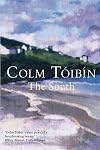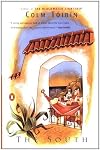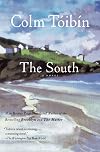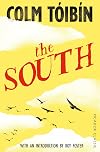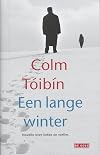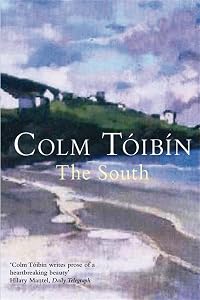
The South
by Colm Tóibín
On This Page
Description
The first highly acclaimed novel from an immensely gifted and accomplished writer, about an Irishwoman who creates a new life in post-war Spain. In 1950, Katherine Proctor leaves Ireland for Barcelona, determined to escape her family and become a painter. There she meets Miguel, an anarchist veteran of the Spanish Civil War, and begins to build a life with him. But Katherine cannot escape her past, as Michael Graves, a fellow Irish émigré in Spain, forces her to reexamine all her show more relationships: to her lover, her art, and the homeland she only thought she knew. The South is a novel of classic themes-of art and exile, and of the seemingly irreconcilable yearnings for love and freedom-to which Colm Tóibín brings a new, passionate sensitivity. show lessTags
Recommendations





Member Reviews
This is a truly beautiful story on so many levels. The writing is tight and exquisite. The characters are full-bodied with all of their mysteries and faults. The setting is varied and full, at the end of the book driving me to my own computer to have a look at pictures of many of the seaside venues in Wexford, Ireland. Political (Catalonia under Franco in Spain) and religious controversy (the Church of Ireland versus Roman Catholicism) inserted themselves into this novel's pages but never completely took over the immediate story of the characters as they related to each other.
I was intrigued that this was the debut novel of Colm Tóibín and appreciated what a talent he has for writing about an individual's experience. I have read two show more other of his novels and plan to read more. It's an exhilarating experience to be under the influence of this author's words.
The South tells the story of Katherine, a young woman, who left her husband Tom and son Richard in Enniscorthy, Ireland, and came to live in Barcelona with a Miguel, a known rebel against the Franco rule. Miguel takes great interest in his fellow rebel Carlos Puig. Both Katherine and Miguel develop a deep friendship with Michael Graves, a man also from Enniscorthy. Katherine, Miguel and Michael Graves are artists who developed their painting skill in an art school in Barcelona under the guidance of Ramon Rogent.
Don't worry too much about the story itself. Just let Katherine's tale carry you along at will. Enjoy the ride! show less
I was intrigued that this was the debut novel of Colm Tóibín and appreciated what a talent he has for writing about an individual's experience. I have read two show more other of his novels and plan to read more. It's an exhilarating experience to be under the influence of this author's words.
The South tells the story of Katherine, a young woman, who left her husband Tom and son Richard in Enniscorthy, Ireland, and came to live in Barcelona with a Miguel, a known rebel against the Franco rule. Miguel takes great interest in his fellow rebel Carlos Puig. Both Katherine and Miguel develop a deep friendship with Michael Graves, a man also from Enniscorthy. Katherine, Miguel and Michael Graves are artists who developed their painting skill in an art school in Barcelona under the guidance of Ramon Rogent.
Don't worry too much about the story itself. Just let Katherine's tale carry you along at will. Enjoy the ride! show less
Toibin's sentences are short and strong (dare I mention Hemingway?). That said, his protagonist is female; Katherine is an Irish woman who leaves her husband and son and relocates to Spain with her mother's assistance. There she falls in with a Spaniard, Miguel, and an Irishman, Michael Graves. They make for a somewhat unusual but improbably comfortable triangle, with Katherine and Miguel forming a unit and Michael Graves hovering around the outside. Eventually Katherine and Miguel move to a remote town and have a daughter; Michael Graves visits occasionally. Miguel becomes depressed, dwelling on his experience in the Spanish Civil War; his depression culminates in a tragic event.
I found the font used for this edition (wide and bold) to show more be distracting.
Quotes
"Have you ever read a book called The Magic Mountain?" he asked.
"No," she said.
"It was like The Magic Mountain except more people died. I didn't die." (60)
He never imagined that they would lose the war...everyone knew things would change, he said, but on one believed they would end. Finally, he told her, they were betrayed by everybody, not just by the fascists, but by the Catalan nationalists and the communists. (98)
...she knew...that it was only a matter of days now before she would be blamed and accused, and would have no answer or excuse, when there would be no forgiveness. (102)
This war has not ended yet, in his eyes, or in anybody else's....I just know that I have taken on more than I can deal with. (122)
She was aware that she had begun to observe each thing as though it were a scene, as though she needed to fix it in her memory, as if she might never get a chance to see it again. (141)
"I wish I knew I could spend the rest of my life here," she said.
"Why can't you?" he asked.
"I always feel that I have just borrowed it for a few years. I watch it all the time because I will need to remember it. Maybe that's why I'm painting it." (147)
Her love for him was like breath on glass. (157)
There are friends: other lives to brush against. But there will be no new intimacies like the old ones.There will always be reservations, things one must leave out, events one can't explain without handing over a full map of one's life, unfolding it, making clear that all the lines and contours stand for long days and nights when things were bad, or good, or when things were too small to be described at all: when things just were. This is a life. (165)
For both of us reality rests in being reminded. For me the whole city of Barcelona, every street I use, every day, evokes memories of the years we were together. (166) show less
I found the font used for this edition (wide and bold) to show more be distracting.
Quotes
"Have you ever read a book called The Magic Mountain?" he asked.
"No," she said.
"It was like The Magic Mountain except more people died. I didn't die." (60)
He never imagined that they would lose the war...everyone knew things would change, he said, but on one believed they would end. Finally, he told her, they were betrayed by everybody, not just by the fascists, but by the Catalan nationalists and the communists. (98)
...she knew...that it was only a matter of days now before she would be blamed and accused, and would have no answer or excuse, when there would be no forgiveness. (102)
This war has not ended yet, in his eyes, or in anybody else's....I just know that I have taken on more than I can deal with. (122)
She was aware that she had begun to observe each thing as though it were a scene, as though she needed to fix it in her memory, as if she might never get a chance to see it again. (141)
"I wish I knew I could spend the rest of my life here," she said.
"Why can't you?" he asked.
"I always feel that I have just borrowed it for a few years. I watch it all the time because I will need to remember it. Maybe that's why I'm painting it." (147)
Her love for him was like breath on glass. (157)
There are friends: other lives to brush against. But there will be no new intimacies like the old ones.There will always be reservations, things one must leave out, events one can't explain without handing over a full map of one's life, unfolding it, making clear that all the lines and contours stand for long days and nights when things were bad, or good, or when things were too small to be described at all: when things just were. This is a life. (165)
For both of us reality rests in being reminded. For me the whole city of Barcelona, every street I use, every day, evokes memories of the years we were together. (166) show less
This is a book about Katherine, an Irish Protestant who leaves her husband and son a few pages into the story. She moves to Barcelona, and discovers a talent for painting, and a new man, Miguel. The book describes, in both the third person and in Katherine's voice, her life there and as they move together to the remote Pyrennees. It tells her story as Miguel and the child they have together no longer form part of her life, and as she returns to Ireland to meet again her now adult child from her marriage. Katherine is a woman who does not explain herself to us, or even to herself. In many ways we hardly know her. Yet her wistful presence, and the powerful evocation of 1950s Catalonia and Ireland make for a compelling, if unsettling read.
After a devastating fire, Katherine Proctor leaves behind her son and husband in a politically tumultuous Ireland, arriving in Barcelona. She becomes an artist and meets Miguel, a Spanish Civil War veteran. She also meets Michael Graves, an Irishman living in Spain. She loves Miguel and builds a life with him, eventually bearing his daughter. After tragedy strikes, she eventually returns to Ireland to face the past. I really did not like Katherine. She acted too irresponsible for me. In spite of my dislike of the main character, I appreciated Toibin's writing. He paints his own pictures with his style.
In 1950, Katherine Proctor leaves Ireland and her family for Barcelona, determined to become a painter. There she meets Miguel, an anarchist veteran of the Spanish Civil War, and proceeds to build a life with him. But Katherine cannot escape her past, as Michael Graves, a fellow Irish emigre to Spain, forces her to re-examine all her relationships: to her lover, her art and the homeland she only thought she knew.
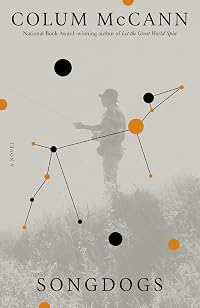
I first read this book in 2004, although when it was selected for my book club I couldn't remember any of it. I had vague recollections that I had read it, but had the plot and characters confused with Songdogs by Colum McCann ((it is also about memories and Ireland and Spain, so I suppose there is somewhat of a commonality show more there)). Once I started reading it, again, I remembered aspects of it, but very little in terms of the details.
It is a very interesting book, and I think it is a book that the reader will bring a lot into, I have a feeling that every reader might see something different in the story and the characters. Katherine is the main point of view character, on occasion we get her first person perspective, but for the most part it is third person story-telling. At the beginning of the book she has just left her husband and child back home in Ireland and escaped to Spain. And I get the feeling that some people at the book club may judge her very harshly for that. Much more harshly than they would judge a man for the same act...
I don't think it is a book that I could say I loved. Interesting and thought provoking would be the terms I would use instead. And I don't mean interesting as code for bad. It is a story all about how life is affected by the events of the past. How history isn't gone, it lives on in in memory and changes people's behaviour for years to come. It isn't in the past, it is still happening.
Below is my review from 2004
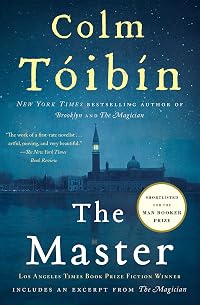
Colm Tóibín has recently been in the news for his new book, The Master which tells the story of Henry James, and is supposedly very good. I haven't read it, so I don't know :) But the publicity did encourage me to pick this book up when I spotted it in the library
His first novel, it tells the story of Katherine Procter who leaves her life in Ireland for Spain, leaving behind her husband and son as well as Enniscorthy. In Spain she finds romance, and a new life as an artist, but is constantly haunted by the past. Both her own history and that of Miguel's experiences during the Spanish Civil War. The book starts off in 1950, a fact I really should have paid a little bit more attention to, otherwise I wouldn't have been so surprised by certain things. But once I checked the date I was sorted.
It is a wonderful read, a great exploration of memory and the impact of the past. Nothing is really resolved, or changed. There is no happy ever after, but it isn't a depressing book. The language is great, especially many of the descriptions of the light. There are no real explanations offered, it is up to the reader to discover the links between the characters show less
I first read this book in 2004, although when it was selected for my book club I couldn't remember any of it. I had vague recollections that I had read it, but had the plot and characters confused with Songdogs by Colum McCann ((it is also about memories and Ireland and Spain, so I suppose there is somewhat of a commonality show more there)). Once I started reading it, again, I remembered aspects of it, but very little in terms of the details.
It is a very interesting book, and I think it is a book that the reader will bring a lot into, I have a feeling that every reader might see something different in the story and the characters. Katherine is the main point of view character, on occasion we get her first person perspective, but for the most part it is third person story-telling. At the beginning of the book she has just left her husband and child back home in Ireland and escaped to Spain. And I get the feeling that some people at the book club may judge her very harshly for that. Much more harshly than they would judge a man for the same act...
I don't think it is a book that I could say I loved. Interesting and thought provoking would be the terms I would use instead. And I don't mean interesting as code for bad. It is a story all about how life is affected by the events of the past. How history isn't gone, it lives on in in memory and changes people's behaviour for years to come. It isn't in the past, it is still happening.
Below is my review from 2004
Colm Tóibín has recently been in the news for his new book, The Master which tells the story of Henry James, and is supposedly very good. I haven't read it, so I don't know :) But the publicity did encourage me to pick this book up when I spotted it in the library
His first novel, it tells the story of Katherine Procter who leaves her life in Ireland for Spain, leaving behind her husband and son as well as Enniscorthy. In Spain she finds romance, and a new life as an artist, but is constantly haunted by the past. Both her own history and that of Miguel's experiences during the Spanish Civil War. The book starts off in 1950, a fact I really should have paid a little bit more attention to, otherwise I wouldn't have been so surprised by certain things. But once I checked the date I was sorted.
It is a wonderful read, a great exploration of memory and the impact of the past. Nothing is really resolved, or changed. There is no happy ever after, but it isn't a depressing book. The language is great, especially many of the descriptions of the light. There are no real explanations offered, it is up to the reader to discover the links between the characters show less
Colm Tóibín has recently been in the news for his new book, The Master which tells the story of Henry James, and is supposedly very good. I haven’t read it, so I don’t know :) But the publicity did encourage me to pick this book up when I spotted it in the library
His first novel, it tells the story of Katherine Procter who leaves her life in Ireland for Spain, leaving behind her husband and son as well as Enniscorthy. In Spain she finds romance, and a new life as an artist, but is constantly haunted by the past. Both her own history and that of Miguel’s experiences during the Spanish Civil War. The book starts off in 1950, a fact I really should have paid a little bit more attention to, otherwise I wouldn’t have been so show more surprised by certain things. But once I checked the date I was sorted.
It is a wonderful read, a great exploration of memory and the impact of the past. Nothing is really resolved, or changed. There is no happy ever after, but it isn’t a depressing book. The language is great, especially many of the descriptions of the light. There are no real explanations offered, it is up to the reader to discover the links between the characters show less
His first novel, it tells the story of Katherine Procter who leaves her life in Ireland for Spain, leaving behind her husband and son as well as Enniscorthy. In Spain she finds romance, and a new life as an artist, but is constantly haunted by the past. Both her own history and that of Miguel’s experiences during the Spanish Civil War. The book starts off in 1950, a fact I really should have paid a little bit more attention to, otherwise I wouldn’t have been so show more surprised by certain things. But once I checked the date I was sorted.
It is a wonderful read, a great exploration of memory and the impact of the past. Nothing is really resolved, or changed. There is no happy ever after, but it isn’t a depressing book. The language is great, especially many of the descriptions of the light. There are no real explanations offered, it is up to the reader to discover the links between the characters show less
Katherine Proctor leaves her husband and young son in Ireland to become a painter in Spain. She's a seeker and a difficult person. Toibin explores exile and artists during Katherine's life from the 1950s to 1970s, and how she eventually returns home to reclaim a part of her past.
Members
- Recently Added By
Lists

Irish writers
87 works; 17 members

Books Read in 2015
3,299 works; 127 members
Author Information

87+ Works 25,372 Members
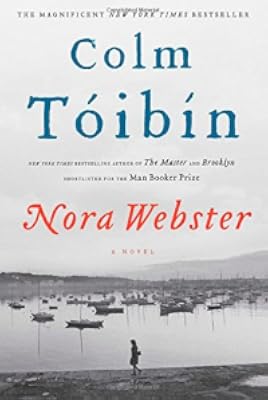
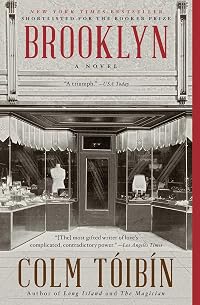
Colm Tóibín was born in Enniscorthy, Ireland in 1955. He studied history and English at University College Dublin, earning his B.A. in 1975. After graduating he moved to Barcelona for three years and taught at the Dublin School of English. In 1978 he returned to Dublin and began working on an M.A. in Modern English and American Literature. He show more wrote for In Dublin, Hibernia, and The Sunday Tribune. He became the Features Editor of In Dublin in 1981, and then a year later accepted the position of Editor for the Irish current affairs magazine Magill. His first book, Walking Along the Border, was published in 1987 and his first novel, The South, was published in 1990. He wrote for The Sunday Independent as a drama or television critic and political commentator. He writes regularly for The London Review of Books. He has written several other novels including The Story of the Night, The Blackwater Lightship, Brooklyn, The Testament of Mary, and Nora Webster. The Heather Blazing received the 1993 Encore Award and The Master received the 2006 International IMPAC Dublin Literary Award, the Stonewall Book Award, and the Lambda Literary Award. In 2015 he made The New Zealand High Profile Titles List with All The Light We Cannot See. He was short listed for the 2015 Folio Prize for his title Nora Webster. (Bowker Author Biography) show less
Some Editions
Awards and Honors
Awards
Notable Lists
Series
Belongs to Publisher Series
Tascabili [Fazi] (15)
rororo (13381)
Work Relationships
Common Knowledge
- Canonical title
- The South
- Original title
- The South
- Original publication date
- 1990; 2006
- People/Characters*
- Katherine Proctor
- Important places
- Barcelona, Catalonia, Spain; Enniscorthy, County Wexford, Ireland
- Dedication
- For Catriona Crowe
- First words
- Night is coming down and there is a hum of noise from the street.
- Last words
- (Click to show. Warning: May contain spoilers.)He stared into the fire for a moment, then turned and looked at her again.
- Publisher's editor*
- Amsterdam
- Blurbers
- De Lillo, Don
- Original language
- English
*Some information comes from Common Knowledge in other languages. Click "Edit" for more information.
Classifications
Statistics
- Members
- 502
- Popularity
- 59,939
- Reviews
- 12
- Rating
- (3.46)
- Languages
- 11 — Catalan, Dutch, English, French, German, Italian, Polish, Portuguese, Spanish, Swedish, Turkish
- Media
- Paper, Audiobook, Ebook
- ISBNs
- 31
- ASINs
- 13