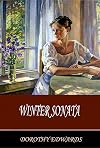
Winter Sonata
by Dorothy Edwards
On This Page
Description
As summer fades, young telegraph clerk Arnold Nettle arrives in an unspecified English village. Sickly and shy, he hopes that the season will be far less damaging to his frail disposition than another winter spent in town. Repulsed by the crude behaviour of his working-class landlady and her brood, he becomes enamoured with the middle-class Neran family, who live in a large white house on the hill. But they're not without problems of their own...Tags
Recommendations












Member Reviews
The only novel by a writer who died tragically young by her own hand. Described by a contemporary as "a precise and perfect work of art", but I don't find myself wholly in agreement with that assessment.
It's a bleak work in many ways, concentrating on "the loneliness of the human condition" - words from the blurb on Virago's edition which sum the novel up well. I can't empathise with any of the characters even though their isolation is painted so vividly and the consequences all too apparent. The weather, and the appearance of the isolated English village in which the novel is set, are a continuing negative theme in the novel's telling. Many of the characters appear badly affected by the onset of autumn and winter and the colours of the show more sky, the trees and the light are described again and again in ways which are rarely uplifting. Even when it appears that the scenery is beautiful, it is clear that few of the characters are in a position to appreciate it.
The writing is precise and there's no question that this is well-crafted. But I can't help but feel that the isolation of the characters bears some strong relation to the author's own unhappy experience of the world.
Not a book to read if you're feeling down, but worth discovering when you can cope with its bleakness. show less
It's a bleak work in many ways, concentrating on "the loneliness of the human condition" - words from the blurb on Virago's edition which sum the novel up well. I can't empathise with any of the characters even though their isolation is painted so vividly and the consequences all too apparent. The weather, and the appearance of the isolated English village in which the novel is set, are a continuing negative theme in the novel's telling. Many of the characters appear badly affected by the onset of autumn and winter and the colours of the show more sky, the trees and the light are described again and again in ways which are rarely uplifting. Even when it appears that the scenery is beautiful, it is clear that few of the characters are in a position to appreciate it.
The writing is precise and there's no question that this is well-crafted. But I can't help but feel that the isolation of the characters bears some strong relation to the author's own unhappy experience of the world.
Not a book to read if you're feeling down, but worth discovering when you can cope with its bleakness. show less
“He had arrived only the night before. It had been cold, rainy and depressing, but now on the first day here it was beautiful, as if to welcome him. Everywhere the trees were nearly bare, but a few golden leaves still clung to the black branches. The black curving lines and the gold leaves looked as if they were painted on the cold, grey sky. The sun shone quite warmly through thin clouds, but the earth had already hardened itself for winter, and did not respond.”
Winter Sonata, Dorothy Edwards’ only novel is simple, quiet and utterly beautiful.
The story opens as Arnold Nettle, who is in poor health, escaping winter in the city and arriving in a quiet village to take up a new job, as a telegraph clerk.
On his very first day he sees show more Olivia Neran through the window, and he finds himself quite besotted.
Olivia and her sister Eleanor are orphans and the live with their aunt, Mrs Curle – a woman at the very centre of village life – and their younger cousin, George.
Mr Nettle lodges with a Mrs Clark, who has a flighty teenage daughter, Pauline and a young son, Alexander.
Mrs Curle discovers that Mr Nettle plays the cello and invites him to her home. His love for her niece grows, but he is too frail, to shy for Olivia to think of him as anything more than a visiting neighbour.
Mr Nettle fades into the background as Pauline’s singing talent is discovered and another newcomer makes a much stronger impression on the village.
Life goes on.
Winter Sonata is a simple story, not too much happens, but it is a lovely book to spend time with.
It speaks clearly of how lonely the human condition can be, of how important family, friends and communities are.
And it works so well because the small cast is beautifully drawn, and the portrayal of their quiet lives is pitch perfect.
Yes, it is sad, but it is also beautiful and emotionally true.
And it is wrapped up in quite wonderful pictures of the village and the surrounding countryside, with winter overtaking autumn and then, in time, the winter fading as spring begins to emerge.
Yes, Winter Sonata is simple, quiet and utterly beautiful. show less
Winter Sonata, Dorothy Edwards’ only novel is simple, quiet and utterly beautiful.
The story opens as Arnold Nettle, who is in poor health, escaping winter in the city and arriving in a quiet village to take up a new job, as a telegraph clerk.
On his very first day he sees show more Olivia Neran through the window, and he finds himself quite besotted.
Olivia and her sister Eleanor are orphans and the live with their aunt, Mrs Curle – a woman at the very centre of village life – and their younger cousin, George.
Mr Nettle lodges with a Mrs Clark, who has a flighty teenage daughter, Pauline and a young son, Alexander.
Mrs Curle discovers that Mr Nettle plays the cello and invites him to her home. His love for her niece grows, but he is too frail, to shy for Olivia to think of him as anything more than a visiting neighbour.
Mr Nettle fades into the background as Pauline’s singing talent is discovered and another newcomer makes a much stronger impression on the village.
Life goes on.
Winter Sonata is a simple story, not too much happens, but it is a lovely book to spend time with.
It speaks clearly of how lonely the human condition can be, of how important family, friends and communities are.
And it works so well because the small cast is beautifully drawn, and the portrayal of their quiet lives is pitch perfect.
Yes, it is sad, but it is also beautiful and emotionally true.
And it is wrapped up in quite wonderful pictures of the village and the surrounding countryside, with winter overtaking autumn and then, in time, the winter fading as spring begins to emerge.
Yes, Winter Sonata is simple, quiet and utterly beautiful. show less
Winter Sonata revolves around the lives of several people in a small English village. Arnold Nettle is a shy telegraph operator, disinclined towards conversation, which nonetheless is invited to his neighbors, where he plays the cello for them in the evenings. He falls in love with Olivia, the eldest daughter, a smart, introspective young woman with good judgment about other people. Other characters in the drama include Olivia’s teenage sister Eleanor, their cousin George, his best friend Mr. Premiss, and Mr. Nettle’s landlady’s teenage daughter, Pauline.
Although the book claims to be a love story, it is mostly about the interactions between the main characters. Although part of the group, Mr. Nettle is completely detached from show more them, and it’s interesting to watch the difference between Olivia, who’s in her twenties and has a head on her shoulders, and the two teenage girls, who are both completely infatuated by Mr. Premiss—a roué who thrives on the admiration of women if ever there was one. Olivia can see what a pompous ass he is, and part of the fun of the book is watching her play around with him. Dorothy Edwards depicts the differences between these girls and women very well. There is also a subtle commentary on the stratification of social class, seen in the difference between Mrs. Clark and Pauline, and the Nerans and Curles.
Like the eponymous season, this book is somewhat bleak in its aspects; there are endless, repetitive references to the weather. In a sense, though, the weather and the characters’ moods are very similar; there’s a sense of gloominess in the tone of the book and the prose Edwards uses to describe her characters’ mental and emotional states. It’s maybe reflective of the author’s own state of mind. show less
Although the book claims to be a love story, it is mostly about the interactions between the main characters. Although part of the group, Mr. Nettle is completely detached from show more them, and it’s interesting to watch the difference between Olivia, who’s in her twenties and has a head on her shoulders, and the two teenage girls, who are both completely infatuated by Mr. Premiss—a roué who thrives on the admiration of women if ever there was one. Olivia can see what a pompous ass he is, and part of the fun of the book is watching her play around with him. Dorothy Edwards depicts the differences between these girls and women very well. There is also a subtle commentary on the stratification of social class, seen in the difference between Mrs. Clark and Pauline, and the Nerans and Curles.
Like the eponymous season, this book is somewhat bleak in its aspects; there are endless, repetitive references to the weather. In a sense, though, the weather and the characters’ moods are very similar; there’s a sense of gloominess in the tone of the book and the prose Edwards uses to describe her characters’ mental and emotional states. It’s maybe reflective of the author’s own state of mind. show less
13 Jan 2010 - from Aluvalibri from the LibraryThing Virago Group
A kind Christmas present and an absorbing, quiet read. We follow the rather dim fortunes of Arnold Nettle, who comes to a village to work in the Post Office and to try to improve his health. He lodges with one family and befriends another, yearns for one of the daughters of the other family while being nonplussed by the teenage daughter of the landlady. The seasons, as autumn deepens into winter and winter recedes and allows thoughts of spring, are absolutely beautifully observed, as is the claustrophobia and boredom of life in a house in a fairly isolated village. A bright spot comes in the form of Pauline, the wayward teenager, who doesn't care what people thing of her, show more runs after men and makes a nuisance of herself. Hugely atmospheric and much enjoyed. show less
A kind Christmas present and an absorbing, quiet read. We follow the rather dim fortunes of Arnold Nettle, who comes to a village to work in the Post Office and to try to improve his health. He lodges with one family and befriends another, yearns for one of the daughters of the other family while being nonplussed by the teenage daughter of the landlady. The seasons, as autumn deepens into winter and winter recedes and allows thoughts of spring, are absolutely beautifully observed, as is the claustrophobia and boredom of life in a house in a fairly isolated village. A bright spot comes in the form of Pauline, the wayward teenager, who doesn't care what people thing of her, show more runs after men and makes a nuisance of herself. Hugely atmospheric and much enjoyed. show less
Not a bad book, but didn’t do too much for me. It starts out as the story of Arthur Nettle, a quiet man who moves to a small town. He observes his harried landlady and her sullen teenage daughter Pauline and meets the Neran sisters, Olivia and Eleanor. Nettle falls in love with Olivia, but it’s something he can’t even mention. Their cousin, George Curle, takes him up even though he rarely talks. In the second part, George’s friend David Premiss comes to visit and flirts – though not seriously – with all three women.
The small-town atmosphere was nice, I enjoyed reading the descriptions of the natural setting and some class differences were conveyed in an understated way but this one failed to really engage me. Possibly I show more couldn’t connect with the characters. I thought George and his mother, Mrs. Curle, were underdeveloped and Nettle remains just a shy man with an unattainable crush. Pauline comes off as your typical sulky, self-involved teenager though her mother sees her as an accident waiting to happen. Happily, there’s no punishment for her for just being a silly teenager. Olivia and Eleanor were nicely distinguished and Premiss was interesting because he was a little infuriating. The book does form a sonata-like structure – the first theme is Nettle, various developments occur though the theme stays the same, then this gives way to a second theme, Premiss, where developments are all his little flirtations with small variations. In the end, the first theme returns, in a slightly different key. show less
The small-town atmosphere was nice, I enjoyed reading the descriptions of the natural setting and some class differences were conveyed in an understated way but this one failed to really engage me. Possibly I show more couldn’t connect with the characters. I thought George and his mother, Mrs. Curle, were underdeveloped and Nettle remains just a shy man with an unattainable crush. Pauline comes off as your typical sulky, self-involved teenager though her mother sees her as an accident waiting to happen. Happily, there’s no punishment for her for just being a silly teenager. Olivia and Eleanor were nicely distinguished and Premiss was interesting because he was a little infuriating. The book does form a sonata-like structure – the first theme is Nettle, various developments occur though the theme stays the same, then this gives way to a second theme, Premiss, where developments are all his little flirtations with small variations. In the end, the first theme returns, in a slightly different key. show less
an interesting book where NOTHING happens really.
Ratings
Members
- Recently Added By
Author Information

3 Works 271 Members
Series
Belongs to Publisher Series
Common Knowledge
- Canonical title
- Winter Sonata
- Original publication date
- 1928
- Epigraph
- Hat der Winter kurzen tac
so hat er die langen naht
daz sich liep bi liebe mac
wol erholn, daz e da vaht.
Waz han ich gesproken? owe ja
haete ich baz geswigen
sol ich iemer so geligen.
Walter von der Voge... (show all)lweide
(Lob des Winters). - Dedication
- To
S.B.J. and W.K. - First words
- It was a beautifully fine day; the sun shone and it was warm.
Dorothy Edwards was born in 1903, the loved and only child of a pioneering Shavian socialist and vegetarian who had glimpsed the imminent dawn of a new and better age when all men - and women, too - would live together in pea... (show all)ce and comradeship; and Dorothy's early upbringing was apparently designed to fit her for life in that brave new world. (Introduction) - Last words
- (Click to show. Warning: May contain spoilers.)He looked round to make sure that he had heard what she said, then he went across the garden to the gate, bending his head to look carefully on the ground for the little flowers.
(Click to show. Warning: May contain spoilers.)For all her admirers it is a sad reflection that this is the last tune she ever composed. (Introduction)
Classifications
Statistics
- Members
- 143
- Popularity
- 230,202
- Reviews
- 6
- Rating
- (3.28)
- Languages
- English
- Media
- Paper, Audiobook, Ebook
- ISBNs
- 5
- ASINs
- 2