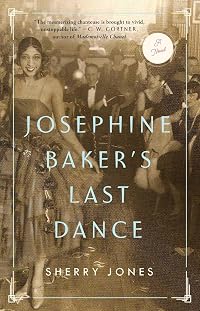
Josephine Baker's Last Dance
by Sherry Jones 
On This Page
Description
"From the author of The Jewel of Medina, a moving and insightful novel based on the life of legendary performer and activist Josephine Baker, perfect for fans of The Paris Wife and Hidden Figures. Discover the fascinating and singular life story of Josephine Baker--actress, singer, dancer, Civil Rights activist, member of the French Resistance during WWII, and a woman dedicated to erasing prejudice and creating a more equitable world--in Josephine Baker's Last Dance. In this illuminating show more biographical novel, Sherry Jones spans Josephine's early years in servitude and poverty in America, to her rise to fame as a showgirl in her famous banana skirt, to her activism against discrimination, and her many loves and losses. From 1920s Paris to 1960s Washington, to her final, triumphant performance, one of the most extraordinary lives of the twentieth century comes to stunning life on the page. With intimate prose and comprehensive research, Sherry Jones brings this remarkable and compelling public figure into focus for the first time in a joyous celebration of a life lived in technicolor, a powerful woman who continues to inspire today"-- show lessTags
Recommendations




















Member Reviews
Josephine Baker’s Last Dance by Sherry Jones is a biographical novel about American Josephine Baker, who, because of her race, had to go to France in the 1920s to be declared the entertaining star that she was. She lived life on the edge whether she was struggling as a poor black child in St. Louis or achieving fame by dancing partially nude on the stage of the Folies Bergere. But there was more to this woman than what was shown on stage, she was equally at home in the uniform of the French Air Force, or working with the French Resistance during World War II, for which she was awarded the Resistance Medal and the Croix de Guerre. She also spent time as a Civil Rights Activist and was the only woman invited to speak at the 1963 March show more on Washington. Unfortunately she was never able to attain popularity in the United States and her star turn in the 1936 Ziegfeld Follies was not commercially successful.
The author brings this vibrant personality to life on these pages. As Josephine Baker conquers Paris in the Jazz Age we read of her transformation and her interactions with some of the greatest artists of the day among them, Pablo Picasso, Ernest Hemingway, Cole Porter and George Gershwin. Her romantic life was very bumpy but she never gave up her search for love and acceptance. The words “too young, too dark, too ugly” haunted her and her celebrity status at times was much more important to her than being faithful in a relationship. Josephine’s rise to stardom took place in France but meanwhile the Nazi party and Hitler were rising in Germany and soon cast their shadow over all of Europe.
I thoroughly enjoyed Josephine Baker’s Last Dance not only for learning about this intriguing personality, but also for the author’s wonderful writing and creative research which brought the setting and the times vividly to life. show less
The author brings this vibrant personality to life on these pages. As Josephine Baker conquers Paris in the Jazz Age we read of her transformation and her interactions with some of the greatest artists of the day among them, Pablo Picasso, Ernest Hemingway, Cole Porter and George Gershwin. Her romantic life was very bumpy but she never gave up her search for love and acceptance. The words “too young, too dark, too ugly” haunted her and her celebrity status at times was much more important to her than being faithful in a relationship. Josephine’s rise to stardom took place in France but meanwhile the Nazi party and Hitler were rising in Germany and soon cast their shadow over all of Europe.
I thoroughly enjoyed Josephine Baker’s Last Dance not only for learning about this intriguing personality, but also for the author’s wonderful writing and creative research which brought the setting and the times vividly to life. show less
Josephine Baker, born in 1906 to a poor family in St. Louis, was used pretty much as a slave from the time she could walk. Her mother put her out to white families as a live in servant, with Josephine’s pay going to her. Josephine never saw anything of it. Worse, she was sexually abused starting at an early age. But she was determined that she would be a dancer and singer; it was the one way she could see out of her impoverished situation. She just needed to get a chance….She was told by producers that she was too skinny, too dark, and didn’t have a strong enough voice to be a chanteuse. She was relegated to the chorus line in all people of color reviews.
But in 1925 she sailed to Paris and started breaking down barriers. She was show more the first woman of color on a Paris stage, the first to star in a movie, the first to sing in an opera. But her most famous act is, sadly, something that started as sarcasm. She was designing her own costumes in Paris. The man in charge, however, thought she was trying to dress too elegantly. So she drew her next costume as a skirt (a belt, really) of bananas and nothing else. That, of course, is what the costume maker produced and that is what she danced in for many performances, and that is the picture that will come up first when you Google her.
In Paris she was received as an equal, not some subhuman servant like she was see in the US. She was the center of any party, the star of the stage. She rubbed elbows with the American ex-pats. Of course, the Nazis came and everything went to hell. So she did what any rebel would do- she joined the French Resistance. As a star and party giver, she had access to the Nazi bigwigs who didn’t know she spoke German. She risked her life giving information to the Resistance- and then spent time flying supplies for the Red Cross.
This was all exciting. After the war she led a much quieter life. She adopted 12 children, of different races and cultures. She tried to come back to the US, but found herself denied service in restaurants and denied rooms in hotels. She was treated like dirt.
I loved the book, but the last part of her life was rushed over. What became of all her children? What kind of relationships did she have with them? After her last big performance- a production that frames the story- what did she do? I know she worked for equality. How did she die? Who was with her then? But it’s still a five star book, because I couldn’t put it down. She was a fascinating woman, and lived her life to the fullest. show less
But in 1925 she sailed to Paris and started breaking down barriers. She was show more the first woman of color on a Paris stage, the first to star in a movie, the first to sing in an opera. But her most famous act is, sadly, something that started as sarcasm. She was designing her own costumes in Paris. The man in charge, however, thought she was trying to dress too elegantly. So she drew her next costume as a skirt (a belt, really) of bananas and nothing else. That, of course, is what the costume maker produced and that is what she danced in for many performances, and that is the picture that will come up first when you Google her.
In Paris she was received as an equal, not some subhuman servant like she was see in the US. She was the center of any party, the star of the stage. She rubbed elbows with the American ex-pats. Of course, the Nazis came and everything went to hell. So she did what any rebel would do- she joined the French Resistance. As a star and party giver, she had access to the Nazi bigwigs who didn’t know she spoke German. She risked her life giving information to the Resistance- and then spent time flying supplies for the Red Cross.
This was all exciting. After the war she led a much quieter life. She adopted 12 children, of different races and cultures. She tried to come back to the US, but found herself denied service in restaurants and denied rooms in hotels. She was treated like dirt.
I loved the book, but the last part of her life was rushed over. What became of all her children? What kind of relationships did she have with them? After her last big performance- a production that frames the story- what did she do? I know she worked for equality. How did she die? Who was with her then? But it’s still a five star book, because I couldn’t put it down. She was a fascinating woman, and lived her life to the fullest. show less
This is a re-read for me. Thus, this is a highly modified review previously written. While I heard of Josephine Baker, I did not know the details of her life. Born in severe poverty to a non existent (perhaps white) father, and a very physically and verbally abusive mother, she rose above it all through sheer determination.
Told she was too black, too ugly, and too stupid, she showed her adversaries and the world that a poor girl could become a world wide star. Her career started in Paris, France where she was known as the 19 year old girl who danced naked on the stage, rising to fame in her famous banana skirt dance.
Embraced in France, when she returned to the United States, she once again was saddened by the extreme prejudice and show more discrimination toward blacks at the hands of the white majority.
Strong and feisty, she refused to perform where blacks were prohibited. Rising to fame by her activism, she spoke at the Washington, DC March for jobs and freedom. Her inspiring words were spoken immediately before Martin Luther King and helped solidify the tone of MLK's speech.
Becoming a member of the French Resistance during World War II, she helped others defy Hitler and his reign of terror.
This is a fascinating study of a woman who refused to remain where people wanted her to stay when she was told she did not know her place! I admit to feeling prudish because the book contained quite a bit of sexual activity, and promiscuity. She was as free with her body as she was with her dance and song. show less
Told she was too black, too ugly, and too stupid, she showed her adversaries and the world that a poor girl could become a world wide star. Her career started in Paris, France where she was known as the 19 year old girl who danced naked on the stage, rising to fame in her famous banana skirt dance.
Embraced in France, when she returned to the United States, she once again was saddened by the extreme prejudice and show more discrimination toward blacks at the hands of the white majority.
Strong and feisty, she refused to perform where blacks were prohibited. Rising to fame by her activism, she spoke at the Washington, DC March for jobs and freedom. Her inspiring words were spoken immediately before Martin Luther King and helped solidify the tone of MLK's speech.
Becoming a member of the French Resistance during World War II, she helped others defy Hitler and his reign of terror.
This is a fascinating study of a woman who refused to remain where people wanted her to stay when she was told she did not know her place! I admit to feeling prudish because the book contained quite a bit of sexual activity, and promiscuity. She was as free with her body as she was with her dance and song. show less
I'm not sure why I haven't heard more of Josephine Baker, because her life is too fascinating for only one novelist to tackle it. Growing up in poverty and segregated St. Louis, Josephine rises to fame in the 1920s and finds a home in Paris, France, where her performances become a symbol of the Jazz Age. She continues, with personal ups and downs, to sing and dance through the 30s, 40s, 50s, and 60s. She had a bad manager who stole her own money, she aided the French Resistance, she refused to perform for segregated audiences, and she adopted a tribe of mixed race children and gave them a home at her French chateau. Josephine was a fascinating woman and in some ways, I felt like this novel was just a teaser about her life. I want to show more know more and hopefully others find this story just as fascinating. show less
Josephine Baker is well know for her dancing and singing and wild routines. However, her childhood growing up in Missouri, how she began in show business and her activism during World War II is less known. Josephine's rise to fame was anything but smooth as she endured poverty, racism, and sexual abuse. Through her own fortitude and determination Josephine carved a place out for herself in the entertainment industry and the world.
As a dancer, Josephine Baker is someone I have learned about and idolized. Through this biographical story we are carried through the lesser known ups and downs of Josephine's exciting and controversial life. The opening scene absolutely dazzled me as we are thrown into Josephine's preparations for what would show more be her last performance. This is a perfect introduction to the person who is a true force of nature and a true performer. This introduction gave just enough hints into Josephine's life to keep me wondering about her life. The elegant writing conveyed the highs and lows of the journey through Josephine's life and the emotions that went alongside of it. I was constantly amazed at how Josephine pulled herself up again and again and continued to add good to the world after all that she went through. Josephine Baker's Last Dance is a whirlwind of an inspirational story of a remarkable woman.
This book was received for free in return for an honest review. show less
As a dancer, Josephine Baker is someone I have learned about and idolized. Through this biographical story we are carried through the lesser known ups and downs of Josephine's exciting and controversial life. The opening scene absolutely dazzled me as we are thrown into Josephine's preparations for what would show more be her last performance. This is a perfect introduction to the person who is a true force of nature and a true performer. This introduction gave just enough hints into Josephine's life to keep me wondering about her life. The elegant writing conveyed the highs and lows of the journey through Josephine's life and the emotions that went alongside of it. I was constantly amazed at how Josephine pulled herself up again and again and continued to add good to the world after all that she went through. Josephine Baker's Last Dance is a whirlwind of an inspirational story of a remarkable woman.
This book was received for free in return for an honest review. show less
This was a riveting, well researched, fact based though slightly embellished account of the life of Josephine Baker from her childhood and beyond her rise to fame, becoming the highest paid black performer in the world. Since Josephine is no longer with us to be able to share her intimate thoughts, there was a good mix of story telling and facts. It held me captivated from start to finish as Josephine grew from a poverty stricken neglected child to a strong willed woman who stood along side MLK to fight for civil rights.
I received an advance copy for review.
I received an advance copy for review.
Born into poverty, Josephine was a wild and rambunctious girl. To tame her, her parents sent her off to work in the homes of the wealthy as a maid. Time and time again she returned home, desperate for her parents love. Trying to find a place in the world, she began dancing comedic roles. Her talent quickly landed her a job and she found herself working in Paris. Looking for better opportunities, Josephine took the role of the "savage dancer," becoming the first topless black dancer in Paris. Her fame spiraled from there. Throughout the book, Josephine continually found, and then lost, love, something she craved more than anything.
Although this was an interesting book, the author continually skipped huge periods of time, and then told show more about them in a paragraph or two. There was a time that she was in America and she decided to leave her man, the Count. Suddenly, it was two years later. Briefly the author mentioned that she had married and converted to Judaism. Why did the author skip over that time? Also, there was a brief mention of adopting children, and then nothing. What about the time she spent adopting and raising children? The book was well written, however, it skipped over too many important events. Wikipedia gave me more information on some periods of her life than this book did. Overall, a bust. show less
Although this was an interesting book, the author continually skipped huge periods of time, and then told show more about them in a paragraph or two. There was a time that she was in America and she decided to leave her man, the Count. Suddenly, it was two years later. Briefly the author mentioned that she had married and converted to Judaism. Why did the author skip over that time? Also, there was a brief mention of adopting children, and then nothing. What about the time she spent adopting and raising children? The book was well written, however, it skipped over too many important events. Wikipedia gave me more information on some periods of her life than this book did. Overall, a bust. show less
Members
- Recently Added By
Lists

Left Bank Lit - Paris in the Interwar Decades
20 works; 2 members
Author Information

6 Works 801 Members
Sherry Jones is a LibraryThing Author, an author who lists their personal library on LibraryThing.
Awards and Honors
Awards
Classifications
Statistics
- Members
- 129
- Popularity
- 253,077
- Reviews
- 13
- Rating
- (3.34)
- Languages
- English
- Media
- Paper, Audiobook, Ebook
- ISBNs
- 6
- ASINs
- 2