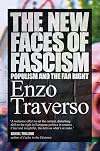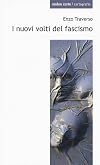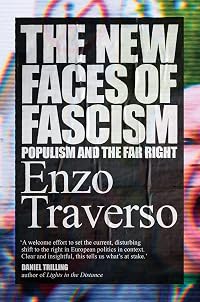
The New Faces of Fascism: Populism and the Far Right
by Enzo Traverso
On This Page
Description
"What does fascism mean at the beginning of the twenty-first century? When we say the word, our memory goes back to the years right between the two world wars and envisions a dark landscape of violence, dictatorships, and genocide. These images spontaneously surface in the face of the rise of the radical right, racism, xenophobia, islamophobia and terrorism, the last of which is often depicted as a form of "Islamic fascism'. Beyond some superficial analogies, however, all these contemporary show more tendencies reveal many differences from historical fascism, probably greater than their affinities. Paradoxically, the fear of terrorism nourishes the populist and racist rights with Marine Le Pen in France or Donald Trump in the US claiming to be the most effective ramparts against "Jihadist fascism'. But since fascism was a product of imperialism, can we define as fascist a terrorist movement whose main target is Western domination? Disentangling these contradictory threads, Enzo Traverso's historical gaze helps to decipher the enigmas of the present. He suggests the concept of post-fascism--a hybrid phenomenon, neither the reproduction of old fascism nor something completely different--to define a set of heterogeneous and transitional movements, suspended between an accomplished past still haunting our memories and an unknown future"-- show lessTags
Recommendations













Member Reviews
What does Fascism mean at the beginning of the twenty-first century? When we pronounce this word, our memory goes back to the years between the two world wars and envisions a dark landscape of violence, dictatorships, and genocide. These images spontaneously surface in the face of the rise of radical right, racism, xenophobia, islamophobia and terrorism, the last of which is often depicted as a form of "Islamic fascism."
Beyond some superficial analogies, however, all these contemporary tendencies reveal many differences from historical fascism, probably greater than their affinities. Paradoxically, the fear of terrorism nourishes the populist and racist rights, with Marine Le Pen in France or Donald Trump in the US claiming to be the show more most effective ramparts against "Jihadist fascism". But since fascism was a product of imperialism, can we define as fascist a terrorist movement whose main target is Western domination? Disentangling these contradictory threads, Enzo Traverso's historical gaze helps to decipher the enigmas of the present. He suggests the concept of post-fascism--a hybrid phenomenon, neither the reproduction of old fascism nor something completely different--to define a set of heterogeneous and transitional movements, suspended between an accomplished past still haunting our memories and an unknown future. show less
Beyond some superficial analogies, however, all these contemporary tendencies reveal many differences from historical fascism, probably greater than their affinities. Paradoxically, the fear of terrorism nourishes the populist and racist rights, with Marine Le Pen in France or Donald Trump in the US claiming to be the show more most effective ramparts against "Jihadist fascism". But since fascism was a product of imperialism, can we define as fascist a terrorist movement whose main target is Western domination? Disentangling these contradictory threads, Enzo Traverso's historical gaze helps to decipher the enigmas of the present. He suggests the concept of post-fascism--a hybrid phenomenon, neither the reproduction of old fascism nor something completely different--to define a set of heterogeneous and transitional movements, suspended between an accomplished past still haunting our memories and an unknown future. show less
Very helpful distillation of the present moment. Several brilliant chapters spent drawing distinctions between the various 20th century flavors of European fascism.
Another chapter contrasting Stalinism and Nazism is very well done.
It may be the case that fascism and totalitarianism as political definitions are spent, and we must find new logic and arguments for the present moment.
Traverso is confident we will.
Another chapter contrasting Stalinism and Nazism is very well done.
It may be the case that fascism and totalitarianism as political definitions are spent, and we must find new logic and arguments for the present moment.
Traverso is confident we will.
Ratings
Members
- Recently Added By
Lists

Books Read in 2020
4,379 works; 124 members

Résister au fascisme
35 works; 2 members
Author Information

28+ Works 1,003 Members
Enzo Traverso (1957) is Susan and Barton Winokur Professor in the Humanities at Cornell University. He has taught in different countries and published many books, translated into a dozen languages, among which are Fire and Blood: The European Civil War (Verso, 2016) and Left-Wing Melancholia (Columbia University Press, 2017).
Common Knowledge
- Original publication date
- 2019
Classifications
- Genres
- Politics and Government, Nonfiction, History, General Nonfiction, Philosophy, Religion & Spirituality
- DDC/MDS
- 320.53 — Society, government, & culture Political science Types of Government Political ideologies Radicalism, collectivism, fascism
- LCC
- JC481 .T69413 — Political Science Political theory Political theory. The state. Theories of the state Forms of the state
- BISAC
Statistics
- Members
- 93
- Popularity
- 346,390
- Reviews
- 2
- Rating
- (3.57)
- Languages
- 5 — English, French, Italian, Portuguese (Portugal), Spanish
- Media
- Paper, Ebook
- ISBNs
- 11
- ASINs
- 3