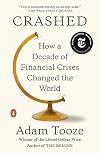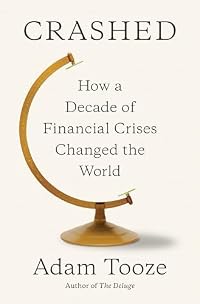
Crashed: How a Decade of Financial Crises Changed the World
by Adam Tooze
On This Page
Description
Looks at the ways that current dramatic shifts in the domestic and global economy have their roots in the 2008 economic crisis and its aftermath, exploring novel themes in the way the crisis has played out for the past decade and will influence the future.Tags
Recommendations




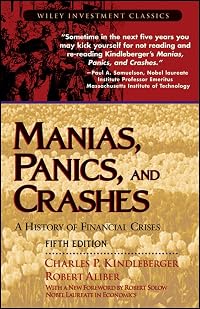
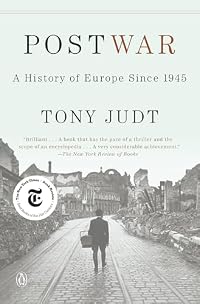
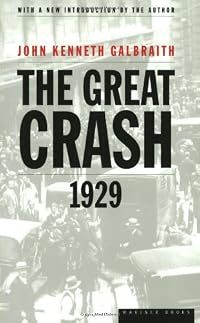
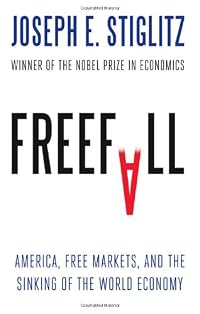


Member Recommendations
Member Reviews
This was a really good book. Adam Tooze is clearly an expert in research as a general subject, and he applies himself fully to research of the 2007-2009 financial crisis and its aftermath in 'Crashed'.
Be warned, this does come off as a dense and dry read at times. Tooze specializes in data-based research, which is (in my opinion) the right way to conduct a book such as this. Really, you can't go wrong with too much data: I would much rather be drowned in data and sources than be inundated with claims that have no references. In this category, Tooze is one of the best to do it, period.
A few particular sections I found worth commenting on. Pages 176-177 were, for me, the best and most succinct explanation to the question of why Lehman show more was allowed to fail. There is (correctly) a lot of furor over whether this was the right thing to do and if it was politically motivated, but Tooze does a very good job at telling this particular story. He validates the belief of many that the Treasury and Fed were not as cooperative as they could have (or should have) been. It doesn't answer all questions, but does add some needed color to the situation, even more than a decade later.
I enjoyed Pages 186-189, if 'enjoyed' is the correct word, because it added another piece of evidence to the credible case that Europe simply cannot get out of its own way. In this situation, Germany was seen deliberately avoiding calls and contact with Britain at times, how they believed it was "just America's problem". Perhaps most comical was when the EU 'heavyweights' refused to help Ireland in the midst of their crisis, so Ireland took unilateral action to try and save their banking system, then Germany & Co. rebuked Ireland ... and then Angela Merkel proceeded to take her own unilateral action days later. This only adds to decades of seeming incompetence going back to at least the nonsenical grumblings prior to (and during) WWII... not a great trend.
In hindsight, it appears absolutely psychotic that the ECB, Germany, and really a large portion of the Eurozone simply and deliberately steered Greece off the cliff and made it into a crisis. As Tooze states repeatedly, if the ECB had taken QE steps similar to what the Federal Reserve did, this crisis would have been magnitudes less dramatic than it ended up being. Still bad, sure, but not something that threatened the entire eurozone. The behavior is almost indefensible.
It's almost laughable how incompetent the supposed heavyweights and standard-bearers of the eurozone ended up being in this crisis. Page 361 describes the French-German unilateral Deauville shock; it's the same as how you can't leave a child alone for more than two seconds or something bad will happen.
Perhaps the best way to close this tome was on Page 430: "It was a staggering admission. Bad economics and faulty empirical assumptions had led the IMF to advocate a policy that destroyed the economic prospects for a generation of young people in southern Europe." The entire 'troika' is to blame.
Four stars for a book that gave some much-needed clarity to the global but especially Eurozone aspects of the 2007-2009 and beyond crisis, but can be somewhat tedious at times (simply a function of the mass of data and research required for this subject). Certainly worth reading. show less
Be warned, this does come off as a dense and dry read at times. Tooze specializes in data-based research, which is (in my opinion) the right way to conduct a book such as this. Really, you can't go wrong with too much data: I would much rather be drowned in data and sources than be inundated with claims that have no references. In this category, Tooze is one of the best to do it, period.
A few particular sections I found worth commenting on. Pages 176-177 were, for me, the best and most succinct explanation to the question of why Lehman show more was allowed to fail. There is (correctly) a lot of furor over whether this was the right thing to do and if it was politically motivated, but Tooze does a very good job at telling this particular story. He validates the belief of many that the Treasury and Fed were not as cooperative as they could have (or should have) been. It doesn't answer all questions, but does add some needed color to the situation, even more than a decade later.
I enjoyed Pages 186-189, if 'enjoyed' is the correct word, because it added another piece of evidence to the credible case that Europe simply cannot get out of its own way. In this situation, Germany was seen deliberately avoiding calls and contact with Britain at times, how they believed it was "just America's problem". Perhaps most comical was when the EU 'heavyweights' refused to help Ireland in the midst of their crisis, so Ireland took unilateral action to try and save their banking system, then Germany & Co. rebuked Ireland ... and then Angela Merkel proceeded to take her own unilateral action days later. This only adds to decades of seeming incompetence going back to at least the nonsenical grumblings prior to (and during) WWII... not a great trend.
In hindsight, it appears absolutely psychotic that the ECB, Germany, and really a large portion of the Eurozone simply and deliberately steered Greece off the cliff and made it into a crisis. As Tooze states repeatedly, if the ECB had taken QE steps similar to what the Federal Reserve did, this crisis would have been magnitudes less dramatic than it ended up being. Still bad, sure, but not something that threatened the entire eurozone. The behavior is almost indefensible.
It's almost laughable how incompetent the supposed heavyweights and standard-bearers of the eurozone ended up being in this crisis. Page 361 describes the French-German unilateral Deauville shock; it's the same as how you can't leave a child alone for more than two seconds or something bad will happen.
Perhaps the best way to close this tome was on Page 430: "It was a staggering admission. Bad economics and faulty empirical assumptions had led the IMF to advocate a policy that destroyed the economic prospects for a generation of young people in southern Europe." The entire 'troika' is to blame.
Four stars for a book that gave some much-needed clarity to the global but especially Eurozone aspects of the 2007-2009 and beyond crisis, but can be somewhat tedious at times (simply a function of the mass of data and research required for this subject). Certainly worth reading. show less
Tooze follows the crisis from mortgages in the US (where many of the big players were not technically US banks, but the crisis was perceived as US-driven anyway) to the Eurozone crisis a few years later. He argues that these were really the same underlying problems, although one looked like a public balance sheet problem and one looked like a private problem; only the US proved capable of truly taking on the challenge of putting enough liquidity into the system. He also explains how other economies, particularly China’s, responded (China built a lot of infrastructure to keep its economy growing, and now they have empty cities instead of accounting balance sheets; query if that’s any better).
A magisterial exploration of the global economy leading up to and through the Great Recession of 2008 and its fallout for the next decade.
The author considers the events of 2007 and 2008 and the political and economic decisions made for thirty years which led to the economic crisis. He lays out, in about the most comprehensible terminology possible, what exactly happened, and the nature of the crisis: yes, precipitated by all the bad mortgage backed securities and credit default swaps with inflated ratings, but really the political mistake of letting Lehman Brothers go bankrupt and the freezing of the credit market that followed.
Yet the author's real emphasis is on the European side of the crisis: he sets forth how the US Fed became show more the fund for the whole world in ways which were not made much of publicly at the time. He reveals how exposed European banks were to the financial products America was selling, and examined the various EU crises of 2010-2013 as political farce which led to profound social and economic devastation for Southern Europe in order to placate German obstruction, and all ultimately for naught, since the actions the Americans took to stabilize their market would eventually be what the EU would have to do for its own.
The author also establishes how the turn toward nationalism, far right candidates, and especially Trump and Brexit are direct consequences of the economic crisis, even if only realized 8 years later. He also discusses the response in Asia and other places and how the financial crisis provided China and Russia with opportunities to challenge America as the solitary superpower.
No doubt this work will become one of the standard resources on the 2008 financial crisis and its effects. Worth the read. show less
The author considers the events of 2007 and 2008 and the political and economic decisions made for thirty years which led to the economic crisis. He lays out, in about the most comprehensible terminology possible, what exactly happened, and the nature of the crisis: yes, precipitated by all the bad mortgage backed securities and credit default swaps with inflated ratings, but really the political mistake of letting Lehman Brothers go bankrupt and the freezing of the credit market that followed.
Yet the author's real emphasis is on the European side of the crisis: he sets forth how the US Fed became show more the fund for the whole world in ways which were not made much of publicly at the time. He reveals how exposed European banks were to the financial products America was selling, and examined the various EU crises of 2010-2013 as political farce which led to profound social and economic devastation for Southern Europe in order to placate German obstruction, and all ultimately for naught, since the actions the Americans took to stabilize their market would eventually be what the EU would have to do for its own.
The author also establishes how the turn toward nationalism, far right candidates, and especially Trump and Brexit are direct consequences of the economic crisis, even if only realized 8 years later. He also discusses the response in Asia and other places and how the financial crisis provided China and Russia with opportunities to challenge America as the solitary superpower.
No doubt this work will become one of the standard resources on the 2008 financial crisis and its effects. Worth the read. show less
This is a tome. Comprehensive, well-written, balanced, but written for real students of the Great Recession and the political and economic fallout that followed. We are clearly living with the reverberations and upheaval that resulted from the crash and the drama is still being played out. The chapters on Europe bogged down a bit, but are still vital to the story. The U.S. Fed and Treasury responded in creative and timely ways that saved both Europe and the U.S. from real calamity. Crashed and Fault Lines by Raghuram Rajan are must reads if you really want to grasp the enormity and complexity of the event.
Massive history of the ten years around the 2008 crash. The actual crash part is just fascinating to relieve and view through this much wider aperture of a world reaching crisis. The complexity, the terror, the after effects. Nothing happens in a vacuum.
"Crashed" is a global economic history spanning the past decade of rolling financial crises—moving from the subprime mortgage crisis in the US, to the Eurozone crisis, to the Chinese stock market turbulence of 2015.
Some of my key takeaways:
THE US SUBPRIME CRISIS WAS FUELED BY EUROPEAN CAPITAL
Although the real-estate development underlying the derivatives that fueled the 2008 financial crisis had their center of gravity in the US, it was European investment capital that fueled supercharged the bubble. Europe still has significantly more financial capital than the United States, and this results in massive investment in US equities.
DON'T EXPECT GLOBAL LEADERSHIP FROM EUROPE
The term "Eurozone" is misleading, as it implies some kind of show more coherent whole, maybe like the United States of America. Eurozone countries have open borders to member nations, and a share currency.
Greek represents roughly 1.5% of Eurozone GDP (pocket change) and the fact that other member countries were unwilling to either buy Greek bonds or write off Greek debt illustrates that Europe is close to a set of warring nations than allies.
Whereas the Federal Reserve in the US has a dual role, of have an inflation target and keeping unemployment low, the European Central Bank cares solely about currency value. The fact that Spain has 40% unemployment illustrates that the ECB is willing to drive member nations into the ground.
CHINA HAD A CRASH IN 2015
Maybe you didn't hear about it, but China recently had a 50% devaluation in stocks. As China steps up to take the role of dominant global economic powerhouse, it will be further integrated into the global economy. More integration means more liquidity, and more volatility.
In conclusion, "Crashed" drives home the idea that we haven't actually made it to the other side of the financial crises that began a decade ago, and that we, if anything, might actually be more ill-equipped to deal with the next crisis (which could be just around the corner). If you're interested in current global economic affairs, this is a great book for you. show less
Some of my key takeaways:
THE US SUBPRIME CRISIS WAS FUELED BY EUROPEAN CAPITAL
Although the real-estate development underlying the derivatives that fueled the 2008 financial crisis had their center of gravity in the US, it was European investment capital that fueled supercharged the bubble. Europe still has significantly more financial capital than the United States, and this results in massive investment in US equities.
DON'T EXPECT GLOBAL LEADERSHIP FROM EUROPE
The term "Eurozone" is misleading, as it implies some kind of show more coherent whole, maybe like the United States of America. Eurozone countries have open borders to member nations, and a share currency.
Greek represents roughly 1.5% of Eurozone GDP (pocket change) and the fact that other member countries were unwilling to either buy Greek bonds or write off Greek debt illustrates that Europe is close to a set of warring nations than allies.
Whereas the Federal Reserve in the US has a dual role, of have an inflation target and keeping unemployment low, the European Central Bank cares solely about currency value. The fact that Spain has 40% unemployment illustrates that the ECB is willing to drive member nations into the ground.
CHINA HAD A CRASH IN 2015
Maybe you didn't hear about it, but China recently had a 50% devaluation in stocks. As China steps up to take the role of dominant global economic powerhouse, it will be further integrated into the global economy. More integration means more liquidity, and more volatility.
In conclusion, "Crashed" drives home the idea that we haven't actually made it to the other side of the financial crises that began a decade ago, and that we, if anything, might actually be more ill-equipped to deal with the next crisis (which could be just around the corner). If you're interested in current global economic affairs, this is a great book for you. show less
Crashed is a book that is blessed with superb hindsight. It is a timely exploration of the causes and effects of the Global Financial Crises that swept out savings and small banks alike. Ten years later and there are still jobs that just aren’t coming back, while the wealthy continue to accrue more wealth.
The really interesting part of this book is the connection of dozens of threads leading to the collapse of the Economic System. It is exhaustively researched, as one can usually tell with books of this length. In fact, this book was so lengthy, that I did something I rarely do and took some notes. Generally, I read books to gain knowledge and enjoy myself. I don’t like having to take notes since that makes it feel a bit too much show more like I am in school.
The book is a bit hard going if you don’t read publications like the Wall Street Journal. For instance, I have heard of Fannie Mae and Freddie Mac, but what exactly are they? Well, the book talks about that, but it lays a ton of jargon on you all at once. It is fascinating to read and see all of the mistakes and errors that were created.
With my personal stance on this sort of thing, it is easy to see why I am not a banker or manager of risk. I don’t believe that people should be given loans that they have no possible way to pay. The Subprime Mortgage Crisis is just a small drop though. How did that small drop create a veritable tsunami capable of sweeping the globe? Well, the author, Adam Tooze discusses all of this and more.
Even if you need to have Wikipedia open on a web browser so that you can find out what an Asset-Backed Commercial Paper is, this book might be well worth your time. show less
The really interesting part of this book is the connection of dozens of threads leading to the collapse of the Economic System. It is exhaustively researched, as one can usually tell with books of this length. In fact, this book was so lengthy, that I did something I rarely do and took some notes. Generally, I read books to gain knowledge and enjoy myself. I don’t like having to take notes since that makes it feel a bit too much show more like I am in school.
The book is a bit hard going if you don’t read publications like the Wall Street Journal. For instance, I have heard of Fannie Mae and Freddie Mac, but what exactly are they? Well, the book talks about that, but it lays a ton of jargon on you all at once. It is fascinating to read and see all of the mistakes and errors that were created.
With my personal stance on this sort of thing, it is easy to see why I am not a banker or manager of risk. I don’t believe that people should be given loans that they have no possible way to pay. The Subprime Mortgage Crisis is just a small drop though. How did that small drop create a veritable tsunami capable of sweeping the globe? Well, the author, Adam Tooze discusses all of this and more.
Even if you need to have Wikipedia open on a web browser so that you can find out what an Asset-Backed Commercial Paper is, this book might be well worth your time. show less
Members
- Recently Added By
Published Reviews
ThingScore 100
I once heard a history professor describe another history professor I knew as ‘a very good, old-fashioned narrative historian’. I wasn’t entirely sure what he meant but I got the pejorative message. Well, call me old-fashioned as well, because I like a historian who sets out to tell me what happened. Which is exactly what Professor Tooze does.
...
This is a great book to which I cannot do show more justice in a review. There is a particular pleasure to be had engaging with a really big brain and Tooze has one. show less
...
This is a great book to which I cannot do show more justice in a review. There is a particular pleasure to be had engaging with a really big brain and Tooze has one. show less
added by davidgn
Author Information

12+ Works 2,516 Members
Adam Tooze teaches in the history faculty, University of Cambridge.
Some Editions
Awards and Honors
Awards
Distinctions
Notable Lists
Common Knowledge
- Canonical title
- Crashed: How a Decade of Financial Crises Changed the World
- Original title
- Crashed. How a Decade of Financial Crises Changed the World
- Original publication date
- 2018
- Important events
- Financial Crisis of 2008; Financial Crisis of 2012
- Epigraph*
- /
- Dedication*
- /
- First words*
- Introduction
La première crise d'une ère mondialisée
Le mardi 16 septembre 2008 restera « le lendemain de Lehman », le jour où les marchés financiers mondiaux se sont immobilisés. [...] - Original language*
- Anglais (Royaume-Uni) (Royaume-Uni)
*Some information comes from Common Knowledge in other languages. Click "Edit" for more information.
Classifications
Statistics
- Members
- 692
- Popularity
- 41,044
- Reviews
- 11
- Rating
- (4.19)
- Languages
- 7 — Chinese, Dutch, English, French, German, Italian, Spanish
- Media
- Paper, Audiobook, Ebook
- ISBNs
- 20
- ASINs
- 7