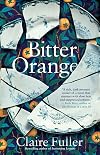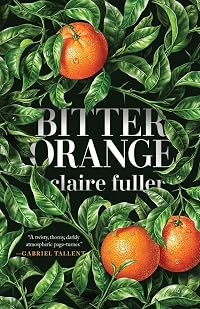
Bitter Orange
by Claire Fuller
On This Page
Description
From the attic of Lyntons, a dilapidated English country mansion, Frances Jellico sees them--Cara first: dark and beautiful, then Peter: striking and serious. The couple is spending the summer of 1969 in the rooms below hers while Frances is researching the architecture in the surrounding gardens. But she's distracted. Beneath a floorboard in her bathroom, she finds a peephole that gives her access to her neighbors' private lives.Tags
Recommendations









Member Reviews
Claire Fuller’s gothic-tinged 3rd novel, Bitter Orange, tells a mesmerizing tale of repressed desire and wayward lust set during the sweltering summer of 1969. Lyntons is a dilapidated 17th-century estate, long abandoned, located in the countryside outside London. The property has been purchased by a wealthy American, Mr. Liebermann. However, when we first meet our narrator, Frances Jellico, it’s 20 years after the fact and she’s lying ravaged by disease on her deathbed recalling events from that fateful summer. Twenty years earlier, 39-year old Frances’ mother has just died, freeing her from the thankless task of caring for a woman who is both demanding and unfeeling. Frances—friendless, socially inept, overweight, show more tentative—has been hired to catalogue the buildings and other structures in the estate’s gardens and prepare an assessment of their architectural value for the new owner. When she arrives at Lyntons, Frances is surprised to find two other people already on site, Cara and Peter, whom (in her innocence) she assumes to be a married couple. Peter is handsome in a raffish sort of way, while beautiful Cara appears to Frances to embody the hot-blooded Mediterranean temperament she has heard about but never witnessed first-hand. Frances moves into the mansion’s attic room while Cara and Peter occupy the rooms directly below hers. Peter, she soon learns, has been commissioned by Liebermann to write a report like the one Frances is working on, but focusing on the main house and its contents. Frances is at first wary around the younger couple, intimidated by Cara’s beauty, unpredictable moods and impulsive nature, though as days and then weeks pass, she finds herself drawn to them, and them to her. Soon the three are eating meals together and spending entire days in each other’s company, engaged in languid summer pursuits, depleting the estate’s wine supply, neglecting their assignments, and making discoveries about the property. With the three of them living in a bubble, personal disclosures are inevitable. But gradually it dawns on Frances that Peter and Cara’s history is more complex than she’s been led to believe, that Cara takes refuge in deception when the truth doesn’t suit her, and indeed often appears to be living in a fantasy world. As time passes Fuller raises the emotional temperature, with Cara’s behaviour growing increasingly erratic, and Frances—unhinged by misguided passion—succumbing to Peter’s physical charms. The story is stunningly atmospheric and brilliantly paced, drawing the reader in despite the fact that none of the characters is particularly likable. The writing is richly lyrical, brimming with evocative detail. Like the best who-dun-it, Bitter Orange spirals slowly but inevitably toward a tragic denouement. Fuller lays a compelling groundwork: we know something is going to happen. But when it does, it still comes as a shock. The result is a poignant, suspenseful, immensely satisfying and deliciously lurid high-stakes drama. show less
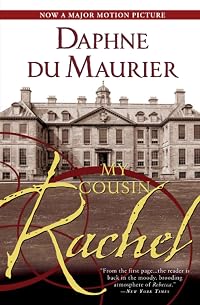
Thank you, Claire Fuller! I thought I would be doomed to read forgettable three star novels for the rest of the year, and then this random selection saved me! Part ghost story, part murder mystery, Bitter Orange is the most captivating book I have read in 2018 so far. Every character is sympathetic, if not likeable, with hidden secrets which slowly unravel, pacing the plot so neatly that every chapter is a cliffhanger, keeping the reader hooked. And like Du Maurier's Rebecca, which this reminded me of, the house is a character in itself - based on the Grange Estate in Hampshire, Lyntons is a gothic treasure trove, full of hidden rooms and crumbling history.
Amateur historian Frances Jellico is hired by an American businessman to write a show more report on the garden architecture of a dilapidated mansion, abandoned since the end of the Second World War. There she meets Peter, who is there to take stock of the house's interior, and his enigmatic wife Cara. They spend the summer of 1969 together, rambling around the old building and getting to know each other, but like Lyntons, some secrets are best left buried deep.
From the deeply unreliable narrator, Frances, whom I identified with far too closely in the early chapters and then quickly started to shy away from, to the incredible house which gives Manderley a run for its money, this is a more like a compendium of separate short stories tied beautifully together and framed in the style of Wuthering Heights. Is there any truth to Cara's elaborate storytelling? Who is haunted, the house or its guests? Did Frances witness a tragedy that summer or cause one? I loved every page!
Definitely recommended, especially for curing reader's ennui. show less
Amateur historian Frances Jellico is hired by an American businessman to write a show more report on the garden architecture of a dilapidated mansion, abandoned since the end of the Second World War. There she meets Peter, who is there to take stock of the house's interior, and his enigmatic wife Cara. They spend the summer of 1969 together, rambling around the old building and getting to know each other, but like Lyntons, some secrets are best left buried deep.
From the deeply unreliable narrator, Frances, whom I identified with far too closely in the early chapters and then quickly started to shy away from, to the incredible house which gives Manderley a run for its money, this is a more like a compendium of separate short stories tied beautifully together and framed in the style of Wuthering Heights. Is there any truth to Cara's elaborate storytelling? Who is haunted, the house or its guests? Did Frances witness a tragedy that summer or cause one? I loved every page!
Definitely recommended, especially for curing reader's ennui. show less
Bitter Orange by Claire Fuller is a 2018 Tin House Books publication.
This one may be an acquired taste for some, but I felt this one all the way down to my toes.
During 2018, I found myself reaching, more than ever before, for more comforting, light and easy, 'feel good' books to soothe my troubled soul. But I do still have a huge tendency to gravitate towards darker, troubling, moody or heavily laden novels, and especially love it when I pick up on a Gothic tone intertwined in there, as well.
This novel has all these elements, but also asks the reader to work a few things out on their own. So, while this book certainly stimulates the senses, it also gives the brain a little exercise, too.
As Frances lay on her death bed, she is often show more visited by an old friend, a vicar, who gently, but urgently, coaxes her into relaying back to him what really happened in the year 1969. This is the year Frances was hired to do research at Lyntons, a once grand estate in Hampshire, which now lies in ruins. Frances is staying on the estate with a couple named Peter and Cara, who are also doing research work.
I am obdurate and uncooperative, drifting on a sea of memory between islands of lucidity.
As the three of them settle in together, Frances, who has spent the bulk of her adult life caring for her mother, is suddenly overwhelmed by the prospect of being friends with the Cara and Peter. Cara is usually quite willing to regale Frances with stories of how she and Peter met, and the complicated route they took which eventually landed them at the dilapidated estate. She also shares with Frances the tragic events in her life which have left her feeling fragile and unstable. But her tales are often fantastical, and Peter tries to downplay her outlandish claims, leaving Frances unsure of who or what to believe.
But the world is a nicer place when you think everyone is telling the truth. There are no agendas, no hidden motives; no one lies for dramatic effect.
Right away I was drawn in by the beautiful prose, which sucked me right into the pages and held me there, as I listened to Frances’ tale unfold, tingling with both anticipation and dread. However, the story initially unfolds in frustratingly slow pace, and the book's structuring is occasionally jarring. Other than that, this atmospheric and thought- provoking novel held me completely spellbound.
I loved the metaphors and allegory, the history, the mild supernatural suggestions, and that shocking conclusion caps it all off, beautifully. The author did such an amazing job with creating vivid characterizations and that deliciously thick, but tantalizing atmosphere. Frances' clever narrative and detailed storytelling adeptly and successfully lured me willingly along to a wickedly stunning and unforeseeable outcome.
Clair Fuller is an author I will be keeping a very close eye on!
4.5 stars show less
This one may be an acquired taste for some, but I felt this one all the way down to my toes.
During 2018, I found myself reaching, more than ever before, for more comforting, light and easy, 'feel good' books to soothe my troubled soul. But I do still have a huge tendency to gravitate towards darker, troubling, moody or heavily laden novels, and especially love it when I pick up on a Gothic tone intertwined in there, as well.
This novel has all these elements, but also asks the reader to work a few things out on their own. So, while this book certainly stimulates the senses, it also gives the brain a little exercise, too.
As Frances lay on her death bed, she is often show more visited by an old friend, a vicar, who gently, but urgently, coaxes her into relaying back to him what really happened in the year 1969. This is the year Frances was hired to do research at Lyntons, a once grand estate in Hampshire, which now lies in ruins. Frances is staying on the estate with a couple named Peter and Cara, who are also doing research work.
I am obdurate and uncooperative, drifting on a sea of memory between islands of lucidity.
As the three of them settle in together, Frances, who has spent the bulk of her adult life caring for her mother, is suddenly overwhelmed by the prospect of being friends with the Cara and Peter. Cara is usually quite willing to regale Frances with stories of how she and Peter met, and the complicated route they took which eventually landed them at the dilapidated estate. She also shares with Frances the tragic events in her life which have left her feeling fragile and unstable. But her tales are often fantastical, and Peter tries to downplay her outlandish claims, leaving Frances unsure of who or what to believe.
But the world is a nicer place when you think everyone is telling the truth. There are no agendas, no hidden motives; no one lies for dramatic effect.
Right away I was drawn in by the beautiful prose, which sucked me right into the pages and held me there, as I listened to Frances’ tale unfold, tingling with both anticipation and dread. However, the story initially unfolds in frustratingly slow pace, and the book's structuring is occasionally jarring. Other than that, this atmospheric and thought- provoking novel held me completely spellbound.
I loved the metaphors and allegory, the history, the mild supernatural suggestions, and that shocking conclusion caps it all off, beautifully. The author did such an amazing job with creating vivid characterizations and that deliciously thick, but tantalizing atmosphere. Frances' clever narrative and detailed storytelling adeptly and successfully lured me willingly along to a wickedly stunning and unforeseeable outcome.
Clair Fuller is an author I will be keeping a very close eye on!
4.5 stars show less
It's fair to say that Bitter Orange was one of those books. You know the ones, where you get excited at the very thought of being able to pick it up and devour it. Where you just know that you are going to get an intensely fabulous experience.
Frances Jellico is at the end of her life. She looks back to a very brief, but life-changing time when she met Peter and Cara. She was commissioned in 1969 to write a report on the garden structures of Lyntons, a rundown country house and there she met Peter, who had been engaged to do something similar with the inside of the house, and Cara his wife. Just the three of them lived in the house during that time and inevitably they started to spend all their time together.
The friendship between the show more three is what I would call toxic in every way. Vulnerabilities brought to the fore and preyed upon, exploited. At every stage I felt a kind of protectiveness for Frances, a fairly naive and gullible 39 year old. Peter and Cara, on the other hand, are more worldly, eating food and drinking drink that Frances has only heard about. I could sense such foreboding. I knew that the story couldn't end well, but a couple of big surprises left me goggle-eyed.
Bitter Orange is such an atmospheric, powerful novel. It talks of love and loss, passion and voyeurism. Claire Fuller has such a beautiful way with words. Her descriptions on behalf of Frances of that heady summer, the heat, the sense of something lurking in the attic rooms, the over-indulgences, the leading astray, all put me right there with them. And the short interludes, where Frances is at the end of her life, are so moving, so sad, so thoughtful.
The characterisations are fabulous too. There is a strong sense (both metaphorical and literal) of Frances, during the course of her time at Lyntons, throwing off her shackles, becoming unloosened and freer. Ultimately though, despite looking back on those times with some fondness, it also led to her complete undoing.
Bitter Orange is a book to savour (unlike the bitter oranges at Lyntons!). It's one to read slowly and carefully so as to not miss nuances and the exquisite writing. It's full of tension and is really quite unsettling (in the best possible way). I have only good things to say about it - it's a triumph. show less
Frances Jellico is at the end of her life. She looks back to a very brief, but life-changing time when she met Peter and Cara. She was commissioned in 1969 to write a report on the garden structures of Lyntons, a rundown country house and there she met Peter, who had been engaged to do something similar with the inside of the house, and Cara his wife. Just the three of them lived in the house during that time and inevitably they started to spend all their time together.
The friendship between the show more three is what I would call toxic in every way. Vulnerabilities brought to the fore and preyed upon, exploited. At every stage I felt a kind of protectiveness for Frances, a fairly naive and gullible 39 year old. Peter and Cara, on the other hand, are more worldly, eating food and drinking drink that Frances has only heard about. I could sense such foreboding. I knew that the story couldn't end well, but a couple of big surprises left me goggle-eyed.
Bitter Orange is such an atmospheric, powerful novel. It talks of love and loss, passion and voyeurism. Claire Fuller has such a beautiful way with words. Her descriptions on behalf of Frances of that heady summer, the heat, the sense of something lurking in the attic rooms, the over-indulgences, the leading astray, all put me right there with them. And the short interludes, where Frances is at the end of her life, are so moving, so sad, so thoughtful.
The characterisations are fabulous too. There is a strong sense (both metaphorical and literal) of Frances, during the course of her time at Lyntons, throwing off her shackles, becoming unloosened and freer. Ultimately though, despite looking back on those times with some fondness, it also led to her complete undoing.
Bitter Orange is a book to savour (unlike the bitter oranges at Lyntons!). It's one to read slowly and carefully so as to not miss nuances and the exquisite writing. It's full of tension and is really quite unsettling (in the best possible way). I have only good things to say about it - it's a triumph. show less
Bitter Orange by Claire Fuller is an old-fashioned slow burn of a thriller, set during the summer of 1969 in a dilapidated country house in rural England. Three people--a couple, Peter and Cara, and the narrator, Frances--are staying in the ruin to catalog any valuable architecture for the American who purchased it. Isolated as they are, the dynamic between the triangle gradually grows charged. Frances, sleeping in the attic, soon discovers a hole in her bathroom floor with a telescope installed through which she can spy on the couple's bathroom below. She also starts seeing strange things, unexplained--are there ghosts in the old house? As the summer wears on in its languid, drunken way, lonely loner Frances indulges her fantasies show more about her companions as young Cara spins stories for her that seem fantastical but that Frances wholeheartedly believes. Of course, reality will intrude eventually, and as older Frances is narrating the story from her death bed, we readers become more and more tense, waiting for the inevitable explosion. I really enjoyed the writing here, the isolated setting, the measured pace, the claustrophobic atmosphere. For me this was a thriller in an old-fashioned sense--and it helped that it was set in the 1960s--one that doesn't rely on twists and jagged writing, but rather on building character and tension up to a breaking point. show less
This story is revealed slowly, developing suspense as it proceeds to a shocking conclusion. From her death bed, Frances Jellico tells the story of the summer of 1969 when she, with Peter and Cara, a troubled couple, were commissioned to survey landscape and buildings of a once-grand country home that is becoming a ruin. Fuller beautifully portrays their fall into a summer of indolence as they neglect duties in favour of the well-stocked wine cellar. It's well-written but the story has too many unbelievable elements such as gourmet cooking when kitchen equipment consisted of tin cups and little else, or a massive furniture move that would have required a team of movers. And while some fanciful tales showed the unreliability of the show more characters, others were so far-fetched that like hiccups they hindered fluency and reduced the overall effect of a languid, dreamy summer. show less
A psychological thriller, this is one of those books where you know early on that something bad has happened, but of course the reveal is never quite as you expect.
The protagonist, a social misfit who's spent years caring for her mother, takes a job at a decayed English country house to itemise the garden features for its new and remote American owner. Her life becomes entangled with an emotive young couple also staying there, and as their triangle develops and the narrative flashes forward to Frances' deathbed and her conversations with an old vicar friend, we know that this new relationship which develops quickly is not going to end well.
This was a fun novel, but I doubt it will stick with me for long. Recommended for when you just show more want a good zipping read that you don't have to think too hard about.
3.5 stars - enjoyable, but didn't stand out for me. show less
The protagonist, a social misfit who's spent years caring for her mother, takes a job at a decayed English country house to itemise the garden features for its new and remote American owner. Her life becomes entangled with an emotive young couple also staying there, and as their triangle develops and the narrative flashes forward to Frances' deathbed and her conversations with an old vicar friend, we know that this new relationship which develops quickly is not going to end well.
This was a fun novel, but I doubt it will stick with me for long. Recommended for when you just show more want a good zipping read that you don't have to think too hard about.
3.5 stars - enjoyable, but didn't stand out for me. show less
Members
- Recently Added By
Lists

Books Set in Great Britain
191 works; 13 members

Female Protagonist
1,056 works; 57 members

Houses and Buildings as Characters in Fiction
182 works; 29 members

Kirkus Starred Fiction Reviews of Books Published in 2018
330 works; 3 members

Amazon best fictional genre picks monthly for 2018
418 works; 9 members

Books Read in 2019
4,052 works; 110 members

A Rainbow of Books: Colors in the Title
570 works; 24 members

Books with Food in the Title
8 works; 1 member

Books Read in 2018
4,360 works; 110 members

Historical fiction set in Britain
13 works; 1 member
Author Information

8+ Works 3,413 Members
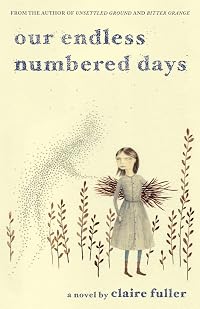
Claire Fuller is the author of Our Endless Numbered Days which won the £10,000 (A$20,438) Desmond Elliott Prize for new fiction. This was her debut novel. (Bowker Author Biography)
Awards and Honors
Awards
Distinctions
Common Knowledge
- Canonical title
- Bitter Orange
- Original title
- Bitter Orange
- Original publication date
- 2018
- Dedication
- In memory of
Joyce Grubb
(9 August 1910 to 4 July 2004)
&
Joyce Grubb
(8 April 1907 to 26 June 1982) - First words
- They must think I don’t have long left because today they allow the vicar in.
- Last words
- (Click to show. Warning: May contain spoilers.)He sits on the lip of stone again and watches the gravedigger work, moving the soil, spade by spade, into the hole.
- Original language
- English
- Canonical DDC/MDS
- 823.92
- Canonical LCC
- PR6106.U45
Classifications
Statistics
- Members
- 695
- Popularity
- 41,057
- Reviews
- 36
- Rating
- (3.67)
- Languages
- 5 — English, French, German, Greek, Spanish
- Media
- Paper, Audiobook, Ebook
- ISBNs
- 21
- ASINs
- 6