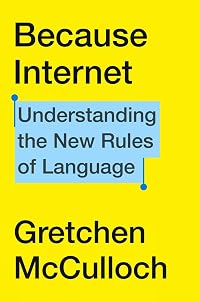
Because Internet: Understanding the New Rules of Language
by Gretchen McCulloch
On This Page
Description
A linguistically informed look at how our digital world is transforming the English language. Language is humanity's most spectacular open-source project, and the internet is making our language change faster and in more interesting ways than ever before. Internet conversations are structured by the shape of our apps and platforms, from the grammar of status updates to the protocols of comments and @replies. Linguistically inventive online communities spread new slang and jargon with show more dizzying speed. What's more, social media is a vast laboratory of unedited, unfiltered words where we can watch language evolve in real time. Even the most absurd-looking slang has genuine patterns behind it. Internet linguist Gretchen McCulloch explores the deep forces that shape human language and influence the way we communicate with one another. She explains how your first social internet experience influences whether you prefer "LOL" or "lol," why ~sparkly tildes~ succeeded where centuries of proposals for irony punctuation had failed, what emoji have in common with physical gestures, and how the artfully disarrayed language of animal memes like lolcats and doggo made them more likely to spread. Because Internet is essential reading for anyone who's ever puzzled over how to punctuate a text message or wondered where memes come from. It's the perfect book for understanding how the internet is changing the English language, why that's a good thing, and what our online interactions reveal about who we are. show lessTags
Recommendations
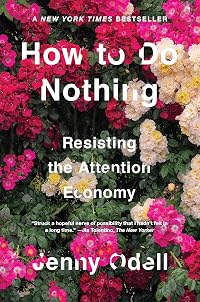
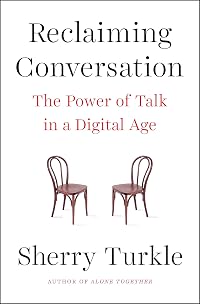
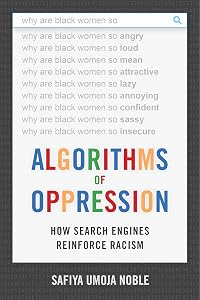
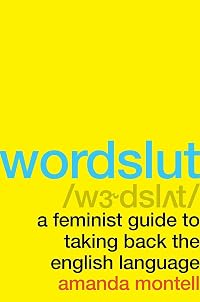


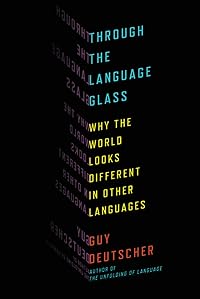
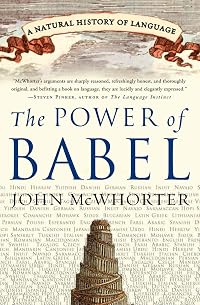





Member Recommendations
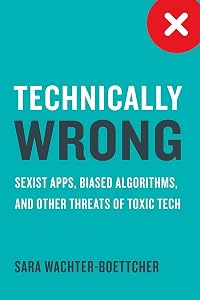
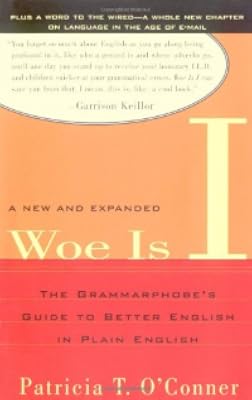
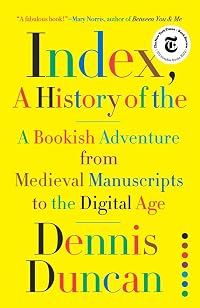
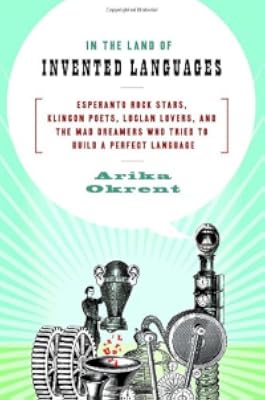
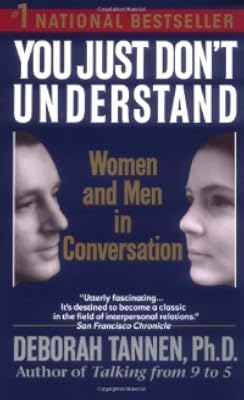
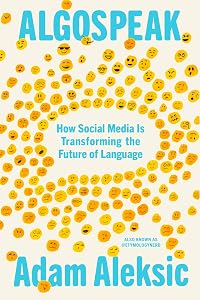
tmrps Both are interesting books about language used by its users on the internet.
Member Reviews
Because Internet is, at its core, a book about evolutionary linguistics. Only, instead of looking at how vowels have shifted or Grimm's Law turned /p/ into /f/ or the myriad more technical things that may be used to describe long-term changes to language, Gretchen McCulloch focuses on the way the new and ubiquitous communication medium of the internet has influenced written English. This is, of course, a much shorter time range for linguistic change than we may be used to reading about, but language on the internet is constantly adapting to the needs of the people speaking there, and there have been distinct changes to how internet communication happens in the last 40 years ("internet communication" includes any networked, written show more communication, more or less).
McCulloch is particularly interested in two things: the gap between mostly young people and mostly older people, and the use of emoji.
In the first instance, she notes that the gap in slang and writing preferences isn't exactly old people not getting "the kids these days" or lazy writing or anything like that. The differences aren't related to age (no more than any linguistic changes have solely been a teenage fad), but rather how the person views the internet as a communication tool and what pre-internet writing or communication habits they may already have. Of course, younger people don't have any pre-internet anything, and are basically post-internet - it is an extension of their meatspace social lives and writing, which does not have the same nuance for irony or feeling that meatspace speech does, has to adapt.
An entire chapter in the book is devoted to examining the different phases of internet use in the past 40 years and what they mean for how people view it. McCulloch calls them "Internet People" and divides them into Old Internet People, Full Internet People, Semi Internet People, Post-Internet People, and Pre-Internet People. These five categories have strong correlations to where people communicate online and their writing styles. For example, Post-Internet People might eschew traditional punctuation and rely on the line breaks of a texting app to separate phrases or sentences - and when they put in a ? or . or !, the mark carries additional nuance. Meanwhile, Pre-Internet People used to spacing their thoughts with a "..." in handwriting may fill up their texts with "....." instead of line breaks.
One of the biggest gaps in written language is that tone of voice and body language simply don't exist. For centuries, folks have been trying to invent a sarcasm or irony marker, and in letter/diary/postcard writin, folks have used capital letters, colored ink, underlines, etc., for emphasis or emotional weight. In a pure text medium (not just early internet, but current texting systems!), different forms of punctuation were adapted - ~*~sparkle~*~tildes~*~, ALL CAPS, *bold asterisks*, and so on. But also, emoticons and kaomoji and eventually emoji. McCulloch explains the rapid adoption of emoji as filling in the missing gesture space for written language. These little unicode characters can be decorative or meaningful, but they aren't word replacements except in games or self-conscious use. There are common rules for emoji that most people seem to pick up instinctively - much like they figure out what a head-tilt means and how to use it, they know when to use one laughing-with-tears face or three in a row.
Another major aspect of internet communication that gets a lot of press are memes. McCulloch documents some of the ways they've changed over the years in response to shifts in technology and general social trends. They're an in-group signifier, much like slang or verbal in-jokes, only the group for which they are in is very often the whole internet. There is a lot more to be said about memes and even the particular ones that McCulloch highlights, but it seems like they were included as an example of how the internet influences trends and fads rather than being a specific linguistic thing. Though, of course, they do illustrate how linguistic trends could spread...
I enjoyed Because Internet quite a bit, though sometimes it felt like I was engaging in an act of navel-gazing by reading it. With all the press it's getting in major newspapers, I feel safe to say that a lot of people could appreciate it - but also, it was very much of the Now in a narrative voice that's very 2018 Full Internet Person and there are lots of little jokes scattered throughout the text that might be offputting. I love McCulloch's linguistic educational outreach efforts and public writing, and this book felt like a friendly chat, an extension of her podcast and twitter persona. show less
McCulloch is particularly interested in two things: the gap between mostly young people and mostly older people, and the use of emoji.
In the first instance, she notes that the gap in slang and writing preferences isn't exactly old people not getting "the kids these days" or lazy writing or anything like that. The differences aren't related to age (no more than any linguistic changes have solely been a teenage fad), but rather how the person views the internet as a communication tool and what pre-internet writing or communication habits they may already have. Of course, younger people don't have any pre-internet anything, and are basically post-internet - it is an extension of their meatspace social lives and writing, which does not have the same nuance for irony or feeling that meatspace speech does, has to adapt.
An entire chapter in the book is devoted to examining the different phases of internet use in the past 40 years and what they mean for how people view it. McCulloch calls them "Internet People" and divides them into Old Internet People, Full Internet People, Semi Internet People, Post-Internet People, and Pre-Internet People. These five categories have strong correlations to where people communicate online and their writing styles. For example, Post-Internet People might eschew traditional punctuation and rely on the line breaks of a texting app to separate phrases or sentences - and when they put in a ? or . or !, the mark carries additional nuance. Meanwhile, Pre-Internet People used to spacing their thoughts with a "..." in handwriting may fill up their texts with "....." instead of line breaks.
One of the biggest gaps in written language is that tone of voice and body language simply don't exist. For centuries, folks have been trying to invent a sarcasm or irony marker, and in letter/diary/postcard writin, folks have used capital letters, colored ink, underlines, etc., for emphasis or emotional weight. In a pure text medium (not just early internet, but current texting systems!), different forms of punctuation were adapted - ~*~sparkle~*~tildes~*~, ALL CAPS, *bold asterisks*, and so on. But also, emoticons and kaomoji and eventually emoji. McCulloch explains the rapid adoption of emoji as filling in the missing gesture space for written language. These little unicode characters can be decorative or meaningful, but they aren't word replacements except in games or self-conscious use. There are common rules for emoji that most people seem to pick up instinctively - much like they figure out what a head-tilt means and how to use it, they know when to use one laughing-with-tears face or three in a row.
Another major aspect of internet communication that gets a lot of press are memes. McCulloch documents some of the ways they've changed over the years in response to shifts in technology and general social trends. They're an in-group signifier, much like slang or verbal in-jokes, only the group for which they are in is very often the whole internet. There is a lot more to be said about memes and even the particular ones that McCulloch highlights, but it seems like they were included as an example of how the internet influences trends and fads rather than being a specific linguistic thing. Though, of course, they do illustrate how linguistic trends could spread...
I enjoyed Because Internet quite a bit, though sometimes it felt like I was engaging in an act of navel-gazing by reading it. With all the press it's getting in major newspapers, I feel safe to say that a lot of people could appreciate it - but also, it was very much of the Now in a narrative voice that's very 2018 Full Internet Person and there are lots of little jokes scattered throughout the text that might be offputting. I love McCulloch's linguistic educational outreach efforts and public writing, and this book felt like a friendly chat, an extension of her podcast and twitter persona. show less
Linguist Gretchen McCullough looks at the way we use language online and in texting: how it's evolving, how it replicates features of verbal speech, how it varies among different groups of people (mainly by when you first started using the internet), and what linguists can learn from it.
It's all really interesting, even if it did reinforce my impression that I, as what McCullough categorizes as an Old Internet Person -- a label I can neither dispute nor find offense in -- have a real disconnect in communications style and conventions from Those Kids Today, to the extent that I may well be sending off entirely the wrong signals with my punctuation. Oops. Well, I guess it's at least better to know, right?
Despite the fact that I find this show more realization a bit depressing, the book as a whole was extremely enjoyable. McCullough's writing is clear, entertaining, breezy, and humorous. It's obvious she's having fun writing about this topic, and she makes it a lot of fun to read about, as well as providing a lot of interesting food for thought. show less
It's all really interesting, even if it did reinforce my impression that I, as what McCullough categorizes as an Old Internet Person -- a label I can neither dispute nor find offense in -- have a real disconnect in communications style and conventions from Those Kids Today, to the extent that I may well be sending off entirely the wrong signals with my punctuation. Oops. Well, I guess it's at least better to know, right?
Despite the fact that I find this show more realization a bit depressing, the book as a whole was extremely enjoyable. McCullough's writing is clear, entertaining, breezy, and humorous. It's obvious she's having fun writing about this topic, and she makes it a lot of fun to read about, as well as providing a lot of interesting food for thought. show less
Gretchen McCulloch is an internet linguist, how cool is that?
In Because Internet - Understanding the New Rules of Language, Gretchen McCulloch observes just how fast internet language has changed and how quickly it continues to move and evolve. Internet slang and jargon varies by generation, country, location, friend group and more and I honestly don't know how internet linguists can keep up.
I enjoyed Gretchen's thoughts on new words from Chapter 8:
"Any one of us can coin a word or compose a sentence that has never been said before. And it now exists in the language as soon as we utter it. Whether it winks in and out for a single moment or whether it catches on and endures in the minds of people yet unborn."
In Because Internet, show more Gretchen casts a detailed linguistic eye over digital communications and interactions from the early beginnings of the internet in chat rooms like IRC and discussion boards, to the evolution of text messages, MMS, emojis, memes and GIFs.
I was surprised to find I didn't know the difference between emoticons and emojis (emoticons can be represented by the keys on your keyboard, and emojis are pictograms that could include images of flowers or a slice of cake). And while listening to the chapter on emoji and internet gestures, I realised I don't know what many of the hand gestures actually mean.
I chose to listen to the audiobook for this title and loved the chapter that discussed the use of repeating letters to add emphasis and I do this a lot! I can't seem to recall what this is called and can't flip back through the book to find it which is soooooooo annoying! (See what I did there?) For this and other reasons (the section on emoticons come to mind) I really think this would have been better read in print.
I enjoyed the author's observation on changing language from Chapter 8:
"When you lay a book down and come back to it, you expect all its ink to stay where you left it. But the only languages that stay unchanging are the dead ones."
After reading Because Internet - Understanding the New Rules of Language by Gretchen McCulloch, I've learned that it's pointless to lay down rules for language on the internet; who is going to follow them? It's also an impossible task to comprehensively record internet language in its entirety at any given point in time.
The best we can hope for is a bird's eye view and Gretchen McCulloch has certainly given me that. show less
In Because Internet - Understanding the New Rules of Language, Gretchen McCulloch observes just how fast internet language has changed and how quickly it continues to move and evolve. Internet slang and jargon varies by generation, country, location, friend group and more and I honestly don't know how internet linguists can keep up.
I enjoyed Gretchen's thoughts on new words from Chapter 8:
"Any one of us can coin a word or compose a sentence that has never been said before. And it now exists in the language as soon as we utter it. Whether it winks in and out for a single moment or whether it catches on and endures in the minds of people yet unborn."
In Because Internet, show more Gretchen casts a detailed linguistic eye over digital communications and interactions from the early beginnings of the internet in chat rooms like IRC and discussion boards, to the evolution of text messages, MMS, emojis, memes and GIFs.
I was surprised to find I didn't know the difference between emoticons and emojis (emoticons can be represented by the keys on your keyboard, and emojis are pictograms that could include images of flowers or a slice of cake). And while listening to the chapter on emoji and internet gestures, I realised I don't know what many of the hand gestures actually mean.
I chose to listen to the audiobook for this title and loved the chapter that discussed the use of repeating letters to add emphasis and I do this a lot! I can't seem to recall what this is called and can't flip back through the book to find it which is soooooooo annoying! (See what I did there?) For this and other reasons (the section on emoticons come to mind) I really think this would have been better read in print.
I enjoyed the author's observation on changing language from Chapter 8:
"When you lay a book down and come back to it, you expect all its ink to stay where you left it. But the only languages that stay unchanging are the dead ones."
After reading Because Internet - Understanding the New Rules of Language by Gretchen McCulloch, I've learned that it's pointless to lay down rules for language on the internet; who is going to follow them? It's also an impossible task to comprehensively record internet language in its entirety at any given point in time.
The best we can hope for is a bird's eye view and Gretchen McCulloch has certainly given me that. show less
I’ve followed the author’s linguistics Tumblr for years. This book was fascinating and entertaining. I have a tendency to read non-fiction in a very piecemeal fashion but I read this one in a day. It was informative when it came to things I didn’t know, and unexpectedly validating when it came to the aspects of internet culture I’ve experienced. (I particularly enjoyed the chapter on “Internet People”.) It’s one thing to know what sorts of things people do or say, and another to understand why that happens. Or happened.
I had a lot of oh moments. Like why my grandmother lets a ringing telephone interrupt a conversation -- she’s from a generation where a missed phone call could result in a frustratingly prolonged game of show more telephone tag and the best way to schedule a phone call was with another phone call, whereas I’m from a generation where phone calls can be easily screened with caller ID and unobtrusively scheduled with a text message. Or why people use emojis or assign subtle meaning to punctuation.
This book clarified for me that many of the ways we play around with language online happen because we're trying to convey non-verbal information, such as tone of voice, facial expressions and gestures. Sometimes we want methods that are quick to type, or that work within the limitations of the technology we’re using (eg. text messages, unlike email, don’t allow italics) or closely mimic how we’d say this aloud, but sometimes it’s not always about what is most convenient or best resembles face-to-face communication but about what best conveys our meaning -- sometimes we want to be loud, sometimes we want to be really precise, sometimes we want to be subtle. show less
I had a lot of oh moments. Like why my grandmother lets a ringing telephone interrupt a conversation -- she’s from a generation where a missed phone call could result in a frustratingly prolonged game of show more telephone tag and the best way to schedule a phone call was with another phone call, whereas I’m from a generation where phone calls can be easily screened with caller ID and unobtrusively scheduled with a text message. Or why people use emojis or assign subtle meaning to punctuation.
This book clarified for me that many of the ways we play around with language online happen because we're trying to convey non-verbal information, such as tone of voice, facial expressions and gestures. Sometimes we want methods that are quick to type, or that work within the limitations of the technology we’re using (eg. text messages, unlike email, don’t allow italics) or closely mimic how we’d say this aloud, but sometimes it’s not always about what is most convenient or best resembles face-to-face communication but about what best conveys our meaning -- sometimes we want to be loud, sometimes we want to be really precise, sometimes we want to be subtle. show less
This was a really interesting read, containing a lot of stuff I knew without knowing and also stuff I hadn’t thought about. It’s also a good, well-structured introduction to linguistics and specifically sociolinguistics—not as in depth as a textbook would be, but with compressed versions of the core ideas in accessible, modern language. I liked that McCulloch makes a point to not only lay out her reasoning as to why she focused on some linguistic features over others, but also to cite originators of memes and slang when possible.
As for the contents, they’re a little hard to sum up simply because there’s a lot of stuff covered. The evolution of internet culture and generational profiles of its users. The semantic uses of gifs show more and emojis. Twitter and Facebook as research tools. Minimalist Tumblr punctuation and the contentiousness of periods in texts. The history of memes. The informality of emails compared to letters. Emphatic letter duplication. Just for starters. Like I said, I knew a lot of the content just from living on the internet for so long, but it was nice having it verbalized and the sociology I largely did not know and it was very cool.
And while McCulloch doesn’t cover everything—the “because + noun phrase” formation doesn’t appear despite the title, for instance, and the spread of internet usages into spoken English is barely touched on—a lot of those gaps are things you could do a dissertation on and internet linguistics is a pretty new field, so I have hopes for either a follow-up or a book by somebody else. She definitely leaves things open and encouraging to anyone wanting to follow her lead. (Doing linguistics research and stumped for ideas? Hit me up. I have thoughts.)
So yeah, definitely a good book and very much written for me the internet goblin linguistics nerd. Anyone who’s interested in language, the internet, understanding what the heck is up with kids these days, and/or the social history of our times should add this to their TBR.
8/10
To bear in mind: Will challenge your ideas about language and the internet, unless you’re a linguist already. If you’re already a linguist, will give you at least ten ideas for research papers. Might also give you flashbacks to the 1990s, regardless of educational leanings. show less
As for the contents, they’re a little hard to sum up simply because there’s a lot of stuff covered. The evolution of internet culture and generational profiles of its users. The semantic uses of gifs show more and emojis. Twitter and Facebook as research tools. Minimalist Tumblr punctuation and the contentiousness of periods in texts. The history of memes. The informality of emails compared to letters. Emphatic letter duplication. Just for starters. Like I said, I knew a lot of the content just from living on the internet for so long, but it was nice having it verbalized and the sociology I largely did not know and it was very cool.
And while McCulloch doesn’t cover everything—the “because + noun phrase” formation doesn’t appear despite the title, for instance, and the spread of internet usages into spoken English is barely touched on—a lot of those gaps are things you could do a dissertation on and internet linguistics is a pretty new field, so I have hopes for either a follow-up or a book by somebody else. She definitely leaves things open and encouraging to anyone wanting to follow her lead. (Doing linguistics research and stumped for ideas? Hit me up. I have thoughts.)
So yeah, definitely a good book and very much written for me the internet goblin linguistics nerd. Anyone who’s interested in language, the internet, understanding what the heck is up with kids these days, and/or the social history of our times should add this to their TBR.
8/10
To bear in mind: Will challenge your ideas about language and the internet, unless you’re a linguist already. If you’re already a linguist, will give you at least ten ideas for research papers. Might also give you flashbacks to the 1990s, regardless of educational leanings. show less
This has been on my list for a long time because linguistics. It delighted me just as much as I expected, and in unexpected ways. It had less syntax than I expected from the title (though some is there) but a lot more sociolinguistics and discussion of paralinguistic features.
The sociolinguistics included a great analysis of 'types' of internet people. Classically people talk about "Digital Immigrants" vs "Digital Natives" based on nothing more than birth year, but this adds in the nuance of whether/when in their life people start to actually use the technology. At the same time it goes beyond the "early adopter"/"late adopter" model from theory of innovation to build in the nuance of how they then use the internet, and what aspects are show more important to them.
The paralinguistics side was especially interesting: in speech we have tone of voice and gesture, while on the internet we have typography and emojis. The book talks about how these fill similar niches but not as one-to-one translations.
And more... I'm pretty much an Old Internet Person at this point, so while I've seen a lot of the change discussed it was fantastic to read about it recontextualised to explain why/how some of those changes came about. show less
The sociolinguistics included a great analysis of 'types' of internet people. Classically people talk about "Digital Immigrants" vs "Digital Natives" based on nothing more than birth year, but this adds in the nuance of whether/when in their life people start to actually use the technology. At the same time it goes beyond the "early adopter"/"late adopter" model from theory of innovation to build in the nuance of how they then use the internet, and what aspects are show more important to them.
The paralinguistics side was especially interesting: in speech we have tone of voice and gesture, while on the internet we have typography and emojis. The book talks about how these fill similar niches but not as one-to-one translations.
And more... I'm pretty much an Old Internet Person at this point, so while I've seen a lot of the change discussed it was fantastic to read about it recontextualised to explain why/how some of those changes came about. show less
For some reason the title lead me to think this would be more whimsical and/or more specific. It wasn't especially whimsical, but it was fascinating. I love me some linguistics and MCulloch is very good at explaining things. I enjoyed reading it more than I likely would have enjoyed a more topical book that would have explained the "because noun" popularity.
The stuff about kinds of networks of influence was new and fascinating to me. And I am amused by the image of the author as a child conducting linguistics experiments on her peers.
Library copy
The stuff about kinds of networks of influence was new and fascinating to me. And I am amused by the image of the author as a child conducting linguistics experiments on her peers.
Library copy
Members
- Recently Added By
Lists

Top Five Books of 2022
736 works; 272 members

Penguin Random House
458 works; 4 members

Books With Interesting Titles
173 works; 14 members

Five star books
1,767 works; 110 members

Books With the Most Memorable Titles
478 works; 158 members

Club Read's Recommended Nonfiction Written by Women
618 works; 30 members

Books Read in 2024
4,623 works; 126 members
Author Information

1 Work 1,416 Members
Gretchen McCulloch is an internet linguist; she analyzes the language of the internet, for the people of the internet. She writes the Resident Linguist column at Wired (and formerly at The Toast). McCulloch has a master's in linguistics from McGill University, runs the blog All Things Linguistic, and cohosts Lingthusiasm, a podcast that's show more enthusiastic about linguistics. She lives in Montreal, but also on the internet. show less
Some Editions
Awards and Honors
Awards
Distinctions
Common Knowledge
- Original publication date
- 2019-07-23
- People/Characters
- Gretchen McCulloch
- Dedication
- To the people who make internet language.
You are the territory, this is merely a map. - First words
- Imagine learning to talk from recordings rather than people.
- Last words
- (Click to show. Warning: May contain spoilers.)There's space, in this glorious linguistic web, for you.
- Blurbers
- Sun, Jonny; Stamper, Kory; Doctorow, Cory; McWhorter, John; Crystal, David; McKean, Erin
- Original language
- English
- Canonical DDC/MDS
- 302.231
- Canonical LCC
- P120.I6
Classifications
- Genres
- Technology, Sociology, General Nonfiction, Nonfiction
- DDC/MDS
- 302.231 — Society, government, & culture Social sciences, sociology & anthropology Mass Communication & Media Communication Media (Means of communication) Digital media
- LCC
- P120 .I6 — Language and Literature Philology. Linguistics Language. Linguistic theory. Comparative grammar
- BISAC
Statistics
- Members
- 1,416
- Popularity
- 16,696
- Reviews
- 56
- Rating
- (3.96)
- Languages
- English
- Media
- Paper, Audiobook, Ebook
- ISBNs
- 12
- ASINs
- 6