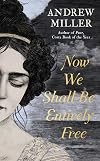
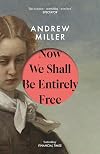
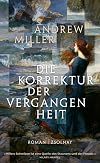
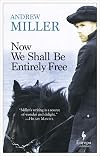
Now We Shall Be Entirely Free
by Andrew Miller
On This Page
Description
One rain-swept February night in 1809, an unconscious man is carried into a house in Somerset. He is Captain John Lacroix, home from Britain's disastrous campaign against Napoleon's forces in Spain. Gradually Lacroix recovers his health, but not his peace of mind - he cannot talk about the war or face the memory of what happened in a village on the gruelling retreat to Corunna. After the command comes to return to his regiment, he sets out instead for the Hebrides, with the vague intent of show more reviving his musical interests and collecting local folksongs. Lacroix sails north incognito, unaware that he has far worse to fear than being dragged back to the army: a vicious English corporal and a Spanish officer are on his trail, with orders to kill. The haven he finds on a remote island with a family of free-thinkers and the sister he falls for are not safe, at all.--Provided by publisher. show lessTags
Recommendations














Member Reviews
John Lacroix is a haunted man: trying to escape his memories and carrying the shame of a traumatic event during the Peninsular War, he leaves his home to undertake a journey to the Scottish islands where he hopes to recover his peace of mind by immersing himself in music. Little does he know that an officer in the English Army with secret orders, along with a Spanish cavalry officer, are close on his heels.
I adored Pure, but I think that Andrew Miller has outdone himself here with this beautifully written and deeply allegorical novel about war, guilt and redemption. Apparently the atrocity at the core of this story is based on the My Lai Massacre during the Vietnam War; he even went so far as to give five of his characters names based show more on some of the US troops that were involved. His skills to recreate the past and to imbue his characters with life are among the best I've come across. So absorbed was I in the story that I barely noticed events around me, and yet it wasn't simply the tension of the knowledge that the two converging paths would eventually cross; it is the details of characters' lives and their environments, along with their relationships to each other, that make this novel so remarkable and memorable. While the novel is filled with exquisite descriptions, the reader is also required to read between the lines to make sense of the elements of the story that remain unsaid.
A true master of his craft. show less
I adored Pure, but I think that Andrew Miller has outdone himself here with this beautifully written and deeply allegorical novel about war, guilt and redemption. Apparently the atrocity at the core of this story is based on the My Lai Massacre during the Vietnam War; he even went so far as to give five of his characters names based show more on some of the US troops that were involved. His skills to recreate the past and to imbue his characters with life are among the best I've come across. So absorbed was I in the story that I barely noticed events around me, and yet it wasn't simply the tension of the knowledge that the two converging paths would eventually cross; it is the details of characters' lives and their environments, along with their relationships to each other, that make this novel so remarkable and memorable. While the novel is filled with exquisite descriptions, the reader is also required to read between the lines to make sense of the elements of the story that remain unsaid.
A true master of his craft. show less
A well written mixture of historical novel, adventure story and romance set during the Napoleonic wars, that may have been written with at least half an eye to a possible film adaptation.
The central character John Lacroix is a naive young gentleman cavalry officer who has just found his way home from the retreat that ended at Corunna. He is brought home barely alive, and scarred by what he has seen of his army's chaotic retreat and an atrocity he witnessed in a Spanish village. His regiment want him to return to action, and he conceives a trip to the Scottish islands in a bid to buy more time.
Meanwhile in Spain a military court has found him guilty, and a violent and unscrupulous corporal is sent to pursue him with a Spanish soldier for show more company.
The chaos of war and the period detail is quite impressive, and the whole thing is a very enjoyable read, but I am deducting a star because the plotting seems a little too neat and contrived. show less
The central character John Lacroix is a naive young gentleman cavalry officer who has just found his way home from the retreat that ended at Corunna. He is brought home barely alive, and scarred by what he has seen of his army's chaotic retreat and an atrocity he witnessed in a Spanish village. His regiment want him to return to action, and he conceives a trip to the Scottish islands in a bid to buy more time.
Meanwhile in Spain a military court has found him guilty, and a violent and unscrupulous corporal is sent to pursue him with a Spanish soldier for show more company.
The chaos of war and the period detail is quite impressive, and the whole thing is a very enjoyable read, but I am deducting a star because the plotting seems a little too neat and contrived. show less
One rainy night in 1809, a coach pulls up to a vacant country house in Somerset, discharging a badly injured man. Nell, the housekeeper, can’t tell whether it’s John Lacroix, master of the house, for he possesses few recognizable clothes or belongings, and facial hair and wounds obscure his features.
However, Nell tends him; and yes, it’s John, an officer of hussars returned from a disastrous campaign in Corunna, Spain, against Napoleon. John slowly recovers from his physical wounds, pleasing Nell and his beloved sister, Lucy, but he’s emotionally out of sorts and refuses to speak of his war. And when a comrade visits to urge him to heal quickly and return to his regiment, John decides to travel instead and settles on Scotland as show more a destination. He’ll look for an island where he may find solitude and solace, though how he envisions those qualities remains vague, even to himself.
Meanwhile, two men have been sent, unofficially yet on high authority, to hunt him. Why they’ve targeted John is unclear, at first. All you know is that one of his seekers, Calley, is as vicious a brute as any who’s ever drawn breath. On sighting a man he’s never met, for example, he measures up the newcomer to guess whether he’d be his equal in a brawl. It’s Calley against the world, and he’ll come out swinging.
This brilliant, delicately written thriller has to do with a manhunt, obviously, but offers a significant twist. John’s hunting himself too, though he doesn’t know that yet, trying to figure out who he is. His entire life, he’s accepted a given version of himself and can’t see its constraints.
Instinctively, he turns away from questions, especially the existential kind. But on his travels, he meets Emily, a freethinking woman who’s going blind, yet sees what he can’t (a lovely touch). As he learns to trust her, he opens himself up to insight and reflection — which is all very well, but two men are trailing him.
To call a thriller “delicate” may sound strange, especially considering that this one, like many, portrays its share of violence. Yet the adjective fits. Miller’s is a subtle hand; he shows just about everything, letting you infer from his beautiful, lucid prose all you need to know while keeping John and Emily less open to themselves than to the reader. That’s extraordinary storytelling.
Like a house assembled by artisans who take pride in details that few visitors or even residents would ever notice, Now We Shall Be Entirely Free reflects the author’s dedication to moments small and large, characters major or minor. Nell, the housekeeper, has an inner life, as does John’s sister, Lucy, though neither plays a lengthy role. Such loving attention extends even to characters with whom our protagonist never even interacts.
Also impressive, and what few authors succeed at, the villain has his due. Calley’s thoroughly repugnant, yet you glimpse the kind of life he’s had, and why he might have surrendered to his crueler instincts — all of it suggested, never announced.
Andrew Miller has written a splendid story that’s at once a page-turning novel of suspense and an inquiry into what defines freedom. show less
However, Nell tends him; and yes, it’s John, an officer of hussars returned from a disastrous campaign in Corunna, Spain, against Napoleon. John slowly recovers from his physical wounds, pleasing Nell and his beloved sister, Lucy, but he’s emotionally out of sorts and refuses to speak of his war. And when a comrade visits to urge him to heal quickly and return to his regiment, John decides to travel instead and settles on Scotland as show more a destination. He’ll look for an island where he may find solitude and solace, though how he envisions those qualities remains vague, even to himself.
Meanwhile, two men have been sent, unofficially yet on high authority, to hunt him. Why they’ve targeted John is unclear, at first. All you know is that one of his seekers, Calley, is as vicious a brute as any who’s ever drawn breath. On sighting a man he’s never met, for example, he measures up the newcomer to guess whether he’d be his equal in a brawl. It’s Calley against the world, and he’ll come out swinging.
This brilliant, delicately written thriller has to do with a manhunt, obviously, but offers a significant twist. John’s hunting himself too, though he doesn’t know that yet, trying to figure out who he is. His entire life, he’s accepted a given version of himself and can’t see its constraints.
Instinctively, he turns away from questions, especially the existential kind. But on his travels, he meets Emily, a freethinking woman who’s going blind, yet sees what he can’t (a lovely touch). As he learns to trust her, he opens himself up to insight and reflection — which is all very well, but two men are trailing him.
To call a thriller “delicate” may sound strange, especially considering that this one, like many, portrays its share of violence. Yet the adjective fits. Miller’s is a subtle hand; he shows just about everything, letting you infer from his beautiful, lucid prose all you need to know while keeping John and Emily less open to themselves than to the reader. That’s extraordinary storytelling.
Like a house assembled by artisans who take pride in details that few visitors or even residents would ever notice, Now We Shall Be Entirely Free reflects the author’s dedication to moments small and large, characters major or minor. Nell, the housekeeper, has an inner life, as does John’s sister, Lucy, though neither plays a lengthy role. Such loving attention extends even to characters with whom our protagonist never even interacts.
Also impressive, and what few authors succeed at, the villain has his due. Calley’s thoroughly repugnant, yet you glimpse the kind of life he’s had, and why he might have surrendered to his crueler instincts — all of it suggested, never announced.
Andrew Miller has written a splendid story that’s at once a page-turning novel of suspense and an inquiry into what defines freedom. show less
An unknown man is carried to a house in Somerset in a storm – a suitably moody opening for this historical novel by Andrew Miller. Set in 1809 the instigator of events is the Peninsular War (which, I have to admit, I knew little or nothing about so this was a good educational experience to go off and research this pretty bleak moment of British military history).
The man is John Lacroix, and he is a haunted man, a broken man. Tended by his old housekeeper he gains enough strength to move on, via his family, to Glasgow and the Scottish islands. But he is also a hunted man; two soldiers - one a British corporal named Calley, the other a Spanish officer named Medina – have been despatched to hunt him down and punish him for the events show more that took place in a village called Los Morales, a war crime perpetrated by rogue British soldiers. All 3 of these central characters are lost in their own way, and the figure if Calley in particular is revealed to be a violent, brutal thug hellbent on seeking vengeance. The reasons why become apparent as the novel progresses, for this is not a simple manhunt, and the reasons for the atrocity become muddied, as indeed events in war often are.
Miller is a wonderfully poetic write, and his prose is luminous and lyrical as he describes both people and landscapes: ‘As the embers of the fire died down so the light fell from their faces. Owl hoot, fox scream. A smear of stars.’ As the book progresses towards its inevitable climax the narrative takes pace, as Lacroix and the family with whom he finds shelter in the islands are hunted by Calley and Medina. The remoteness of the islands becomes a metaphor (‘the world’s scattered edge’) and violence is an intrusion on the community that Lacroix has found.
This is a novel about war, and about the suffering of those it affects. The characters are haunted, scarred, broken. There is resolution and, finally, there is hope of a better future, but it is a world shaped by war and this is what gives the novel its drive. I found myself still thinking about the book long after I finished, and that tells me all I need to know. A bruising, powerful and moving book about war, understanding, and ultimately love. For me, 4.5 stars.
(Thank you to the publisher and to NetGalley for an advance copy in return for an honest review.) show less
The man is John Lacroix, and he is a haunted man, a broken man. Tended by his old housekeeper he gains enough strength to move on, via his family, to Glasgow and the Scottish islands. But he is also a hunted man; two soldiers - one a British corporal named Calley, the other a Spanish officer named Medina – have been despatched to hunt him down and punish him for the events show more that took place in a village called Los Morales, a war crime perpetrated by rogue British soldiers. All 3 of these central characters are lost in their own way, and the figure if Calley in particular is revealed to be a violent, brutal thug hellbent on seeking vengeance. The reasons why become apparent as the novel progresses, for this is not a simple manhunt, and the reasons for the atrocity become muddied, as indeed events in war often are.
Miller is a wonderfully poetic write, and his prose is luminous and lyrical as he describes both people and landscapes: ‘As the embers of the fire died down so the light fell from their faces. Owl hoot, fox scream. A smear of stars.’ As the book progresses towards its inevitable climax the narrative takes pace, as Lacroix and the family with whom he finds shelter in the islands are hunted by Calley and Medina. The remoteness of the islands becomes a metaphor (‘the world’s scattered edge’) and violence is an intrusion on the community that Lacroix has found.
This is a novel about war, and about the suffering of those it affects. The characters are haunted, scarred, broken. There is resolution and, finally, there is hope of a better future, but it is a world shaped by war and this is what gives the novel its drive. I found myself still thinking about the book long after I finished, and that tells me all I need to know. A bruising, powerful and moving book about war, understanding, and ultimately love. For me, 4.5 stars.
(Thank you to the publisher and to NetGalley for an advance copy in return for an honest review.) show less
After the Napoleonic Wars, British forces were defeated in Spain. A shameful and tragic instance occurred when soldiers became drunk and ravaged a small Spanish town, killing and shaming people. John Lacroix was an officer and as the book opens he is being returned to his home in Britain where the housemaid cares for him. He is shamed about the occurrence but the reader is not clear as to what part he played. At the same time in Spain, the Spainish government wants some sort of revenge and two men are commissioned to find Lacroix and bring him back to Spain. One man, Calley, was a low level officer, is uneducated, cynical, and capable of violence. A Spanish officer is to accompany him. The two travel to Britain and the majority of the show more book is the pursuit.
Lacroix has taken an assumed name of Lovell and carrying a lot of guilt fleas with no particular place in mind. He finds himself landed on a remote island (where he is unloaded from the ship on the back of a cow). Here he finds a man and his two sisters living together. They have very open minds about many things. Emily has sight problems which eventually leads them to Glascow where she undergos an experimental eye surgery.
I enjoyed the two strands of the story alternating between Lacroix and the men who were pursuing him. The relationship between Calley and the Spanish man was interesting, but there are no happy endings here. Interesting book and a good example of what war does to a person and how childhood experiences shape futures. Would like to read more by his author. show less
Lacroix has taken an assumed name of Lovell and carrying a lot of guilt fleas with no particular place in mind. He finds himself landed on a remote island (where he is unloaded from the ship on the back of a cow). Here he finds a man and his two sisters living together. They have very open minds about many things. Emily has sight problems which eventually leads them to Glascow where she undergos an experimental eye surgery.
I enjoyed the two strands of the story alternating between Lacroix and the men who were pursuing him. The relationship between Calley and the Spanish man was interesting, but there are no happy endings here. Interesting book and a good example of what war does to a person and how childhood experiences shape futures. Would like to read more by his author. show less
What I most admire about Andrew Miller is the way he seamlessly incorporates historical setting and events into his narrative without drawing attention to it and thereby spoiling the story. I find this especially noticeable after recently finishing Jennifer Egan's "Manhattan Beach", a story which sometimes seems to exist in order to justify the research for the novel. With Miller it is the opposite: the historical research supports the story, not vice versa. Additionally, the intimate touches, the close attention to detail, and the actual texture of the times are effortlessly rendered. This is how historical fiction should look.
The actual plot leaves a little to be desired, but not much. It could have been tighter, it could have been show more more hard driving, but it works. This is a gem of a book. show less
The actual plot leaves a little to be desired, but not much. It could have been tighter, it could have been show more more hard driving, but it works. This is a gem of a book. show less
Now We Shall Be Entirely Free is my first online review of a novel by English author Andrew Miller, but it's not the first I've read. I was impressed by the thoughtful treatment of complex issues in Oxygen (2001) and The Optimists (2005) but (because I confused him with A.D. Miller who wrote the rather tawdry Snowdrops) I did not seek out Pure (2011), which won the Costa Book of the Year. I bought Now We Shall Be Entirely Free (2018) because of the buzz around Miller's visit to Australia for the Perth Writers Festival in 2019. (He just scraped in before the Covid border restrictions!)
Miller revisits the issue of atrocities in warfare from The Optimists but from a different angle. The Optimists deals with a traumatised photojournalist on show more a quest for the perpetrator of a massacre in a place not unlike Rwanda, and the issue explored is not vengeance but rather how a witness to an atrocity can come to terms with what he has seen. Now We Shall Be Entirely Free, however, can be dated to 1809 by a reference to Haydn's recent death in Vienna, and it traces the vengeful pursuit of an officer present at the British army's retreat from Spain at Corunna during the Napoleonic Wars. Military discipline had #understatement broken down leading to an atrocity not unlike the notorious German reprisals on villages during WW2. The presiding authority at an enquiry by the British Army comes to the conclusion that in the chaos of the retreat the men were pushed beyond their limits, and...
However, the Spanish have been humiliated and in the interests of diplomacy and to maintain Spain's alliance with the British against the French, a covert decision to pursue a scapegoat is made. The central character John Lacroix was the senior officer present at the atrocity, though his actions are not revealed until the end of the novel. He is to be the sacrificial lamb in an illegal and unofficial extrajudicial killing for political purposes.
Though the reader always knows that the manhunt is immoral, for nearly all of this gripping story, she does not know whether Lacroix is culpable or not. But there is a clue in his name. Lacroix (of French origin) means the cross, an allusion to the crucifixion of Jesus Christ — a sacrificial lamb bringing redemption to sinners.
The title of this novel is an undercurrent throughout the novel, which creates a tension between the contrasting characters. Can anyone be 'entirely free' of obligations, loyalties, duty, responsibilities, or culpability?
To read the rest of my review please visit https://anzlitlovers.com/2022/12/28/now-we-shall-be-entirely-free-2018-by-andrew... show less
Miller revisits the issue of atrocities in warfare from The Optimists but from a different angle. The Optimists deals with a traumatised photojournalist on show more a quest for the perpetrator of a massacre in a place not unlike Rwanda, and the issue explored is not vengeance but rather how a witness to an atrocity can come to terms with what he has seen. Now We Shall Be Entirely Free, however, can be dated to 1809 by a reference to Haydn's recent death in Vienna, and it traces the vengeful pursuit of an officer present at the British army's retreat from Spain at Corunna during the Napoleonic Wars. Military discipline had #understatement broken down leading to an atrocity not unlike the notorious German reprisals on villages during WW2. The presiding authority at an enquiry by the British Army comes to the conclusion that in the chaos of the retreat the men were pushed beyond their limits, and...
After all, it is not as if such things are unknown. No ancient and honourable institution without its ancient and honourable crimes. (p.70)
However, the Spanish have been humiliated and in the interests of diplomacy and to maintain Spain's alliance with the British against the French, a covert decision to pursue a scapegoat is made. The central character John Lacroix was the senior officer present at the atrocity, though his actions are not revealed until the end of the novel. He is to be the sacrificial lamb in an illegal and unofficial extrajudicial killing for political purposes.
Though the reader always knows that the manhunt is immoral, for nearly all of this gripping story, she does not know whether Lacroix is culpable or not. But there is a clue in his name. Lacroix (of French origin) means the cross, an allusion to the crucifixion of Jesus Christ — a sacrificial lamb bringing redemption to sinners.
The title of this novel is an undercurrent throughout the novel, which creates a tension between the contrasting characters. Can anyone be 'entirely free' of obligations, loyalties, duty, responsibilities, or culpability?
To read the rest of my review please visit https://anzlitlovers.com/2022/12/28/now-we-shall-be-entirely-free-2018-by-andrew... show less
Members
- Recently Added By
Published Reviews
ThingScore 88
...paints a richly detailed portrait of a society in some ways familiar, in others impossibly strange. Startlingly exact details accrue, of life on board ship, how to make cartridges for a gun, or the (literally) cutting edge of contemporary eye surgery.
added by charl08
...a novel of delicately shifting moods, a pastoral comedy and passionate romance story alternating with a blackly menacing thriller. It is also a book of ideas: about male violence, the impact of war and the price of freedom.
added by charl08
added by charl08
Lists

Walter Scott Prize Winners and Shortlist
66 works; 6 members
Author Information

11+ Works 4,126 Members
Awards and Honors
Common Knowledge
- Canonical title
- Now We Shall Be Entirely Free
- Original publication date
- 2018-08-23
- People/Characters
- John Lacroix; Andrew Calley; Ernesto Medina; Nell; Lucy Swann; William Swann (show all 13); Captain Browne; Ranald; Emily Frend; Jane Frend; Cornelius Frend; Dr Rizzo; Robert
- Important places
- Somerset, England, UK; Lisbon, Portugal; Glasgow, Scotland, UK; Outer Hebrides, Scotland, UK
- Important events
- Napoleonic Wars; Peninsular War; British Army retreat to Corunna (1809)
- Epigraph
- I attempted to pray and recommend myself to God but my mind was so confused I could not arrange my ideas. I almost think I was deranged...
Thomas Howell, 71st Regiment of Foot
...the only art worth learning but which can never be wholly mastered, the art of inhabiting the earth.
Luigi Barzini - Dedication
- For Bill Parish, Jim Hodges, Howard Allen and Maurice Osbourne. Patient men all. Salve!
- First words
- It came through lanes crazy with rain, its sides slabbed with mud, its wheels throwing arcs of mud behind it.
- Quotations
- He had played chess with Erikson, had spent entire hours gazing down at the skirt of weed at the water line, noting how soon the movement of the sea escaped the language he had to describe it with.
In his effort to understand he had worn language thin but made it no sharper.
One by one, the landlady's breath put out the stars.
His teeth looked terrible, even for teeth. - Last words
- (Click to show. Warning: May contain spoilers.)'Now we shall be entirely free!'
- Blurbers
- Jordan, Justine; Marr, Andrew; Walton, James; Sampson, Fiona; Armstrong, Neil
- Original language
- English UK
Classifications
Statistics
- Members
- 335
- Popularity
- 94,951
- Reviews
- 12
- Rating
- (3.86)
- Languages
- English, German
- Media
- Paper, Audiobook, Ebook
- ISBNs
- 8
- ASINs
- 4