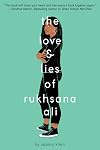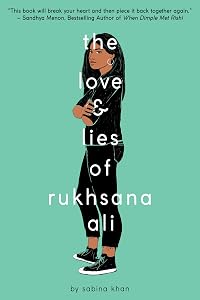
The Love and Lies of Rukhsana Ali
by Sabina Khan
On This Page
Description
Seventeen-year-old Rukhsana Ali is looking forward to going to Caltech and getting away from her conservative Muslim parents' expectation that she will marry, especially since she is in love with her girlfriend Ariana--but when her parents catch her kissing Ariana, they whisk Rukhsana off to Bangladesh and a world of tradition and arranged marriages, and she must find the courage to fight for the right to choose her own path.Tags
Recommendations







Member Reviews
"Bangladeshi-American Rukhsana Ali must choose between her family’s wishes and following her heart.
Although her Muslim immigrant parents approve of her professional dreams of becoming a physicist at NASA, Rukhsana is sure that they won’t be as enthusiastic about her personal dream of spending her life with her secret girlfriend, Ariana, who is white. After winning a prestigious scholarship to Caltech, her professional ambitions seem within reach—until her mother catches her kissing Ariana and she is whisked away to Bangladesh with plans to arrange her marriage. As she battles her parents’ homophobia, Rukhsana simultaneously struggles to help Ariana and her friends back home in Seattle understand the weight of the cultural and show more social stigmas that she has to fight. Along the way, Rukhsana finds unexpected allies, including her grandmother, who encourages her to fight for what she wants. This witty coming-out story is populated by colorful, nuanced personalities who never lapse into stereotypes. Unfortunately, the fast pace leaves readers little time to digest the most intense moments, including some physical and sexual violence. Likewise, the sheer amount of action leaves certain characters, like Rukhsana’s spoiled but loving brother, insufficient time to fully develop. However, the story is told tenderly and unflinchingly, balancing the horrors of homophobia against the South Asian men and women who risk their lives to fight it each and every day.
A coming-out story featuring diverse characters and a richly rendered international setting. (Fiction. 14-18)" www.kirkusreviews.com show less
Although her Muslim immigrant parents approve of her professional dreams of becoming a physicist at NASA, Rukhsana is sure that they won’t be as enthusiastic about her personal dream of spending her life with her secret girlfriend, Ariana, who is white. After winning a prestigious scholarship to Caltech, her professional ambitions seem within reach—until her mother catches her kissing Ariana and she is whisked away to Bangladesh with plans to arrange her marriage. As she battles her parents’ homophobia, Rukhsana simultaneously struggles to help Ariana and her friends back home in Seattle understand the weight of the cultural and show more social stigmas that she has to fight. Along the way, Rukhsana finds unexpected allies, including her grandmother, who encourages her to fight for what she wants. This witty coming-out story is populated by colorful, nuanced personalities who never lapse into stereotypes. Unfortunately, the fast pace leaves readers little time to digest the most intense moments, including some physical and sexual violence. Likewise, the sheer amount of action leaves certain characters, like Rukhsana’s spoiled but loving brother, insufficient time to fully develop. However, the story is told tenderly and unflinchingly, balancing the horrors of homophobia against the South Asian men and women who risk their lives to fight it each and every day.
A coming-out story featuring diverse characters and a richly rendered international setting. (Fiction. 14-18)" www.kirkusreviews.com show less
This was a great book. Overall, I thought the protagonist was relatable, interesting, funny, and resilient. The book was rich with interesting people, complex mother-daughter-grandmother dynamics, support and betrayal. Ultimately, for Rukhsana, this book is about finding a path to self-liberation and finding community in those who embrace all the parts of her--her lesbianism and her Bengali culture.
Complaints: The ending tied things up a little too quickly and in a way that left me feeling like the depth of Rukhsana's experience and the harm done was not fully honored by the narrative. It was rushed in a way that didn't ring true. She deserves happiness, but in my experience it doesn't come so easily when trust has been so broken. The show more other main complaints are Rukhsana's relationships with Ariana (her girlfriend) and her two white friends... these three are wildly self-involved. They frequently mistreat and mischaracterize Rukhsana; they deny her the benefit of the doubt, look down on her culture, and are actively racist. I had a hard time understanding why Rukhsana felt connected to any of them, why she was in love with Ariana, or why anyone would root for Ariana and Rukhsana to be together at all. I wanted Rukhsana, in her becoming, to get to a place where she realizes Ariana (clearly) isn't right for her, and isn't good to her. show less
Complaints: The ending tied things up a little too quickly and in a way that left me feeling like the depth of Rukhsana's experience and the harm done was not fully honored by the narrative. It was rushed in a way that didn't ring true. She deserves happiness, but in my experience it doesn't come so easily when trust has been so broken. The show more other main complaints are Rukhsana's relationships with Ariana (her girlfriend) and her two white friends... these three are wildly self-involved. They frequently mistreat and mischaracterize Rukhsana; they deny her the benefit of the doubt, look down on her culture, and are actively racist. I had a hard time understanding why Rukhsana felt connected to any of them, why she was in love with Ariana, or why anyone would root for Ariana and Rukhsana to be together at all. I wanted Rukhsana, in her becoming, to get to a place where she realizes Ariana (clearly) isn't right for her, and isn't good to her. show less
"I'm not ashamed. But I'm afraid you'll be ashamed of me if you know."
This book was an interesting look into one type of cultural reaction to LGBT children, and manages to balance the much needed conversation about how these things actually happen but also the fact that it's not everyone, just as all white American LGBT kids aren't thrown out of their homes or sent off to conversion therapy. I think that's sadly an important balance to have right now, considering the toxic and frightening political developments; especially when it comes to the islamophobic aspect of it.
I do feel like I've been educated during my read of this book, and that's always a good sign for a book, especially when it comes to books that focus on realism and show more social issues. Part of this is Khan's amazing and seamless descriptions of Desi culture; she happily described food and clothing and such beyond just their names, and it worked well because it showed how important culture can be, especially to Rukhsana despite the fact that she feels more or less oppressed by her parents' parenting and view on certain things. It's rarely black and white.
But I did have a few issues; mostly having to do with the white characters. Perhaps not as characters, but rather more as persons, and I wish Khan had gone all the way in not only showing how non-understanding white people can be but actually make a clear mark that this is not okay. Rukhsana's white friends, including her girlfriend, went beyond just "doesn't understand, but just needs to be informed" to honestly having me feel uncomfortable when they were reunited and all was good. I get that it's not easy to stand up to your friends; I struggle to do so to straight friends, so I'm sure doing it to white friends is even harder, but it feels like there must've been a better way to at least portray that struggle. Because now they just felt... forgiven and they did not deserve that.
That being said, the ending (without spoiling too much) felt... rushed and entirely flat to me. I appreciate a happy ending, but sometimes bitterweet is happy enough when the plot handles such heavy topics; it mostly made me feel like it removed some of the seriousness of what Rukshana's parents actually put her through. show less
This book was an interesting look into one type of cultural reaction to LGBT children, and manages to balance the much needed conversation about how these things actually happen but also the fact that it's not everyone, just as all white American LGBT kids aren't thrown out of their homes or sent off to conversion therapy. I think that's sadly an important balance to have right now, considering the toxic and frightening political developments; especially when it comes to the islamophobic aspect of it.
I do feel like I've been educated during my read of this book, and that's always a good sign for a book, especially when it comes to books that focus on realism and show more social issues. Part of this is Khan's amazing and seamless descriptions of Desi culture; she happily described food and clothing and such beyond just their names, and it worked well because it showed how important culture can be, especially to Rukhsana despite the fact that she feels more or less oppressed by her parents' parenting and view on certain things. It's rarely black and white.
But I did have a few issues; mostly having to do with the white characters. Perhaps not as characters, but rather more as persons, and I wish Khan had gone all the way in not only showing how non-understanding white people can be but actually make a clear mark that this is not okay. Rukhsana's white friends, including her girlfriend, went beyond just "doesn't understand, but just needs to be informed" to honestly having me feel uncomfortable when they were reunited and all was good. I get that it's not easy to stand up to your friends; I struggle to do so to straight friends, so I'm sure doing it to white friends is even harder, but it feels like there must've been a better way to at least portray that struggle. Because now they just felt... forgiven and they did not deserve that.
That being said, the ending (without spoiling too much) felt... rushed and entirely flat to me. I appreciate a happy ending, but sometimes bitterweet is happy enough when the plot handles such heavy topics; it mostly made me feel like it removed some of the seriousness of what Rukshana's parents actually put her through. show less
The conservative community, the son and daughter are different mom, the racism, everything is in perfect perspective. As someone who's in more or less the same situation as Rukhsana, I find myself living the role as I read.
My heart breaks into million pieces for what Rukhsana and Ariana.
Recently, I came out as an asexual to my mom and introduced my girlfriend to her. She accepted us because we're both aces and have no desire for sex. She won't morally let us have a sexual relationship not let us move out as a couple. We're living at our respective parents' houses like every other single girls do in our country, and we resort to doing sleep overs at each other's house.
It's not ideal but we have to make with it. For we can't ever get show more married, legally or morally-because what will others say, or move out and live together on our own although both of us can afford to do so.
I can't imagine if I am to face something as Rukhsana. That's why I adore her character more, for being stronger than I can imagine myself to be, and for being a representation of hope and inspiration.
Also I find it really horrifying that women are always the ones who are stricter with the patriarchal rules and are always so eager to shape their daughters into themselves. I know I'm stereotyping here, but it's mostly true, but it's stupid stereotyping too. Nani is so cool, unlike mom, and I'm sure both woman want the best for their children, It's just their idea of best life is different.
This concept of different woman and their stance against/for patriarchy is the most valuable thing this book gives me. Reading this will remind us of our own place as a woman in this patriarchal world and what we can do to change it. show less
My heart breaks into million pieces for what Rukhsana and Ariana.
Recently, I came out as an asexual to my mom and introduced my girlfriend to her. She accepted us because we're both aces and have no desire for sex. She won't morally let us have a sexual relationship not let us move out as a couple. We're living at our respective parents' houses like every other single girls do in our country, and we resort to doing sleep overs at each other's house.
It's not ideal but we have to make with it. For we can't ever get show more married, legally or morally-because what will others say, or move out and live together on our own although both of us can afford to do so.
I can't imagine if I am to face something as Rukhsana. That's why I adore her character more, for being stronger than I can imagine myself to be, and for being a representation of hope and inspiration.
Also I find it really horrifying that women are always the ones who are stricter with the patriarchal rules and are always so eager to shape their daughters into themselves. I know I'm stereotyping here, but it's mostly true, but it's stupid stereotyping too. Nani is so cool, unlike mom, and I'm sure both woman want the best for their children, It's just their idea of best life is different.
This concept of different woman and their stance against/for patriarchy is the most valuable thing this book gives me. Reading this will remind us of our own place as a woman in this patriarchal world and what we can do to change it. show less
"Do you think that just because you've finally realized how narrow-minded you are, I should feel lucky that you're accepting me now? I'm sick, remember? And disgusting. Well, now I don't accept you."
Whew, complicated thoughts about this one. There's a lot to unpack. I'm parroting lots of other middling reviews by saying that this was a very important and interesting story, but the writing quality was just...not there. Which was really a shame. It had a lot of great topics in here but it fumbled so many of them - the emotional resonance was dulled and it didn't hold itself together strong enough for me.
That said, it hit lots of points I was glad to see - the complicated emotions of pain, righteousness, and guilt that Rukhsana feels when show more she knows that she's ruining everything for her parents...but that they're in the wrong. The multiple facets of religion and culture and how the West interacts with it - especially when those facets are a big part of your friends' lives. Rukhsana's parents went to extremes but the whole time they were misguided and wrong, but not villains. And her friends being selfish and bigoted even under so many layers of good intentions.
But there wasn't much impact since the writing was fairly juvenile. A craft problem that'll get better and better with future books, so I'm interested in seeing what other hard topics Khan will choose to tackle, because she has the emotional intelligence and the sensitivity to deal with many facets of complicated issues. But lord. It couldn't really hold itself together chapter to chapter, page to page, sentence to gosh dang sentence. D: show less
Trigger warning for rape, mentions of child sexual abuse, and violent homophobia.
I don't really know how I feel about this. I wanted so desperately to love it, and I did enjoy certain aspects of it, such as the fantastic OwnVoices Bengali rep (it was amazing), the complex family relationships (some of which are so touching: Rukhsana's relationship with her brother and cousin Shaila), as well as the commentary on racism, islamophobia, and homophobia, and how Rukhsana as a character faces this and calls out the microaggressions and manipulative behaviours of family/friends.
But unfortunately the writing, which was very basic, the pacing, and the way the narrative progressed lessened my enjoyment of it. It felt a little like the author was show more underestimating the audience. The romance also just didn't feel very believable as a relationship to me. I didn't find myself rooting for it, instead rooting for Rukhsana's personal happiness, and I found myself wishing for... more. The issues I had with the writing is definitely something that could be fixed in other novels though so I will be checking out anything the author writes in the future. show less
I don't really know how I feel about this. I wanted so desperately to love it, and I did enjoy certain aspects of it, such as the fantastic OwnVoices Bengali rep (it was amazing), the complex family relationships (some of which are so touching: Rukhsana's relationship with her brother and cousin Shaila), as well as the commentary on racism, islamophobia, and homophobia, and how Rukhsana as a character faces this and calls out the microaggressions and manipulative behaviours of family/friends.
But unfortunately the writing, which was very basic, the pacing, and the way the narrative progressed lessened my enjoyment of it. It felt a little like the author was show more underestimating the audience. The romance also just didn't feel very believable as a relationship to me. I didn't find myself rooting for it, instead rooting for Rukhsana's personal happiness, and I found myself wishing for... more. The issues I had with the writing is definitely something that could be fixed in other novels though so I will be checking out anything the author writes in the future. show less
Rukhsana is a senior in high school and thrilled to get a full ride to college in California. She's in love with Arianna, but doesn't want to come out because she doesn't think it will go over well with her parents. There is a rich look at her Bangladeshi community. When Rukhsana's family finds out she is a lesbian, they react extremely faking an illness with her grandmother that requires them to go to Bangladesh. Her parents proceed to begin to work on arranging a marriage for her. There is a lot of family trauma and drama. There were times that the dialog felt a bit stilted. The story took lots of twists and turns before getting to the lessons learned.
Members
- Recently Added By
Lists

Relationships: LGTBQ
40 works; 2 members

BookTok Teen
123 works; 2 members

Books Read in 2021
5,361 works; 114 members

School library books removed after TX state legislator inquiry
429 works; 6 members

Books Mentioned in the A+ Autostraddle Pop Up Discords Nov 2022 & Dec 2022
223 works; 3 members
Author Information

7 Works 732 Members
Awards and Honors
Awards
Notable Lists
Common Knowledge
- Canonical title
- The Love and Lies of Rukhsana Ali
- Original language
- English
Classifications
- Genres
- LGBTQ+, Teen, Fiction and Literature, Young Adult
- DDC/MDS
- 813.6 — Literature & rhetoric American literature in English American fiction in English 2000-
- LCC
- PZ7.1 .K5315 .L — Language and Literature Fiction and juvenile belles lettres Fiction and juvenile belles lettres Juvenile belles lettres
- BISAC
Statistics
- Members
- 456
- Popularity
- 67,048
- Reviews
- 18
- Rating
- (3.70)
- Languages
- English, Spanish
- Media
- Paper, Audiobook, Ebook
- ISBNs
- 13
- ASINs
- 3