On This Page
Description
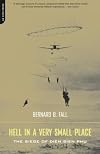
Like Gettysburg, Stalingrad, Midway, and Tet, the battle at Dien Bien Phu-a strategic attack launched by France against the Vietnamese in 1954, after eight long years of war, marked a historic turning point. By the end of the fifty-six-day siege, a determined Viet Minh guerrilla force had destroyed a large, tactical French colonial army in the heart of Southeast Asia. The Vietnamese victory would not only end French occupation of Indochina and offer a sobering premonition of the U.S.'s show more future military defeat in the region, but would also provide a new model of modern warfare in which size and sophistication didn't always dictate victory. Before his death in Vietnam in 1967, Bernard Fall, a critically acclaimed scholar and reporter, drew upon declassified documents from the French Defense Ministry and interviews with thousands of surviving French and Vietnamese soldiers to weave a compelling account of the key battle of Dien Bien Phu. With Fall's thorough and insightful analysis, Hell in a Very Small Place has become one of the benchmarks in war reportage. show lessTags
Recommendations

























Member Reviews
It's easy to see why this became a classic. Fall's prose flows easily as he maintains an excellent middle ground examination of the failure of the French High Command coupled with both heroic and cowardly deeds of the French, Moroccan, Algerian, T'ai, and Vietnamese on the ground. As it is all to often in war, the men far behind the lines dither and dictate policy while the boots suffer and die for it.
This book I would also argue is paramount to understanding the French army's role and treatment of the populace in the struggle for Algeria. Most of the combatants and leaders were Indo-China and Dien Bien Phu veterans.
One can almost detect a pleading towards the end, Fall writing while his own country (The USA) began to commit more and show more more to a "conventional war" with the build up of forces in Vietnam passing from the role of adviser to active combatant. Fall hoped we would learn from both our and French mistakes in the 50's, sadly, he died while attached to a unit as a reporter in the jungle. With perfect hindsight, it is plain to see we did not take to heart Fall's excellent work and the lessons available to us. show less
This book I would also argue is paramount to understanding the French army's role and treatment of the populace in the struggle for Algeria. Most of the combatants and leaders were Indo-China and Dien Bien Phu veterans.
One can almost detect a pleading towards the end, Fall writing while his own country (The USA) began to commit more and show more more to a "conventional war" with the build up of forces in Vietnam passing from the role of adviser to active combatant. Fall hoped we would learn from both our and French mistakes in the 50's, sadly, he died while attached to a unit as a reporter in the jungle. With perfect hindsight, it is plain to see we did not take to heart Fall's excellent work and the lessons available to us. show less
The next time someone accuses the French of being cheese eating surrender monkeys, I will be forced to slap them. Dien Bien Phu is one of those battles that has shaped the course of history. In 55 days of brutal siege warfare, the Viet Minh under General Giap defeated a French garrison, ending French involvement in Vietnam, and setting the stage for America's bloody war. Published in 1966, this book was required reading in Wasington policy circles, and drove Lyndon Johnson’s obsession that the battle of Khe Sahn not be another 'din bin foo'.
Bernard Fall was an old Indochina hand, and this book mixes a day by day account of the battle with portraits of colorful French Foreign Legion officers and analysis of the mood and thought in show more Hanoi, Paris, and Washington. At times, the endless descriptions of desperate counter-attacks and airdrops under fire wears on, but a few scenes rise above prosaic reporting to describe the suffering endured by the French, trapped in hastily built trenches, starving, soaked to the bone, and under continual Viet Minh bombardment. The strategic analysis of Eisenhower's decision not to intervene is fairly accurate, especially considering how closely this book was published to the events. Notably, even in 1966 Vietnam experts were obsessed with counter-factuals and might-have-beens.
Ultimately, the French were defeated, but only after days without rations, reinforcement, or resupply. Dien Bien Phu fell only after every bullet was fired, and the last defensive positions overrun. Both sides were ferocious and skilled fighters, but what decided the battle was logistics. The French arrogantly assumed that the base could be supplied by airlift, and that it was impossible to move large numbers of men and supplies through the jungle. Communist flak, and the endurance of coolie porters carrying 200 kg loads on modified bicycles hundreds of miles through the jungle proved them wrong.
Dien Bien Phu was an atypical set-piece of battle, not characteristic of the war as a whole. Long and detailed, Hell in a Very Small Place is too much for a general audience, but vital reading for anybody interested in the origins of the war, or the French colonial forces. show less
Bernard Fall was an old Indochina hand, and this book mixes a day by day account of the battle with portraits of colorful French Foreign Legion officers and analysis of the mood and thought in show more Hanoi, Paris, and Washington. At times, the endless descriptions of desperate counter-attacks and airdrops under fire wears on, but a few scenes rise above prosaic reporting to describe the suffering endured by the French, trapped in hastily built trenches, starving, soaked to the bone, and under continual Viet Minh bombardment. The strategic analysis of Eisenhower's decision not to intervene is fairly accurate, especially considering how closely this book was published to the events. Notably, even in 1966 Vietnam experts were obsessed with counter-factuals and might-have-beens.
Ultimately, the French were defeated, but only after days without rations, reinforcement, or resupply. Dien Bien Phu fell only after every bullet was fired, and the last defensive positions overrun. Both sides were ferocious and skilled fighters, but what decided the battle was logistics. The French arrogantly assumed that the base could be supplied by airlift, and that it was impossible to move large numbers of men and supplies through the jungle. Communist flak, and the endurance of coolie porters carrying 200 kg loads on modified bicycles hundreds of miles through the jungle proved them wrong.
Dien Bien Phu was an atypical set-piece of battle, not characteristic of the war as a whole. Long and detailed, Hell in a Very Small Place is too much for a general audience, but vital reading for anybody interested in the origins of the war, or the French colonial forces. show less
Hell in a Very Small Place (1966) was the definitive book on the battle of Dien Bien Phu (1954) up until the release of The Last Valley in 2004. It still might be, I have not read the later to determine. Fall's book is mostly the chronicle of a "cage fight" with two tough cats thrown into a closed space and watching them destroy one another. I admit to being somewhat lost much of the time for lack of decent maps (I read the audiobook version). There is a lot of detail that would reward a second or third reading. As a battle it's interesting in the same way the Western Front was in WWI. Except in the back woods of Vietnam. And units that included ex-Nazi mercenaries, sub-Saharan Africans, Moroccan and Algerians, French elite show more paratroopers, Laos tribesmen, Chinese and of course many Vietnamese. Actions included massive air drops, mountain artillery, underground mines, human waves, daredevil feats of heroism. I'd like to revisit sometime but with a better understanding of the Indochina war. show less
Superb. One of the best books I've read this year. Comparable to The Great Siege b Ernle Bradford, it describes an horrific battle whose outcome changed the course of history. I'm not much into military tactics, but this book by B. Fall lays everything out in clear maps and prose with unbelievably expert analysis. And, yet, the US still decided to tackle Vietnam, committing many of the same mistakes as did the French. The US deserved what it got. The author's story is equally credible and worth learning as well. Finished 03.09.20.
I have re read this book after 27 years and after a personal trip to the site of the battle. With greater maturity, I enjoyed the book much more with the second reading. The threat of Communism was perhaps less than the years of anti-colonial war that the Vietnamese people had to endure to finally throw off the foreign yoke, much as the French themselves had to fight off German occupation in several wars. The irony is that neither the French, nor the Americans (with their Revolutionary War experience) either identified with the Vietnamese struggle for their own independence.
A good writer, and a well researched book. it remains one of the classics of war reporting. It may have had some influence on whipping up enthusiasm for the widening Vietnamese conflict when it was published.
An outstanding, professional level military study of the lead up to the battle, the battle, and the sequelae. If you are a student of the conflicts in Vietnam, it’s a must read.
Members
- Recently Added By
Author Information

16+ Works 1,461 Members
Bernard Fall was born in Vienna in 1926, migrating to France in 1938. After his father was killed by the Gestapo and his mother killed at Auschwitz, he joined the French Resistance at sixteen, then the French Army. Following World War II, he was an analyst with the Nuremberg War Crimes Tribunal. Coming to the United States in the early 1950s, he show more earned a master's and a doctorate at Syracuse University. He first traveled to Indochina in 1953, returning in 1957, 1962, 1965, 1966, and 1967, when he was killed by a mine on the "street without joy," the highway he had described in his book. He also wrote Hell in a Very Small Place. show less
Series

Common Knowledge
- Canonical title*
- Dien Bien Phu, un coin d'enfer
- Original title
- Hell in a very small place
- Original publication date
- 1967
- Important places
- Dien Bien Phu, Vietnam; Vietnam
- Important events
- Battle of Dien Bien Phu; Indochina War
- Epigraph*
- Shakespeare scrisse che il male fatto dagli uomini sopravvive loro, mentre il bene viene sepolto con loro ossa.Nella vita delle nazioni è spesso vero il contrario. Il bene che la Francia ha fatto in Indocina durerà. Il male... (show all) è stato sepolto a Dien Bien Phu. (David Schoenbrun, 'As France Goes', 1957. //
Le grandi battaglie, come le grandi tragedie, non sempre sono il prodotto di un calcolo degli uomini; e una catastrofe nasce più facilmente da un calcolo non del tutto esatto che da un errore macroscopico. (Generale S.L.A. Marshall, 'Night Drop - The American Airborne Invasion of Normandy, 1962. //
Quando una nazione si risveglia, i suoi figli migliori sono pronti a dare la loro vita per la sua libertà.
Quando gli imperi stanno per crollare, essi sono pronti a dare la vita dei loro sottufficiali. (Menachem Begin, Capo dell'Irgun, 'La rivolta', 1951. - Dedication
- To Dorthy who lived with the ghosts of Dien Bien Phu for three long years
- First words
- "Castor" was probably the first and last airborne operation in history in which the leading aircraft contained three generals along with the paratroop pathfinders.
- Quotations
- The western flank of the fortress was the last to be occupied by the Viet-Minh, since its positions were still covered by extensive mine fields and barbed-wire entanglements. Some of the strongpoints on Claudine were occupied... (show all) as late as 1820. One of the last to be occupied was strongpoint Lily, still held by a handful of Moroccans under Major Jean Nicolas. As Nicolas looked out over the battlefield from a slit trench near his command post, a small white flag, probably a handkerchief, appeared on top of a rifle hardly fifty feet away from him, followed by the flat helmeted head of a Viet-Minh soldier. "You're not going to shoot anymore?" said the Viet-Minh in French. " No, I am not going to shoot anymore," said Nicolas. "C'est fini?" said the Viet-Minh. " Oui, c'est fini," said the French major. And all around them, as on some gruesome Judgement Day, mud covered soldiers, French and enemy alike, began to crawl out of their trenches and stand erect as firing ceased everywhere. The silence was deafening.
- Last words
- (Click to show. Warning: May contain spoilers.)After the end of the Second Indochina War.
- Original language*
- Anglais (Etats-Unis) (Etats-Unis)
*Some information comes from Common Knowledge in other languages. Click "Edit" for more information.
Classifications
Statistics
- Members
- 576
- Popularity
- 50,737
- Reviews
- 8
- Rating
- (4.32)
- Languages
- English, French
- Media
- Paper, Audiobook, Ebook
- ISBNs
- 8
- ASINs
- 21