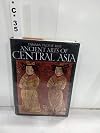
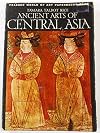
Ancient arts of Central Asia
by Tamara Talbot Rice
On This Page
Tags
Recommendations


















Member Reviews
I keep dipping in and out of this book, which I've owned for 40 years, whenever I want to review Central Asian art history. It takes a very complex subject and manages in 250 pages to make it a coherent whole despite the periods when there simply are 'gaps' that we still haven't been able to fill in. Since the book was published (in 1965), there's been many more archaeological finds, but there has also been an equal amount of archaeological 'damage' in these regions. It's difficult to read about the great Buddhas of Bamiyan, for example, in the author's present-tense voice and not be angry. Or to read for that matter about many other Afghanistan and Pakistan (Bactria and the Hindu Kush) locations mentioned, to know that they probably show more also no longer exist. On the other hand, I have been to ancient 'Chorasmia' (today's Turkmenistan) and the Ordos and 'Kashgaria' (The Tarim Basin region), and my visits have been all the richer for having read this book beforehand. I will doubtlessly be re-reading this book the rest of my life for each time I read it, I'm trying to fill in different parts of the puzzle of Central Asian art.
The book's shortfall is the use of outdated spellings and transcription systems. If you haven't grown up with Wade-Giles or Sanskrit, be prepared to puzzle over Ho Ch'up'ing (in Pinyin, Huo Qubing) and Tch'ang-ugen (Ch'ang-an, or modern Xi'an).
This volume is also best read with a historical atlas at one's side, unless you already know where Keriya, Endere, Begram, Saripul, Damghan, Balasagun and Tepe Maredjan are located because to read this volume without following the geographical identifiers would be a waste of your time. It's the geography and the cultures that count with Central Asian art, as the author warns us in the Introduction "the political conditions which developed in various sections of the vast area dealt with in this volume were often so fluid and complex that, for reasons both of brevity and clarity, it has seemed best to deal with the artistic schools peculiar to each region on a geographical rather than a chronological basis" (p. 10). And therein lies the value of this volume...together with scholar Talbot Rice's constant reminders to 'look back', to see the links, the influences, and to want to continue the search for the missing links. show less
The book's shortfall is the use of outdated spellings and transcription systems. If you haven't grown up with Wade-Giles or Sanskrit, be prepared to puzzle over Ho Ch'up'ing (in Pinyin, Huo Qubing) and Tch'ang-ugen (Ch'ang-an, or modern Xi'an).
This volume is also best read with a historical atlas at one's side, unless you already know where Keriya, Endere, Begram, Saripul, Damghan, Balasagun and Tepe Maredjan are located because to read this volume without following the geographical identifiers would be a waste of your time. It's the geography and the cultures that count with Central Asian art, as the author warns us in the Introduction "the political conditions which developed in various sections of the vast area dealt with in this volume were often so fluid and complex that, for reasons both of brevity and clarity, it has seemed best to deal with the artistic schools peculiar to each region on a geographical rather than a chronological basis" (p. 10). And therein lies the value of this volume...together with scholar Talbot Rice's constant reminders to 'look back', to see the links, the influences, and to want to continue the search for the missing links. show less
A structural aesthetic look at nomadic fine arts, metals, and sculptures.
Members
- Recently Added By
Author Information

22+ Works 643 Members
Series
Belongs to Publisher Series
Common Knowledge
- Important places
- Central Asia
- Original language
- English
Classifications
Statistics
- Members
- 69
- Popularity
- 454,759
- Reviews
- 2
- Rating
- (4.00)
- Languages
- Dutch, English
- Media
- Paper
- ISBNs
- 2
- ASINs
- 4