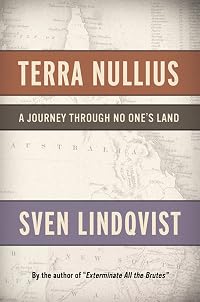
Terra Nullius: A Journey Through No One's Land
by Sven Lindqvist
On This Page
Description
"Sven Lindqvist travels 7,000 miles through Australia in search of places where belief in the rights of the white man and the annihilation of the "lower races" were put into practice. While Australia continues to reckon with its violent past - echoed in the United States' treatment of Native Americans and Europe's colonization of other continents - Lindqvist evokes a history in which young boys were kidnapped to dive for pearls, then whipped and abandoned when the bends ruined them for work; show more "half-caste" children were taken from their mothers; and natives were misdiagnosed with STDs, put in neck irons, and sent to internment camps on remote islands. Lindqvist also recalls the work of ethnologists who brought their own prejudices to bear in studying Aborigines as primitives close to the origins of civilization, later inspiring Freud and Durkheim. At the same time he describes a beautiful and strange land, sacred to the native people who had inhabited it for centuries and celebrated it in a long tradition on richly symbolic art." "Terra Nullius is the disturbing story of how "no man's land" became the province of the white man."--BOOK JACKET. show lessTags
Recommendations























Member Reviews
This is a historical exploration of the treatment of the Australian Aborigines, as the author travels the country, primarily visiting places where the legal fiction "terra nullius" was used to justify the seizure of their land from the Aborigines, or even to massacre them. The first stop is Moorundie, the site of the first fighting in South Australia, and where the entire Ngaiawong people were wiped out. When the author first arrived in Adelaide, no one seemed to know where it was--the South Australia Musem didn't know where it was, and referred the author to the tourist office, which referred him to another tourist office. He finally located the town on a computer in the maps section of the Department of the Environment.
He next show more traveled up the Stuart Highway to Woomera, a town built in 1947 by the British to test intercontinental missiles. They moved white settlers from their stations, but the Aborigines, scattered over this area the size of western Europe, didn't have radios or other means to be notified. (Most of the territory appropriated for the testing had been allocated to the Aborigines in 1930).
He next visited Uluru, "an inverse Grand Canyon. The same red sandstone, the same grandeur. But the Grand Canyon, unlike Uluru, is instantly comprehensible. You can see its cause--the river--and understand at once how it came about. Uluru is a visual mystery, lacking any perceptible cause." Uluru is another area that was "restored" to the Aborigines, but only on the condition that they immediately lease the whole area back to a park authority. Today, they are powerless to prevent the countless torurists from climbing this spiritual site.
The book considers the government policy of removing "half-caste" children from their families, a policy that did not end until 1957. "The half-caste is intellectually above the aborigine, and it is the duty of the state that they be given a chance to lead a better life than their mothers who soon forget their offspring." (See the movie or read the book Rabbit Proof Fence to see the fallacy of the belief that Aborigines did not have close and loving familial relationships.)
The British conducted nuclear tests on land belonging to the Aborigines in the Great Victoria Desert. These tests went on until 1963, and in 1968 the Australian government signed an agreement with Great Britain releasing the British government from any further liability. Ten years later, this agreement was reconsidered, when it was learned that the British "decontamination" efforts had consisted of ploughing the plutonium a few decimeters below the surface, which was soon exposed by the desert winds.
I found the sections about the aboriginal artists to be the most interesting parts of the book. In the 1930's an aboriginal camelkeeper, Albert Namatjiras, asked his employer if he could learn to use watercolors. Soon, his work began selling very well. His success was held up as a model of how the Aborigine by learning from the white man could become his cultural equal. Namatjiras was rewarded for his success with full Australian citizenship. However, in 1959 after he was caught drunk with one of his relatives, he was convicted and sentenced to hard labor for supplying intoxicants to his relative. He died shortly after his release. The book also covers the birth of what we now refer to as "Aboriginal Art" in the 1970's, and notes that unprecedented percentages of these populations have become important and sought-after artists.
This book was a fascinating read, and was full of obscure facts and stories. Although it is specific to Australia, it is reflective of other areas "settled" by Europeans to the detriment of the indigenous people. show less
He next show more traveled up the Stuart Highway to Woomera, a town built in 1947 by the British to test intercontinental missiles. They moved white settlers from their stations, but the Aborigines, scattered over this area the size of western Europe, didn't have radios or other means to be notified. (Most of the territory appropriated for the testing had been allocated to the Aborigines in 1930).
He next visited Uluru, "an inverse Grand Canyon. The same red sandstone, the same grandeur. But the Grand Canyon, unlike Uluru, is instantly comprehensible. You can see its cause--the river--and understand at once how it came about. Uluru is a visual mystery, lacking any perceptible cause." Uluru is another area that was "restored" to the Aborigines, but only on the condition that they immediately lease the whole area back to a park authority. Today, they are powerless to prevent the countless torurists from climbing this spiritual site.
The book considers the government policy of removing "half-caste" children from their families, a policy that did not end until 1957. "The half-caste is intellectually above the aborigine, and it is the duty of the state that they be given a chance to lead a better life than their mothers who soon forget their offspring." (See the movie or read the book Rabbit Proof Fence to see the fallacy of the belief that Aborigines did not have close and loving familial relationships.)
The British conducted nuclear tests on land belonging to the Aborigines in the Great Victoria Desert. These tests went on until 1963, and in 1968 the Australian government signed an agreement with Great Britain releasing the British government from any further liability. Ten years later, this agreement was reconsidered, when it was learned that the British "decontamination" efforts had consisted of ploughing the plutonium a few decimeters below the surface, which was soon exposed by the desert winds.
I found the sections about the aboriginal artists to be the most interesting parts of the book. In the 1930's an aboriginal camelkeeper, Albert Namatjiras, asked his employer if he could learn to use watercolors. Soon, his work began selling very well. His success was held up as a model of how the Aborigine by learning from the white man could become his cultural equal. Namatjiras was rewarded for his success with full Australian citizenship. However, in 1959 after he was caught drunk with one of his relatives, he was convicted and sentenced to hard labor for supplying intoxicants to his relative. He died shortly after his release. The book also covers the birth of what we now refer to as "Aboriginal Art" in the 1970's, and notes that unprecedented percentages of these populations have become important and sought-after artists.
This book was a fascinating read, and was full of obscure facts and stories. Although it is specific to Australia, it is reflective of other areas "settled" by Europeans to the detriment of the indigenous people. show less
Sven Lindqvist has never written a bad word, and the abuse and destruction of Aboriginal and nomadic peoples is one of his pet subjects - see his work on the destruction of the Hetero peoples in "Exterminate All The Brutes". Now he turns to Australia and the dismal treatment of the Aboriginal population by both settlers, anthropologists, "protectors" (possibly one of the most grotesque misuses of a word in the history of the English language) and politicians. He travels through South Australia, Northern Territory and Western Australia documenting at each stop another example of a community torn apart by casual race hate, or near genocide, of Aboriginal communities desperately trying to protect cultural and family ties. None of this is show more new material, but rarely has it been described in such stark terms. Lindqvist argues, correctly, that whether the near genocide was intended or not (he thinks it was, or at least that the removal of Aboriginal communities was a desired outcome) it very nearly succeeded, and that the extent to which Aboriginal culture has managed to survive is remarkable. He believes it a sign of a very strong culture rather than the weak, outmoded one it is often portrayed as. He also correctly argues that saying "Sorry" is meaningless without some attempt to change behaviour or make things right. As he points out to those who would argue "its nothing to do with me, I haven't mistreated any Aborigines", maybe not, but if you've enjoyed the spoils of conquest, as all European settlers have, then you should pay part of the reparation costs. Couldn't agree more. Highly recommended show less
Another great book from Sven Lindkvist. This is a unique blend of informed travelogue with historical analysis, social anthropolgy, and the origins of modern Australian art & literature.
Lindkvist accounts for how the white European settlement of Australia in turn resulted in the wholesale systematic dispossession of the indigenous aboriginal peoples. Of course it doesn't end there - not only were their lands and waters stolen but there was a conscious attempt to actually exterminate them altogether. Citing countless and varied sources he demonstrates how this peaked in the 1930s - one exponent even calls it 'the final solution' - and would even continue in many aspects well into the post-WW2 era.
Families are seperated, children interned show more in labour camps, boys made to pearl-dive, girls sent away as maids (often to repeated sexual & physical abuse), mothers would have their babies taken away, and the men would be utterly disenfranchised and often arrested, rounded-up, beaten, disappeared, and even shot. Time after time the authorities would turn a blind eye or even encourage these acts. The prison islands for supposed carriers of STDs were little more than concentration camps for the thousands...
Towards its end, Lindkvist's book explores how through art the persecuted peoples have made a sort of breakthrough into modern Australian identity and consciousness. The subject of restitution is an ongoing one and has clearly become a hot political issue in 21st century Australia.
As others will doubtless echo - all Australians should read this book, but it isn't a story unique to that country alone. We should all look at our own countries and ask ourselves did this happen here? Did we do it over there? Are we still responsible for it happening? show less
Lindkvist accounts for how the white European settlement of Australia in turn resulted in the wholesale systematic dispossession of the indigenous aboriginal peoples. Of course it doesn't end there - not only were their lands and waters stolen but there was a conscious attempt to actually exterminate them altogether. Citing countless and varied sources he demonstrates how this peaked in the 1930s - one exponent even calls it 'the final solution' - and would even continue in many aspects well into the post-WW2 era.
Families are seperated, children interned show more in labour camps, boys made to pearl-dive, girls sent away as maids (often to repeated sexual & physical abuse), mothers would have their babies taken away, and the men would be utterly disenfranchised and often arrested, rounded-up, beaten, disappeared, and even shot. Time after time the authorities would turn a blind eye or even encourage these acts. The prison islands for supposed carriers of STDs were little more than concentration camps for the thousands...
Towards its end, Lindkvist's book explores how through art the persecuted peoples have made a sort of breakthrough into modern Australian identity and consciousness. The subject of restitution is an ongoing one and has clearly become a hot political issue in 21st century Australia.
As others will doubtless echo - all Australians should read this book, but it isn't a story unique to that country alone. We should all look at our own countries and ask ourselves did this happen here? Did we do it over there? Are we still responsible for it happening? show less
The term "terra nulllius," for "land belonging to no one," refers to the legal fiction used by the European colonizers of Australia to take the land belonging to the various groups of Aborigines who already lived there and, not so incidentally, for whom the land had very deep significance, reflecting (to oversimplify) the creation of the world. In the book Terra Nullius], Lindqvist combines a travelogue with a look at some highlights (lowlights?) of European interaction with Aborigines: outright massacres, rape, introduction of diseases including venereal diseases, land theft, imprisonment, stealing half-white and other children, breaking up families, testing of nuclear weapons without moving people away, and of course, underlying show more everything, breathtaking racism. Towards the end of the book, he introduces a little hope with an exploration of the success (i.e., in the white art market) of Aboriginal art and music.
Lindqvist has an amazing talent to blend his travelogue with historical information, which tends to speak for itself, and with examples from fiction written by colonizers (including a book he read as a child in Sweden which characterizes Aborigines as cannibals), which also tend to speak for themselves. He also devotes some space to an analysis of the the thinking of early 20th century European psychologists and anthropologists who hypothesized freely (and incorrectly) about the origins of humanity based on what they "knew" about the Australian Aborigines. I hadn't heard of Lindqvist before learning about this book from another LTer, but apparently he has made a career of traveling to places to understand the European/white impact on the people of color living in the lands they colonized. This is a compellingly readable, if borderline polemical, book, and it spurs the reader to anger. Many of the stories he tells are appalling.
Some examples of Lindqvist's writing.
"When the natives deny the occupiers access to their records and traditions, scholarship declares they don't exist. . .
When the settler community has stolen the land from its original owners, scholarship finds the natives have no land rights." pp. 38-39
So the Aborigines were constantly being moved, not only to allow for atom-bomb tests, but also because the whites' cattle needed a particular pool of water or because the whites' company had found new mineral deposits -- or simply for their own good, so they could be looked after and learn the whites' table manners, the whites' good home cooking, the whites' working hours. The new policy after the second world war was aimed at 'assimilating' the Aborigines, which didn't imply the whites thought they had anything to learn from black people, but meant black people were to be trained to be steady wage earners and consumers on the fringes of white society." p. 163
Lindqvist makes the case for meaningful apologies from the descendents of colonizers by recounting his own encounter, as a young man, with Norwegians who accused him of benefiting from the Swedish policy of allowing the Nazis to march across Sweden to Norway. At first, he was taken aback by this, since he was only 10 in 1942, but comes to realize that "it was my own country's cowardly appeasement policy I had to thank for never having been bombed or shot at or even gone to bed hungry." He also discusses how countries can effectively make amends for past misdeeds; needless to say, saying "I'm sorry" isn't enough.
He ends the book with a broader look at the world.
"Three hundred million human beings on this planet are members of indigenous peoples who have been, or are on the way to being, robbed of their land. They are generally among the poorest and most scorned minorities in the countries where they live. Not long ago, they were considered doomed to die out. But in recent decades the indigenous peoples have seized back the initiative on a global scale." p.204
He then goes on to discuss some of these efforts, what Australia is doing, the fight to obtain German reparations for the Holocaust, and other claims for reparations. He concludes:
"When the misdeeds of the past are brought to light, when the perpetrators and their heirs confess and ask forgiveness, when we do penance and mend our ways and pay the price -- then the crime committed has a new setting and a new significance. No longer the inescapable extinction of a people, but its ability to survive and eventually have the justice of its claim acknowledged." p. 213 show less
Lindqvist has an amazing talent to blend his travelogue with historical information, which tends to speak for itself, and with examples from fiction written by colonizers (including a book he read as a child in Sweden which characterizes Aborigines as cannibals), which also tend to speak for themselves. He also devotes some space to an analysis of the the thinking of early 20th century European psychologists and anthropologists who hypothesized freely (and incorrectly) about the origins of humanity based on what they "knew" about the Australian Aborigines. I hadn't heard of Lindqvist before learning about this book from another LTer, but apparently he has made a career of traveling to places to understand the European/white impact on the people of color living in the lands they colonized. This is a compellingly readable, if borderline polemical, book, and it spurs the reader to anger. Many of the stories he tells are appalling.
Some examples of Lindqvist's writing.
"When the natives deny the occupiers access to their records and traditions, scholarship declares they don't exist. . .
When the settler community has stolen the land from its original owners, scholarship finds the natives have no land rights." pp. 38-39
So the Aborigines were constantly being moved, not only to allow for atom-bomb tests, but also because the whites' cattle needed a particular pool of water or because the whites' company had found new mineral deposits -- or simply for their own good, so they could be looked after and learn the whites' table manners, the whites' good home cooking, the whites' working hours. The new policy after the second world war was aimed at 'assimilating' the Aborigines, which didn't imply the whites thought they had anything to learn from black people, but meant black people were to be trained to be steady wage earners and consumers on the fringes of white society." p. 163
Lindqvist makes the case for meaningful apologies from the descendents of colonizers by recounting his own encounter, as a young man, with Norwegians who accused him of benefiting from the Swedish policy of allowing the Nazis to march across Sweden to Norway. At first, he was taken aback by this, since he was only 10 in 1942, but comes to realize that "it was my own country's cowardly appeasement policy I had to thank for never having been bombed or shot at or even gone to bed hungry." He also discusses how countries can effectively make amends for past misdeeds; needless to say, saying "I'm sorry" isn't enough.
He ends the book with a broader look at the world.
"Three hundred million human beings on this planet are members of indigenous peoples who have been, or are on the way to being, robbed of their land. They are generally among the poorest and most scorned minorities in the countries where they live. Not long ago, they were considered doomed to die out. But in recent decades the indigenous peoples have seized back the initiative on a global scale." p.204
He then goes on to discuss some of these efforts, what Australia is doing, the fight to obtain German reparations for the Holocaust, and other claims for reparations. He concludes:
"When the misdeeds of the past are brought to light, when the perpetrators and their heirs confess and ask forgiveness, when we do penance and mend our ways and pay the price -- then the crime committed has a new setting and a new significance. No longer the inescapable extinction of a people, but its ability to survive and eventually have the justice of its claim acknowledged." p. 213 show less
The finest exploration of the history and morality of a continent. Better because it is more serious than Bryson's 'Down Under', and more hard-hitting as it should be.
A confronting eye-opener. Absolutely worth reading.
Excellent - indigenous history never heard of before - all round Australia.
Members
- Recently Added By
Lists

Top Five Books of 2015
811 works; 241 members

Best Travel Writing - Non-Fiction
110 works; 6 members

Not the NYT list of top 100 21st century books
100 works; 6 members
Author Information

36+ Works 2,014 Members
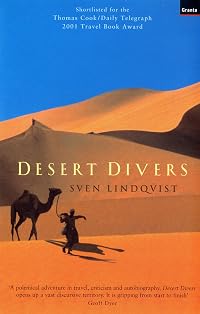
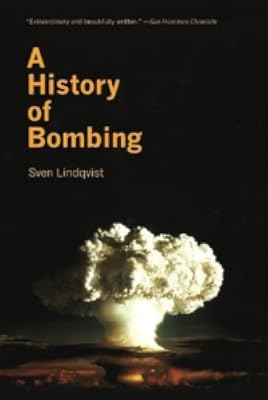
Sven Lindqvist was born in Stockholm, Sweden on March 28, 1932. He wrote for the newspaper Dagens Nyheter before becoming a cultural attaché to the Swedish embassy in Beijing. He received a Ph.D. from Stockholm University in 1966. He wrote more than 30 books including A Proposal, Advertising Is Lethal, The Myth of Wu Tao-tzu, The Shadow, Land and show more Power in South America, Diary of a Lover, Diary of a Married Man, Bench Press, Desert Divers, Exterminate All the Brutes, Terra Nullius: A Journey Through No One's Land, and A History of Bombing. In 2012, he received the Lenin Prize. He died on May 14, 2019 at the age of 87. (Bowker Author Biography) show less
Some Editions
Work Relationships
Common Knowledge
- People/Characters
- Sven Lindqvist
- Important places
- Australia
Classifications
- Genres
- Nonfiction, Travel, General Nonfiction, History
- DDC/MDS
- 919.4047 — History & geography Geography & travel Geography of and travel in Australasia, Pacific Ocean islands, Atlantic Ocean islands, Arctic islands, Antarctica and on extraterrestrial worlds Australia Travel 2000-
- LCC
- GN666 .L54 — Geography, Anthropology and Recreation Anthropology Anthropology Ethnology. Social and cultural anthropology Ethnic groups and races By region or country
- BISAC
Statistics
- Members
- 170
- Popularity
- 193,168
- Reviews
- 9
- Rating
- (4.03)
- Languages
- 9 — Dutch, English, Finnish, French, Italian, Polish, Portuguese, Slovenian, Swedish
- Media
- Paper
- ISBNs
- 13
- ASINs
- 1