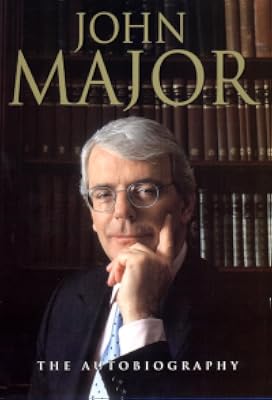
John Major: The Autobiography
by John Major
On This Page
Description
Major's early life was extraordinary; his rise through Parliament meteoric. Soon a favourite of Margaret Thatcher, he became Foreign Secretary and then Chancellor of the Exchequher. When Thatcher fell, he fought and won a shrewd campaign to succeed her.Tags
Recommendations





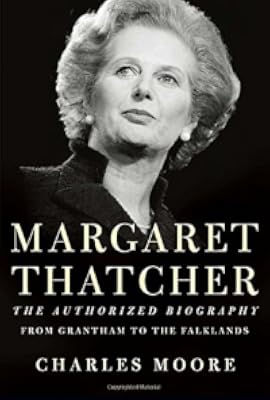
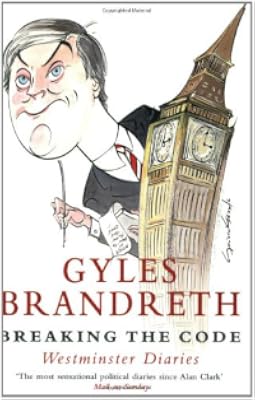
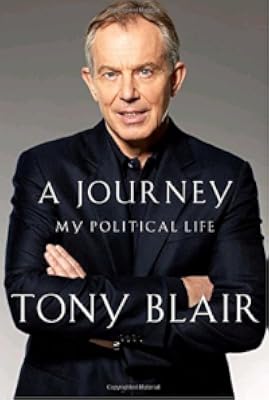
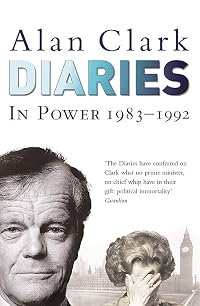



Member Reviews
(19 August 2013, Arcadia Bookshop, Oxford)
This book was bought on the trip to Oxford detailed in this post. An excellent political autobiography that deserves its description as one of the best of the genre written in the 20th century. It’s very detailed and did take a long time to read (and I will admit to getting a big bogged down in all the mechanisms of the ERM) but very much worth it.
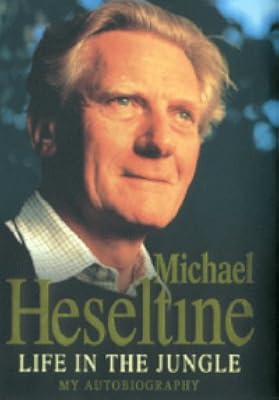
Major’s conservatism was of the socially responsible kind, in fact initiating many of the policies that New Labour took and ran with. He never forgot his own start in life and did seem to genuinely aim to lift people out of poverty, remove class distinctions and offer education of whatever kind people needed, while making public services more show more accountable (even if league tables obviously went a bit far in the end; he is clear-sighted on the propensity to ‘game’ these, however). He does make much of the fact that Blair decried his policies while in opposition then took them over when it power, with Blair even using pet words and phrases of Major’s in his own rallying calls, which seems a bit much, really. Having said that, he does have a decent word for Blair’s support during the Northern Ireland peace negotiations and subsequent work on this area. He is also generous about other characters’ actions, e.g. Heseltine’s decency during the last leadership campaign Major fought.
Major’s prime ministership fell during an important time in my life, when I was getting interested in party politics and voting for the first time, so it was interesting to read about the background to some of those seminal events. He clarifies why he has been said to have done too little in Yugoslavia (letting the UN get on with it rather than wading in), and he does admit his mistakes, although I have to say here that he does not mention his own contribution to the accusations of ‘sleaze’ levelled at the Tories after his ‘Back to Basics’ campaign, which was a bit disappointing. He’s very clear on Margaret Thatcher, both in power and after power, and quite scathing about her breaches of etiquette in openly talking about him and even campaigning against him – I had thought this would be more mealy-mouthed on that area. He paints amusing and affectionate portraits of his fellow politicians at home and abroad, and reprints his lovely eulogy for John Smith.
A humane and interesting book about a man who was perhaps more interesting than contemporary reports portrayed him. He seems to be a decent man who genuinely wanted to serve, and consulted his immediate family on the big political and career decisions. There’s an additional chapter in this edition which looks at ‘what next’ from 2000, which is a bit unnecessary now, as I don’t really remember the exact detail of what came true and what didn’t. But overall a fascinating and valuable read. show less
This book was bought on the trip to Oxford detailed in this post. An excellent political autobiography that deserves its description as one of the best of the genre written in the 20th century. It’s very detailed and did take a long time to read (and I will admit to getting a big bogged down in all the mechanisms of the ERM) but very much worth it.
Major’s conservatism was of the socially responsible kind, in fact initiating many of the policies that New Labour took and ran with. He never forgot his own start in life and did seem to genuinely aim to lift people out of poverty, remove class distinctions and offer education of whatever kind people needed, while making public services more show more accountable (even if league tables obviously went a bit far in the end; he is clear-sighted on the propensity to ‘game’ these, however). He does make much of the fact that Blair decried his policies while in opposition then took them over when it power, with Blair even using pet words and phrases of Major’s in his own rallying calls, which seems a bit much, really. Having said that, he does have a decent word for Blair’s support during the Northern Ireland peace negotiations and subsequent work on this area. He is also generous about other characters’ actions, e.g. Heseltine’s decency during the last leadership campaign Major fought.
Major’s prime ministership fell during an important time in my life, when I was getting interested in party politics and voting for the first time, so it was interesting to read about the background to some of those seminal events. He clarifies why he has been said to have done too little in Yugoslavia (letting the UN get on with it rather than wading in), and he does admit his mistakes, although I have to say here that he does not mention his own contribution to the accusations of ‘sleaze’ levelled at the Tories after his ‘Back to Basics’ campaign, which was a bit disappointing. He’s very clear on Margaret Thatcher, both in power and after power, and quite scathing about her breaches of etiquette in openly talking about him and even campaigning against him – I had thought this would be more mealy-mouthed on that area. He paints amusing and affectionate portraits of his fellow politicians at home and abroad, and reprints his lovely eulogy for John Smith.
A humane and interesting book about a man who was perhaps more interesting than contemporary reports portrayed him. He seems to be a decent man who genuinely wanted to serve, and consulted his immediate family on the big political and career decisions. There’s an additional chapter in this edition which looks at ‘what next’ from 2000, which is a bit unnecessary now, as I don’t really remember the exact detail of what came true and what didn’t. But overall a fascinating and valuable read. show less
Trapped in between that of Thatcher and Blair, John Major premiership often tends to be overlooked and yet... He had managed to reduce both inflation and unemployment -then left by the traumatic Thatcher's era- leaving thus to his successor a sound economy, something which hadn't occurred in a long time. A brilliant politician (Thatcher saw that in him, she who had appointed him Foreign Secretary then Finance Minister), he here reveals himself in a biography written back in 1999.
What strikes first and foremost is his social background. Here is a man who left school at 16 and worked odd jobs from then on, an experience that made him more of a centre-right liberal than an ultra-Conservative, then multiplying within the Tories. It's also, show more somehow, ironic. He is often considered as Thatcher's heir (he carried on her privatisations campaigns) and yet he was the one to break away from many of her other controversial policies and views (e.g. he ditched the Poll Tax, and took a radically new approach towards the EU)!
But the book, of course, worth a read for his retelling of the major events that had shaped his leadership, from the signing of the Maastricht Treaty to his successful negotiating with the IRA, and from Black Wednesday (a crash that reads here like an epic thriller!) to his 'Back to Basic' slogan, an approach that -to put it mildly- backfired very badly. His downfall facing Tony Blair was brutal indeed, but it would be wrong to overlook him: here was a man who tried to stir the Tories away from many of their 'nasty' features (although guilty of embodying some himself) and who paid a heavy price for it.
Is it indispensable? I didn't feel so. Apart from his lampooning of Blair, there's not much controversies in here, the man being as humble as he can be funny at times. The work behind the scene surely is engrossing (personally, I was fascinated by how Black Wednesday unfolded...) but, frankly, there is not much to learn otherwise; the events in question having been recounted elsewhere and in more details. It still is a nice biography, if you care about recent British history... show less
What strikes first and foremost is his social background. Here is a man who left school at 16 and worked odd jobs from then on, an experience that made him more of a centre-right liberal than an ultra-Conservative, then multiplying within the Tories. It's also, show more somehow, ironic. He is often considered as Thatcher's heir (he carried on her privatisations campaigns) and yet he was the one to break away from many of her other controversial policies and views (e.g. he ditched the Poll Tax, and took a radically new approach towards the EU)!
But the book, of course, worth a read for his retelling of the major events that had shaped his leadership, from the signing of the Maastricht Treaty to his successful negotiating with the IRA, and from Black Wednesday (a crash that reads here like an epic thriller!) to his 'Back to Basic' slogan, an approach that -to put it mildly- backfired very badly. His downfall facing Tony Blair was brutal indeed, but it would be wrong to overlook him: here was a man who tried to stir the Tories away from many of their 'nasty' features (although guilty of embodying some himself) and who paid a heavy price for it.
Is it indispensable? I didn't feel so. Apart from his lampooning of Blair, there's not much controversies in here, the man being as humble as he can be funny at times. The work behind the scene surely is engrossing (personally, I was fascinated by how Black Wednesday unfolded...) but, frankly, there is not much to learn otherwise; the events in question having been recounted elsewhere and in more details. It still is a nice biography, if you care about recent British history... show less
This was an interesting read - the political memoir of the UK Prime Minister between Thatcher and Blair. While not a book about The Iron Lady, she does present as politically fumbling (from the Conservative P.O.V.) with the Poll Tax and laying the groundwork for federation with Europe. It is interesting to read how the UK Conservative party is for far to the left of what we call Conservative here in the US. Major cited as progress
Yes, the typical Conservative platform: public health services, broader public education, and support for the arts.
The relationship with George Bush (who comes across as a real gentleman) and Bill Clinton was interesting. The Clinton relationship was fraught with a lack of coordination around Gerry Adams and the IRA while things were good with Bush even during the difficult first Gulf War period. The whole issue of Scottish devolution as well as Northern Ireland (and so much violence there) combined with difficulties in working with a the Franco-German vision of a united Europe seems to me like this book could be documenting the roots of some future disintegration of the United Kingdom into a petulant, insignificant island nation of England. show less
...the NHS was treating 133 patients for every hundred it had managed to treat before reforms...show more
I wanted nursery education to be available for all...
What the "elite" tended to forget was that unless they broadened the base of the arts' public support, and recognised that they were part of a tradition, which
begins in school and the village hall, they risked undermining their own claim to public subsidy. The problem was how to stimulate wider enjoyment and involvement...
Yes, the typical Conservative platform: public health services, broader public education, and support for the arts.
The relationship with George Bush (who comes across as a real gentleman) and Bill Clinton was interesting. The Clinton relationship was fraught with a lack of coordination around Gerry Adams and the IRA while things were good with Bush even during the difficult first Gulf War period. The whole issue of Scottish devolution as well as Northern Ireland (and so much violence there) combined with difficulties in working with a the Franco-German vision of a united Europe seems to me like this book could be documenting the roots of some future disintegration of the United Kingdom into a petulant, insignificant island nation of England. show less
How politicians and others present and hide themselves when writing about themselves. No one does or can tell everything and we're all selective so in many ways this makes an Autobiography less informative and true than a third party biography. There are many statements about the "sleaze" of politicians around this Prime Minister, but not a mention of his affair with Edwina Curry. It diminishes his story, but is I suppose understandable.
Not the greatest Prime Minister of my time.
Not the greatest Prime Minister of my time.
Ratings
Members
- Recently Added By
Author Information

5 Works 382 Members
Common Knowledge
- Original publication date
- 1999
- People/Characters
- John Major; Margaret Thatcher
- Important places
- United Kingdom
- Dedication
- To Norma, Elizabeth and James
- First words
- Since I left 10 Downing Street, I have often thought — why politics?
- Original language
- English
Classifications
- Genres
- Biography & Memoir, Nonfiction, General Nonfiction, History, Politics and Government
- DDC/MDS
- 941.0859092 — History & geography History of Europe British Isles Historical periods of British Isles 1837- Period of Victoria and House of Windsor 1945-1999 1990-1995
- LCC
- DA591 .M33 .A3 — History of Europe, Asia, Africa and Oceania Great Britain History of Great Britain England History By period Modern, 1485- 20th century
- BISAC
Statistics
- Members
- 252
- Popularity
- 129,324
- Reviews
- 4
- Rating
- (3.25)
- Languages
- English
- Media
- Paper, Audiobook, Ebook
- ISBNs
- 5
- ASINs
- 2