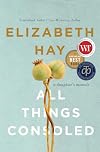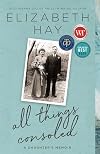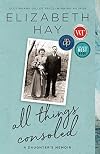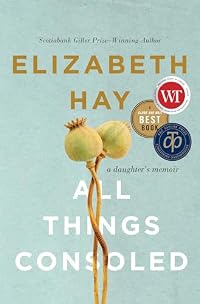
All Things Consoled: A daughter's memoir
by Elizabeth Hay
On This Page
Description
From Elizabeth Hay, one of Canada's beloved novelists, comes a startling and beautiful memoir about the drama of her parents' end, and the longer drama of being their daughter. Winner of the 2018 Hilary Weston Writers' Trust Prize for Nonficiton. Jean and Gordon Hay were a colourful, formidable pair. Jean, a late-blooming artist with a marvellous sense of humour, was superlatively frugal; nothing got wasted, not even maggoty soup. Gordon was a proud and ambitious schoolteacher with a show more terrifying temper, a deep streak of melancholy, and a devotion to flowers, cars, words, and his wife. As old age collides with the tragedy of living too long, these once ferociously independent parents become increasingly dependent on Lizzie, the so-called difficult child. By looking after them in their final decline, she hopes to prove that she can be a good daughter after all. In this courageous memoir, written with tough-minded candour, tenderness, and wit, Elizabeth Hay lays bare the exquisite agony of a family's dynamics--entrenched favouritism, sibling rivalries, grievances that last for decades, genuine admiration, and enduring love. In the end, she reaches a more complete understanding of the most unforgettable characters she will ever know, the vivid giants in her life who were her parents. show lessTags
Recommendations







Member Reviews
Elizabeth Hay's ALL THINGS CONSOLED is a book that simply will not let go of me. I stayed up reading it into the wee hours last week, and it continues to haunt me, to invade my thoughts, dreams and consciousness. There are probably a lot of reasons for this. It's a book about witnessing the last years of your parents, a close look at the ravages of extreme age, how, in the last years of life, you are robbed of so many things, and not just physical strength, but sometimes your very ability to think, to recall, to remember. If you are of a certain age, and especially if you have lost your parents, you will most certainly be caught up in Hay's book, subtitled A DAUGHTER'S MEMOIR. I am probably a bit older than Hay, but I still recall show more vividly the last days and death of my dad, thirty years ago this year. My mother lived much longer, another twenty-four years, and lived her last year and a half in a nearby nursing home. Those are months that I often revisit, racked by guilt, filled with sadness, questioning over and over again whether I did the right thing. Six years ago now. So there is that. And we have also been attending too many funerals lately. A dear friend's mother died only yesterday, and last night my dreams were filled with thoughts of her, and of my own parents, and yes, of Elizabeth Hay's wrenchingly honest and moving story of her parents' decline and final days. All of these things mixed together last night. Her story will not let go of me.
The book's title comes from something her mother said near the end of her life, as she sank gradually into dementia, losing words, confusing them, losing herself, albeit with occasional moments of lucidity. "I'm lost," she said one day, weeping. And, on another day, she said, quite simply, "I've had a good life, all things consoled."
Hay's father, Gordon, was a teacher and principal in Ontario's public schools for all of his professional life. Her mother was an aspiring artist, a painter. Hay's own relationship with her father was a troubled one, in many ways. She recalls, with brutal honesty, episodes in which her father erupted in fits of anger and disciplined her and her two older brothers quite brutally. In one such event, he threw her brother against an iron radiator splitting his head open. A doctor was called in for this unfortunate "accident." In another, she recalls her father dragging her across a room by the hair. Hay's mother always made excuses for these kind of things, telling her children that "he didn't mean it." Some readers might find this inexcusable, but I recall this time in history, when wives always supported their husbands. I also recall physical disciplining from my father, of my brothers and me. We all do. And yet, like Hay, we still loved our dad. When you are a child, your parents are like the sun and the moon. They are the arbiters of right and wrong. So yeah, a troubled relationship. And yet, in those last years of her father's life, as she recalls to a friend -
"... how much hatred I had felt for him over the years. 'But we get along now,' I said. 'All I had to do was kiss him. Give him affection. The affection I never gave him and that he was so hungry for.' … I had seen the effect on my father of receiving a kiss from me. He softened visibly, melted a bit every time. So I made a conscious decision to always kiss him as soon as I arrived for a visit and again before I left."
A kiss. That simple. In his later years, Hay's father also tells of how his own father didn't think much of him, but then also says he didn't think much of his father either. Reading this, I was immediately reminded of Robert Anderson's play (and later a movie), I NEVER SANG FOR MY FATHER, which touched me so deeply many years ago, reminding me how much I longed for my own father's approval and respect. As did Hay long for her father's respect, but, she tells us, he never even once acknowledged her success as an author, and probably didn't even read her books, a disappointment she still feels, I am sure.
Hay's relationship with her mother was much better, so it was especially painful for her to watch as dementia took her mother's mind away. My mom was lucid to the end of her nearly 97 years, but I always knew she loved me. Not so sure about my dad, so I was the family 'weeper' at his funeral. Not so at my mom's 24 years later. Unbearable sadness, but nary a tear.
One other passage that especially grabbed me was something Hay's mother said near the end of her father's life, telling her granddaughter Sochi, "He's not long for this land. I've never watched someone die before. I'm going to stay right here." Reading this, I recalled a letter my mother wrote after Dad died, describing his last moments, his last breaths, and I was surprised when she told me she'd never seen anyone die before, and how peaceful it was, and how she didn't call anyone, how she just sat with him for a while, and how absolutely quiet it suddenly seemed.
Okay. Enough. Looking this over, I can see it's not so much a book review as it is a reaction - a very personal, emotional and visceral reaction to Elizabeth Hay's story. And it's not a stretch either to say I feel 'consoled.' Consoled at knowing I am not alone in my continuing thoughts about my own parents, and how important they were to me. I hope that Hay herself feels this same sense of consolation, having finally gotten it all down, and in such an eloquent and moving fashion. Thank you so much, Elizabeth. My very highest recommendation for this thoughtful, loving and beautiful book.
- Tim Bazzett, author of the memoir, BOOKLOVER show less
The book's title comes from something her mother said near the end of her life, as she sank gradually into dementia, losing words, confusing them, losing herself, albeit with occasional moments of lucidity. "I'm lost," she said one day, weeping. And, on another day, she said, quite simply, "I've had a good life, all things consoled."
Hay's father, Gordon, was a teacher and principal in Ontario's public schools for all of his professional life. Her mother was an aspiring artist, a painter. Hay's own relationship with her father was a troubled one, in many ways. She recalls, with brutal honesty, episodes in which her father erupted in fits of anger and disciplined her and her two older brothers quite brutally. In one such event, he threw her brother against an iron radiator splitting his head open. A doctor was called in for this unfortunate "accident." In another, she recalls her father dragging her across a room by the hair. Hay's mother always made excuses for these kind of things, telling her children that "he didn't mean it." Some readers might find this inexcusable, but I recall this time in history, when wives always supported their husbands. I also recall physical disciplining from my father, of my brothers and me. We all do. And yet, like Hay, we still loved our dad. When you are a child, your parents are like the sun and the moon. They are the arbiters of right and wrong. So yeah, a troubled relationship. And yet, in those last years of her father's life, as she recalls to a friend -
"... how much hatred I had felt for him over the years. 'But we get along now,' I said. 'All I had to do was kiss him. Give him affection. The affection I never gave him and that he was so hungry for.' … I had seen the effect on my father of receiving a kiss from me. He softened visibly, melted a bit every time. So I made a conscious decision to always kiss him as soon as I arrived for a visit and again before I left."
A kiss. That simple. In his later years, Hay's father also tells of how his own father didn't think much of him, but then also says he didn't think much of his father either. Reading this, I was immediately reminded of Robert Anderson's play (and later a movie), I NEVER SANG FOR MY FATHER, which touched me so deeply many years ago, reminding me how much I longed for my own father's approval and respect. As did Hay long for her father's respect, but, she tells us, he never even once acknowledged her success as an author, and probably didn't even read her books, a disappointment she still feels, I am sure.
Hay's relationship with her mother was much better, so it was especially painful for her to watch as dementia took her mother's mind away. My mom was lucid to the end of her nearly 97 years, but I always knew she loved me. Not so sure about my dad, so I was the family 'weeper' at his funeral. Not so at my mom's 24 years later. Unbearable sadness, but nary a tear.
One other passage that especially grabbed me was something Hay's mother said near the end of her father's life, telling her granddaughter Sochi, "He's not long for this land. I've never watched someone die before. I'm going to stay right here." Reading this, I recalled a letter my mother wrote after Dad died, describing his last moments, his last breaths, and I was surprised when she told me she'd never seen anyone die before, and how peaceful it was, and how she didn't call anyone, how she just sat with him for a while, and how absolutely quiet it suddenly seemed.
Okay. Enough. Looking this over, I can see it's not so much a book review as it is a reaction - a very personal, emotional and visceral reaction to Elizabeth Hay's story. And it's not a stretch either to say I feel 'consoled.' Consoled at knowing I am not alone in my continuing thoughts about my own parents, and how important they were to me. I hope that Hay herself feels this same sense of consolation, having finally gotten it all down, and in such an eloquent and moving fashion. Thank you so much, Elizabeth. My very highest recommendation for this thoughtful, loving and beautiful book.
- Tim Bazzett, author of the memoir, BOOKLOVER show less
In this memoir, Elizabeth Hay documents the later years and eventual deaths of both her parents. Her mother develops dementia, and her father becomes more physically frail and unable to care for her, so they move to Ottawa to be closer to Elizabeth. She and her siblings (who live in Mexico, Montreal, and Halifax) discuss their shared history, divide up eldercare responsibilities, and come to terms with their parents’ deaths.
Hay does not shy away from the feelings of guilt, frustration, and resentment that family caregivers can feel in this sort of situation: at one point, she says that although she volunteered to take on most of the responsibility, because she lived closer to her parents than her other siblings, not a moment passed show more when she didn’t wish that one of the others could take it on. She also explores the complexities of her relationship with her parents, particularly her father with his fierce temper and other personality traits she finds in herself.
Anyone with a relative who has dementia will find a lot to relate to in this book. Hay’s description of her mother’s forgetfulness and repeating things sounded very much like my grandma, and it shed light on how my own mother must feel when looking after her. It is not an easy read but an honest one. show less
Hay does not shy away from the feelings of guilt, frustration, and resentment that family caregivers can feel in this sort of situation: at one point, she says that although she volunteered to take on most of the responsibility, because she lived closer to her parents than her other siblings, not a moment passed show more when she didn’t wish that one of the others could take it on. She also explores the complexities of her relationship with her parents, particularly her father with his fierce temper and other personality traits she finds in herself.
Anyone with a relative who has dementia will find a lot to relate to in this book. Hay’s description of her mother’s forgetfulness and repeating things sounded very much like my grandma, and it shed light on how my own mother must feel when looking after her. It is not an easy read but an honest one. show less
The fine Canadian novelist, Elizabeth Hay, explores the final years of her aged parents lives, interweaving memories of her childhood with them and her sometimes friendly, sometimes fraught relationship with her father and her mother. Hay grew up in southern Ontario and for anyone who knows the region, or, like me, both knows the region and is a near-contemporary, this memoir will strike chord after chord. Written in Hay’s distinctively dry, almost journalistic, style, matched, in the audiobook, by her equally dry and distinctive voice, you will find it surprisingly compelling. I did. Perhaps I’m getting sentimental, or perhaps it was the numerous similarities between her mother’s decline and my own mother’s. I don’t think show more I’ve ever encountered an end-of-life memoir that was as clear and matter-of-fact about the details of dying while constantly being just on the verge of lyricism. Remarkable.
There aren’t any startling revelations in Hay’s memoir. She seems to have had the normal range of frictions with family members. However, she shows both a prickly sensitivity as well as unsparing self-criticism. The result is a very rounded view of her parents and of herself, a very human view. And one in which you really can’t help feeling deep affection for each of the principle characters of this memoir.
Warmly recommended. show less
There aren’t any startling revelations in Hay’s memoir. She seems to have had the normal range of frictions with family members. However, she shows both a prickly sensitivity as well as unsparing self-criticism. The result is a very rounded view of her parents and of herself, a very human view. And one in which you really can’t help feeling deep affection for each of the principle characters of this memoir.
Warmly recommended. show less
“acts of love are never uncomplicated”
Acclaimed Canadian novelist, Elizabeth Hay has produced a beautifully written and affecting memoir of her parents’s last years. In 2008 when Hay’s narrative opens, her frail parents are in their late eighties and living in London, Ontario, a mid-sized city in the southwest of the province, some seven hours’ drive from Hay’s Ottawa home. Gordon, Elizabeth’s father, had been an ambitious secondary school teacher of history and then a high-school principal. He had worked hard to advance his career, ultimately becoming a professor of education at the local university. A frightening, gloomy figure, volcanic in temperament, he would erupt with fury when disobeyed, once throwing his young son show more hard enough across the dining room for the boy to require stitches. Jean Stevenson Hay, Elizabeth’s mother, was born in the Ottawa Valley in 1919 (the same year as her husband), and had apparently trained as a nurse before marrying at the age of 24 and bearing four children—Elizabeth being the third. Jean ultimately turned to art, making adventurous journeys (in her sixties) to Canada’s far north to sketch and explore the terrain of Ellesmere Island alongside scientists. (This was a time when grants were available for artists to travel to the Canadian Arctic.) Throughout her married life, Jean worked steadily to counter her husband’s dark energy, attempting to bring light into the home. Having a painter’s studio built just off the side of their house when she was 65 no doubt allowed her the physical space for her creativity to flourish and her psychological health to be preserved.
By the end of January 2009, after her mother had undergone two knee surgeries due to a streptococcal lung infection that had spread through the blood, Hay and her husband had arranged for Gordon and Jean to live at a retirement home in Ottawa, just a short walk from Elizabeth’s house. The move would allow her to visit them daily and tend to their needs. Hay documents the physical and cognitive decline of both parents as well as many painful memories from the past. (A particularly sad anecdote concerns Hay’s father’s failure to acknowledge his daughter’s literary achievements. When it came time to winnow down his personal library before leaving the London house, Gordon left behind his daughter’s seven novels, personally inscribed to her parents.) Growing up, and even in adulthood, Hay’s relationship with both parents was fraught. All three of them were touchy, defensive, easily set off. Hay feared and even hated her disapproving and fury-prone father, and she harboured anger towards her mother, who had been so committed to keeping the peace that she did not defend or protect her daughter. Hay is frank about her motivation for taking on the care of her parents as they neared their end: it was due to a kind of competitiveness, a desire to be loved the best.
Hay’s memoir makes clear that the hardships and losses of very old age are terrifying and gruelling—not just for those who endure the ravages most directly, the elderly themselves, but for the family members who travel alongside them. In their final years and months, Hay’s parents together and individually frequently expressed the wish that it could all quickly end, with a pill perhaps. Furthermore, even when an adult child willingly takes on the care of an elderly parent, resentments do build. Even so, there are moments of beauty and love, and Hay comes to understand just how deeply her parents’ lives had been woven together.
Hay’s father died in 2011; her mother in 2012. A photograph of the two together provides a humble conclusion to an interesting and moving narrative. show less
Acclaimed Canadian novelist, Elizabeth Hay has produced a beautifully written and affecting memoir of her parents’s last years. In 2008 when Hay’s narrative opens, her frail parents are in their late eighties and living in London, Ontario, a mid-sized city in the southwest of the province, some seven hours’ drive from Hay’s Ottawa home. Gordon, Elizabeth’s father, had been an ambitious secondary school teacher of history and then a high-school principal. He had worked hard to advance his career, ultimately becoming a professor of education at the local university. A frightening, gloomy figure, volcanic in temperament, he would erupt with fury when disobeyed, once throwing his young son show more hard enough across the dining room for the boy to require stitches. Jean Stevenson Hay, Elizabeth’s mother, was born in the Ottawa Valley in 1919 (the same year as her husband), and had apparently trained as a nurse before marrying at the age of 24 and bearing four children—Elizabeth being the third. Jean ultimately turned to art, making adventurous journeys (in her sixties) to Canada’s far north to sketch and explore the terrain of Ellesmere Island alongside scientists. (This was a time when grants were available for artists to travel to the Canadian Arctic.) Throughout her married life, Jean worked steadily to counter her husband’s dark energy, attempting to bring light into the home. Having a painter’s studio built just off the side of their house when she was 65 no doubt allowed her the physical space for her creativity to flourish and her psychological health to be preserved.
By the end of January 2009, after her mother had undergone two knee surgeries due to a streptococcal lung infection that had spread through the blood, Hay and her husband had arranged for Gordon and Jean to live at a retirement home in Ottawa, just a short walk from Elizabeth’s house. The move would allow her to visit them daily and tend to their needs. Hay documents the physical and cognitive decline of both parents as well as many painful memories from the past. (A particularly sad anecdote concerns Hay’s father’s failure to acknowledge his daughter’s literary achievements. When it came time to winnow down his personal library before leaving the London house, Gordon left behind his daughter’s seven novels, personally inscribed to her parents.) Growing up, and even in adulthood, Hay’s relationship with both parents was fraught. All three of them were touchy, defensive, easily set off. Hay feared and even hated her disapproving and fury-prone father, and she harboured anger towards her mother, who had been so committed to keeping the peace that she did not defend or protect her daughter. Hay is frank about her motivation for taking on the care of her parents as they neared their end: it was due to a kind of competitiveness, a desire to be loved the best.
Hay’s memoir makes clear that the hardships and losses of very old age are terrifying and gruelling—not just for those who endure the ravages most directly, the elderly themselves, but for the family members who travel alongside them. In their final years and months, Hay’s parents together and individually frequently expressed the wish that it could all quickly end, with a pill perhaps. Furthermore, even when an adult child willingly takes on the care of an elderly parent, resentments do build. Even so, there are moments of beauty and love, and Hay comes to understand just how deeply her parents’ lives had been woven together.
Hay’s father died in 2011; her mother in 2012. A photograph of the two together provides a humble conclusion to an interesting and moving narrative. show less
so good! elizabeth hay tells a difficult story with grace. while this memoir will be relatable for anyone with aging parents and grandparents who are dealing with declining bodies and minds, hay also includes some wonderful insights and observations around end of life care, family dynamics, and family history.
DNF
Elizabeth Hay is one of my Must Read Everything authors, but this memoir of dealing with her again parents seemed so whiny to me that I closed it for good about two dozen pages in. I was appaled at myself.
Elizabeth Hay is one of my Must Read Everything authors, but this memoir of dealing with her again parents seemed so whiny to me that I closed it for good about two dozen pages in. I was appaled at myself.
Once in a blue moon, you read a book that is perfectly timed to match the reality of your current life. So naturally at the moment it is my FAVOURITE book ever, in every way. [ And the author is a neighbour]
Members
- Recently Added By
Lists

Evergreen Award™ Winners and Nominees 2005–2024
200 works; 3 members
Author Information

12+ Works 2,516 Members
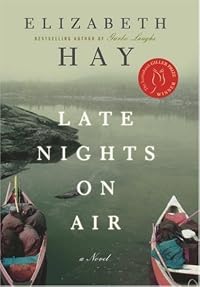
Elizabeth Hay was born in Owen Sound, Ontario on October 22, 1951. She attended Victoria College, University of Toronto. She worked for Canadian Broadcasting Corporation radio for ten years as a host, interviewer, and documentary maker. She has written several books including Small Change, A Student of Weather, Garbo Laughs, and The Only Snow in show more Havana. She won the 2007 Scotiabank Giller Prize for Late Nights on Air. In 2002, she received the Marian Engel Award for her body of work, which includes novels, short fiction, and creative non-fiction. (Bowker Author Biography) show less
Awards and Honors
Awards
Distinctions
Classifications
Statistics
- Members
- 72
- Popularity
- 435,207
- Reviews
- 9
- Rating
- (4.22)
- Languages
- English
- Media
- Paper, Audiobook, Ebook
- ISBNs
- 11
- ASINs
- 4