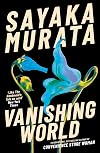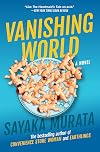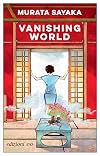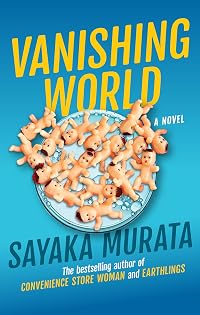
Vanishing World
by Sayaka Murata
On This Page
Description
"From the author of the million-copy literary sensation Convenience Store Woman comes a surprising and highly imaginative story set in a version of Japan where sex between married couples has vanished and where all children are born by artificial insemination. Sayaka Murata has proven herself to be one of the most exciting chroniclers of the strangeness of society, x-raying our contemporary world to bizarre and troubling effect. Her depictions of a happily unmarried retail worker in show more Convenience Store Woman and a young woman convinced she is an alien in Earthlings have endeared her to readers worldwide. Vanishing World takes Murata's universe to a bold new level, imagining an alternative Japan where attitudes to sex and procreation are wildly different to our own. As a girl, Amane realizes with horror that her parents "copulated" in order to bring her into the world, rather than using artificial insemination, which became the norm in the mid-twentieth century. Amane strives to get away from what she considers an indoctrination in this strange "system" by her mother, but her infatuations with both anime characters and real people have a sexual force that is undeniable. As an adult in an appropriately sexless marriage-sex between married couples is now considered as taboo as incest-Amane and her husband Saku ultimately decide to go and live in a mysterious new town called Experiment City or Paradise-Eden, where all children are raised communally, and every person is considered a Mother to all children. Men are beginning to become pregnant using artificial wombs that sit outside of their bodies like balloons, and children are nameless, called only "Kodomo-chan." Is this the new world that will purify Amane of her strangeness once and for all?"-- show lessTags
Recommendations
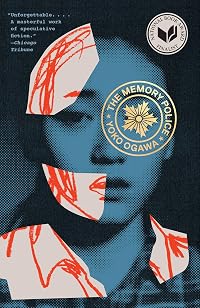
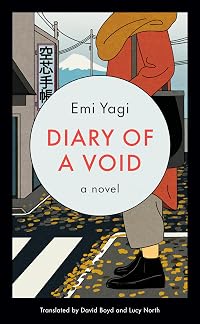
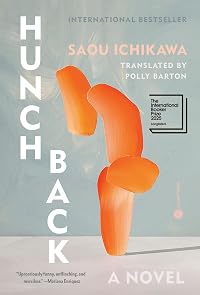
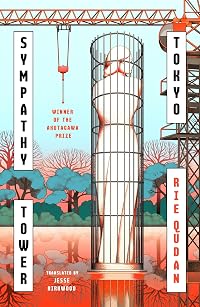
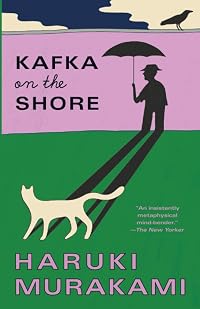

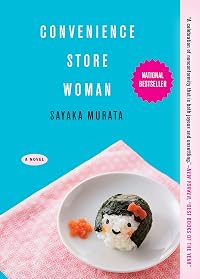
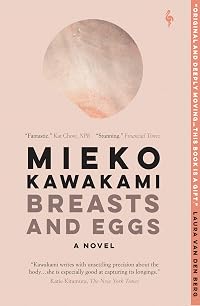
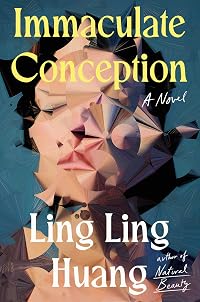
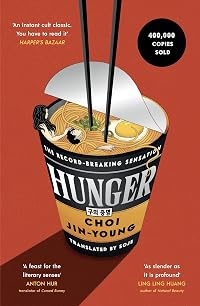


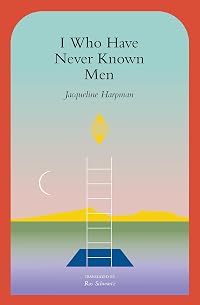

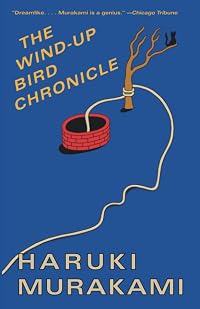
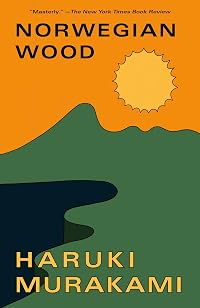
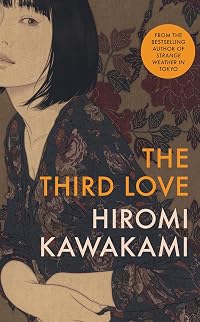

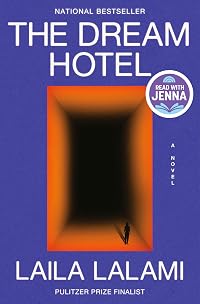
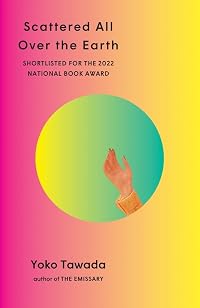


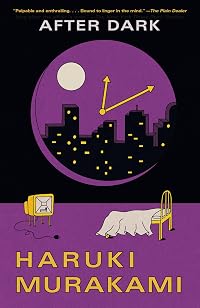




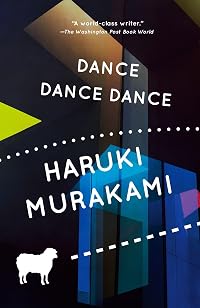


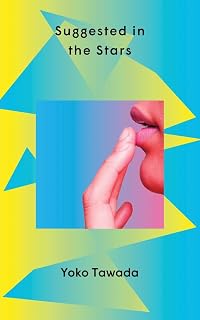



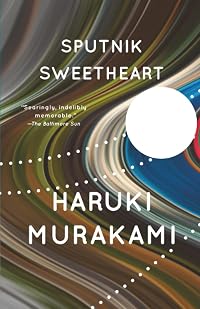
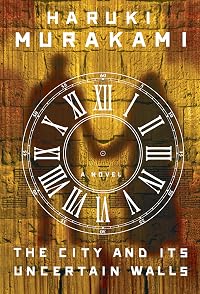



Member Recommendations

Member Reviews
”Normality is the creepiest madness there is.”
Amane spent her early childhood in a house full of red things, full of books about princesses meeting princes, and her mother always saying ”Amane, you too will one day fall in love, get married, and have children, just like Mommy and Daddy.” The author makes it sound chilling.
This is because we are in a world where sexuality is being slowly taken away from people. Children are only conceived by artificial insemination. Some people still have sex, but the done thing is to be in love with anime and manga characters.
Let’s imagine how such a society would function, how people would think, talk, act. There is so much weirdness that the effect is almost comical… but in a disturbing show more way. We are looking at deeper questions, of course.
Who controls your sexuality? You? The society? Totalitarian societies love to control people’s sexuality, don’t they? Aren’t we all brainwashed, one way or another, no matter what society we live in?
As the book progresses, and Amane’s world changes yet again, madness creeps in more and more. In the end, it seems that there is nothing but madness left.
”The very idea of a married couple having sex, it’s horrifying!”
”You are the only family I have in this world. You are the one person I can never fall in love with.”
”We humans were always changing. Whichever world we were brainwashed by, we didn’t have the right to judge others based on the ideas we had been inculcated with.”
This book might not appeal to every reader, but I like what Sayaka Murata does to literature.
Many thanks to NetGalley and the publisher for this arc! show less
Amane spent her early childhood in a house full of red things, full of books about princesses meeting princes, and her mother always saying ”Amane, you too will one day fall in love, get married, and have children, just like Mommy and Daddy.” The author makes it sound chilling.
This is because we are in a world where sexuality is being slowly taken away from people. Children are only conceived by artificial insemination. Some people still have sex, but the done thing is to be in love with anime and manga characters.
Let’s imagine how such a society would function, how people would think, talk, act. There is so much weirdness that the effect is almost comical… but in a disturbing show more way. We are looking at deeper questions, of course.
Who controls your sexuality? You? The society? Totalitarian societies love to control people’s sexuality, don’t they? Aren’t we all brainwashed, one way or another, no matter what society we live in?
As the book progresses, and Amane’s world changes yet again, madness creeps in more and more. In the end, it seems that there is nothing but madness left.
”The very idea of a married couple having sex, it’s horrifying!”
”You are the only family I have in this world. You are the one person I can never fall in love with.”
”We humans were always changing. Whichever world we were brainwashed by, we didn’t have the right to judge others based on the ideas we had been inculcated with.”
This book might not appeal to every reader, but I like what Sayaka Murata does to literature.
Many thanks to NetGalley and the publisher for this arc! show less
This one was a little too strange for me. The premise was certainly original, and it held my attention. I never considered putting it down. By the end, though, it felt like it never quite developed beyond that initial weirdness. The characters were difficult to connect with, none felt especially likable or even relatable. It made me confused by many of their decisions. Even the most basic interpersonal dynamics were hard to get a grip on. I didn’t understand what anyone’s motivations were. What was the thematic core? Sex is strange? Normalcy is fluid? The systems we take for granted are destined to be absurd in retrospect? I’m open to the idea that I may be missing some cultural context, but for me, it didn’t land. The show more speculative elements felt more provocative than purposeful. The biologist in me is screaming at the lack of respect for sexual selection.
Thanks to NetGalley and Grove Press for access to this book. show less
Thanks to NetGalley and Grove Press for access to this book. show less
This is a fascinating and disturbing novel about a speculative future. Sexuality, morality, society, normalcy, relationships -- these are turned inside-out, upside-down, challenged at every juncture. It's a serious farce, a comical satire, an intellectual challenge, and an improbable delight. My favorite quote: "Times change. What's normal also changes. Clinging on to what's normal in the past is insanity." (p. 131) Any change, no matter how gradual or sudden, can disrupt an individual, a group, a society, or nearly everyone on the planet; resistance to change for some is natural, sometimes suicidal; regardless, it can be frightening. Change often implies choice (when we are confronted by a sudden change for which there is a choice), show more but change also occurs without choice (often when it is slow and we are unaware we've adapted when the change is noticed). This novel certainly is not for everyone, and while it may be banned in many markets (by people who take it at face value or never read it), it is worth reading -- if only to force the reader to consider the many changes taking place (technical, sociological, political, environmental), and seriously consider and debate how changes, however disconnected, affect society. show less
This was such a deeply disturbing yet fascinating read. I picked this up because I loved convenience store woman, and did not expect where it was going. It's a great take on some of the tropes first explored in feminist science fiction - the ability for all to carry children, collective care pushed to its extremes - and the resistance of individuals and their desires. It's the story of a descent into what can only be described as madness. Where Convenience Woman closes on a form of individual assertion and redemption, this novel ends with the extremes a person has to go to if they are to survive in an environment stifling their feelings and bodies.
3.5
Compared to Convenience Story Woman, this novel piqued my interest considerably more. It is largely a speculative novel where sexual intimacy is largely eliminated in favor of artificial insemination. In the present world of AI companioship, this isn't even really all that speculative.
This novel is darkly funny in places. It's a mixture of realistic descriptions back to back with more fantastic elements. The meaning of words in the storyworld are fluid and at times absurd. The book comments on modern concepts of conformity, family, kids and relationships and also explores the nature of intimacy when parasocial relationships stand in for the real thing. The author's stance is somewhat opaque and detached and the ending left me show more unsettled but in a thought-provoking way. show less
Compared to Convenience Story Woman, this novel piqued my interest considerably more. It is largely a speculative novel where sexual intimacy is largely eliminated in favor of artificial insemination. In the present world of AI companioship, this isn't even really all that speculative.
This novel is darkly funny in places. It's a mixture of realistic descriptions back to back with more fantastic elements. The meaning of words in the storyworld are fluid and at times absurd. The book comments on modern concepts of conformity, family, kids and relationships and also explores the nature of intimacy when parasocial relationships stand in for the real thing. The author's stance is somewhat opaque and detached and the ending left me show more unsettled but in a thought-provoking way. show less
Sayaka Murata”s Vanishing World is a delight to read. Think 1984. Think Women’s Lib, Think anime, think IVF. And above all think Japan.
Murata has given the reader an imagined world where sex and marriage have no relationship to each other. Indeed any sexual activity between married couples is considered gross.
Husbands and wives are friends without benefits. They both have their work, are of two different genders and their aim to make themselves a family with children using IVF. Sex is reserved for lovers who can be human or anime.
The main characters are Amane and Saku. They have yet to have a child as they are saving for their dream home. In planing their lives they hear of an new development - Experiment City or Paradise-Eden - show more where couples have their own units and children are created by IVF as in the rest of Japan, - but in Experimental City the children are raised communally.
The children all look the same and are all called “Kodomo-chan.” Every adult, regardless of gender is considered a Mother to all children. Technology has recently allowed men to become pregnant using artificial wombs that sit outside of their bodies like balloons.
The description of the society of the future is built gradually, so that we are gradually introduced to the absurdities, starting with the marital arrangements and ending with the pregnant men. Just as we are thinking we have seen it all, there is more to come.
There are some amusing passages where young lovers are introduced to copulation. “You put it in the hole” the young woman explains. “What hole?” the incredulous boy asks. The girl has some trouble finding it herself, but when she does and shows him … well I cannot explain except by an excerpt, and unfortunately I was so overcome I forgot to bookmark it.
Read it! It’s fun and raises a number of interesting questions.
I gave it an easy 4. show less
Murata has given the reader an imagined world where sex and marriage have no relationship to each other. Indeed any sexual activity between married couples is considered gross.
Husbands and wives are friends without benefits. They both have their work, are of two different genders and their aim to make themselves a family with children using IVF. Sex is reserved for lovers who can be human or anime.
The main characters are Amane and Saku. They have yet to have a child as they are saving for their dream home. In planing their lives they hear of an new development - Experiment City or Paradise-Eden - show more where couples have their own units and children are created by IVF as in the rest of Japan, - but in Experimental City the children are raised communally.
The children all look the same and are all called “Kodomo-chan.” Every adult, regardless of gender is considered a Mother to all children. Technology has recently allowed men to become pregnant using artificial wombs that sit outside of their bodies like balloons.
The description of the society of the future is built gradually, so that we are gradually introduced to the absurdities, starting with the marital arrangements and ending with the pregnant men. Just as we are thinking we have seen it all, there is more to come.
There are some amusing passages where young lovers are introduced to copulation. “You put it in the hole” the young woman explains. “What hole?” the incredulous boy asks. The girl has some trouble finding it herself, but when she does and shows him … well I cannot explain except by an excerpt, and unfortunately I was so overcome I forgot to bookmark it.
Read it! It’s fun and raises a number of interesting questions.
I gave it an easy 4. show less
Hands down the weirdest narrative I’ve ever read. Like a lot of reviewers I really could have done without the final 5 pages. I get why that choice was made (do I, really?) but I just didn’t NEED to read it and iykyk. But I will say this: reads like the wind and is told so absolutely straight and swift that you barely have a moment to process one WTF before being given another and another and another. Like the best scifi it’s terrifying because of how absolutely real the possibility of such a parallel reality is. This writer has got an imagination like no other.
Members
- Recently Added By
Author Information

15+ Works 7,520 Members
Some Editions
Awards and Honors
Awards
Distinctions
Notable Lists
Common Knowledge
- First words
- "Aren't we kind of the opposite of Adam and Eve?" a boyfriend once asked me, long ago.
- Last words
- (Click to show. Warning: May contain spoilers.)I no longer knew whether it was coming from next door or whether I was emitting it myself as I stroked the soft skin of the Kodomo-chan finally attached to my womb.
- Original language
- Japanese
- Canonical DDC/MDS
- 895.6360
Classifications
- Genres
- Fiction and Literature, General Fiction, Science Fiction
- DDC/MDS
- 895.6360 — Literature & rhetoric Literatures of other languages Literatures of East and Southeast Asia Japanese Japanese fiction 2000–
- LCC
- PL873 .U73 .S5613 — Language and Literature Languages and literatures of Eastern Asia, Africa, Oceania Languages of Eastern Asia, Africa, Oceania Japanese language and literature Japanese literature
- BISAC
Statistics
- Members
- 284
- Popularity
- 114,159
- Reviews
- 10
- Rating
- (3.23)
- Languages
- 5 — Danish, English, German, Italian, Japanese
- Media
- Paper, Audiobook, Ebook
- ISBNs
- 15
- ASINs
- 5