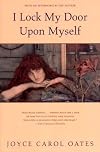
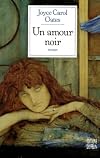
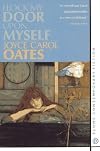
I Lock My Door upon Myself
by Joyce Carol Oates
On This Page
Description
Written in a painterly style that is utterly compelling, this compact yet powerful novel is perfect for anyone wishing to step into the hypnotic fictional world of Joyce Carol Oates. "A poetic ballad of love and death and martyrdom in a turn-of-the-century small town ..."--The New York Times.Tags
Recommendations














Member Reviews
Incredible triangulation of painting, poetry and narrative. Inspired by the haunting Ferdnand Khnopff painting of the same name, which takes its title from Christina Rosetti's poem, "Who Shall Deliver Me?", this novella is a layered tale that is equivalent in mastery to either of those "companion" works. It stands alone brilliantly, but when you've finished reading it, read the poem; contemplate the painting. You'll never be able to separate the three again. And you'll probably want to re- read the novella immediately, as I do. The story itself is relatively simple; a beautiful young red-headed woman married to an older man falls in love with a passing stranger---a black man with a gift for finding water. The inevitably tragic outcome show more of this liaison is slightly reminiscent of Ethan Frome, but richer and less "moral" in tone. 4 stars. show less
I'm a big fan of Joyce Carol Oates (except for We Were the Mulvaneys, which disturbs me to this day), so I was glad to come upon this new-to-me novel. It is the story of an aloof young woman (Calla) who is married off to a much older man. She remains distant from everyone until she falls in love with Tyrell Thompson, a black itinerant worker. As the story is set in the early 1900s, this inter-racial relationship is especially scandalous. The writing is sparse and poetical as Calla's granddaughter pieces together her story. I loved the writing and Calla's character is haunting.
The language is slow and lazy and languid. Although less than a hundred pages long, this is a powerful novel, if a quiet one.
It tells the story of Edith Margaret Freilicht (nee Honeystone) – or Calla as she was named by her mother, the name she speaks to herself and gifts rarely to others. Calla Honeystone is a strange child whose mother dies at her birth. She is a wild redheaded child who turns into a strange and introverted woman who is married off to an older man called George Freilicht.
His physicality repels her, but over time and familiarity he touches the pity inside her, and she cedes him access to her body. Bearing him 3 children who are tended by his family as she shows little interest or concern for them. After the painful show more birth of the third child she reclaims her body, and he is almost as relieved as she to return to a celibate state.
Calla lives in her head, which we, unlike everyone else, are given controlled and limited access too.
When she meets the water diviner Tyrell Thompson who comes to the farm to see if he can earn himself a ‘gift’ in exchange for finding the place to drill for a well, Calla realises he is the broad, tall black man she has been watching by the river. She follows him around the land as, uninvited, he seeks for water on the Freilicht property, opening up to him in ways her in-laws, watching from the windows of the house have never seen her respond to anyone before.
She has seen very few negroes in her lifetime. Occasionally on a visit to the city she has seen some of the younger folk, now liberated from slavery. “...but their blackness, their essence-that had been owned. And now in this city amid the heterogeneous white population of the city they were so relatively few in number-like small dark carp in an immense school of fiercely golden carp, depending upon God knows what precarious law or whim of nature to survive. Like me they are outcasts in this country. No, not like me: they are true outcasts”. p40
In Thompson she has found a kind of kindred spirit in his outcastness that whilst she acknowledges is more authentic than her own, she is drawn to him, and soon they become lovers.
Calla has always been whispered about, but now the whispering becomes louder as the rumours and gossip of the relationship between a white married woman and a black itinerant tie the tongues of the townsfolk together.
To tell much more of Calla’s story would be to deprive a new reader of too many of the twists and turns of the journey.
The novel presents us with a woman who is forced into a life that she hasn’t chosen, and yet she does not fight it overtly. She fights by withdrawal into herself, as the book’s title infers. She becomes powerful inside herself, ultimately going her own way, taking the reader’s sympathy with her. However, it is also the case that you can see that even in the quiet path she has taken, she is leaving destruction and damage behind in the lack of engagement, love or concern for the children she has given her husband, as she herself says in one place, she thought he wanted them.
This is also a novel about the African American experience. Although not blatant in its exploration, in a handful of paragraphs Oates subtly weaves a powerful chunk of that experience into this story. show less
It tells the story of Edith Margaret Freilicht (nee Honeystone) – or Calla as she was named by her mother, the name she speaks to herself and gifts rarely to others. Calla Honeystone is a strange child whose mother dies at her birth. She is a wild redheaded child who turns into a strange and introverted woman who is married off to an older man called George Freilicht.
His physicality repels her, but over time and familiarity he touches the pity inside her, and she cedes him access to her body. Bearing him 3 children who are tended by his family as she shows little interest or concern for them. After the painful show more birth of the third child she reclaims her body, and he is almost as relieved as she to return to a celibate state.
Calla lives in her head, which we, unlike everyone else, are given controlled and limited access too.
When she meets the water diviner Tyrell Thompson who comes to the farm to see if he can earn himself a ‘gift’ in exchange for finding the place to drill for a well, Calla realises he is the broad, tall black man she has been watching by the river. She follows him around the land as, uninvited, he seeks for water on the Freilicht property, opening up to him in ways her in-laws, watching from the windows of the house have never seen her respond to anyone before.
She has seen very few negroes in her lifetime. Occasionally on a visit to the city she has seen some of the younger folk, now liberated from slavery. “...but their blackness, their essence-that had been owned. And now in this city amid the heterogeneous white population of the city they were so relatively few in number-like small dark carp in an immense school of fiercely golden carp, depending upon God knows what precarious law or whim of nature to survive. Like me they are outcasts in this country. No, not like me: they are true outcasts”. p40
In Thompson she has found a kind of kindred spirit in his outcastness that whilst she acknowledges is more authentic than her own, she is drawn to him, and soon they become lovers.
Calla has always been whispered about, but now the whispering becomes louder as the rumours and gossip of the relationship between a white married woman and a black itinerant tie the tongues of the townsfolk together.
To tell much more of Calla’s story would be to deprive a new reader of too many of the twists and turns of the journey.
The novel presents us with a woman who is forced into a life that she hasn’t chosen, and yet she does not fight it overtly. She fights by withdrawal into herself, as the book’s title infers. She becomes powerful inside herself, ultimately going her own way, taking the reader’s sympathy with her. However, it is also the case that you can see that even in the quiet path she has taken, she is leaving destruction and damage behind in the lack of engagement, love or concern for the children she has given her husband, as she herself says in one place, she thought he wanted them.
This is also a novel about the African American experience. Although not blatant in its exploration, in a handful of paragraphs Oates subtly weaves a powerful chunk of that experience into this story. show less
In 1866 the perennially morbid English poet Christina Rossetti wrote Who Shall Deliver Me? It’s eight verses long but two should suffice to establish the tone:
I lock my door upon myself,
And bar them out; but who shall wall
Self from myself, most loathed of all?
…….
God harden me against myself,
This coward with pathetic voice
Who craves for ease, and rest, and joys:
In 1891 Belgian symbolist painter Fernand Khnopff was struck by her words and turned them into an arresting image.
In 1990 American author Joyce Carol Oates took the painting and its title for a 98 page novella while also reaching back to the ideas of self-loathing and God’s deliverance behind the original poem – crafting a story with themes of isolation, paganism, race show more relations, feminist non-conformity and speculation about the past all wrapped up in an Ethan Frome-style of plot and the language of a dream.
It begins with a red-haired woman and a black man in a rowboat heading straight over Tintern Falls. Set in upstate New York at the turn of the 20th Century, it manages to be almost southern gothic in spite of its locale. Weather perpetually autumnal, rotting outbuildings, racial tensions, small town gossip and an angry husband with a shotgun are just the first images that spring to mind…
The story is that of Calla (official name Edith) Honeystone, a distant, alienated young woman with no use for human company, preferring to wander into the woods, passive-aggressive in her defiance of convention. Her story is only guessed at by her granddaughter. "…there was Calla Honeystone tall and skinny yet thriving….this girl so mature to their eyes she might as easily have passed for twenty years of age as for fourteen; who might have been of unusual intelligence and sensitivity as plausibly as she might have been touched in the head.
“Touched in the head”: Calla knew what people whispered behind her back, even her mother’s people, and she was both outraged in her pride and strangely pleased for, somehow, yes she liked that thought, that idea, “touched” by the finger of God Himself: compelled to live out a special destiny none of the fools and idiots and commonplace sinners around her could guess."
The granddaughter is an amorphous character, her story seemingly patched out of old accounts, family gossip and sympathetic imagination, recasting the possibly crazy Calla as a non-conformer, wanting more than to be viewed simply as a wife and mother. It gets interesting when you realize that this granddaughter never knew Calla and has no idea what this recluse thought of anything. Madness as genius and madness as the creation of a patriarchal society are thus her speculations. The two women are tied by blood but the passage of even a single generation in between creates a gulf of unknowing and as a result all the facts are available but all motivations are a puzzle.
The defining moment in Calla’s existence comes after her marriage to German immigrant farmer George Freilicht and after the birth of their three children when she meets Tyrell Thompson, black itinerant water dowser. In the aftermath of their affair she withdraws into seclusion for 55 years before dying. She is drawn to Tyrell Thompson immediately and it is here that the real layers of the novella are to be found. Calla is every inch the outsider and Tyrell Thompson is in an even worse position than herself socially. If you wanted to you could interpret their whole relationship as an allegory of race relations in the early 20th Century. Personally I doubt that was Oates’ whole intention – in her books things don’t tend to be so clear or so moral in design.
I Lock My Door Upon Myself has an elemental, pagan subtext. Right from the beginning Tyrell Thompson is associated with water – he’s a water dowser and first says “A human being is born with a gift for water like for singing or dancing or preaching or fighting but then it’s God’s will you refine it. That means discipline, and hard work, and a right way of thinking so that what is sacred is not cast down in the mud.” Calla first spies him fishing behind a dilapidated mill; when a mob goes after him they attempt to drown him; and when death does come it is by water. She is drawn to him but how much of that is sympathy for their shared alienation and how much is because, as he says, “like calls out to like?” Calla is immediately established as a child of the wilderness:
"Often she stayed out from school to tramp about the fields and woods and along the creek, gone sometimes for entire days when she’d show up at a neighbor’s farm like a stray cat or dog Oh is it Edith Honeystone? and she’d say I’m Calla in that low assured matter-of-fact voice, not so much certain of herself and of her welcome as indifferent; simply not caring; as ready to turn and wander back into the woods as to come into a house and be fed like any normal child."
From this view it is the story of two humans in the thrall of the wilderness and that adds an element of hubris to the downfall of Tyrell Thompson - whose modesty over his power evaporates on the final day when he explains his plan to Calla. "…the impromptu nature of it, the defiance, the flaunting and self-display and madness of it, the two to them rowing downstream to Tintern Falls on a day when anyone might see them who chose to see them, setting their course deliberately for the falls at Tintern that had not the power – so he boasted, or gave the air of boasting – to withstand Tyrell Thompson’s God-given mastery over water.
Or maybe he just wanted to kill them both."
Relationships between men and women in Oates’ world are habitually dark with undercurrents of violence and control. This one’s no different. Both threatened with death from her husband and the community at large, both seeming to fight with each other every time they meet – who’s stronger? who’s braver? who’s steering? who’s going to die first? "She wished he’d strangled her: that would be an ending. She could not bear it that since loving Tyrell Thompson she’d become one of those women she had always scorned, quick to tears, bones like water, raw and demeaning hunger shining in her face Love me, love me don’t ever stop I will die if you stop." It seems almost a subconscious struggle which propels them into that rowboat.
Unlike Ethan Frome and its ilk, this isn’t really a tragic love story except in framework. It’s all there is the original poem – the story is one of self-betrayal. From the beginning Calla is purely self-reliant, all ice and independence. Parent, husband, child all subjected in this way to her refusal to acknowledge them. The mystery at the heart of the little book is what it was that drove her, such a bold person, to retreat from life. Broken by a near-death experience? Broken-hearted from Tyrell’s fate? The granddaughter is obsessed with discovering the rationale she was too shy to seek while Calla was alive. "Did you know it was Death that summoned you, a dowsing rod in his hand? Or was it Love? And were you faithful to him however bitterly however purposelessly all the days of your long life?" But perhaps she was not broken, perhaps it was a choice made not to retreat from the world but to triumph over herself, over the part of her that was human. It adds to the religious element, for the idea of God threads the work without any clear resolution as to Calla’s faith or lack thereof.
Joyce Carol Oates does not attempt to answer the mysteries of I Lock My Door Upon Myself. A smart move. To do so would be to spoil the effect. I absolutely loved this book, with its ability to inspire so much thought in less than 100 pages. One thing’s for sure, it demands to be reread. My first read found it beautifully told and mildly interesting, the layers only becoming apparent on turning back the pages. I’m not sure how it would do as an introduction to her work but for anyone already intrigued by her it is a necessary addition to your collection. Personally, I’m more and more convinced that she is a major American writer.
http://pseudointellectualreviews.wordpress.com/2013/07/31/i-lock-my-door-upon-my... show less
I lock my door upon myself,
And bar them out; but who shall wall
Self from myself, most loathed of all?
…….
God harden me against myself,
This coward with pathetic voice
Who craves for ease, and rest, and joys:
In 1891 Belgian symbolist painter Fernand Khnopff was struck by her words and turned them into an arresting image.
In 1990 American author Joyce Carol Oates took the painting and its title for a 98 page novella while also reaching back to the ideas of self-loathing and God’s deliverance behind the original poem – crafting a story with themes of isolation, paganism, race show more relations, feminist non-conformity and speculation about the past all wrapped up in an Ethan Frome-style of plot and the language of a dream.
It begins with a red-haired woman and a black man in a rowboat heading straight over Tintern Falls. Set in upstate New York at the turn of the 20th Century, it manages to be almost southern gothic in spite of its locale. Weather perpetually autumnal, rotting outbuildings, racial tensions, small town gossip and an angry husband with a shotgun are just the first images that spring to mind…
The story is that of Calla (official name Edith) Honeystone, a distant, alienated young woman with no use for human company, preferring to wander into the woods, passive-aggressive in her defiance of convention. Her story is only guessed at by her granddaughter. "…there was Calla Honeystone tall and skinny yet thriving….this girl so mature to their eyes she might as easily have passed for twenty years of age as for fourteen; who might have been of unusual intelligence and sensitivity as plausibly as she might have been touched in the head.
“Touched in the head”: Calla knew what people whispered behind her back, even her mother’s people, and she was both outraged in her pride and strangely pleased for, somehow, yes she liked that thought, that idea, “touched” by the finger of God Himself: compelled to live out a special destiny none of the fools and idiots and commonplace sinners around her could guess."
The granddaughter is an amorphous character, her story seemingly patched out of old accounts, family gossip and sympathetic imagination, recasting the possibly crazy Calla as a non-conformer, wanting more than to be viewed simply as a wife and mother. It gets interesting when you realize that this granddaughter never knew Calla and has no idea what this recluse thought of anything. Madness as genius and madness as the creation of a patriarchal society are thus her speculations. The two women are tied by blood but the passage of even a single generation in between creates a gulf of unknowing and as a result all the facts are available but all motivations are a puzzle.
The defining moment in Calla’s existence comes after her marriage to German immigrant farmer George Freilicht and after the birth of their three children when she meets Tyrell Thompson, black itinerant water dowser. In the aftermath of their affair she withdraws into seclusion for 55 years before dying. She is drawn to Tyrell Thompson immediately and it is here that the real layers of the novella are to be found. Calla is every inch the outsider and Tyrell Thompson is in an even worse position than herself socially. If you wanted to you could interpret their whole relationship as an allegory of race relations in the early 20th Century. Personally I doubt that was Oates’ whole intention – in her books things don’t tend to be so clear or so moral in design.
I Lock My Door Upon Myself has an elemental, pagan subtext. Right from the beginning Tyrell Thompson is associated with water – he’s a water dowser and first says “A human being is born with a gift for water like for singing or dancing or preaching or fighting but then it’s God’s will you refine it. That means discipline, and hard work, and a right way of thinking so that what is sacred is not cast down in the mud.” Calla first spies him fishing behind a dilapidated mill; when a mob goes after him they attempt to drown him; and when death does come it is by water. She is drawn to him but how much of that is sympathy for their shared alienation and how much is because, as he says, “like calls out to like?” Calla is immediately established as a child of the wilderness:
"Often she stayed out from school to tramp about the fields and woods and along the creek, gone sometimes for entire days when she’d show up at a neighbor’s farm like a stray cat or dog Oh is it Edith Honeystone? and she’d say I’m Calla in that low assured matter-of-fact voice, not so much certain of herself and of her welcome as indifferent; simply not caring; as ready to turn and wander back into the woods as to come into a house and be fed like any normal child."
From this view it is the story of two humans in the thrall of the wilderness and that adds an element of hubris to the downfall of Tyrell Thompson - whose modesty over his power evaporates on the final day when he explains his plan to Calla. "…the impromptu nature of it, the defiance, the flaunting and self-display and madness of it, the two to them rowing downstream to Tintern Falls on a day when anyone might see them who chose to see them, setting their course deliberately for the falls at Tintern that had not the power – so he boasted, or gave the air of boasting – to withstand Tyrell Thompson’s God-given mastery over water.
Or maybe he just wanted to kill them both."
Relationships between men and women in Oates’ world are habitually dark with undercurrents of violence and control. This one’s no different. Both threatened with death from her husband and the community at large, both seeming to fight with each other every time they meet – who’s stronger? who’s braver? who’s steering? who’s going to die first? "She wished he’d strangled her: that would be an ending. She could not bear it that since loving Tyrell Thompson she’d become one of those women she had always scorned, quick to tears, bones like water, raw and demeaning hunger shining in her face Love me, love me don’t ever stop I will die if you stop." It seems almost a subconscious struggle which propels them into that rowboat.
Unlike Ethan Frome and its ilk, this isn’t really a tragic love story except in framework. It’s all there is the original poem – the story is one of self-betrayal. From the beginning Calla is purely self-reliant, all ice and independence. Parent, husband, child all subjected in this way to her refusal to acknowledge them. The mystery at the heart of the little book is what it was that drove her, such a bold person, to retreat from life. Broken by a near-death experience? Broken-hearted from Tyrell’s fate? The granddaughter is obsessed with discovering the rationale she was too shy to seek while Calla was alive. "Did you know it was Death that summoned you, a dowsing rod in his hand? Or was it Love? And were you faithful to him however bitterly however purposelessly all the days of your long life?" But perhaps she was not broken, perhaps it was a choice made not to retreat from the world but to triumph over herself, over the part of her that was human. It adds to the religious element, for the idea of God threads the work without any clear resolution as to Calla’s faith or lack thereof.
Joyce Carol Oates does not attempt to answer the mysteries of I Lock My Door Upon Myself. A smart move. To do so would be to spoil the effect. I absolutely loved this book, with its ability to inspire so much thought in less than 100 pages. One thing’s for sure, it demands to be reread. My first read found it beautifully told and mildly interesting, the layers only becoming apparent on turning back the pages. I’m not sure how it would do as an introduction to her work but for anyone already intrigued by her it is a necessary addition to your collection. Personally, I’m more and more convinced that she is a major American writer.
http://pseudointellectualreviews.wordpress.com/2013/07/31/i-lock-my-door-upon-my... show less
Set in the turn of the last century, young Calla Honeystone's care falls on relatives. She's a strange child who grows more weird and uncivilized in her teens, and the relatives decide she'd better be married off before the whole town realizes she's crazy. Her much older husband gets little attention from Calla, who also proves to be a disinterested mother who forgets her children exist. But when Calla meets Tyrell, a Black water dowser, she is suddenly in love and dreaming of escaping with him.
I grew up in western NYS, probably not more than 100 miles away from JCO grew up, at about the same time. So first of all, the geography in this novella irks me. She sets the story in an imaginary Eden County (OK, I can buy creating a county -- Faulkner did it), through which a river called the Chautauqua River runs that ends with a drop over Tintern Falls -- this is where I get uncomfortable. I grew up on Chautauqua Lake in Chautauqua County; there is no Chautauqua River. There are no significant river falls in western NYS besides Niagara Falls. If she is creating an imaginary county -- why call it by a rather unique name associated with a real place?
Beyond that quibble -- I found the novel rather beautifully written, but bloodless. show more It's a tale of a passionate love affair between a "wild child," who has been married off to an older German Lutheran farmer, and an African-American itinerant water dowser. Unfortunately, no passion really comes through, and all the reader really contemplates are wasted lives. Didn't do it for me. show less
Beyond that quibble -- I found the novel rather beautifully written, but bloodless. show more It's a tale of a passionate love affair between a "wild child," who has been married off to an older German Lutheran farmer, and an African-American itinerant water dowser. Unfortunately, no passion really comes through, and all the reader really contemplates are wasted lives. Didn't do it for me. show less
The story of an unusual girl who is married off to an older man. There's nothing new about the story but the prose is beautiful. A lovely novella.
Members
- Recently Added By
Author Information

473+ Works 62,238 Members
Joyce Carol Oates was born on June 16, 1938 in Lockport, New York. She received a bachelor's degree in English from Syracuse University and a master's degree in English from the University of Wisconsin. She is the author of numerous novels and collections of short stories. Her works include We Were the Mulvaneys, Blonde, Bellefleur, You Must show more Remember This, Because It Is Bitter, Because It Is My Heart, Solstice, Marya : A Life, and Give Me Your Heart. She has received numerous awards including the National Book Award for Them, the PEN/Malamud Award for Excellence in Short Fiction, and the F. Scott Fitzgerald Award for Lifetime Achievement in American Literature. She was a finalist for the 2015 Pulitzer Prize for Fiction with her title Lovely, Dark, Deep. She also wrote a series of suspense novels under the pseudonym Rosamond Smith. In 2015, her novel The Accursed became listed as a bestseller on the iBooks chart. She worked as a professor of English at the University of Windsor, before becoming the Roger S. Berlind Distinguished Professor of Humanities at Princeton University. She and her late husband Raymond J. Smith operated a small press and published a literary magazine, The Ontario Review. (Bowker Author Biography) Joyce Carol Oates is one of the most eminent and prolific literary figures and social critics of our times. She has won the National Book Award and several O. Henry and Pushcart prizes. Among her other awards are an NEA grant, a Guggenheim fellowship, the PEN/Malamud Lifetime Achievement Award, and the F. Scott Fitzgerald Award for Lifetime Achievement in American Literature. (Publisher Provided) show less
Series
Belongs to Publisher Series
Gallimard, Folio (3212)
Work Relationships
Is contained in
Common Knowledge
- Original publication date
- 1990
- People/Characters
- Calla Honeystone; George Freilicht; Tyrell Thompson
- Dedication
- again, for my parents Carolina and Frederick Oates, and in memory of that world, now vanishing, that continues to nourish...
- First words
- ...there on the river, the Chautauqua, in sepia sun, the rowboat bucking the choppy waves with a look almost of gaiety, defiance.
- Last words
- (Click to show. Warning: May contain spoilers.)A long time ago.
Classifications
Statistics
- Members
- 226
- Popularity
- 142,720
- Reviews
- 10
- Rating
- (3.78)
- Languages
- English, French, German
- Media
- Paper
- ISBNs
- 10
- ASINs
- 1