On This Page
Description
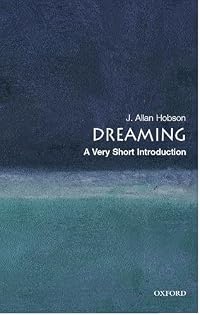
In 'Dreaming' Hobson introduces readers to sleep laboratory science, the cellular and molecular mechanisms of sleep, and explores how the science of dreaming impacts our understanding of psychoanalysis and mental illness.Tags
Recommendations










Member Reviews
“Freud, like his followers, religiously believed that dream bizarreness was a psychological defence against an unacceptable unconscious wish. This seemed unlikely to many people in 1900. At the beginning of the twenty-first century, it seems impossible to us.”
This is a book about the biology of sleep and dreams—EEGs and neurotransmitters, rather than pop-psychology—and its author has little patience with the latter. It’s not just Freud though; throughout history people have concentrated on the content of dreams, for everything from medical diagnosis to fortune-telling, from religious prophesy to psychoanalysis, and Hobson isn’t saying that dreams have no meaning. What he is saying is that when you stop trying to read show more things into the content of dreams by “interpreting” specific details, and look at their form instead, you finally begin to get somewhere. And by “form” he means their more general features, the underlying characteristics shared by all dreams, as well as what the sleeping brain itself is doing while dreaming them.
This of course means neuroscience, and Dreaming reads like a progress report of where this had got to by the 2000s. It covers: the eclipsing of psychology by biology; then brainwaves and the biochemistry of sleep; dream disorders; dreams and mental illness; dreaming, memory and learning; and he considers what dreaming might be for (there’s no evidence that the content of dreams has any significant influence on our waking behaviour for example). An interesting read, written in prose which is both clear and (particularly when talking about Sigmund Freud) lively. show less
This is a book about the biology of sleep and dreams—EEGs and neurotransmitters, rather than pop-psychology—and its author has little patience with the latter. It’s not just Freud though; throughout history people have concentrated on the content of dreams, for everything from medical diagnosis to fortune-telling, from religious prophesy to psychoanalysis, and Hobson isn’t saying that dreams have no meaning. What he is saying is that when you stop trying to read show more things into the content of dreams by “interpreting” specific details, and look at their form instead, you finally begin to get somewhere. And by “form” he means their more general features, the underlying characteristics shared by all dreams, as well as what the sleeping brain itself is doing while dreaming them.
This of course means neuroscience, and Dreaming reads like a progress report of where this had got to by the 2000s. It covers: the eclipsing of psychology by biology; then brainwaves and the biochemistry of sleep; dream disorders; dreams and mental illness; dreaming, memory and learning; and he considers what dreaming might be for (there’s no evidence that the content of dreams has any significant influence on our waking behaviour for example). An interesting read, written in prose which is both clear and (particularly when talking about Sigmund Freud) lively. show less
It's hard to write short books on any subject and VSI has the best and worst of those tendencies. On the subject of dreams, do you take the scientific approach to sleep studies or the full history of dream interpretation, in psychology and beyond? Hobson tries to split the difference, leaning toward neuroscience, and to include a lot of his own dream diary experiences into the narrative. While the latter shows some dedication to the subject I'm not sure it added much when space is at a premium. Trying to walk a line between the failure of a standardized dream interpretation in Freudian (and later Jungian) style, while musing on his own dreaming and interpretations relative to his life made for a bit of a muddle.
I wish he'd picked more interesting dreams than his own to use as examples, and not used every opportunity to brag about how slutty he is... Other than that it's quite good. Free Berkeley dream lectures are better.
Dreams as a function of brain activity during sleep is the central thesis of this short sharp intro to the subject. An informative & good humoured, if pleasently dull work.
Ratings
Members
- Recently Added By
Lists

The Great Courses: The Learning Brain
61 works; 1 member
Author Information

23 Works 953 Members
J. Allan Hobson is Professor of Psychiatry Emeritus at Harvard Medical School, Boston, Massachusetts.
Series

Common Knowledge
- Canonical title
- Dreaming: A Very Short Introduction
- Original title
- Dreaming: A Very Short Introduction
- Original publication date
- 2002
- First words
- Dreaming has fascinated humankind since the dawn of recorded history.
- Last words
- (Click to show. Warning: May contain spoilers.)With it, we can begin to shine light on our most interesting human attribute — consciousness.
- Original language
- English
Classifications
Statistics
- Members
- 317
- Popularity
- 99,525
- Reviews
- 5
- Rating
- (3.18)
- Languages
- English, Portuguese
- Media
- Paper, Audiobook, Ebook
- ISBNs
- 12
- ASINs
- 4