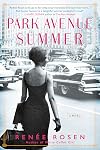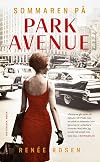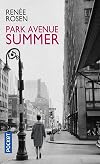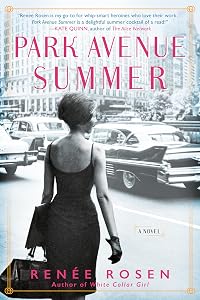
Park Avenue Summer
by Renée Rosen
On This Page
Description
“‘Mad Men meets The Devil Wears Prada,’ which might as well be saying ‘put me in your cart immediately.’”—PopSugarIt’s 1965 and Cosmopolitan magazine’s brazen new editor in chief—Helen Gurley Brown—shocks America and saves a dying publication by daring to talk to women about all things off-limits...
New York City is filled with opportunities for single girls like Alice Weiss, who leaves her small Midwestern town to chase her big-city dreams and unexpectedly lands a show more job working for the first female editor in chief of Cosmopolitan magazine, Helen Gurley Brown.
For Alice, who wants to be a photographer, it seems like the perfect foot in the door, but nothing could have prepared her for the world she enters. Editors and writers resign on the spot, refusing to work for the woman who wrote the scandalous bestseller Sex and the Single Girl, and confidential memos, article ideas, and cover designs keep finding their way into the wrong hands. When someone tries to pull Alice into a scheme to sabotage her boss, she is more determined than ever to help Helen succeed.
While pressure mounts at the magazine, Alice struggles not to lose sight of her own dreams as she’s swept up into a glamorous world of five-star dinners, lavish parties, and men who are certainly no good. Because if Helen Gurley Brown has taught her anything, it’s that a woman can demand to have it all. show less
Tags
Recommendations









Member Reviews
Loved this historical fiction coming-of-age story set in New York City during 1965 – featuring legendary magazine editor Helen Gurley Brown as she reinvents Cosmopolitan magazine and mentors Alice Weiss, her new-to-the-city secretary and a wannabe-photographer.
Meticulously researched and well-written, the story is sprinkled with real people and authentically portrays the era when women were struggling to become more independent. New York is as much a character as the people, and as we follow the growth of Alice’s personal and professional life, the novel also explores women’s friendships, behind-the-scenes in the magazine industry, the life of the single working girl in the 1960s, the fashions, and the never-ending cigarettes and show more coffee!
If you’re looking for engaging historical fiction, featuring strong, ambitious female characters in a glamourous big-city setting, I highly recommend this one! show less
Meticulously researched and well-written, the story is sprinkled with real people and authentically portrays the era when women were struggling to become more independent. New York is as much a character as the people, and as we follow the growth of Alice’s personal and professional life, the novel also explores women’s friendships, behind-the-scenes in the magazine industry, the life of the single working girl in the 1960s, the fashions, and the never-ending cigarettes and show more coffee!
If you’re looking for engaging historical fiction, featuring strong, ambitious female characters in a glamourous big-city setting, I highly recommend this one! show less
I loved this book about Alice ("Ali") who moves to New York City to follow her dream of becoming a "world-renowned photographer, but she becomes the assistant of Helen Gurley Brown, who has just taken over as new editor in chief of the magazine. The story is fiction, but the author's note at the end indicates which parts actually happened, and what (and who) she has fictionalized.
So many elements come together: Brown's struggles with the "brass", what it was like for women trying to make a name for themselves in the 60s, how women's roles were changing, as well as things specific to Ali, who is still mourning the death of her mother years ago, and trying to reconnect to her father, who is remarried.
There's even a bit of a mystery show more about who may be sabotaging Brown.
Good storylines, interesting characters, well written. Maybe wraps up a little too neatly. show less
So many elements come together: Brown's struggles with the "brass", what it was like for women trying to make a name for themselves in the 60s, how women's roles were changing, as well as things specific to Ali, who is still mourning the death of her mother years ago, and trying to reconnect to her father, who is remarried.
There's even a bit of a mystery show more about who may be sabotaging Brown.
Good storylines, interesting characters, well written. Maybe wraps up a little too neatly. show less
This novel about Helen Gurley Brown's early days at the magazine Cosmopolitan are full of the vibrancy and sexuality of the 1960s. Told from through the eyes of a fictional secretary, the era depicted in this novel - with the affairs between coworkers, subtle and not-so-subtle suppression of women, and approaches to feminism - feels so far from today. Helen Gurley Brown emerges as a mixed figure - she'd definitely be reviled today from many directions, but she did present a different view of womanhood that one might still find radical. I enjoyed the depictions of Helen's battles with the conservative men above her in the magazine world and her dedication to what she saw as her mission. This made for fun reading and I'm half tempted to show more track down some old copies of Cosmo. show less
Initially I wasn't jazzed to read this, I don't know if it was the cover or the description "Devil Wears Prada meets Mad Men," but I went into this book completely meh. Three and a half hours later I had a completely different reaction, I was head over heels. I started by reading a chapter and then... I couldn't stop. I literally bailed on plans so I could sit and read this book in one setting. I simply adored the main character Alice Weiss and her vulnerability and indecision; her tenacity won me over. Alice moves from the country into the big bad city of New York. It's the sixties and she is convinced that she will be able to make it as a photographer. She calls up one of her mother's friends who doesn't give her any hope on the show more photography front but does set her up with a secretarial job to one of the most controversial and revered women in the country, Helen Gurley Brown, the editor of Cosmopolitan magazine and author of the book, Sex and the Single Girl. Alice is swept away in helping Helen tackle the fools at Hearst convinced that no woman can run a magazine and who are determined for the whole venture to fail. Alice gets so wrapped up in the magazine, her boss, and her new "Don Juan" that she slowly starts to lose her aspirations for photography and her vision for the future. A wonderful read and journey into 1960s New York publishing scene. show less
When twenty-one-year-old Alice Weiss arrives in New York in 1965 from Youngstown, Ohio, to make her fortune, she dreams of becoming a photographer. However, the job she finds is secretary to Helen Gurley Brown, author of the scandalous bestseller, Sex and the Single Girl, recently named by publishing giant Hearst to resurrect the then-flailing Cosmopolitan magazine. By the time Alice figures out what has hit her, her life has been changed forever.
Alice represents the New York office world and what was then called a “gal Friday,” because, like her namesake in Robinson Crusoe, she does everything. That involves getting coffee or lunch, typing correspondence, taking phone calls, managing appointments, taking minutes at meetings, show more picking up Brown’s pets from the vet, running other personal errands, working hellacious hours, and receiving unsolicited advice about life, men, and career.
Most significantly to the story, Alice must decide whether to fend off the advances of a very attractive Don Juan executive who might be plotting against Brown, only one aspect of the complex office politics.
Forces within Hearst want to kill Cosmo and see Brown fail. Her superiors (all male, of course) nearly lose their lunches when they see how she plans to imbue the magazine with her frank vision of female sexuality, starting with provocative covers and articles about orgasms. Rosen brilliantly captures how an unrepentant woman occupying a corner office goes about making her mark — or how this inimitable woman does, anyway.
Brown’s feminism is decidedly heterodox, though, for her creed includes at least two dubious propositions: that a woman can and should use her physical attraction to advance her career; and that every woman should bed a Mr. Wrong, a skirt chaser with too much magnetism for anyone’s good, just to “get that out of her system.” For contrast, Rosen has Alice attend a lecture by Betty Friedan, where she hears a more appealing philosophy, though she remains loyal to Brown and sees wisdom in her mentor too.
Which fits, because Alice’s life reflects the story’s feminist themes, and Rosen deftly weaves the two narratives of Cosmo and her protagonist. But Brown’s the star here, the definition of larger-than-life, consummate actress, constantly outré, loyal to her friends, but always the center of attention. She’s good to Alice — mostly — but doesn’t listen particularly well, and her protégée needs that above all.
I like how Rosen seldom cuts an emotional moment too short and lets Alice feel deeply even though a whole lot is going on. One notable exception: Brown uses Alice as a prop during a presentation to potential advertisers in an exploitive way, yet the young woman only blushes, harboring no anger. But otherwise, Rosen’s protagonist has much to deal with, and the author honors that without flinching.
Nevertheless, two aspects of Alice’s life seem empty, or nearly so. First, she’s nominally Jewish, but, aside from fleeting references that suggest its importance to her, she doesn’t live it.
I’ve never been to Youngstown, but I’m betting there’s a hell of a difference between being Jewish there and in New York; shouldn’t Alice register this, especially since she feels lonely in her new environment? But she never even has cause to wonder that there seem many more of her coreligionists around; nobody ever pegs her as Jewish, whatever that means to them, or her; and her unabashed passion for certain nonkosher foods wants explaining.
Secondly, I don’t entirely believe this novel takes place in the mid-1960s, and not just because the dialogue occasionally includes present-day business-speak or idioms. The clothing styles, sexual attitudes, and workplace mores feel right, but there’s no Sixties vibe — no slang, manners, street life, or sense that the country is at war, in Vietnam and with itself (conflicts that would emerge even more strongly within the next two or three years). Nobody even thinks about those issues, and though Alice spends time in Greenwich Village, I get no hint of protest, counterculture, or avant-garde.
But Helen Gurley Brown did leave her mark. If you’d like a glimpse of what she did at Cosmo, Park Avenue Summer is an entertaining, often poignant story of a young woman struggling with heartbreak and dreams that feel beyond reach. show less
Alice represents the New York office world and what was then called a “gal Friday,” because, like her namesake in Robinson Crusoe, she does everything. That involves getting coffee or lunch, typing correspondence, taking phone calls, managing appointments, taking minutes at meetings, show more picking up Brown’s pets from the vet, running other personal errands, working hellacious hours, and receiving unsolicited advice about life, men, and career.
Most significantly to the story, Alice must decide whether to fend off the advances of a very attractive Don Juan executive who might be plotting against Brown, only one aspect of the complex office politics.
Forces within Hearst want to kill Cosmo and see Brown fail. Her superiors (all male, of course) nearly lose their lunches when they see how she plans to imbue the magazine with her frank vision of female sexuality, starting with provocative covers and articles about orgasms. Rosen brilliantly captures how an unrepentant woman occupying a corner office goes about making her mark — or how this inimitable woman does, anyway.
Brown’s feminism is decidedly heterodox, though, for her creed includes at least two dubious propositions: that a woman can and should use her physical attraction to advance her career; and that every woman should bed a Mr. Wrong, a skirt chaser with too much magnetism for anyone’s good, just to “get that out of her system.” For contrast, Rosen has Alice attend a lecture by Betty Friedan, where she hears a more appealing philosophy, though she remains loyal to Brown and sees wisdom in her mentor too.
Which fits, because Alice’s life reflects the story’s feminist themes, and Rosen deftly weaves the two narratives of Cosmo and her protagonist. But Brown’s the star here, the definition of larger-than-life, consummate actress, constantly outré, loyal to her friends, but always the center of attention. She’s good to Alice — mostly — but doesn’t listen particularly well, and her protégée needs that above all.
I like how Rosen seldom cuts an emotional moment too short and lets Alice feel deeply even though a whole lot is going on. One notable exception: Brown uses Alice as a prop during a presentation to potential advertisers in an exploitive way, yet the young woman only blushes, harboring no anger. But otherwise, Rosen’s protagonist has much to deal with, and the author honors that without flinching.
Nevertheless, two aspects of Alice’s life seem empty, or nearly so. First, she’s nominally Jewish, but, aside from fleeting references that suggest its importance to her, she doesn’t live it.
I’ve never been to Youngstown, but I’m betting there’s a hell of a difference between being Jewish there and in New York; shouldn’t Alice register this, especially since she feels lonely in her new environment? But she never even has cause to wonder that there seem many more of her coreligionists around; nobody ever pegs her as Jewish, whatever that means to them, or her; and her unabashed passion for certain nonkosher foods wants explaining.
Secondly, I don’t entirely believe this novel takes place in the mid-1960s, and not just because the dialogue occasionally includes present-day business-speak or idioms. The clothing styles, sexual attitudes, and workplace mores feel right, but there’s no Sixties vibe — no slang, manners, street life, or sense that the country is at war, in Vietnam and with itself (conflicts that would emerge even more strongly within the next two or three years). Nobody even thinks about those issues, and though Alice spends time in Greenwich Village, I get no hint of protest, counterculture, or avant-garde.
But Helen Gurley Brown did leave her mark. If you’d like a glimpse of what she did at Cosmo, Park Avenue Summer is an entertaining, often poignant story of a young woman struggling with heartbreak and dreams that feel beyond reach. show less
When Alice Weiss left her small town in Ohio for New York, she only had one aim: becoming a photographer. Yet, live wasn’t easy for an inexperienced young woman with high ambitions. A friend of her deceased mother arranged her an interview for the job of a secretary. Not exactly what Alice was looking for, but, well, she needed money and working for Helen Gurley Brown who had just taken over the Cosmo magazine seemed as good as any other job. What she didn’t expect was that her time as Helen’s right hand would bring her much more than just the money to survive: she learned to be ambitious, not to see marriage as the only goal for a woman and to stand up for herself. 1965 wasn’t quite ready for feminism and so wasn’t Alice. But show more things had to start finally.
Renée Rosen tells the story of Helen Gurley Brown who published the bestseller “Sex and the Single Girl” before becoming editor-in-chief of “Cosmopolitan” and transforming the magazine from a housewife read to the most widely sold independent women’s magazine. Talking openly about sex was simply scandalous in 1965 and showing sexy pictures of women was also new in the magazine world, but it was especially her attitude that made a big change. The character of Alice Weiss, the protagonist of the novel, is yet just an invention, but one I highly adored while reading.
Apart from all that is connected to Brown’s difficult start at the magazine, which I found quite interesting from today’s perspective, I liked Alice from the start. She is not the typical naive country girl coming to the big city. However, things are very different from what she was used to and she had to find her place in the Big Apple. Rosen portrays her in a very authentic way: she is sometimes insecure but ventures to overcome this and dares to speak for her own, she is working hard for her dream and does not give up even after horrendous experiences, she is at times torn between wanting to be independent and looking for a husband to marry. Also the way she describes New York of 1965 was wonderful, you are conquering the city together with Alice.
A brilliant behind-the-scenes novel which skilfully combines fact and fiction and offers a girl’s story without being a kitschy love story, quite the contrary: it shows our mothers in fighting for female independence. show less
Renée Rosen tells the story of Helen Gurley Brown who published the bestseller “Sex and the Single Girl” before becoming editor-in-chief of “Cosmopolitan” and transforming the magazine from a housewife read to the most widely sold independent women’s magazine. Talking openly about sex was simply scandalous in 1965 and showing sexy pictures of women was also new in the magazine world, but it was especially her attitude that made a big change. The character of Alice Weiss, the protagonist of the novel, is yet just an invention, but one I highly adored while reading.
Apart from all that is connected to Brown’s difficult start at the magazine, which I found quite interesting from today’s perspective, I liked Alice from the start. She is not the typical naive country girl coming to the big city. However, things are very different from what she was used to and she had to find her place in the Big Apple. Rosen portrays her in a very authentic way: she is sometimes insecure but ventures to overcome this and dares to speak for her own, she is working hard for her dream and does not give up even after horrendous experiences, she is at times torn between wanting to be independent and looking for a husband to marry. Also the way she describes New York of 1965 was wonderful, you are conquering the city together with Alice.
A brilliant behind-the-scenes novel which skilfully combines fact and fiction and offers a girl’s story without being a kitschy love story, quite the contrary: it shows our mothers in fighting for female independence. show less
I. Loved. This. Book. So. Much. And I really didn't expect to! Thanks to whoever told me to read this. Can't for the life of me remember who, but I highly doubt I put this on hold myself given my incredible bias against historical fiction right now. Even when it showed up at the library I thought "Huh" to myself. Don't know why as I used to devour the genre, but these days none of it's been sticking with me. But this one, I actually turned on my light to read in bed, which I haven't done in so long. It was a complete treat, and the scenes all were painted so vividly that I could see it all unfold in front of me.
Can't place my finger on what it was about this that I adored so much, but Alice as a character was so well formed and so show more nuanced and so very relatable, and I admired her courage so much. I saw a lot of myself in her loyalty to her boss and her loneliness in moving to the city, so I'm probably biased.
I didn't know anything about Helen Gurley Brown, which is good, because if I had, I would have been concerned about the accuracy. But Rosen's author note at the end did an excellent job of explaining what was based in fact and what was fictionalised, which is something that I greatly appreciate as I discern these things for myself.
I can't say I'm going to jump to read more historical fiction, but I think this is one of my favourites of the year so far. show less
Can't place my finger on what it was about this that I adored so much, but Alice as a character was so well formed and so show more nuanced and so very relatable, and I admired her courage so much. I saw a lot of myself in her loyalty to her boss and her loneliness in moving to the city, so I'm probably biased.
I didn't know anything about Helen Gurley Brown, which is good, because if I had, I would have been concerned about the accuracy. But Rosen's author note at the end did an excellent job of explaining what was based in fact and what was fictionalised, which is something that I greatly appreciate as I discern these things for myself.
I can't say I'm going to jump to read more historical fiction, but I think this is one of my favourites of the year so far. show less
Members
- Recently Added By
Author Information

10+ Works 1,498 Members
Some Editions
Common Knowledge
- Canonical title
- Park Avenue Summer
- Original publication date
- 2019-05
- People/Characters
- Alice Weiss; Helen Gurley Brown; Herbert Weiss; Faye Weiss; Vivian Weiss; Erik Masterson (show all 17); Elaine Sloan; Trudy Lewis; Christopher Mack; Margot Henley; Bridget Grayson; Richard Berlin; Dick Deems; David Brown; Ruth; Morris; Francesco Scavullo
- Important places
- New York, New York, USA; Youngstown, Ohio, USA; Stamford, Connecticut, USA
- Dedication
- To my girls: Sara Gruen, Brenda Klem, Mindy Mailman and Pam Rosen. I love you all!
- First words
- The breeze blows through the open windows, curtains swaying slow and lazy.
- Quotations
- As photographers, we're not creating something out of thin air like a writer or a musician or a painter. Our art is derived from what already exists. We're actually stealing from what's already there and turning it into our o... (show all)wn expression.
- Last words
- (Click to show. Warning: May contain spoilers.)And now this girl from Youngstown, Ohio has her heart and soul on display in this fashionable Chelsea gallery, and those women in my life are the ones who truly understand what it took to get me here.
- Blurbers
- Quinn, Kate; Cleeton, Chanel; White, Karen; Brenner, Jamie; Gaynor, Hazel; Koslow, Sally (show all 8); Letts, Elizabeth; Robson, Jennifer
Classifications
Statistics
- Members
- 307
- Popularity
- 104,788
- Reviews
- 30
- Rating
- (3.94)
- Languages
- 5 — English, French, German, Korean, Swedish
- Media
- Paper, Audiobook, Ebook
- ISBNs
- 13
- ASINs
- 2