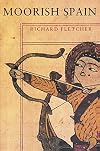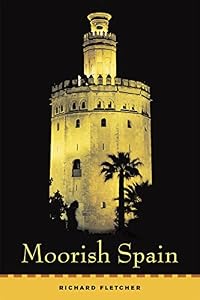
Moorish Spain
by Richard Fletcher
On This Page
Description
In the year 711, a small Berber army under Arab leadership crossed the Straits of Gibraltar from Morocco and, in the following year, defeated the army of Spain, slaying its king. Within a matter of a few years only, the whole of the Iberian peninsula was theirs and the course of Western civilization was transformed. For nearly a thousand years, the Islamic presence they planted in Spain survived - at times flourishing, at others dwindling into warring, fratricidal fiefdoms. But the culture show more and science they brought with them - including long-buried knowledge from Greece, forgotten in Europe's Dark Ages - was to have an even more enduring impact. Now, in a book as gracefully written as it is compellingly narrated, Richard Fletcher reveals that culture in all its fascinating disparity, telling as much about the differing waves of Islamic conquest and immigration (and, thereby, about a thousand years of Islamic history in North Africa and the Middle East) as about the culture and history of Spain itself. In the tradition of Steven Runciman's elegant histories of the Crusades and John Julius Norwich's engrossing accounts of Venice and Byzantium, Richard Fletcher's Moorish Spain entertains even as it enlightens. It is history at its best: wonderful storytelling by a true and recognized scholar writing with wit and style. show lessTags
Recommendations








Member Reviews
The author, when writing this, set out on a quest to defuse the popular image of Spain under the Moors as a glamorous, tolerant and enlightened community laid to waste by brute ignoramuses - he states this intention clearly enough in the first chapter.
His success is only partial. Because while the Moors was as brutal and intolerant as the Christians that replaced them this was very much what life was during not only this period of time but the periods preceding and succeeding it, and while the Christians are a known entity to us in western Europe the Moorish Muslims are not. The winner writes the history, and for a very long time the winners had zero interest in preserving anything Muslim. This means very few records or perishable show more objects are left us from the Moorish era. Thus a lot of our knowledge is guesswork. What objects are left only adds to the enigma. The Alhambra, arab baths, carved objects and learned texts all shows the image of something medieval Europe wasn't, not to our inner eye.
(This inner image is, of course, a false one. Between the Black Death and the Inquisition there was a place where the seed of science could grow. Not to come to bloom yet, but the ground works were being laid. Part of that came through the area then called al-Andalus in the form of translated and commented texts by Aristotle and the like.)
The book is geared towards the layman, and therefore lacks notes of sources and references. This is both good and bad. It's good, because it makes the text flow in a pleasant way. It's almost written as discourse, and he don't care to hide his disdain for the navel-gazing coteries of historians who spends their time disputing who wrote what in 784 when the real interest lies in why things happened - the patterns and the motivating factors (I happen to share his view).
The lack of footnotes are bad because in some cases references are of interest even to the layman. A special period or person or place has captured your interest, and you want to know more. This is just a minor flaw, though. As a whole it offers a comprehensive overview of early medieval Spain.
If you're interested in the era this should be a must read.
You should also read this if you're planning on visiting Spain or Portugal - if you do it will add to the experience and heighten your awareness of what you are seeing (if you venture beyond the beaches of Costa del Sol, that is). show less
His success is only partial. Because while the Moors was as brutal and intolerant as the Christians that replaced them this was very much what life was during not only this period of time but the periods preceding and succeeding it, and while the Christians are a known entity to us in western Europe the Moorish Muslims are not. The winner writes the history, and for a very long time the winners had zero interest in preserving anything Muslim. This means very few records or perishable show more objects are left us from the Moorish era. Thus a lot of our knowledge is guesswork. What objects are left only adds to the enigma. The Alhambra, arab baths, carved objects and learned texts all shows the image of something medieval Europe wasn't, not to our inner eye.
(This inner image is, of course, a false one. Between the Black Death and the Inquisition there was a place where the seed of science could grow. Not to come to bloom yet, but the ground works were being laid. Part of that came through the area then called al-Andalus in the form of translated and commented texts by Aristotle and the like.)
The book is geared towards the layman, and therefore lacks notes of sources and references. This is both good and bad. It's good, because it makes the text flow in a pleasant way. It's almost written as discourse, and he don't care to hide his disdain for the navel-gazing coteries of historians who spends their time disputing who wrote what in 784 when the real interest lies in why things happened - the patterns and the motivating factors (I happen to share his view).
The lack of footnotes are bad because in some cases references are of interest even to the layman. A special period or person or place has captured your interest, and you want to know more. This is just a minor flaw, though. As a whole it offers a comprehensive overview of early medieval Spain.
If you're interested in the era this should be a must read.
You should also read this if you're planning on visiting Spain or Portugal - if you do it will add to the experience and heighten your awareness of what you are seeing (if you venture beyond the beaches of Costa del Sol, that is). show less
Another good book covering the Moorish period in Spain. Written by a professional historian, the book is aimed at the general reader. Sets out, in a readable manner, the events from 710 to 1600. Plenty of darkness in that period! But also plenty of light - Europe was dead - lost in the dark ages after the fall of Rome. However, the islamic world, however, was alive. The Moors brought much to Spain - greatly diversified crops and significant improvements in farming and irrigation made the place highly productive. The elite contained an educated class, and played a significant role in bringing Greek philisophers and mathematicians and scientists and doctors to the West.
It wasn't all sweetness and linght - the Amirs and Caliphs were just show more as prone to internal fueds and succession dramas as the rest of Spain at the time. show less
It wasn't all sweetness and linght - the Amirs and Caliphs were just show more as prone to internal fueds and succession dramas as the rest of Spain at the time. show less
Textbook history textbook style. Fairly even-handed for an account from the Western European side of things, it dispels some persistent myths about the Reconquest and places Moorish Spain at the heart of European culture. One for the casual reader, though, as the scholar will be very frustrated by the lack of reference to any sources for some of the wilder speculations and figures.
Wonderful topic, but I found it a bit shallow...
Ratings
Members
- Recently Added By
Author Information

5+ Works 1,982 Members
Common Knowledge
- Important places
- Spain
Classifications
- Genres
- History, Nonfiction, General Nonfiction, Religion & Spirituality
- DDC/MDS
- 946.02 — History & geography History of Europe Spain & Portugal Spain Moorish kingdom 711-1479
- LCC
- DP99 .F56 — History of Europe, Asia, Africa and Oceania Spain – Portugal History of Spain History By period 711-1516. Moorish domination and the Reconquest
- BISAC
Statistics
- Members
- 378
- Popularity
- 82,279
- Reviews
- 4
- Rating
- (3.74)
- Languages
- English, Spanish
- Media
- Paper, Ebook
- ISBNs
- 7
- ASINs
- 2