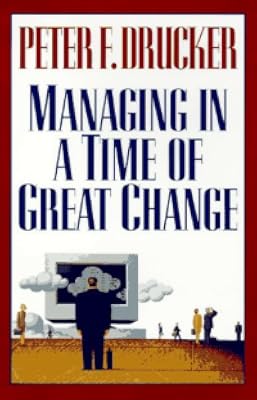
Managing in a Time of Great Change
by Peter F. Drucker
On This Page
Description
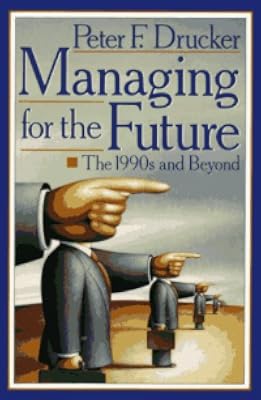
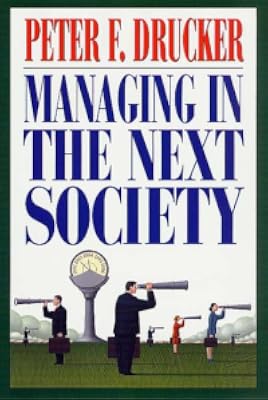
'It is not so very difficult to predict the future. It is only pointless...what is always far more important are fundamental changes that happened though no one predicted them or could possible have predicted them.' (quote taken from this book) It is these unpredictable and irreversible changes from the past, and their effect on the role of the executive which Peter Drucker examines in his latest book. The management of change is a subject which has been, undoubtedly, the principal show more preoccupation of management thinkers in the 1990s. Peter Drucker, the guru's guru, brings together a group of his own original essays and interviews on this vitally important topic. As ever, he provides invaluable food for thought for all executives and students of business and management. show lessTags
Recommendations








Member Reviews
Another one of the excellent books intended to get business managers out of ideological dead-ends to look at data and information. Remarkably prescient -- "it is not so difficult to predict the future" [ix] -- Drucker has reliably predicted business dynamics shadowed by economic data.
Ever since his 1946 book "The Concept of the Corporation" redefined employees as a resource rather than a cost, Drucker has been credited with policies that have resulted in prosperity and business success. Here, he takes on the "post-capitalist" executive.
Capital is a key resource, but the scarcest resources are "performing people". [136] This is one of the arguments against slashing labor costs and rewarding CEOs who spend their time figuring out how to show more spend all the money they are getting. "It is only through respect of the workers that true productivity is achieved." [350]
Drucker is an advocate for the "reinvention of Government" -- whether it is driven by Al Gore's efforts, or Newt Gingrich and The Heritage Foundation proposals. He suggests that the megastate is morally and financially bankrupt, but that its successor cannot be "small government". "We need 'effective' government" [300].
In this call, I see Obama's 2008 "Change We Can Believe In" as an answer. Drucker calls for a theory that asks what results the government should be held accountable for. [300] Obama has produced a theory with factual information underlying it. show less
Ever since his 1946 book "The Concept of the Corporation" redefined employees as a resource rather than a cost, Drucker has been credited with policies that have resulted in prosperity and business success. Here, he takes on the "post-capitalist" executive.
Capital is a key resource, but the scarcest resources are "performing people". [136] This is one of the arguments against slashing labor costs and rewarding CEOs who spend their time figuring out how to show more spend all the money they are getting. "It is only through respect of the workers that true productivity is achieved." [350]
Drucker is an advocate for the "reinvention of Government" -- whether it is driven by Al Gore's efforts, or Newt Gingrich and The Heritage Foundation proposals. He suggests that the megastate is morally and financially bankrupt, but that its successor cannot be "small government". "We need 'effective' government" [300].
In this call, I see Obama's 2008 "Change We Can Believe In" as an answer. Drucker calls for a theory that asks what results the government should be held accountable for. [300] Obama has produced a theory with factual information underlying it. show less
Ratings
Members
- Recently Added By
Author Information

258+ Works 12,456 Members
Peter F. Drucker has been Clarke Professor of Social Science and Management at Claremont Graduate School in California since 1971.
Classifications
Statistics
- Members
- 221
- Popularity
- 148,258
- Reviews
- 1
- Rating
- (3.71)
- Languages
- 5 — English, Italian, Portuguese, Russian, Spanish
- Media
- Paper, Audiobook, Ebook
- ISBNs
- 19
- ASINs
- 3