Cape May
by Chip Cheek
On This Page
Description
"It's 1957, and Henry and Effie, very young newlyweds from Georgia, arrive in Cape May, New Jersey, for their honeymoon. It's September, though, and the town is deserted. Feeling shy of each other and isolated, they decide to cut the trip short. But before they leave, they meet a glamorous set of people who sweep them up into their drama. There's Clara, a beautiful socialite who feels her youth slipping away; Max, a wealthy playboy and Clara's lover; and Alma, Max's aloof and mysterious half show more sister, to whom Henry is irresistibly drawn. The empty beach town becomes their playground, and as they sneak into abandoned summer homes, go sailing, walk naked under the stars, make love, and drink a great deal of gin, Henry and Effie slip from innocence into betrayal, with irrevocable consequences."--Page 4 of cover. show lessTags
Recommendations




















Member Reviews
Capturing the essence of youthful unrest and dissatisfaction while maintaining a literary tone are not easy things to master in fiction, F. Scott Fitzgerald did it several times, capturing the highs and lows while Richard Yates paints a sorrowful portrait of suburban boredom. But Chip Cheek has successfully taken the reader out of 2019 to recreate America in the 1950s, the innocence and the worldly in Cape May. It’s a very polished debut that has me wanting more of it all – the debauchery, the emotional rollercoaster and the shattering of innocence.
Henry and Effie are newlyweds who have left their small town of Georgia to honeymoon in New Jersey in Effie’s uncle’s house. Effie has fond memories of childhood summers in Cape May, show more but autumn Cape May as a grown up is not what she had in her head. Her uncle has left mean instructions (right down to the amount of alcohol the couple can drink without replacing the bottle) and most things are shut. It’s an awkward start to a honeymoon but things seem to plod along relatively nicely in the bedroom and outside. It’s just so…pedestrian and unexciting for the pair that they are set on leaving early to return home. A light down the street has the young couple dressing up to formally meet their neighbours. But it turns out to be a childhood frenemy of Effie’s – Clara. Effie doesn’t really have fond memories of Clara, but she and Henry agree to stay for dinner. And a party. And more and more until they are involved in the daily lives of Clara, her lover Max and his recently discovered sister, Alma. All three are way more worldly than the innocent sweethearts and introduce them to a world of drinking, carefree fantasies and sex. It can only end badly.
Chip Cheek’s description of Henry and Effie’s descent into a darker world of sex is more explicit than anything Yates or Fitzgerald ever wrote, but overall the novel still fits in with those authors. An update for the times perhaps. The destruction of innocence is sweet at first, but Henry is particular is taken further into the world of adultery. Yet when Effie does similar, he reacts like a typical man of the times, treating Effie like his property. The ending, which describes the rest of the couple’s lives, does feel a bit superfluous but in retrospect demonstrates Effie’s defiance of this claim. (I’m also a sucker for knowing everything about characters in a good story, so I’m not complaining). The story is richly detailed and captures Henry’s warring emotions, thoughts and bargaining to try to talk himself of what he believes are his misdeeds.
Overall, Cape May is a complex entwining of relationships in the vein of literary fiction, yet it is also an absolute page-turner. Add Chip Cheek to your list of must-read authors.
Thank you to Hachette for the copy of this book. My review is honest.
http://samstillreading.wordpress.com show less
Henry and Effie are newlyweds who have left their small town of Georgia to honeymoon in New Jersey in Effie’s uncle’s house. Effie has fond memories of childhood summers in Cape May, show more but autumn Cape May as a grown up is not what she had in her head. Her uncle has left mean instructions (right down to the amount of alcohol the couple can drink without replacing the bottle) and most things are shut. It’s an awkward start to a honeymoon but things seem to plod along relatively nicely in the bedroom and outside. It’s just so…pedestrian and unexciting for the pair that they are set on leaving early to return home. A light down the street has the young couple dressing up to formally meet their neighbours. But it turns out to be a childhood frenemy of Effie’s – Clara. Effie doesn’t really have fond memories of Clara, but she and Henry agree to stay for dinner. And a party. And more and more until they are involved in the daily lives of Clara, her lover Max and his recently discovered sister, Alma. All three are way more worldly than the innocent sweethearts and introduce them to a world of drinking, carefree fantasies and sex. It can only end badly.
Chip Cheek’s description of Henry and Effie’s descent into a darker world of sex is more explicit than anything Yates or Fitzgerald ever wrote, but overall the novel still fits in with those authors. An update for the times perhaps. The destruction of innocence is sweet at first, but Henry is particular is taken further into the world of adultery. Yet when Effie does similar, he reacts like a typical man of the times, treating Effie like his property. The ending, which describes the rest of the couple’s lives, does feel a bit superfluous but in retrospect demonstrates Effie’s defiance of this claim. (I’m also a sucker for knowing everything about characters in a good story, so I’m not complaining). The story is richly detailed and captures Henry’s warring emotions, thoughts and bargaining to try to talk himself of what he believes are his misdeeds.
Overall, Cape May is a complex entwining of relationships in the vein of literary fiction, yet it is also an absolute page-turner. Add Chip Cheek to your list of must-read authors.
Thank you to Hachette for the copy of this book. My review is honest.
http://samstillreading.wordpress.com show less
In 1957, Henry and Effie, married straight out of a small-town Georgia high school, honeymoon in Cape May, New Jersey. Borrowing a cousin’s cottage, they arrive at the end of September to find the town deserted — naturally, because it’s a place where the well-to-do summer, and now they’re gone.
That’s only the first fact to surprise the innocent, unsophisticated newlyweds, and Effie’s instinct is to go home after a couple days. But Henry, unsure of her, though they’ve known each other for years — he can’t quite believe that the mayor’s daughter chose him — takes her notion to mean that she doesn’t want his company. That insecurity leads to much trouble and the discovery that the Jersey shore is much farther from show more rural Georgia than the mere distance indicates.
A group of city sophisticates welcomes them next door to a nonstop party, though absorb would be a fitter word. Max, a sometime writer, heir to a shipping fortune, and a lewd drunk, drives the festivities with his lover, Clara, who was in show business at one time. Alma, Max’s sullen, gorgeous half-sister, acts as though she’d rather be anywhere else, but she draws Henry’s eye.
At first, he’s more susceptible to this crowd’s invitations than his bride, attracted by the veneer of “civilization,” as he calls it, what these mildly degenerate Yankees represent to him. And in that fever, he loses his common sense and his moral compass, helped by a power outage after a storm (something of a cliché, there).
Cheek’s a terrific observer, especially of social interactions and sexual mores. What could have been a stagey, turgid domestic drama stewing in its own juices feels surprisingly open, fluid, and freewheeling. This requires a subtle touch, the ability to evoke movement even when people are sitting still, and simmering tension below the surface, at all of which Cheek excels.
Throughout, there’s a sexual charge, like a humid summer day before a thunderstorm. All of these elements derive from the prose, which does its work simply, never calling attention to itself, yet conveys the mood in vivid, active images.
For all that, though, Cape May falls short of memorable. I understand Henry, somewhat, but Effie hardly at all, and the sophisticates even less. They seem too brittle to feel anything, rushing from experience to experience to prevent what they most fear, boredom. I would have wanted flashes of depth, glimmers of what they’re trying not to face; though, since the newlyweds provide the only perspectives as naïve observers, that’s difficult to achieve. Cheek seems to be saying that the Georgians’ innocence is also a veneer, that they share their new friends’ desires, and we’re all the same underneath, city mouse or country mouse.
That’s fine, but absent fuller characterizations or any particular connection to time and place — if it weren’t for clothing styles or brief mentions of current events, I would never have known it was the late Fifties — we’re left with what sex means, or what it means to Henry, Effie, and the reader.
And as for sex, there’s plenty of it, licit and otherwise. Cheek does well to make the scenes matter-of-fact and realistic — no breathless, inflated bodice-ripper descriptions — though I do wonder how these people manage to get it on after half a dozen gins-and-tonic.
Cheek’s a fine writer whose subject matter and theme remind me of Ian McEwan’s On Chesil Beach, also about newlyweds clueless about marriage. But the people in Cape May seem more a collection of attitudes than complex humans, and their plight therefore less than powerful. show less
That’s only the first fact to surprise the innocent, unsophisticated newlyweds, and Effie’s instinct is to go home after a couple days. But Henry, unsure of her, though they’ve known each other for years — he can’t quite believe that the mayor’s daughter chose him — takes her notion to mean that she doesn’t want his company. That insecurity leads to much trouble and the discovery that the Jersey shore is much farther from show more rural Georgia than the mere distance indicates.
A group of city sophisticates welcomes them next door to a nonstop party, though absorb would be a fitter word. Max, a sometime writer, heir to a shipping fortune, and a lewd drunk, drives the festivities with his lover, Clara, who was in show business at one time. Alma, Max’s sullen, gorgeous half-sister, acts as though she’d rather be anywhere else, but she draws Henry’s eye.
At first, he’s more susceptible to this crowd’s invitations than his bride, attracted by the veneer of “civilization,” as he calls it, what these mildly degenerate Yankees represent to him. And in that fever, he loses his common sense and his moral compass, helped by a power outage after a storm (something of a cliché, there).
Cheek’s a terrific observer, especially of social interactions and sexual mores. What could have been a stagey, turgid domestic drama stewing in its own juices feels surprisingly open, fluid, and freewheeling. This requires a subtle touch, the ability to evoke movement even when people are sitting still, and simmering tension below the surface, at all of which Cheek excels.
Throughout, there’s a sexual charge, like a humid summer day before a thunderstorm. All of these elements derive from the prose, which does its work simply, never calling attention to itself, yet conveys the mood in vivid, active images.
For all that, though, Cape May falls short of memorable. I understand Henry, somewhat, but Effie hardly at all, and the sophisticates even less. They seem too brittle to feel anything, rushing from experience to experience to prevent what they most fear, boredom. I would have wanted flashes of depth, glimmers of what they’re trying not to face; though, since the newlyweds provide the only perspectives as naïve observers, that’s difficult to achieve. Cheek seems to be saying that the Georgians’ innocence is also a veneer, that they share their new friends’ desires, and we’re all the same underneath, city mouse or country mouse.
That’s fine, but absent fuller characterizations or any particular connection to time and place — if it weren’t for clothing styles or brief mentions of current events, I would never have known it was the late Fifties — we’re left with what sex means, or what it means to Henry, Effie, and the reader.
And as for sex, there’s plenty of it, licit and otherwise. Cheek does well to make the scenes matter-of-fact and realistic — no breathless, inflated bodice-ripper descriptions — though I do wonder how these people manage to get it on after half a dozen gins-and-tonic.
Cheek’s a fine writer whose subject matter and theme remind me of Ian McEwan’s On Chesil Beach, also about newlyweds clueless about marriage. But the people in Cape May seem more a collection of attitudes than complex humans, and their plight therefore less than powerful. show less
Henry und Effie sind noch sehr jung als sie 1957 heiraten. Sie sind jedoch nicht nur jung, sondern auch unerfahren und müssen sich in ihren Flitterwochen fernab der Südstaatenheimat erst als Mann und Frau kennenlernen. Das verschlafene Urlaubsstädtchen Cape May ist ihr Ziel, doch im Herbst ist der Ort fast ausgestorben und die ersten Tage bestehen nur aus ihnen beiden. Mit der Ankunft von Clara und ihren glamourösen New Yorker Freunden ändert sich alles und aus der beschaulichen Ruhe wird eine aufreizende Unruhe, die Henry und Effie gleichermaßen ergreift. Sie sind fasziniert von diesen Menschen, die einen so anderen Lebensstil als sie beide pflegen, doch die Faszination droht Überhand zu nehmen und sie in den Abgrund zu show more stürzen.
Chip Cheeks Debütroman überzeugt für mich vor allem durch das authentische Zeitgefühl, das er erweckt. Keinen Moment zweifelt man daran, sich Ende der 1950er Jahre zu befinden und kann so auch leicht diesen Zauber nachvollziehen, den die ausschweifenden Partys der New Yorker auf die beiden Jugendlichen vom Land haben. Das Buch besticht vor allem durch die Atmosphäre und des Ortes, der quasi ausgestorben ist und es der Handlung so ermöglicht, sich ganz auf die kleine Gruppe zu konzentrieren.
Im Zentrum steht die Frage danach, was die Liebe eigentlich ausmacht. Man ist zunächst verwundert, dass Effie und Henry zueinander gefunden haben, zu unterschiedlich scheinen sie beide in Herkunft und Vorstellungen vom Leben zu sein. Doch nach und nach zeigt sich, dass sie, je näher sie sich kommen, sie immer mehr zu sich ergänzenden Partnern werden, die lediglich noch lernen müssen, als Paar zu funktionieren. Diese Idylle wird durch Henrys Faszination für die junge Alma gefährdet und nun beginnt der Roman nicht nur psychologisch spannend zu werden – wie kann der junge, frisch verheiratete Mann mit der Verwirrung seiner Gefühle umgehen? – sondern auch die anderen Facetten von Liebe zu beleuchten.
„Wir lieben uns, wir mögen uns nur nicht besonders.“
So beschreiben sie am Ende ihre Zweisamkeit. Ihre Vorstellungen von Liebe und Ehe werden schon ganz zu Beginn auf eine schwere Probe gestellt. Damit fängt Chip Cheek nicht nur die Zerrissenheit der Figuren, sondern auch den Umbruch der Zeit glaubwürdig ein. Der Roman ist Anfang und Ende zugleich, rauschend und intensiv, voller widersprüchlicher Emotionen – wie eben große Umwerfungen sind. show less
Chip Cheeks Debütroman überzeugt für mich vor allem durch das authentische Zeitgefühl, das er erweckt. Keinen Moment zweifelt man daran, sich Ende der 1950er Jahre zu befinden und kann so auch leicht diesen Zauber nachvollziehen, den die ausschweifenden Partys der New Yorker auf die beiden Jugendlichen vom Land haben. Das Buch besticht vor allem durch die Atmosphäre und des Ortes, der quasi ausgestorben ist und es der Handlung so ermöglicht, sich ganz auf die kleine Gruppe zu konzentrieren.
Im Zentrum steht die Frage danach, was die Liebe eigentlich ausmacht. Man ist zunächst verwundert, dass Effie und Henry zueinander gefunden haben, zu unterschiedlich scheinen sie beide in Herkunft und Vorstellungen vom Leben zu sein. Doch nach und nach zeigt sich, dass sie, je näher sie sich kommen, sie immer mehr zu sich ergänzenden Partnern werden, die lediglich noch lernen müssen, als Paar zu funktionieren. Diese Idylle wird durch Henrys Faszination für die junge Alma gefährdet und nun beginnt der Roman nicht nur psychologisch spannend zu werden – wie kann der junge, frisch verheiratete Mann mit der Verwirrung seiner Gefühle umgehen? – sondern auch die anderen Facetten von Liebe zu beleuchten.
„Wir lieben uns, wir mögen uns nur nicht besonders.“
So beschreiben sie am Ende ihre Zweisamkeit. Ihre Vorstellungen von Liebe und Ehe werden schon ganz zu Beginn auf eine schwere Probe gestellt. Damit fängt Chip Cheek nicht nur die Zerrissenheit der Figuren, sondern auch den Umbruch der Zeit glaubwürdig ein. Der Roman ist Anfang und Ende zugleich, rauschend und intensiv, voller widersprüchlicher Emotionen – wie eben große Umwerfungen sind. show less
Well Cape May is basically a smut book. And I don’t mean this necessarily in a bad way. The author is very deft with his writing but it is about a newlywed couple in the honeymoon who get bored, lost, I don’t know but they rapidly turn into lushes and get into mischief.
It is respectable porn for soccer moms to read at the beach this summer.
It is respectable porn for soccer moms to read at the beach this summer.
In most books, one expects there to be some character growth. In this book, the characters just get more and more debauched. Our main characters, Henry and Effie, are newlyweds from Georgia on their honeymoon in Cape May, NJ. It's September, so the summer resort community is largely empty, but soon Henry and Effie find another young couple in a house down the street. But their new friends are neither as young nor as innocent Henry and Effie, and soon they find themselves going inexorably down the path to dissipation and lasciviousness until they both doubt whether their marriage will outlast the honeymoon. Cheek saves most of his answers for the last chapter of the book, where the reader can trace the effects of their show more licentiousness.
Ultimately, this book is very readable (if you're in the mood for reading about a lot of sex) and the action (pun intended) is fairly continuous, making it feel as though things are moving along at a good pace. The descriptions of the town and the ocean are evocative (as are the descriptions of the sex) and the characters are believable, if not very likable. But there's not much movement in this book, either geographical or metaphysical, giving the book a somewhat stagnant feel.
Cheek shows his prowess (I just can't help myself) much more in the last chapter than in all the preceding ones, when he focuses on the emotions of a relationship more than the sex. He shows definite promise as a novelist (certainly anyone who can write a good sex scene is a promising novelist) but hopefully his future books will focus more on the growth of his characters than on their sex lives. show less
Ultimately, this book is very readable (if you're in the mood for reading about a lot of sex) and the action (pun intended) is fairly continuous, making it feel as though things are moving along at a good pace. The descriptions of the town and the ocean are evocative (as are the descriptions of the sex) and the characters are believable, if not very likable. But there's not much movement in this book, either geographical or metaphysical, giving the book a somewhat stagnant feel.
Cheek shows his prowess (I just can't help myself) much more in the last chapter than in all the preceding ones, when he focuses on the emotions of a relationship more than the sex. He shows definite promise as a novelist (certainly anyone who can write a good sex scene is a promising novelist) but hopefully his future books will focus more on the growth of his characters than on their sex lives. show less
Imagine an X Rated version of Hemingway’s A Moveable Feast and you’ve got Cape May.
The virginal couple of Effie and Henry choose to spend their honeymoon at her Uncles cottage in Cape May, New Jersey. It’s off season so the crowds have left but one house is occupied by an old acquaintance of Effie’s. This band of merry makers take the young couple under their wing and shows them a good time; Partying, sailing, gaming, drinking to name a few. There is subtle debauchery and temptations galore. Will Effie and Henry’s new marriage survive their honeymoon? I recommend you give this novel a shot.
The virginal couple of Effie and Henry choose to spend their honeymoon at her Uncles cottage in Cape May, New Jersey. It’s off season so the crowds have left but one house is occupied by an old acquaintance of Effie’s. This band of merry makers take the young couple under their wing and shows them a good time; Partying, sailing, gaming, drinking to name a few. There is subtle debauchery and temptations galore. Will Effie and Henry’s new marriage survive their honeymoon? I recommend you give this novel a shot.
This book could also be titled How to Destroy your Relationship in Two Weeks. But that's just my opinion.
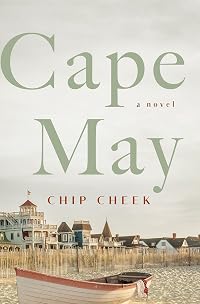
The time period is the 1950’s and setting is off-season Cape May, New Jersey. Some of the appeal was the cover, the time period and subject of relationships.
It’s the tale of virginal newlyweds Henry and Effie slowly and shyly getting to know one another. Seemingly good people at heart, they cautiously learn about each other’s bodies and love. They talk about their future, having children, settling down in their small Georgia town. A few days into the honeymoon Effie wants to go home because Cape May during off-season isn’t as fun as remembered it. When she visited as a young girl it was the summer high season. So much was show more going on then.
If only they had left when Effie first suggested it. But then we wouldn't have a story as it all revolves around the two week honeymoon. The holiday homes are empty and most stores are closed. One afternoon they notice cars at one home down the block. As they stop by to say hello, Effie is surprised to see a woman from her childhood. Clara was much older and used to tease Effie when she was a young girl, embarrassing her. Clara, who has the moral code of a cat in heat, is partying with her friends Max and Alma.
Against Effie’s better judgement they are cajoled into staying longer and have dinner and drinks with Clara, Max and Alma. Things start spiraling out of control soon afterwards. Gin and tonics are consumed by the bucketful. Eventually they break into the other homes, vacant holiday homes that won’t be visited until the following May. They walk through the houses on the block and look at the possessions as if they are in a museum. They try on clothes and play with homeowner's belongings. Creepy isn’t it?
Here come some spoilers
Henry is a complete piece of crap. While he cheats on his wife he also wonders how she could have gone off on a boat outing without him. He wouldn’t have gone anywhere without her, he muses. Seriously, one of the worst examples of a husband Ever.
Not that any of the other characters are sterling examples of virtue. None of them.
The last 15% of the book seems to be written by someone else. Almost the entire book focuses on the two week honeymoon period and the interactions with Clara and her group. Honestly, the best way I can categorize it is under the genre pornography. There are graphic sex scenes, very detailed, throughout the book. It was expected there would be passages about love and sex as the book is advertised as a plot of “marriage, love and sexuality and the lifelong repercussions a group of debauched cosmopolitans may have.” That’s an understatement.
Another unbelievable part is when Effie wonders if she is pregnant. OK, so.....she was a virgin and it's only been two weeks at the most and she thinks she's pregnant. I can suspend disbelief for many scenarios but this didn't qualify. Never mind the other "relationships" that formed, also unlikely but hey....maybe I'm naive.
The last bit of the story wraps up with the final 50 years of Henry and Effie’s respective lives. Bam, bam, bam you are given the life story in a fast forward mode.
If graphic sex scenes offend then skip this book. If you would like a snapshot of 1950’s depravity and a dose of double standards from our Henry, by all means pick this one up.
Netgalley kindly gave me a complimentary copy prior to it's publication on April 30, 2019. Opinions are mine and I was not compensated for my honest review. show less
The time period is the 1950’s and setting is off-season Cape May, New Jersey. Some of the appeal was the cover, the time period and subject of relationships.
It’s the tale of virginal newlyweds Henry and Effie slowly and shyly getting to know one another. Seemingly good people at heart, they cautiously learn about each other’s bodies and love. They talk about their future, having children, settling down in their small Georgia town. A few days into the honeymoon Effie wants to go home because Cape May during off-season isn’t as fun as remembered it. When she visited as a young girl it was the summer high season. So much was show more going on then.
If only they had left when Effie first suggested it. But then we wouldn't have a story as it all revolves around the two week honeymoon. The holiday homes are empty and most stores are closed. One afternoon they notice cars at one home down the block. As they stop by to say hello, Effie is surprised to see a woman from her childhood. Clara was much older and used to tease Effie when she was a young girl, embarrassing her. Clara, who has the moral code of a cat in heat, is partying with her friends Max and Alma.
Against Effie’s better judgement they are cajoled into staying longer and have dinner and drinks with Clara, Max and Alma. Things start spiraling out of control soon afterwards. Gin and tonics are consumed by the bucketful. Eventually they break into the other homes, vacant holiday homes that won’t be visited until the following May. They walk through the houses on the block and look at the possessions as if they are in a museum. They try on clothes and play with homeowner's belongings. Creepy isn’t it?
Here come some spoilers
Henry is a complete piece of crap. While he cheats on his wife he also wonders how she could have gone off on a boat outing without him. He wouldn’t have gone anywhere without her, he muses. Seriously, one of the worst examples of a husband Ever.
Not that any of the other characters are sterling examples of virtue. None of them.
The last 15% of the book seems to be written by someone else. Almost the entire book focuses on the two week honeymoon period and the interactions with Clara and her group. Honestly, the best way I can categorize it is under the genre pornography. There are graphic sex scenes, very detailed, throughout the book. It was expected there would be passages about love and sex as the book is advertised as a plot of “marriage, love and sexuality and the lifelong repercussions a group of debauched cosmopolitans may have.” That’s an understatement.
Another unbelievable part is when Effie wonders if she is pregnant. OK, so.....she was a virgin and it's only been two weeks at the most and she thinks she's pregnant. I can suspend disbelief for many scenarios but this didn't qualify. Never mind the other "relationships" that formed, also unlikely but hey....maybe I'm naive.
The last bit of the story wraps up with the final 50 years of Henry and Effie’s respective lives. Bam, bam, bam you are given the life story in a fast forward mode.
If graphic sex scenes offend then skip this book. If you would like a snapshot of 1950’s depravity and a dose of double standards from our Henry, by all means pick this one up.
Netgalley kindly gave me a complimentary copy prior to it's publication on April 30, 2019. Opinions are mine and I was not compensated for my honest review. show less
Members
- Recently Added By
Lists

Kirkus Starred Fiction Reviews of Books Published in 2019
411 works; 12 members

Books Read in 2018
4,360 works; 110 members
Author Information

1 Work 215 Members
Awards and Honors
Distinctions
Common Knowledge
- Canonical title
- Cape May
- Original publication date
- 2019
Classifications
Statistics
- Members
- 214
- Popularity
- 152,988
- Reviews
- 16
- Rating
- (3.07)
- Languages
- 5 — English, French, German, Italian, Spanish
- Media
- Paper, Audiobook, Ebook
- ISBNs
- 19
- ASINs
- 3