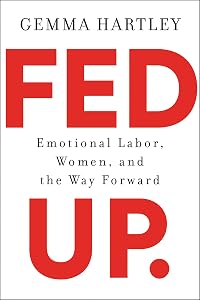
Fed Up: Emotional Labor, Women, and the Way Forward
by Gemma Hartley
On This Page
Description
A rousing call to arms, packed with surprising insights, that explores how carrying "the mental load"-the thankless day-to-day anticipating of needs and solving of problems large and small-is adversely affecting women's lives and feeding gender inequality, and shows the way forward for better balancing our lives. Launching a heated national conversation with her viral article "Women Aren't Nags; We're Just Fed Up"-viewed over two billion times-journalist Gemma Hartley gave voice to the show more frustration and anger of countless women putting in the hidden, underappreciated, and absolutely draining mental work that consists of keeping everyone in their lives comfortable and happy. Bringing long overdue awareness to the daunting reality of emotional labor in our lives, Hartley defines the largely invisible but demanding, time-consuming, and exhausting "worry work" that falls disproportionately and unfairly on all women-no matter their economic class or level of education. Synthesizing a wide variety of sources-history, sociology, economics, psychology, philosophy, and anthropology-Hartley makes the invisible visible, unveiling the surprising shapes emotional labor takes at work, at home, in relationships, and in parenting. With on-the-ground reporting, identifiable personal stories and interviews from around the world, this feminist manifesto will empower women to transform their inner dialogue and give all women the emotional fortitude and courage to ask for what we most want-without shame, without guilt, and without the emotional baggage. Beyond naming the problem, Fed Up offers practical advice and solutions for teaching both men and women how to wield emotional labor to live more full and satisfying lives. Hartley helps us to see emotional labor not as a problem to be overcome, but as a genderless virtue we can all learn to channel in our quest to make a better, more egalitarian world for ourselves and most importantly, our children. Insightful, surprising, deeply relatable, and filled with all too familiar moments, this provocative, intelligent, and empathetic guide is essential reading for every woman who has had enough with feeling fed up. show lessTags
Recommendations







Member Reviews
What is Emotional Labor and how is its unequal distribution ruining your marriage? I think most married women can relate to unending frustration that boils up inside them when they find the pile of dirty dishes their husband can't even be bothered to bring to the kitchen, much less wash himself. Or perhaps it's the mass of dirty socks left to molder beside the bed? Perishable food items left sitting on the counter? So much trash crammed in the can that the lid won't close? I've felt and experienced these frustrations, but didn't quite understand the force that was driving them. Surely I wasn't really crying over something so small? What is underlying this feeling that the walls are closing in and you're drowning under endless chore show more charts?
What your are experiencing is the aftermath of emotional labor overload. The unending mental weight of prioritizing a thousand menial tasks that ensure one's household is running properly. This stress is compounded by the arrival of children and can lead to frequent blowups where a woman is gas-lighted for "freaking out" about "nothing". Often a woman in this position is told that if she needs help, she should just ask for it. This statement often made me sick to my stomach because I couldn't articulate why this would not solve the problem.
Ms. Hartley puts her finger on it within the first paragraph. I don't want help. I don't want appreciation. I want a partner with equal initiative. A grown up man shouldn't have to be told to take the trash out. A grown up man shouldn't have to be told that the living room needs to be vacuumed. That is how you communicate with a child. A grown up sees a task that needs to be done, and either does it, or puts it on a mental to-do list.
The reason I was crying over moldy tupperware that my husband left in his backpack all weekend was not because the thought of washing one more dish was too much for me. It was brought on my a complete sense of isolation. The bedrock knowledge that I was the only person in the house who cared or would do anything to keep the house running smoothly. Even when my husband would take on chores, I first had to provide him a list which he would complete faithfully and then pat himself on the back for being a "good husband" and go back to doing nothing. These were rare exceptions. He was doing me a favor. He was being a magnanimous spouse - this was not something he would have to maintain.
This book gave me the vocabulary to recognize the sources of my frustration. For me - really, that was the greatest gift. The reason I feel so overwhelmed and overworked is because I am. And now that I know why, I can change things. Whether it be having a productive conversation with my husband about household duties - not just who does them, but who is responsible for noticing and making sure they get done; or setting wise boundaries in my life to protect my self-worth and piece of mind.
Every adult human should read this book. show less
What your are experiencing is the aftermath of emotional labor overload. The unending mental weight of prioritizing a thousand menial tasks that ensure one's household is running properly. This stress is compounded by the arrival of children and can lead to frequent blowups where a woman is gas-lighted for "freaking out" about "nothing". Often a woman in this position is told that if she needs help, she should just ask for it. This statement often made me sick to my stomach because I couldn't articulate why this would not solve the problem.
Ms. Hartley puts her finger on it within the first paragraph. I don't want help. I don't want appreciation. I want a partner with equal initiative. A grown up man shouldn't have to be told to take the trash out. A grown up man shouldn't have to be told that the living room needs to be vacuumed. That is how you communicate with a child. A grown up sees a task that needs to be done, and either does it, or puts it on a mental to-do list.
The reason I was crying over moldy tupperware that my husband left in his backpack all weekend was not because the thought of washing one more dish was too much for me. It was brought on my a complete sense of isolation. The bedrock knowledge that I was the only person in the house who cared or would do anything to keep the house running smoothly. Even when my husband would take on chores, I first had to provide him a list which he would complete faithfully and then pat himself on the back for being a "good husband" and go back to doing nothing. These were rare exceptions. He was doing me a favor. He was being a magnanimous spouse - this was not something he would have to maintain.
This book gave me the vocabulary to recognize the sources of my frustration. For me - really, that was the greatest gift. The reason I feel so overwhelmed and overworked is because I am. And now that I know why, I can change things. Whether it be having a productive conversation with my husband about household duties - not just who does them, but who is responsible for noticing and making sure they get done; or setting wise boundaries in my life to protect my self-worth and piece of mind.
Every adult human should read this book. show less
Here's my unpopular opinion: I don't like the way the phrase 'emotional labour' has been changed in the past few years. Here's a great article about it, but I'll summarize: these days you're basically saying that since it's labour done by women, and women are emotional, then it's emotional labour.
I kept thinking that as I was reading this. The book is about emotionality! Where is it!? (That's a movie reference btw, don't act like I'm dumb) You're describing different kinds of labour, for sure, but why is it emotional? Why is EMOTIONAL to do a fucking grocery list? It's mental labour, but not emotional.
I think this book does a good job describing a problem that's facing women, but I don't think it's emotional labour and it makes the show more entire book very hard to read. I feel like we used to talk about invisible labour and women being the family's project leader, but now all of a sudden we found a buzzword to apply to everything and that means we can't have any meaningful conversations. It's like how "problematic" means nothing anymore, you need to point out what the problem is (someone isn't being 'problematic', they're being 'racist', for example).
It bothers me. By this definition me writing SQL queries at work is emotional labour because it is labour and it makes me fucking emotional. That doesn't track??? Emotional labour is something else, it's the performing emotions at your job because it's expected of people in your profession. And it's fucking EXHAUSTING in case you didn't know.
To quote the article: "Which gets at the main reason the rapidly shifting meaning of “emotional labor” does matter: It diverts attention from the original focus on labor struggle and suggests depoliticized solutions that offer women no real power or lasting independence like “guilt trip your man” and “ask Reply Guys to Venmo you $50.” It also makes bourgeois women the focus of a discussion that was meant to provide a theoretical basis to unite working women (and non-women) — teachers, sex workers, bartenders, flight attendants —in a struggle for better labor conditions."
(I know I've lost this battle. I'm not interested in your deep, well-thougthout arguments about why it's emotional labour to have to do the dishes. I don't care) show less
I kept thinking that as I was reading this. The book is about emotionality! Where is it!? (That's a movie reference btw, don't act like I'm dumb) You're describing different kinds of labour, for sure, but why is it emotional? Why is EMOTIONAL to do a fucking grocery list? It's mental labour, but not emotional.
I think this book does a good job describing a problem that's facing women, but I don't think it's emotional labour and it makes the show more entire book very hard to read. I feel like we used to talk about invisible labour and women being the family's project leader, but now all of a sudden we found a buzzword to apply to everything and that means we can't have any meaningful conversations. It's like how "problematic" means nothing anymore, you need to point out what the problem is (someone isn't being 'problematic', they're being 'racist', for example).
It bothers me. By this definition me writing SQL queries at work is emotional labour because it is labour and it makes me fucking emotional. That doesn't track??? Emotional labour is something else, it's the performing emotions at your job because it's expected of people in your profession. And it's fucking EXHAUSTING in case you didn't know.
To quote the article: "Which gets at the main reason the rapidly shifting meaning of “emotional labor” does matter: It diverts attention from the original focus on labor struggle and suggests depoliticized solutions that offer women no real power or lasting independence like “guilt trip your man” and “ask Reply Guys to Venmo you $50.” It also makes bourgeois women the focus of a discussion that was meant to provide a theoretical basis to unite working women (and non-women) — teachers, sex workers, bartenders, flight attendants —in a struggle for better labor conditions."
(I know I've lost this battle. I'm not interested in your deep, well-thougthout arguments about why it's emotional labour to have to do the dishes. I don't care) show less
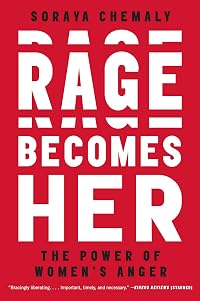
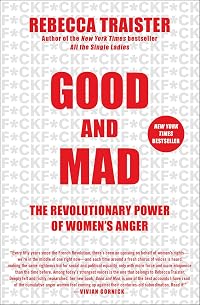
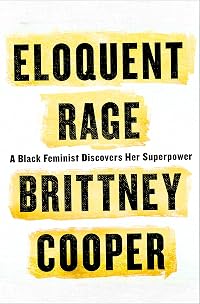
This is the fourth of four recent women-and-anger books I know of ([b:Rage Becomes Her: The Power of Women's Anger|38532207|Rage Becomes Her The Power of Women's Anger|Soraya Chemaly|https://images.gr-assets.com/books/1536485995s/38532207.jpg|60165024], [b:Good and Mad: The Revolutionary Power of Women's Anger|39939208|Good and Mad The Revolutionary Power of Women's Anger|Rebecca Traister|https://images.gr-assets.com/books/1537726614s/39939208.jpg|61834507], and [b:Eloquent Rage: A Black Feminist Discovers Her Superpower|33574165|Eloquent Rage A Black Feminist Discovers Her Superpower|Brittney Cooper|https://images.gr-assets.com/books/1498834108s/33574165.jpg|54380609]) and while good, it was not as good as the others.
Despite her many show more motions in the direction of intersectionality, for instance, the vast bulk of the book revolves around the concerns of straight women cohabiting with or married to straight men, with children.
This is not what emotional labour looks like to many, many women. Even for those women, it's not all of what emotional labour looks like.
And yes, she makes some motions in that direction as well: one chapter on emotional labour at work, for example. But this is outweighed considerably in the book by her experiences with emotional labour in her marriage. I get it; this experience is what drove her to write the book. But it limits the book's applicability to anyone else.
On the one hand, I felt extremely grateful not to be married. Again. Yes, being a single mom is a logistical mess; I have more work to do and less time to do it. But there's no other grown-ass adult around whose job it also is to keep the house clean and the kid alive who's watching tv instead, so there's no resentment.
On the other hand, most of the emotional labour that is on my plate went entirely unaddressed. Except for the work chapter.
Here's what emotional labour looks like in my personal life these days:
The ex leaving all the paperwork and phonecalls for my daughter's health conditions on my plate, and promising to "harass" me until they're done. Yes indeed. We're divorced; he had no intention of changing when we were married and has no incentive now, and of course my daughter has to get to her appointments and get her treatments, so they're mine unavoidably. I repackage this to myself as something I do for her. But it's pretty clear this is a service my ex feels entitled to.
His constant questions about what the custody agreement says. He has the same number of copies of it that I do, but it's easier I guess to text your ex-wife and demand she tell you, as if she were your secretary. I ignore these. They're still infuriating.
His poor treatment of our daughter, and the work I do to bring her to therapy and support her in intervening/talking to him about it. It never makes a permanent difference. I joke that I do more to take care of his relationship with our daughter than he does.
Other men.
Men on dating sites, who go on endlessly about themselves without ever showing any interest in me as a person, ever asking me questions about myself, and then when I go silent, become demanding and angry about why I disappeared on them. Men on dating sites who say or do terrible things (dick pics, sexist jokes, stuff that's way too racy) and then yell at me when I don't give them the laughter or appreciation they think they're entitled to.
Men on dates who unload on me like an unpaid therapist, and are shocked and taken aback when I tell them I'm not available for that with someone I barely know. Men on dates who spend the date complaining about the other women in their lives, and how awful those women are for not taking care of them the way they think they should have. Men on dates who spend the date telling me how mistaken the women they know are about their own lives.
Men at work, who need their egos handled with kid gloves, and every deadline communicated with a question mark and smile emoji.
Random men in public spaces who assume that I am there to talk to them about what they think about how I look or what I'm wearing. Who, in some cases, chase me down the street to continue trying to engage me in conversation. Who insult me when I'm not as welcoming or friendly about this as they seem to think they're entitled to.
What emotional labour does not look like in my life right now is the author's life. I set the standards for cleanliness in my house, and they would not be endorsed by any women's magazine. It's good enough, and I'm fine with it. I hire cleaners who come in every couple of weeks. I've made sure that it's a company who pays their workers well, because that's important to me. The lawn is not mowed as often as my neighbours would like. The birthday cakes are not hand-made. We eat frozen lasagna without shame. It's my daughter's job to manage her schedule and remember her homework and whatever forms she needs to give me. I have never bought a teacher's gift--not because I don't value the work teachers do, I do! I just don't have the time, and I can't imagine what they do with the 30-odd coffee mugs they get every year. I've been meaning to put new drapes on the downstairs windows for six years. Gardening consists of perennials, and then they survive on the water they get from rain, or they die.
Basically I've set a bar for good-enough that keeps the house clean enough and us well-fed enough to remain healthy and sane. Emotional labour is budgeted for my daughter and climate change, and a bit left over for my very dear friends. Other adults are responsible for their own feelings and schedules. And yes, I pay a price for it, but it's a worthwhile price not to keep forcing myself to try to do the impossible.
A lot of emotional labour is necessary work that needs to be done by someone, yes: but YOU CAN GO ON STRIKE if you're doing more than your share and don't want to continue that way. No one is going to die if your partner forgets to call his mom on her birthday because you didn't remind him. And a lot of emotional labour is shitwork women have been sold by companies selling cosmetics, household goods or cleaning supplies, trying to make us FEEL like it's necessary work that needs to be done by someone, when it really isn't.
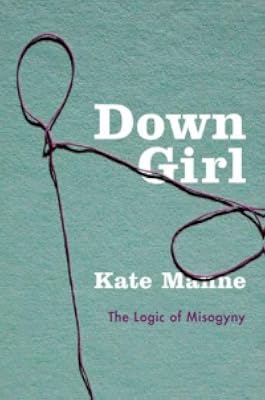
Also, I feel it's worthwhile to read this in conjunction with Kate Manne's [b:Down Girl: The Logic of Misogyny|34640834|Down Girl The Logic of Misogyny|Kate Manne|https://images.gr-assets.com/books/1506476695s/34640834.jpg|55801901]. Manne's points about the service position women are expected to assume with the men in their lives is critical to understanding the dynamics at play in emotional labour. Hartley's analysis here falls sadly short. show less
Despite her many show more motions in the direction of intersectionality, for instance, the vast bulk of the book revolves around the concerns of straight women cohabiting with or married to straight men, with children.
This is not what emotional labour looks like to many, many women. Even for those women, it's not all of what emotional labour looks like.
And yes, she makes some motions in that direction as well: one chapter on emotional labour at work, for example. But this is outweighed considerably in the book by her experiences with emotional labour in her marriage. I get it; this experience is what drove her to write the book. But it limits the book's applicability to anyone else.
On the one hand, I felt extremely grateful not to be married. Again. Yes, being a single mom is a logistical mess; I have more work to do and less time to do it. But there's no other grown-ass adult around whose job it also is to keep the house clean and the kid alive who's watching tv instead, so there's no resentment.
On the other hand, most of the emotional labour that is on my plate went entirely unaddressed. Except for the work chapter.
Here's what emotional labour looks like in my personal life these days:
The ex leaving all the paperwork and phonecalls for my daughter's health conditions on my plate, and promising to "harass" me until they're done. Yes indeed. We're divorced; he had no intention of changing when we were married and has no incentive now, and of course my daughter has to get to her appointments and get her treatments, so they're mine unavoidably. I repackage this to myself as something I do for her. But it's pretty clear this is a service my ex feels entitled to.
His constant questions about what the custody agreement says. He has the same number of copies of it that I do, but it's easier I guess to text your ex-wife and demand she tell you, as if she were your secretary. I ignore these. They're still infuriating.
His poor treatment of our daughter, and the work I do to bring her to therapy and support her in intervening/talking to him about it. It never makes a permanent difference. I joke that I do more to take care of his relationship with our daughter than he does.
Other men.
Men on dating sites, who go on endlessly about themselves without ever showing any interest in me as a person, ever asking me questions about myself, and then when I go silent, become demanding and angry about why I disappeared on them. Men on dating sites who say or do terrible things (dick pics, sexist jokes, stuff that's way too racy) and then yell at me when I don't give them the laughter or appreciation they think they're entitled to.
Men on dates who unload on me like an unpaid therapist, and are shocked and taken aback when I tell them I'm not available for that with someone I barely know. Men on dates who spend the date complaining about the other women in their lives, and how awful those women are for not taking care of them the way they think they should have. Men on dates who spend the date telling me how mistaken the women they know are about their own lives.
Men at work, who need their egos handled with kid gloves, and every deadline communicated with a question mark and smile emoji.
Random men in public spaces who assume that I am there to talk to them about what they think about how I look or what I'm wearing. Who, in some cases, chase me down the street to continue trying to engage me in conversation. Who insult me when I'm not as welcoming or friendly about this as they seem to think they're entitled to.
What emotional labour does not look like in my life right now is the author's life. I set the standards for cleanliness in my house, and they would not be endorsed by any women's magazine. It's good enough, and I'm fine with it. I hire cleaners who come in every couple of weeks. I've made sure that it's a company who pays their workers well, because that's important to me. The lawn is not mowed as often as my neighbours would like. The birthday cakes are not hand-made. We eat frozen lasagna without shame. It's my daughter's job to manage her schedule and remember her homework and whatever forms she needs to give me. I have never bought a teacher's gift--not because I don't value the work teachers do, I do! I just don't have the time, and I can't imagine what they do with the 30-odd coffee mugs they get every year. I've been meaning to put new drapes on the downstairs windows for six years. Gardening consists of perennials, and then they survive on the water they get from rain, or they die.
Basically I've set a bar for good-enough that keeps the house clean enough and us well-fed enough to remain healthy and sane. Emotional labour is budgeted for my daughter and climate change, and a bit left over for my very dear friends. Other adults are responsible for their own feelings and schedules. And yes, I pay a price for it, but it's a worthwhile price not to keep forcing myself to try to do the impossible.
A lot of emotional labour is necessary work that needs to be done by someone, yes: but YOU CAN GO ON STRIKE if you're doing more than your share and don't want to continue that way. No one is going to die if your partner forgets to call his mom on her birthday because you didn't remind him. And a lot of emotional labour is shitwork women have been sold by companies selling cosmetics, household goods or cleaning supplies, trying to make us FEEL like it's necessary work that needs to be done by someone, when it really isn't.
Also, I feel it's worthwhile to read this in conjunction with Kate Manne's [b:Down Girl: The Logic of Misogyny|34640834|Down Girl The Logic of Misogyny|Kate Manne|https://images.gr-assets.com/books/1506476695s/34640834.jpg|55801901]. Manne's points about the service position women are expected to assume with the men in their lives is critical to understanding the dynamics at play in emotional labour. Hartley's analysis here falls sadly short. show less
Gemma Hartley wrote an article about emotional labor which went viral, so she decided to turn it into a book. She seems to have done some research, but a good 90% of this book is infuriating stories of men being blissfully ignorant of what women do to make their lives easier at home, at work, and ... you know, everywhere. I kept hoping for some prescription to improve the situation, but apparently the best advice Hartley can give is 'lower your standards.' Disappointing.
I found this book to be both infuriating and profoundly alienating. I kept wanting to shout, "What is wrong with you?" I know it's not fair to blame individuals for systemic problems but if this is what most heterosexual relationships are like, I don't know why any woman would choose to enter one! (I, too, am in a heterosexual relationship, and that is where the alienation comes in: the experiences the author describes are completely foreign to my partnership. We share chores, we share mental load, and we check in with each other about balance. It's not that hard. From each according to their ability and all.)
The author doesn't do a sufficient job of distinguishing "emotional labor" from "mental load." Also, I would have liked to see show more more data -- but the book seems to fall into a grey area in between sociological analysis and self-help. I appreciate the former but have little patience for the latter.
The second half of the book, with essays about emotional labor out of the home, was nothing original. Lean In is more thoughtful about the workplace, and any number of feminists on the internet have better written and more insightful analyses about violence against women and rape culture.
I suppose the book could be enlightening to someone who is just encountering these ideas. But it was so, so entirely not for me. show less
The author doesn't do a sufficient job of distinguishing "emotional labor" from "mental load." Also, I would have liked to see show more more data -- but the book seems to fall into a grey area in between sociological analysis and self-help. I appreciate the former but have little patience for the latter.
The second half of the book, with essays about emotional labor out of the home, was nothing original. Lean In is more thoughtful about the workplace, and any number of feminists on the internet have better written and more insightful analyses about violence against women and rape culture.
I suppose the book could be enlightening to someone who is just encountering these ideas. But it was so, so entirely not for me. show less
Hartley makes a lot of really really good points, and while I think the book got rather repetitive after a while, she hit upon a lot of articulated language that I have been working towards for a long time. Overall, pretty much everything in here is a giant neon sign for why I am getting a divorce. This is a good starting point for talking about a huge invisible problem in cis-het relationships.
some excellent observations, inspirational, a different way of looking at women's labor and how they are always in charge of the household even if they don't do all the work
Members
- Recently Added By
Lists

Feminism
167 works; 4 members
Author Information
3 Works 215 Members
Common Knowledge
- Original publication date
- 2018
- Original language
- English
Classifications
- Genres
- Nonfiction, Sexuality and Gender Studies, Sociology, General Nonfiction
- DDC/MDS
- 155.333 — Philosophy & psychology Psychology Differential and developmental psychology Sexuality and Gender Masculinity, Femininity, and Other Gender Orientations Femininity
- LCC
- BF692.2 .H374 — Philosophy, Psychology and Religion Psychology Psychology Psychology of sex. Sexual behavior
- BISAC
Statistics
- Members
- 212
- Popularity
- 154,156
- Reviews
- 7
- Rating
- (3.39)
- Languages
- English, Swedish
- Media
- Paper, Audiobook, Ebook
- ISBNs
- 13
- ASINs
- 3